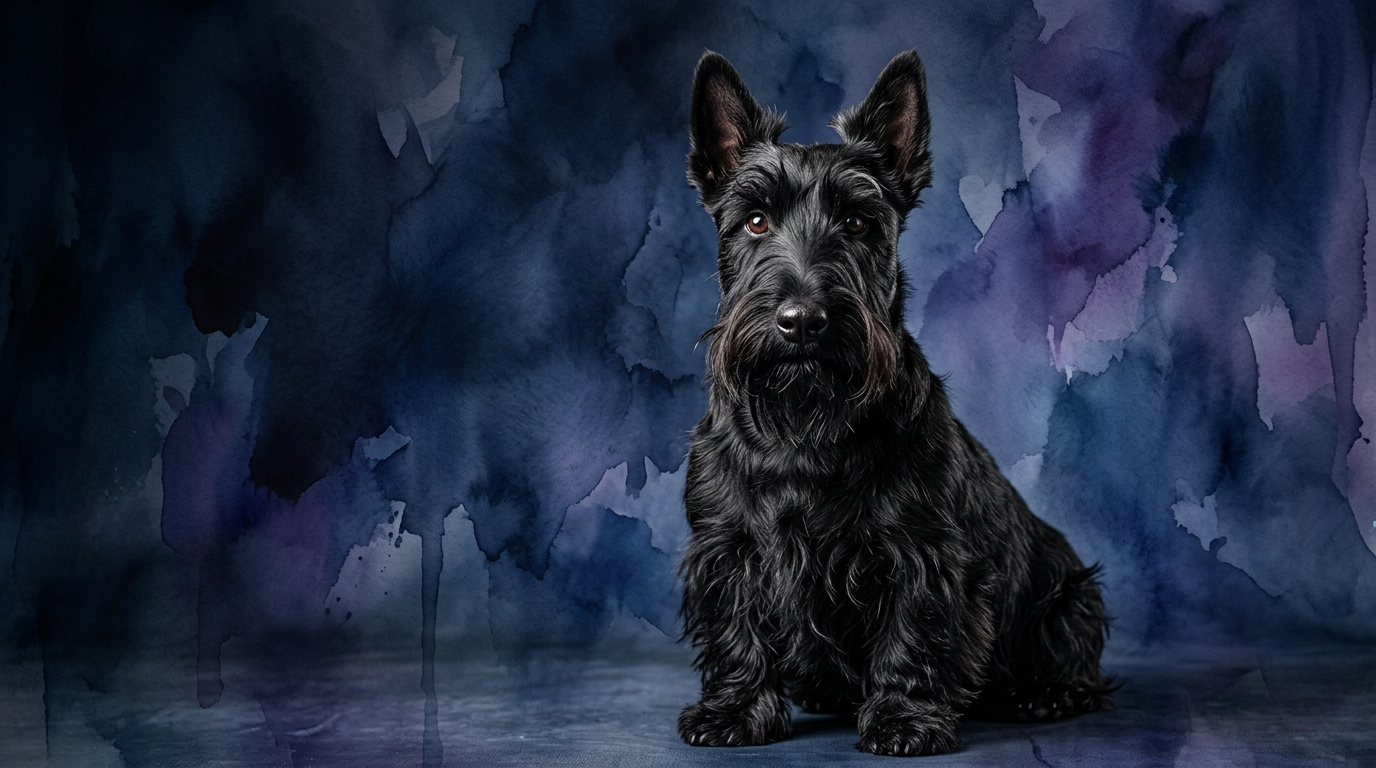
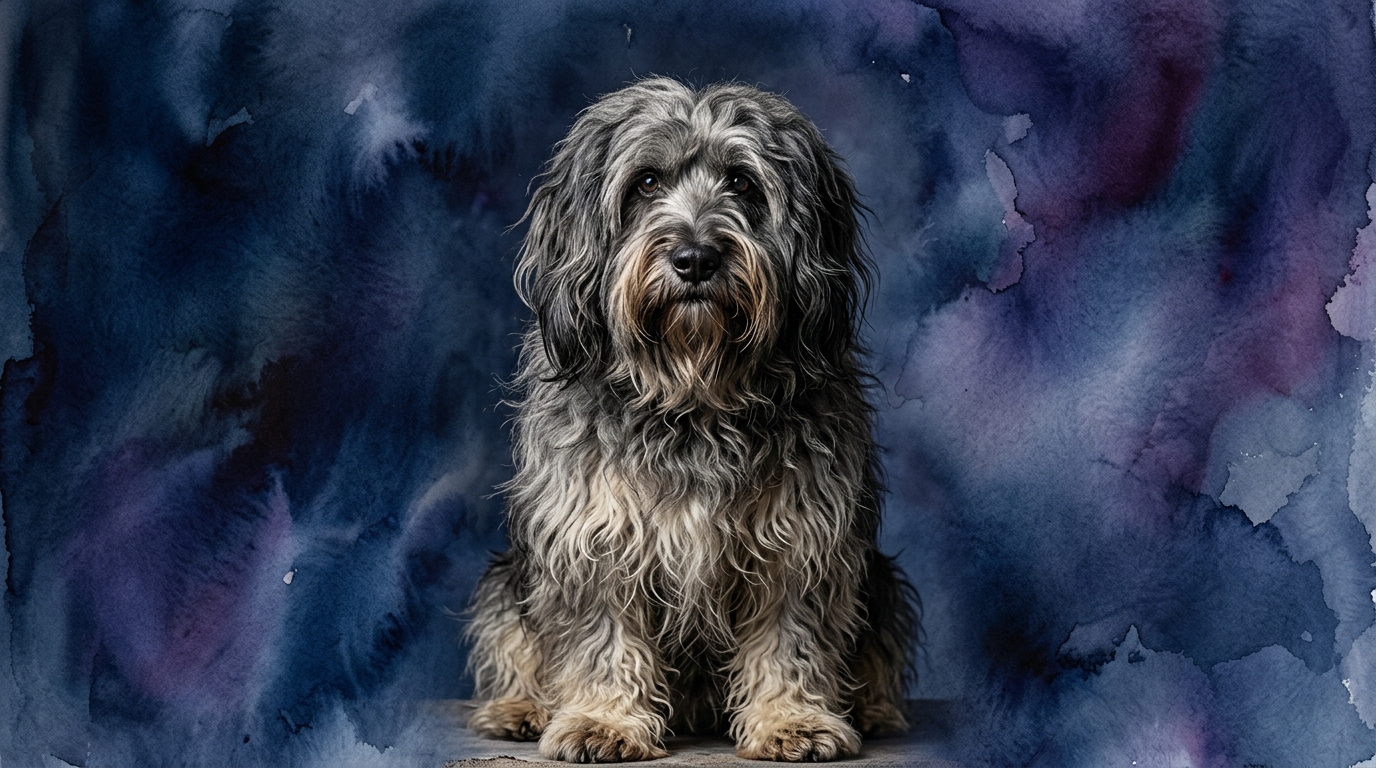
Side-by-Side Cognitive Profile: Scottish Terrier vs. Polish Lowland Sheepdog
The Cosmic Pet Pet IQ Lab assesses canine intelligence across five key dimensions, providing a granular view of how breeds process information and interact with their world. For both the Scottish Terrier and the Polish Lowland Sheepdog, each dimension scores a balanced 3 out of 5, yet the manifestation of these scores is profoundly shaped by their breed heritage.
The Scottish Terrier, a tenacious member of the Terrier group, holds a Coren rank of #65, reflecting a solid capacity for learning and obedience. Their Problem Solving score of 3/5 indicates a resourceful nature; they are adept at figuring out how to achieve their own goals, whether it’s finding a hidden toy or accessing a forbidden treat, often relying on independent thought rather than human guidance. Training Speed also sits at 3/5, meaning they can learn commands efficiently, but their independent streak often requires consistent, engaging methods to ensure compliance. Social Intelligence at 3/5 manifests as deep loyalty to their inner circle, discerning interactions with strangers, and a clear understanding of household dynamics. Their Instinctive Drive, also 3/5, is characterized by a strong prey drive, a love for digging, and territorial instincts that inform much of their sensory processing. Finally, their Memory at 3/5 ensures they recall routines, locations of interest, and past experiences, particularly those that yielded a reward or a perceived injustice.
The Polish Lowland Sheepdog, a robust Herding breed, is not Coren-ranked but demonstrates a comparable cognitive baseline with consistent 3/5 scores across the board. Their Problem Solving at 3/5 showcases an adaptive mind, capable of assessing situations and devising solutions, particularly within the context of managing a 'flock' – be it sheep or their human family. This might involve understanding complex spatial arrangements or anticipating environmental changes. Training Speed at 3/5 means they are generally receptive to learning, often eager to please their handler, but can become bored with repetitive drills, requiring variety and mental challenge to maintain engagement. Social Intelligence, also 3/5, highlights their attunement to human emotions and intentions, forming strong, protective bonds while remaining reserved or cautious with unfamiliar individuals. Their Instinctive Drive at 3/5 is dominated by powerful herding and guarding urges, influencing their observation skills, territorial awareness, and protective behaviors. Their Memory, also 3/5, allows them to retain a vast array of commands, spatial information, and the specific nuances of their family's habits and preferences.
Where the Scottish Terrier Excels Cognitively
Despite identical scores, the Scottish Terrier's cognitive strengths often lie in their self-directed ingenuity. Their 3/5 Problem Solving isn't about pleasing a handler but about achieving personal objectives. This translates into a remarkable tenacity for tasks they deem important, like outsmarting a childproof gate or locating a buried treasure in the garden. They exhibit a specific kind of 'street smarts,' evaluating situations for personal advantage and acting decisively, making them exceptionally clever at navigating their immediate environment to suit their desires. This independent problem-solving can be a double-edged sword, delightful when it’s endearing, challenging when it’s mischievous.
Where the Polish Lowland Sheepdog Shines Cognitively
The Polish Lowland Sheepdog’s cognitive edge, while also scoring 3/5 across the board, manifests differently, rooted in their heritage of cooperative work. Their Problem Solving at 3/5 is often geared towards understanding complex systems and anticipating needs within a group. This breed can excel at multi-step tasks that require sequential thinking and an understanding of cause and effect, particularly when it involves 'managing' their human family or household. Their Social Intelligence (3/5) allows them to pick up on subtle cues, often anticipating a family member's next move or emotional state, which is crucial for a dog bred to work in close partnership with humans and livestock. This makes them highly perceptive and responsive to their environment and the people within it.
Training Dynamics: Which Breed Is Easier and Why?
When it comes to ease of training, the Polish Lowland Sheepdog generally presents a more straightforward path for the average owner. Their Herding background instills a desire to work in partnership and a responsiveness to direction, making their 3/5 Training Speed feel more cooperative. They thrive on having a 'job' and are often eager to please, which translates into a willingness to learn and perform commands, especially when training is varied and mentally stimulating. Their strong memory (3/5) for commands and routines further aids in retention.
The Scottish Terrier, by contrast, with its 3/5 Training Speed, often requires a more nuanced approach. Their independent Terrier spirit means they learn quickly but may choose to obey only if they perceive value in doing so, or if there isn't something more interesting demanding their attention. Their inherent drive to chase and dig can easily override a 'sit' command if a squirrel is in sight. Training a Scottie demands patience, creativity, and a deep understanding of their stubborn yet devoted nature, focusing on positive reinforcement and making training feel like their idea.
Matching Breeds to Lifestyles: Active vs. Relaxed Owners
For active owners, especially those who enjoy outdoor adventures, problem-solving games, or dog sports, the Polish Lowland Sheepdog is often an excellent match. Their Herding instincts translate into a need for consistent mental and physical engagement. They thrive on having a purpose, whether it's agility, obedience, or simply being an active companion on long hikes. Their strong instinctive drive (3/5) for observation and 'management' means they benefit from structured activities that challenge their intellect and physical stamina.
Relaxed owners, or those seeking a devoted companion for a more measured pace of life, might find the Scottish Terrier a better fit. While they certainly enjoy walks and playtime, their exercise needs are generally moderate, and they are content with shorter, consistent outings. Their 3/5 social intelligence means they form deep bonds with their family and are often satisfied with quiet companionship once their basic needs are met. They appreciate a calm home environment where they can observe and participate at their own discretion, offering a loyal, albeit sometimes reserved, presence.
The Verdict: When to Choose Each Breed
The Verdict
Choose the Scottish Terrier if you appreciate a fiercely independent, clever companion who thrives on strong personal bonds and moderate activity, and you're prepared for a dog with a distinctive, sometimes stubborn, personality. They are best for owners who value a dog's self-directed problem-solving and can appreciate their unique blend of loyalty and aloofness.
Opt for the Polish Lowland Sheepdog if you seek an adaptable, biddable, and protective partner eager to participate in family activities and mental challenges, and you can provide ample stimulation. They are ideal for active owners who desire a responsive, perceptive dog that excels in cooperative tasks and forms deep, watchful attachments.
🧠 Find Your Pet's IQ Score
Our Pet IQ Lab assessment covers 25+ tests across 5 cognitive dimensions — personalized to your breed.
Take the Full IQ Test →Frequently Asked Questions
Do Scottish Terriers make good family pets?
Scottish Terriers can be wonderful family pets, forming deep, loyal bonds with their chosen humans. They tend to be more reserved with strangers and other animals, so early socialization is important to ensure they are well-adjusted and comfortable in various settings. Their devoted nature makes them excellent companions for families who understand their independent streak.
What kind of mental stimulation does a Polish Lowland Sheepdog need?
Polish Lowland Sheepdogs require significant mental stimulation to prevent boredom and destructive behaviors. This can include puzzle toys, interactive games, obedience training, agility, herding trials, or even simply teaching them complex tricks. Their herding instincts mean they thrive on having a 'job' and appreciate activities that challenge their problem-solving and memory skills.
Are Scottish Terriers difficult to train due to their independence?
While Scottish Terriers are certainly independent, classifying them as 'difficult' isn't entirely accurate; rather, they require a specific training approach. Their 3/5 training speed means they learn efficiently, but their strong will necessitates consistent, positive reinforcement and making training engaging and rewarding from their perspective. Patience and understanding their terrier motivations are key to successful training.