
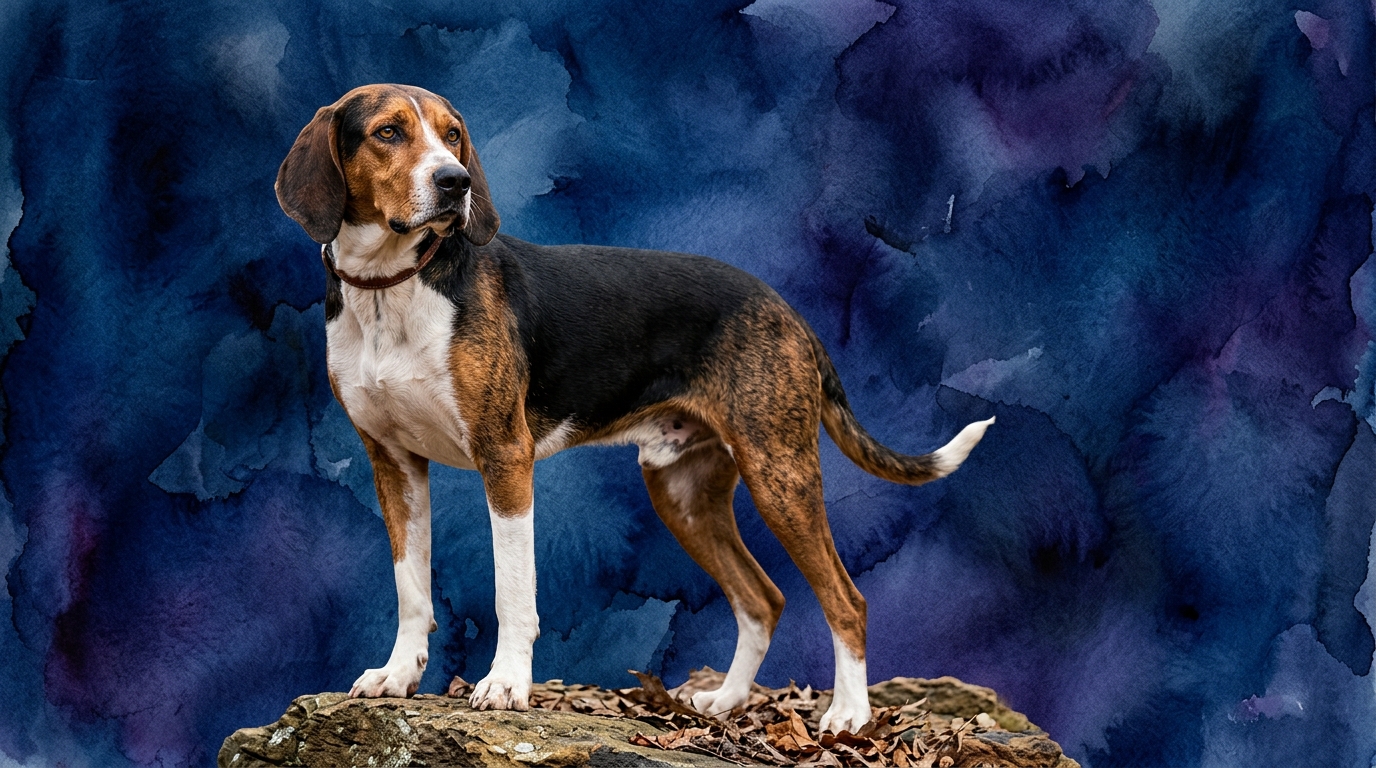
Side-by-Side IQ Profile: Scottish Terrier vs. Treeing Walker Coonhound
At first glance, the identical 3/5 ratings across all five cognitive dimensions for both the Scottish Terrier and the Treeing Walker Coonhound might suggest a near-identical intellectual landscape. However, delving into how these scores translate into breed-specific behaviors reveals a nuanced difference in their cognitive strengths and applications, shaped by their evolutionary purpose.
For the **Scottish Terrier (Coren rank #65)**, their IQ profile details are:
**Problem Solving (3/5):** This score reflects a capacity for figuring out immediate, often physical, challenges. For the Scottish Terrier, this might involve strategizing how to flush out a den dweller, navigating complex terrain underground, or manipulating objects to achieve a goal within their home environment. Their approach to problems tends to be direct and persistent, sometimes bordering on stubbornness.
**Training Speed (3/5):** Scottish Terriers can learn commands and routines at a moderate pace, but their independent nature often means they require consistent motivation and a clear understanding of "what's in it for them." They are not typically eager to please in the same way some other breeds might be, making patience and positive reinforcement key to effective training.
**Social Intelligence (3/5):** A Scottish Terrier demonstrates awareness of human emotions and household dynamics, often forming strong bonds with their primary caregivers. While they can be reserved with strangers, they are adept at reading their family's moods and reacting accordingly, though their expressions of affection might be subtle.
**Instinctive Drive (3/5):** Their instinctual drive is primarily focused on hunting and digging. This 3/5 score indicates a strong, innate motivation to pursue small prey, explore scents, and tunnel, which are deeply ingrained behaviors from their working heritage. This drive needs appropriate outlets to prevent unwanted behaviors.
**Memory (3/5):** Scottish Terriers possess a solid memory for commands, routines, and the layout of their territory. They remember past experiences, both positive and negative, which influences their future interactions and learning. This memory aids their independence, allowing them to navigate their world confidently.
For the **Treeing Walker Coonhound (Not Coren-ranked)**, their IQ profile details are:
**Problem Solving (3/5):** For the Treeing Walker Coonhound, problem-solving largely revolves around navigating complex outdoor environments and deciphering intricate scent trails. This score reflects their ability to logically follow a scent through various obstacles, make decisions about direction, and ultimately "tree" their quarry, demonstrating a specialized form of cognitive processing for their hunting task.
**Training Speed (3/5):** Treeing Walker Coonhounds can absorb training at a moderate pace, particularly when the training incorporates their natural drives or offers high-value rewards. However, their intense focus on scent can make them appear less responsive to commands when distracted by an intriguing smell, requiring more dedicated effort to maintain attention in stimulating environments.
**Social Intelligence (3/5):** These hounds are typically affable and sociable, displaying a strong awareness of their human "pack" and often seeking companionship. They understand social cues within a family setting and are generally good-natured, though their enthusiasm can sometimes overshadow their subtlety in interaction.
**Instinctive Drive (3/5):** The Coonhound's instinctive drive is profoundly tied to their sense of smell and their urge to track and tree. This strong 3/5 rating signifies an almost singular focus on following a scent, an enduring trait that defines much of their behavior and requires significant management and appropriate outlets in a domestic setting.
**Memory (3/5):** Treeing Walker Coonhounds exhibit a robust memory for scent patterns, hunting routes, and the locations of past successes. They recall training cues and routines, especially those associated with positive reinforcement or their beloved outdoor activities, allowing them to efficiently navigate and re-engage with familiar tasks.
Where the Scottish Terrier Wins Cognitively
While both breeds share identical numerical IQ scores, the Scottish Terrier often demonstrates a cognitive advantage in specific scenarios rooted in their terrier heritage. Their problem-solving, rated at 3/5, frequently manifests as a strategic, focused approach to tasks requiring precision and determination in more confined or structured environments. A Scottie might excel at figuring out how to retrieve a toy from under furniture or navigating a complex indoor obstacle course, utilizing their compact size and persistent nature. Their memory (3/5) is keenly applied to remembering household rules, routines, and the locations of favorite items, making them adept at fitting into a domestic rhythm with fewer lapses. This breed also tends to exhibit a more direct and intentional engagement with human-initiated problem-solving, often looking to their owner for cues, even if they ultimately decide on their own method. Their social intelligence (3/5), while perhaps reserved with strangers, allows for a nuanced understanding of their immediate family’s emotional states and expectations, leading to more subtle, yet clear, communication within their core social circle. This focused intensity, combined with their ability to internalize structured expectations, allows the Scottish Terrier to excel in situations demanding a concentrated mental effort within a defined space, rather than broad environmental awareness.
Where the Treeing Walker Coonhound Wins Cognitively
Conversely, the Treeing Walker Coonhound showcases a distinct cognitive superiority in areas aligned with its demanding role as a hunting companion. Their 3/5 problem-solving skill truly shines in dynamic, expansive outdoor settings. This involves complex scent discrimination, where they can sift through a multitude of odors to isolate a specific trail, and then logically follow it across varied terrain, overcoming natural obstacles with remarkable persistence. Their memory (3/5) is exceptionally tuned to recalling intricate scent patterns and geographical routes, enabling them to retrace steps or remember productive hunting grounds. The Coonhound's instinctive drive (3/5) isn't just strong; it's a highly specialized cognitive faculty that allows for sustained, unwavering focus on a single, compelling task – tracking. This sustained mental effort over long periods and distances, often in challenging conditions, is a hallmark of their cognitive prowess. Their social intelligence (3/5) manifests as a strong pack mentality, making them excellent collaborators in a hunting context, where they communicate effectively with their human partners through barks and body language to indicate progress or the location of quarry. This breed excels in tasks demanding endurance, specialized sensory processing, and independent decision-making within a vast, stimulating environment.
Which is Easier to Train and Why
Given that both the Scottish Terrier and the Treeing Walker Coonhound score 3/5 for training speed, neither breed presents an inherently 'easy' training experience, but their challenges stem from different behavioral roots. The Scottish Terrier's training often requires navigating their independent and sometimes stubborn nature. They possess a strong will and a 'what's in it for me?' attitude, meaning consistency, high-value rewards, and engaging methods are crucial. They are less prone to being distracted by distant scents, but a nearby squirrel or a perceived 'intruder' can quickly override learned commands. Their direct focus, while beneficial for some tasks, can also translate into a determined resistance if they don't see the immediate value in a command.
The Treeing Walker Coonhound, on the other hand, faces its primary training hurdle in its overwhelming instinctive drive for scent. Once their nose hits a compelling trail, their world shrinks to that scent, making recall incredibly difficult in an unfenced area. Their social nature means they generally want to please their people, but their biological imperative to track often trumps other desires. Effective training for a Coonhound demands early socialization, rigorous recall practice in increasingly distracting environments, and often relies on their love for food or high-energy play as motivators. While both require patient, positive reinforcement, the Scottie needs an owner who can outsmart their independent streak, while the Coonhound needs an owner who can manage and channel an almost irresistible biological urge.
Which Suits Active Owners vs. Relaxed Owners
The choice between a Scottish Terrier and a Treeing Walker Coonhound significantly hinges on an owner's lifestyle and activity levels. A Scottish Terrier, while not a couch potato, generally suits owners who appreciate a moderate level of activity. They thrive on daily walks, playtime in a secure yard, and mental stimulation through puzzle toys or consistent training sessions. Their exercise needs are manageable for many households, and they can adapt well to apartment living provided they receive sufficient outdoor time and mental engagement. They enjoy focused interaction and are content with a balance of activity and quiet companionship. Therefore, they are a good match for owners who are active but not necessarily extreme athletes, those who enjoy regular, structured walks and engagement without needing to conquer mountains every weekend.
In contrast, the Treeing Walker Coonhound is unequivocally suited for highly active, outdoor-oriented owners. Their boundless energy and intense instinctive drive demand extensive exercise, ideally in large, secure areas where they can run, explore, and engage their powerful sense of smell. Owners who enjoy hiking, running, or participating in scent work, field trials, or even competitive obedience will find a rewarding partner in a Coonhound. They are not a breed for relaxed owners who prefer minimal activity; without sufficient outlets for their physical and mental energy, a Coonhound can become restless and potentially destructive. They need a job or a consistent, demanding exercise routine to be truly content and well-behaved.
The Verdict
Choose a Scottish Terrier if you seek a spirited, independent companion who thrives on focused interaction within a relatively contained environment and appreciates a moderate yet consistent routine of activity and mental engagement.
Opt for a Treeing Walker Coonhound if you are an active, outdoor-loving individual or family, dedicated to providing extensive exercise, engaging their powerful scent drive, and managing a dog with significant energy and a strong biological imperative for tracking.
🧠 Find Your Pet's IQ Score
Our Pet IQ Lab assessment covers 25+ tests across 5 cognitive dimensions — personalized to your breed.
Take the Full IQ Test →Frequently Asked Questions
Are Scottish Terriers difficult to train?
Scottish Terriers, with a training speed rating of 3/5, can be moderately challenging due to their independent and sometimes stubborn nature, requiring consistent, positive reinforcement and high-value motivators to learn effectively. They respond best to engaging training methods that make them feel like they are making their own choices.
How much exercise does a Treeing Walker Coonhound need?
Treeing Walker Coonhounds are highly active dogs with a strong instinctive drive, requiring extensive daily exercise, ideally including opportunities for long runs, hikes, or scent work in secure outdoor environments to satisfy their physical and mental needs. They are not suited for owners seeking a low-energy companion.
Do Treeing Walker Coonhounds make good family pets?
Treeing Walker Coonhounds typically possess a social intelligence rating of 3/5 and are generally affable and good-natured, forming strong bonds with their human "pack," making them suitable family pets for active households that can meet their significant exercise and mental stimulation requirements. Their high energy and strong scent drive need to be understood and managed.