Side-by-Side Cognitive Profiles
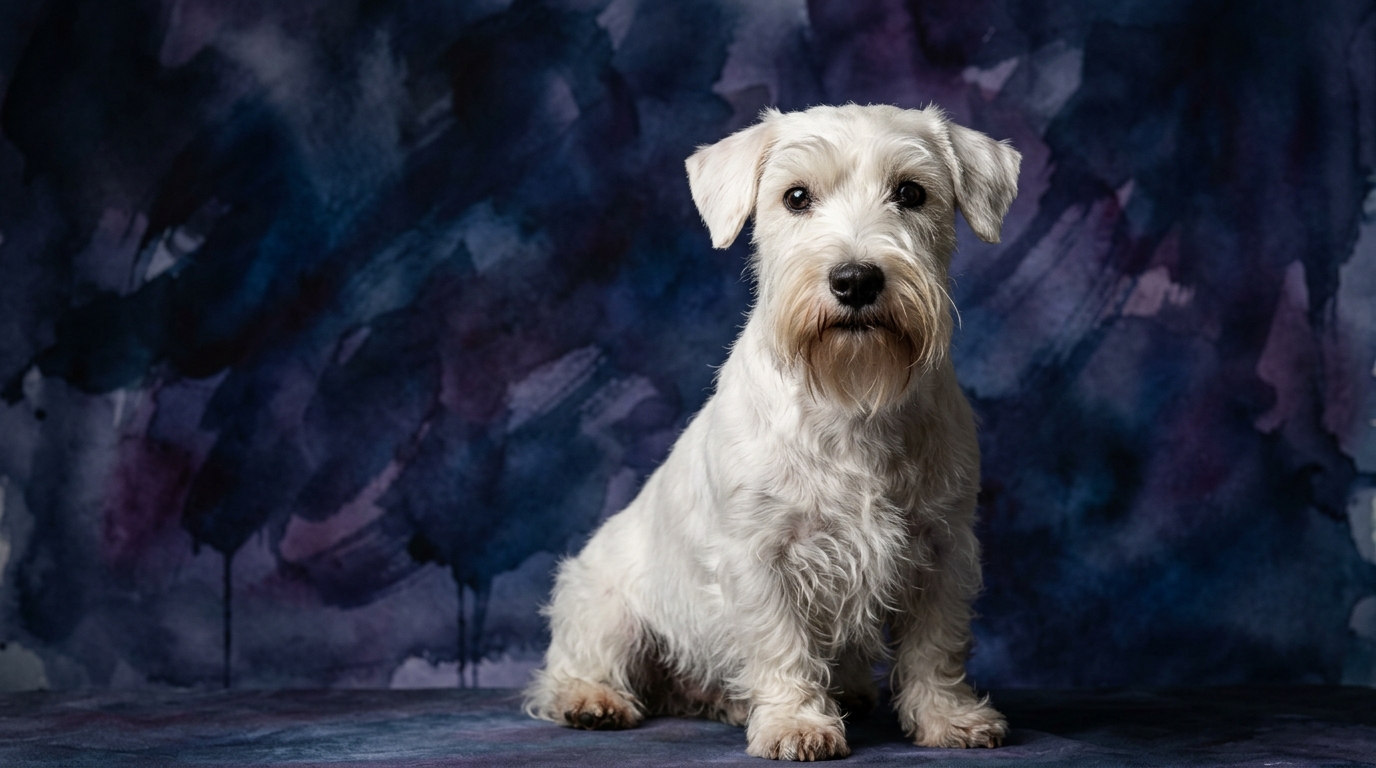
The Cosmic Pet Pet IQ Lab employs a five-dimensional framework to assess canine cognition, providing a nuanced look beyond traditional obedience metrics. For the Sealyham Terrier, each dimension registers a 3/5, indicating a consistent, moderate capacity across the board. This terrier demonstrates a problem-solving approach characterized by persistence, a moderate speed in acquiring new commands, and an average ability to interpret social cues within its familiar circle. Its instinctive drive is present but not overwhelming, focused on its historical role, and it retains information with a steady, average recall.
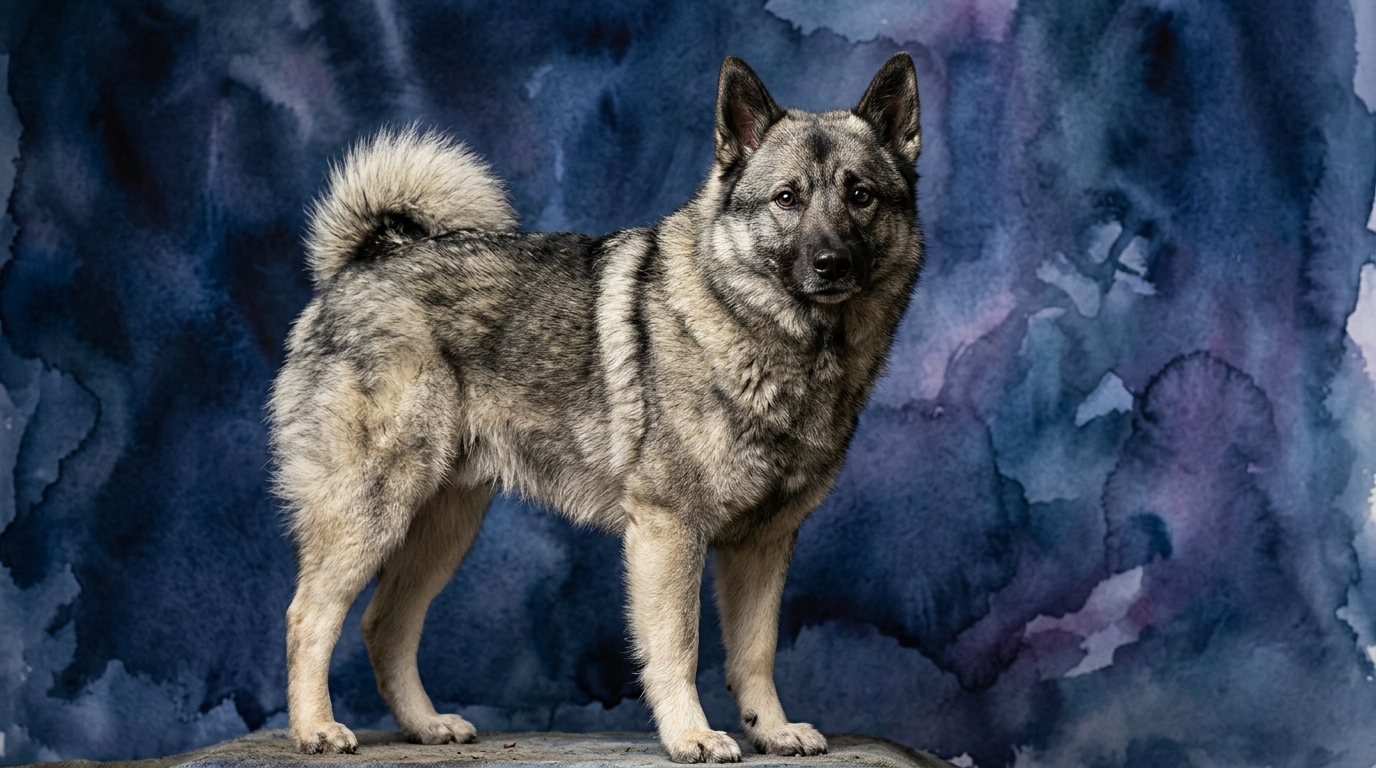
In contrast, the Norwegian Elkhound presents a profile with several higher scores. Its problem-solving capacity and training speed both register at 4/5, suggesting a more agile and efficient cognitive approach. Social intelligence, similar to the Sealyham, stands at 3/5, indicating a good but not exceptional awareness of human social dynamics. Its instinctive drive is also 3/5, reflecting its heritage as an independent hunter, while its memory shines at 4/5, enabling quicker and more lasting retention of learned experiences. These differences hint at distinct learning styles and inherent capabilities.
Where the Sealyham Terrier Excels Cognitively
The Sealyham Terrier, despite its moderate scores, showcases specific cognitive strengths rooted in its terrier lineage. Its 3/5 problem-solving ability is often characterized by an unwavering tenacity and single-minded focus, particularly when engaging with tasks involving exploration or 'unearthing' activities. This isn't about rapid, complex strategizing, but rather an indomitable will to persist until a solution is found, a specialized cognitive trait invaluable for certain challenges. For instance, a Sealyham might not devise an immediate, multi-step solution to a complex puzzle, but it will likely dedicate more sustained, physical effort to the same toy until it yields its contents, demonstrating a unique kind of determined problem-solving.
Its social intelligence, also 3/5, combined with a strong family orientation, means it can be remarkably attuned to the emotional states of its closest human companions. While not broadly social, a Sealyham often forms a deep, intuitive bond with its primary caregiver, picking up on subtle cues and mood shifts within its immediate household. This intimate social awareness, though not universally applied, is a significant strength in close-knit family environments. Furthermore, its moderate instinctive drive is efficiently channeled into a focused, ground-level hunting style, meaning its cognitive resources are effectively deployed in tasks requiring close attention to subtle environmental stimuli, showcasing a specialized form of environmental awareness.
Where the Norwegian Elkhound Shows Cognitive Advantages
The Norwegian Elkhound exhibits a broader cognitive strength, particularly in areas demanding independent thought and efficient learning. Its 4/5 problem-solving score reflects an aptitude for quickly assessing situations and formulating effective responses, often with a keen awareness of its surroundings. This breed frequently demonstrates a more strategic approach to obstacles, rather than simply powering through them. For example, when faced with a barrier, an Elkhound might quickly evaluate options for going over, under, or around, showcasing a more adaptable cognitive flexibility than a breed focused solely on persistence.
The Elkhound's superior training speed (4/5) and memory (4/5) are significant advantages. It typically grasps new commands and routines with fewer repetitions, retaining them effectively over extended periods. This cognitive efficiency means a well-structured training regimen can yield rapid progress and long-lasting recall, making it a more predictable and quicker learner in formal settings. Its instinctive drive, while also 3/5, manifests as a strong, independent hunting focus, requiring it to make autonomous decisions in challenging terrain. This contributes to its overall cognitive independence and ability to operate effectively without constant human direction, a trait honed by centuries of working in vast, remote landscapes. The Elkhound's ability to process and recall information quickly allows it to adapt to new commands and environments more smoothly, making it a more versatile student than the Sealyham.
Training Dynamics: Elkhound vs. Sealyham
Based on their cognitive profiles, the Norwegian Elkhound generally presents as the more straightforward breed to train. Its training speed of 4/5 and memory of 4/5 indicate a quicker grasp of new commands and a stronger retention of learned behaviors. Elkhounds often respond well to consistent, positive reinforcement, and their independent problem-solving ability (4/5) allows them to understand the desired outcome of a training exercise more readily. For instance, an Elkhound might quickly generalize a 'stay' command from one location to another, understanding the underlying concept rather than just the specific context.
In contrast, the Sealyham Terrier, with its 3/5 scores in both training speed and memory, requires a more patient and persistent approach. While certainly capable of learning, the Sealyham may take more repetitions to solidify a command and might be more prone to becoming distracted or demonstrating its independent streak. Their terrier tenacity, while a strength in some contexts, can translate into stubbornness during training sessions if not handled with engaging and varied methods. A Sealyham might learn 'sit' perfectly in the living room but 'forget' it in a distracting park environment, requiring more effort to generalize the behavior. Their moderate social intelligence also means they might be less inclined to perform simply to please, often needing a strong motivator. The Elkhound's cognitive efficiency in processing and recalling information simply gives it an edge in formal obedience and skill acquisition.
Matching Breeds to Lifestyles: Active vs. Relaxed Owners
The choice between these two breeds for active versus relaxed owners largely depends on how 'activity' is defined and what kind of mental engagement is preferred in a companion. For active owners seeking a dog for more structured and enduring outdoor adventures, the Norwegian Elkhound is often a better fit. Its historical role as a big-game hunter means it possesses considerable stamina and a desire for regular, vigorous exercise. Elkhounds thrive on long hikes, trail running, or engaging in dog sports like agility or canicross. Their problem-solving abilities and good memory make them capable partners in activities that require some degree of independent thought and following complex routes. An Elkhound will relish a challenging trek through varied terrain, using its senses and athleticism, making it ideal for owners who enjoy exploring the outdoors extensively. Their strong build and endurance are perfectly suited for sustained physical activity alongside their human companions.
The Sealyham Terrier, while certainly not a sedentary breed, suits owners whose 'activity' might be more focused or interspersed with periods of calm. While they enjoy vigorous play sessions, short walks, and particularly activities that engage their terrier instincts like digging or scent games, they don't typically demand the same endurance-based exercise as an Elkhound. Their smaller size also makes them more adaptable to urban living, provided they receive adequate mental stimulation and opportunities for focused physical exertion. A Sealyham thrives with owners who can provide consistent, engaging play in a backyard, or short, exciting walks that allow for sniffing and exploration, followed by relaxed indoor time. They are ideal for owners who appreciate a dog that can be active in bursts but is equally content to settle down and enjoy quiet companionship within the home.
The Verdict
Opt for the Sealyham Terrier if you appreciate a tenacious, deeply bonded companion who thrives on focused play, moderate exercise, and enjoys being an integral part of a close-knit family, especially if you value persistence in problem-solving over speed.
Select the Norwegian Elkhound if you are an active individual seeking an enduring, quick-learning partner for extensive outdoor adventures and appreciate a dog that demonstrates independent thought and efficient retention in training.
🧠 Find Your Pet's IQ Score
Our Pet IQ Lab assessment covers 25+ tests across 5 cognitive dimensions — personalized to your breed.
Take the Full IQ Test →Frequently Asked Questions
Does the Coren rank indicate overall intelligence?
The Coren rank primarily measures a breed's working and obedience intelligence, focusing on how quickly a dog learns and obeys commands. It doesn't fully encompass other cognitive dimensions like problem-solving, social intelligence, or instinctive drives, which are crucial for a complete understanding of a breed's mental capacities.
How does 'instinctive drive' impact a dog's daily life?
Instinctive drive reflects a dog's inherent tendencies, such as chasing, herding, or scent tracking, which are deeply rooted in their breed's historical purpose. This drive can manifest as a strong motivation for certain activities and requires appropriate outlets to prevent boredom or destructive behaviors, influencing their engagement with their environment and training.
Can a Sealyham Terrier be trained for complex tasks like an Elkhound?
While a Sealyham Terrier can certainly learn complex tasks, its training speed and memory scores suggest it will likely require more patience, repetition, and creative engagement than an Elkhound. Its strength lies in tenacious focus rather than rapid acquisition, meaning complex tasks might be mastered more slowly but with great determination once understood.