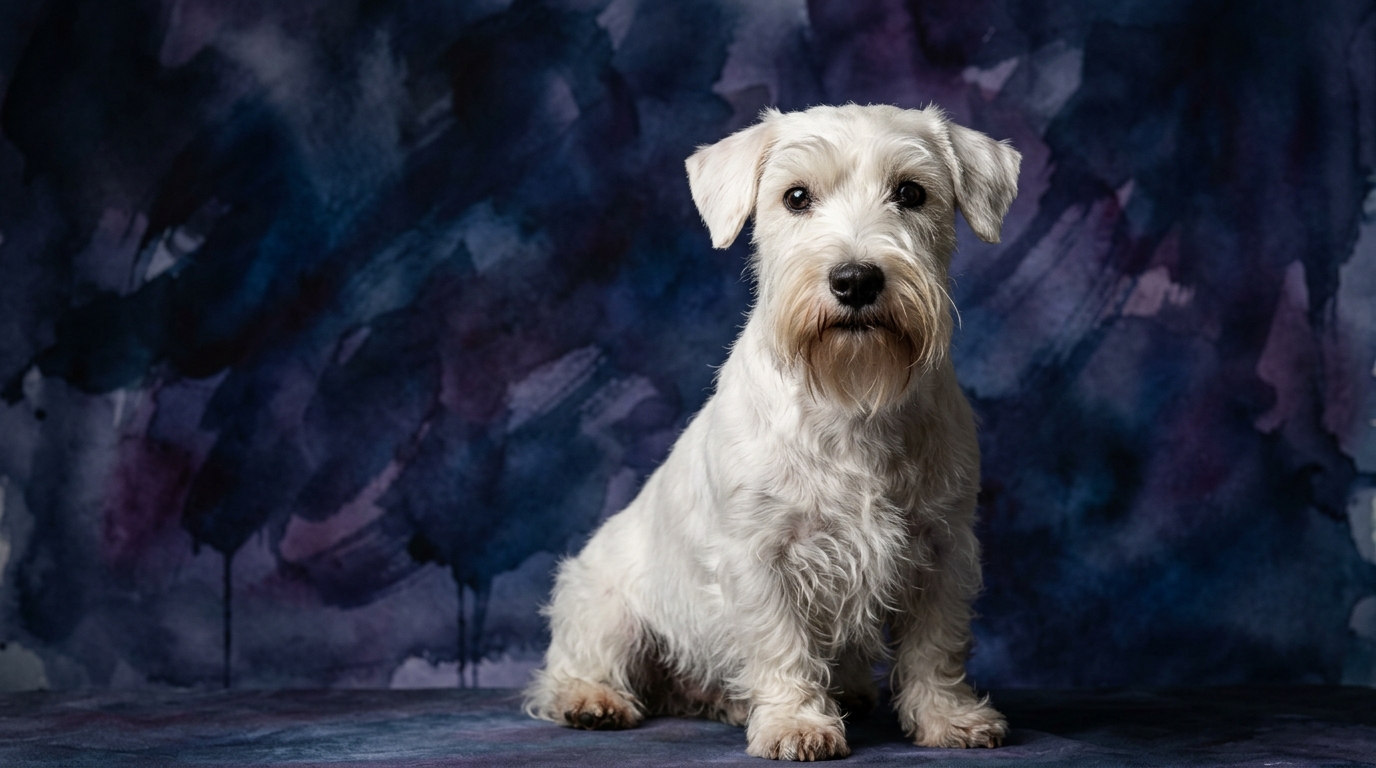
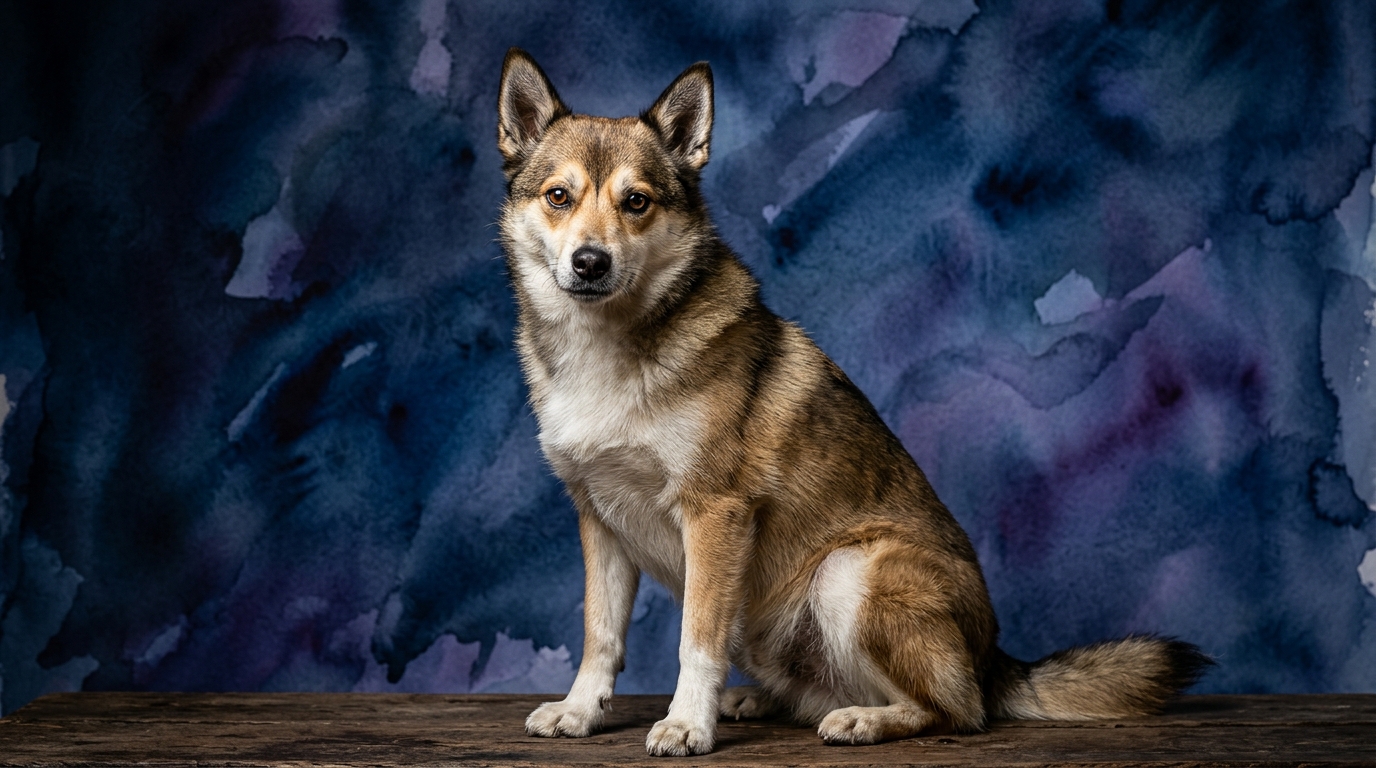
Side-by-Side Cognitive Profile
The Cosmic Pet Pet IQ Lab categorizes canine intelligence across five key dimensions, and both the Sealyham Terrier and the Norwegian Lundehund register a balanced 3/5 across the board. This identical scoring invites a deeper look into how their distinct breed purposes and physical attributes influence the manifestation of these cognitive capabilities, rather than implying a monolithic intellectual equivalence.
For Problem Solving (3/5), the Sealyham Terrier's approach is rooted in tenacious, earth-bound determination. Bred to root out tough prey from underground lairs, their 3/5 rating reflects an ability to persistently navigate confined spaces, overcome physical obstacles through digging or squeezing, and maintain focus on a goal despite challenges. This cognitive strength is less about complex logical sequences and more about relentless, practical application of effort to achieve a specific outcome, often involving physical manipulation of their environment. In contrast, the Norwegian Lundehund's Problem Solving (3/5) is deeply intertwined with their extraordinary physical adaptations for traversing vertical, slippery cliff faces to hunt puffins. Their cognitive efforts involve intricate spatial reasoning for navigating treacherous terrain, evaluating grip, and strategizing access to tight, elevated nesting sites. This breed demonstrates an agile, adaptable problem-solving style, utilizing their unique flexibility and dexterity to manipulate their bodies and environment in complex, three-dimensional ways.
Regarding Training Speed (3/5), the Sealyham Terrier's score indicates a capable learner who can grasp commands and routines with reasonable effort. However, their strong terrier independence and self-assured nature mean that while they understand what is asked, they might not always comply with immediate enthusiasm, especially if they perceive a task as uninteresting or repetitive. Effective training relies on engaging their desire to work alongside their human, rather than relying solely on rote memorization, requiring patience and creative motivation to maintain their interest and cooperation. The Norwegian Lundehund's Training Speed (3/5) suggests they are perceptive but possess a distinctive independent streak, often described as 'cat-like' in their autonomy. They are adept at observing and learning, particularly through novel, engaging experiences, but can become quickly bored or disengaged with traditional, repetitive command training. Their cognitive processes favor self-directed exploration and understanding, meaning trainers often find success by making learning feel like a puzzle or a game, rather than a strict lesson, to harness their innate curiosity.
Social Intelligence (3/5) in the Sealyham Terrier manifests as a devoted loyalty to their immediate family, often accompanied by a cautious or discerning demeanor towards strangers. They understand the nuances of their human family's emotions and routines, forming deep, protective bonds. However, their terrier boldness means they may not always seek to appease or widely socialize, preferring a close-knit circle and clear boundaries, interpreting social cues within that established framework rather than seeking broad acceptance. The Norwegian Lundehund, also at 3/5 for Social Intelligence, expresses this trait through a profound, yet often reserved, connection with their chosen family members. They are highly attuned to the moods and intentions of those they trust, often demonstrating their understanding through subtle cues and quiet companionship rather than overt displays. While they may be standoffish with unfamiliar individuals, their social acumen within their trusted circle allows them to anticipate needs and respond with a quiet empathy, valuing depth over breadth in their social interactions.
The Sealyham Terrier's Instinctive Drive (3/5) is predominantly expressed through a powerful prey drive and an inherent desire to dig and explore. This manifests as a keen interest in small scurrying creatures, an inclination to investigate scents in the ground, and a determined pursuit of perceived 'vermin.' This drive is a fundamental part of their terrier heritage, influencing their play, their reactions to environmental stimuli, and their need for outlets that satisfy these deep-seated hunting and exploratory behaviors. The Norwegian Lundehund’s Instinctive Drive (3/5) is unique, stemming from their specialized role as puffin hunters. This drive encompasses a strong exploratory urge, a natural inclination to navigate complex, tight spaces, and a specific 'retrieval' instinct related to finding birds in their nests. While they possess a prey drive, it is often expressed through investigative behaviors, climbing, and strategic maneuvering rather than just a chase, reflecting their historical need to access difficult-to-reach nesting sites.
Finally, with a Memory rating of 3/5, the Sealyham Terrier demonstrates a solid capacity to recall learned commands, established routines, and the layout of their familiar environment. They remember positive and negative experiences, which informs their future interactions and responses. This memory serves their practical, task-oriented nature, allowing them to effectively integrate training and adapt to consistent household rules and expectations over time. The Norwegian Lundehund also possesses a 3/5 Memory, which is particularly evident in their ability to remember complex spatial patterns and unique problem-solving sequences. Their historical role required them to recall intricate routes up and down cliffs and into nests, suggesting a strong aptitude for spatial and procedural memory. They will remember training methods, family routines, and the details of their environment, often using this recall to navigate new situations or revisit successful strategies.
Where the Sealyham Terrier Wins Cognitively
While both breeds share similar cognitive scores, the Sealyham Terrier often presents a more direct and unwavering cognitive approach when faced with a tangible challenge. Their problem-solving (3/5) shines in situations demanding persistent physical effort and single-minded focus to achieve a goal, such as excavating a perceived intruder or navigating a determined path through undergrowth. This tenacity, rooted in their vermin-hunting heritage, means they are less likely to abandon a task once committed, leveraging their memory (3/5) to recall successful past efforts in overcoming physical barriers.
This breed's cognitive steadfastness ensures they are unwavering in their purpose, whether it's defending their territory or mastering a trick that directly benefits them. Their social intelligence (3/5) fosters a clear, albeit sometimes stubborn, understanding of their family's boundaries and expectations, making them reliably predictable within their established social structure. The Sealyham's cognitive strengths lie in their determined application of intellect to specific, often physical, objectives, showcasing a robust and practical mind.
Where the Norwegian Lundehund Wins Cognitively
The Norwegian Lundehund, despite similar scores, excels cognitively in areas demanding unique physical adaptability and nuanced environmental interaction. Their problem-solving (3/5) is particularly pronounced in scenarios requiring intricate spatial reasoning and the creative use of their flexible anatomy, such as navigating complex obstacles or exploring tight, unconventional spaces. This breed's instinctive drive (3/5) is less about raw chase and more about exploratory investigation and precise manipulation, making them adept at puzzle-solving that involves dexterity and strategic access.
Their memory (3/5) is likely optimized for recalling complex sequences of movements and environmental layouts, enabling them to retrace intricate paths or replicate successful exploratory maneuvers up treacherous terrain. The Lundehund's cognitive strengths lie in their innovative, physically integrated approach to understanding and manipulating their environment, making them masters of their unique domain. Their social intelligence (3/5), while reserved, allows for a deep, subtle attunement to their trusted humans, manifesting in quiet observation and responsive companionship.
Which is Easier to Train and Why
Determining which breed is 'easier' to train between the Sealyham Terrier and the Norwegian Lundehund is less about raw intellectual capacity and more about managing their distinct temperamental expressions of independence. Both breeds have a 3/5 training speed, indicating they grasp concepts adequately but require specific approaches. The Sealyham Terrier, with its classic terrier stubbornness and strong self-will, can be challenging due to its propensity to decide if a command is worth obeying. They learn quickly when motivated, but their resistance often stems from a strong independent streak and a low tolerance for perceived pointlessness or excessive repetition. Successful training with a Sealyham demands consistency, positive reinforcement, and making the training feel like a shared endeavor, appealing to their desire for partnership rather than demanding subservience.
In contrast, the Norwegian Lundehund's training challenges arise from its 'cat-like' independence and a tendency towards disinterest if not sufficiently engaged. They are observational learners and can be quite clever, but their focus can wander if the training lacks novelty or perceived relevance. They may prefer to figure things out for themselves rather than following explicit commands. For Lundehunds, training thrives on making it a game, incorporating puzzle-solving, and utilizing their natural curiosity and exploratory drive. Ultimately, neither is effortlessly 'easy'; both require patient, creative, and consistent trainers who understand how to channel their respective independent natures into cooperative learning experiences, rather than expecting eager, immediate compliance.
Suitability for Active vs. Relaxed Owners
When considering ownership, the Sealyham Terrier and Norwegian Lundehund present different profiles for active versus relaxed lifestyles. The Sealyham Terrier, while not requiring marathon runs, thrives with owners who can provide consistent, engaging activity that taps into their instinctive drive (3/5). Daily vigorous walks, opportunities for digging in designated areas, and interactive play sessions that challenge their problem-solving (3/5) are crucial. They suit owners who are active in a structured, purposeful way, willing to commit to regular training and mental stimulation to prevent boredom and destructive behaviors. Their boldness and occasional vocal nature might not suit overly relaxed households seeking a perpetually quiet companion.
The Norwegian Lundehund, on the other hand, also requires activity, but it's often more about exploration and mental engagement than pure endurance. Their unique physical needs and problem-solving (3/5) excel with owners who can provide varied environments for climbing, exploring, and puzzle-solving. They are not necessarily high-energy 'runners' but need opportunities to investigate and use their agile bodies and minds. They can adapt to a somewhat more relaxed household if their cognitive and exploratory needs are met through enriching toys, puzzle feeders, and safe, varied outdoor spaces. Both breeds are not suited for entirely sedentary lifestyles, but the Lundehund's activity needs lean more towards intricate exploration, while the Sealyham's lean towards purposeful, persistent engagement.
The Verdict
Choose the Sealyham Terrier if you appreciate a tenacious, bold companion who approaches challenges with direct determination and forms deep, protective bonds within a clear social structure. They are ideal for owners who can provide consistent, engaging mental and physical outlets that honor their strong terrier instincts and value a partner with unwavering purpose.
Opt for the Norwegian Lundehund if you are fascinated by a unique, agile companion whose intelligence shines in intricate problem-solving, spatial navigation, and subtle social connection. This breed thrives with owners who can offer diverse exploratory opportunities and appreciate a quiet, independent dog that forms profound, yet reserved, bonds and expresses its intellect through clever, adaptable behaviors.
🧠 Find Your Pet's IQ Score
Our Pet IQ Lab assessment covers 25+ tests across 5 cognitive dimensions — personalized to your breed.
Take the Full IQ Test →Frequently Asked Questions
Do Sealyham Terriers and Norwegian Lundehunds get along well with children?
Sealyham Terriers, with proper socialization, can be devoted family dogs, often tolerating children well, though their terrier boldness means supervision is always wise. Norwegian Lundehunds can be good with children in their immediate family, showing a quiet affection, but they might be reserved or shy with boisterous or unfamiliar children due to their naturally cautious nature.
What are the main differences in grooming needs between these two breeds?
The Sealyham Terrier has a harsh, wiry double coat that requires regular hand-stripping or professional grooming to maintain its texture and prevent matting, along with routine brushing. The Norwegian Lundehund has a double coat that is relatively easy to care for, requiring only weekly brushing to remove loose hair and more frequent brushing during seasonal shedding periods.
Are Sealyham Terriers or Norwegian Lundehunds prone to specific health issues related to their breed?
Sealyham Terriers can be prone to certain genetic conditions like eye disorders (e.g., lens luxation) and deafness, making responsible breeding crucial. Norwegian Lundehunds are known for a specific gastrointestinal disorder called Lundehund Syndrome, which requires careful dietary management and veterinary oversight, highlighting their unique physiological considerations.