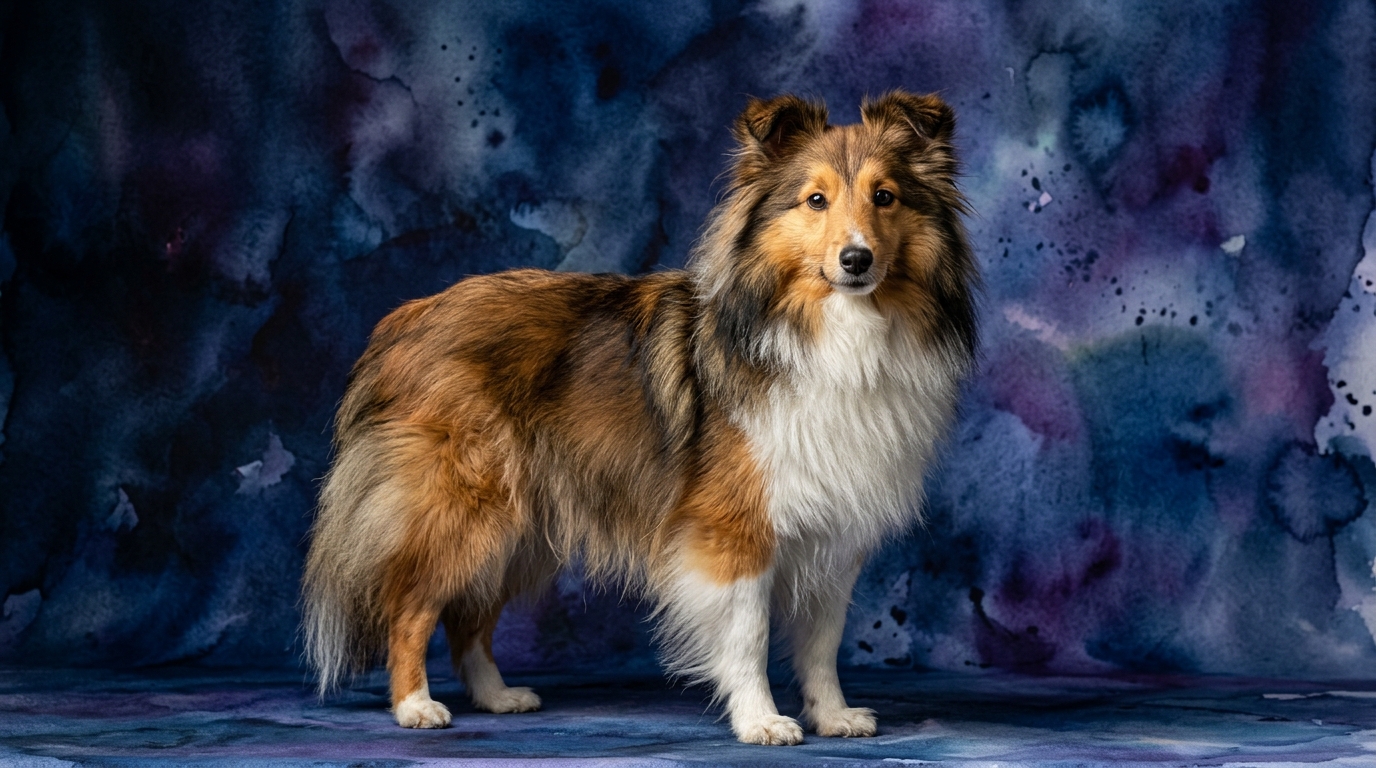
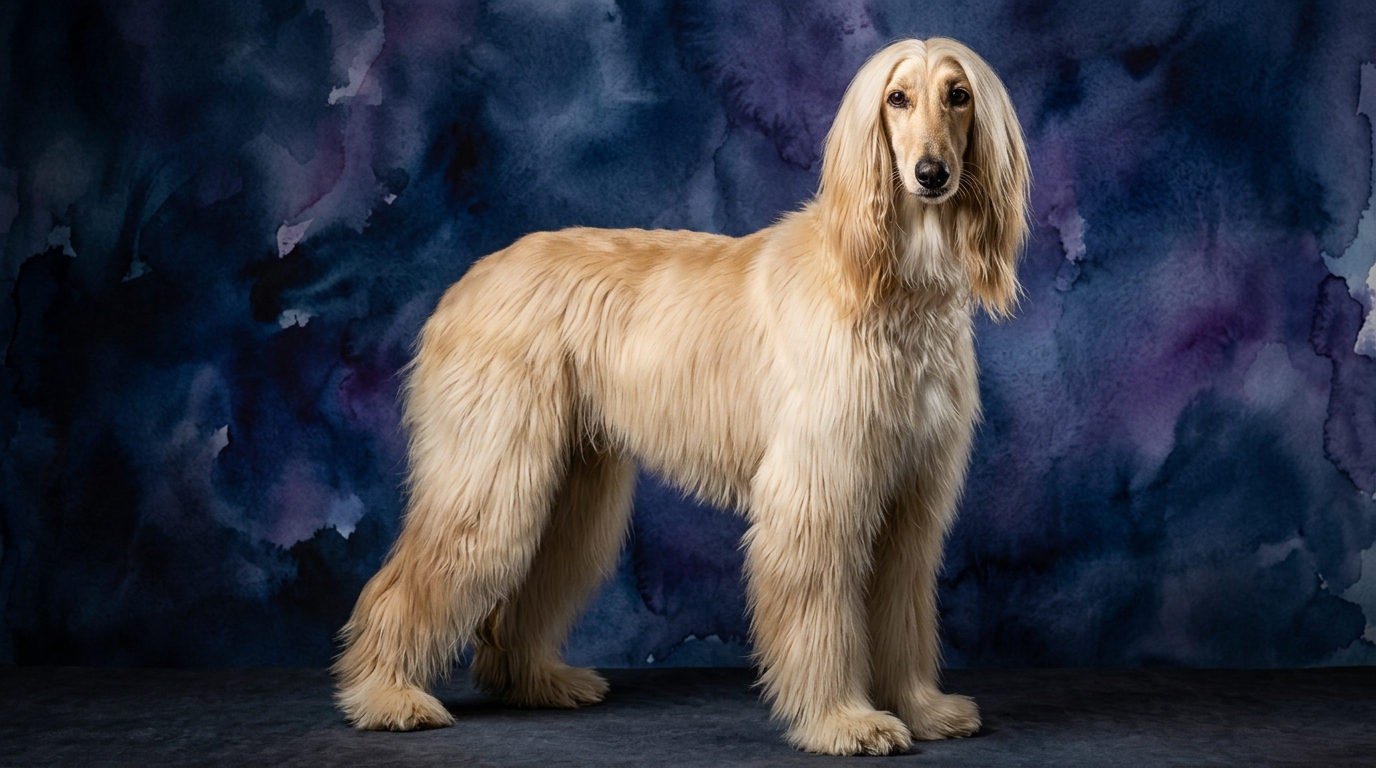
Side-by-Side Cognitive Profiles: Sheltie vs. Afghan Hound
The Cosmic Pet Pet IQ Lab's framework evaluates canine cognition across five crucial dimensions, offering a nuanced understanding beyond a simple ranking. For the Shetland Sheepdog, a Herding group member, these scores paint a picture of a highly adaptable and responsive companion, deeply attuned to human direction. The Afghan Hound, a sighthound from the Hound group, presents a profile marked by independence and a distinct problem-solving approach, reflecting its ancient role.
When examining Problem Solving, both breeds achieve an impressive 4/5. For the Shetland Sheepdog, this score reflects their capacity to understand complex commands and adapt strategies in herding tasks, often anticipating handler needs. The Afghan Hound's identical score, however, stems from its ability to independently strategize during a chase, navigating terrain and obstacles without human intervention, a different application of problem-solving entirely.
Training Speed is where the most dramatic divergence occurs. The Shetland Sheepdog boasts a perfect 5/5, indicating rapid comprehension of new commands, a strong desire to please, and quick retention. Conversely, the Afghan Hound scores a challenging 1/5, signifying a deliberate and often selective approach to learning, requiring significant patience and motivation from trainers. This isn't a lack of capacity, but a difference in willingness to be directed.
Social Intelligence for the Shetland Sheepdog is rated at 4/5, reflecting their strong bond with their human families, their sensitivity to emotional cues, and their collaborative nature in group settings. The Afghan Hound, with a 2/5, exhibits a more reserved and independent social dynamic. While affectionate with their chosen people, they are less inclined to seek constant interaction or to interpret subtle human signals in the same collaborative manner as a herding dog.
Both breeds share a high Instinctive Drive of 5/5, though its manifestation differs significantly. For the Shetland Sheepdog, this drive is channeled into their herding instincts, a strong desire to gather and manage, often translating into a keenness for structured activities and a 'job.' For the Afghan Hound, this drive is predominantly predatory, focused on chasing and capturing prey, a powerful urge that fuels their independent hunting style and requires careful management in domestic settings.
Finally, Memory for the Shetland Sheepdog is a robust 5/5, allowing them to recall a vast repertoire of commands, routines, and experiences over long periods, crucial for complex herding patterns. The Afghan Hound's memory, at 3/5, is adequate for retaining significant details like terrain, scent trails, and familiar routes, but perhaps less focused on the rapid recall of numerous arbitrary human-given commands.
Where the Shetland Sheepdog Excels Cognitively
The Shetland Sheepdog's cognitive strengths lie in their exceptional responsiveness and their deep-seated desire to collaborate. Their perfect 5/5 Training Speed means they absorb new information with remarkable alacrity, making them exceptionally adaptable to various disciplines from obedience to agility. This quick learning curve is supported by their 5/5 Memory, enabling them to retain intricate command sequences and complex routines, building a rich behavioral repertoire over time. This combination makes them a joy to teach and allows for sophisticated communication between dog and owner.
Furthermore, the Sheltie's 4/5 Social Intelligence contributes significantly to their cognitive edge in a domestic setting. They are highly attuned to human emotions and intentions, often anticipating needs or responding to subtle cues. This sensitivity fosters a strong partnership, where the dog actively seeks to understand and engage with its human companions, making them intuitive partners in training and daily life. Their problem-solving (4/5) is often applied to tasks involving human direction, such as navigating an obstacle course or responding to a herding challenge under guidance.
Where the Afghan Hound Demonstrates Unique Cognitive Strengths
The Afghan Hound's cognitive prowess, while different from the Sheltie's, is equally compelling. Their 4/5 Problem Solving score is a testament to their capacity for independent thought and strategic action, honed by centuries of hunting in challenging environments. This isn't about solving puzzles for human reward, but about autonomously assessing and overcoming obstacles in pursuit of a goal, like navigating a complex landscape during a chase or finding the most efficient path. This independent problem-solving sets them apart, indicating a self-reliant mind.
Their 5/5 Instinctive Drive, coupled with their problem-solving ability, highlights their specialized intelligence. This powerful drive isn't easily redirected; it's a deep-seated motivation for their specific purpose. While their 1/5 Training Speed suggests a lack of interest in rote obedience, it doesn't indicate a lack of intelligence. Instead, it reveals a breed that evaluates commands based on perceived utility and self-interest, rather than simply complying. Their memory (3/5) is well-suited for retaining crucial environmental data, like the layout of a hunting ground or the location of potential prey, rather than a long list of arbitrary commands. This combination makes them highly effective in their original role and uniquely challenging in a modern context.
Training Dynamics: Sheltie's Eagerness vs. Afghan's Independence
When it comes to ease of training, the Shetland Sheepdog is the clear choice for most owners due to their 5/5 Training Speed and 4/5 Social Intelligence. They are eager participants, quick to grasp new concepts, and motivated by praise and interaction. Their herding background has ingrained a strong desire to work collaboratively with a handler, making them highly responsive to cues and corrections. A Sheltie thrives on consistent, positive reinforcement and the opportunity to learn and perform tasks, often excelling in dog sports like agility and obedience.
The Afghan Hound, with its 1/5 Training Speed, presents a significantly different training experience. This breed is not inherently motivated by the desire to please or by repetitive drills. Their training requires immense patience, creativity, and an understanding of their independent sighthound nature. Traditional obedience methods often prove frustrating; instead, Afghan Hounds respond best to motivational techniques, short sessions, and commands presented as suggestions rather than demands. Their instinctive drive (5/5) means they are easily distracted by moving objects, requiring a strong recall built on high-value rewards and consistent, engaging practice, often in a secure, fenced area. Behavioral differences stem from their historical roles: one bred to work in close partnership, the other to hunt autonomously.
Matching Breeds to Lifestyles: Active Engagement vs. Independent Spirit
For active owners seeking a highly engaged and trainable companion, the Shetland Sheepdog is an excellent fit. Their high instinctive drive (5/5) translates into a need for consistent mental and physical stimulation. They thrive on having a 'job,' whether it's learning new tricks, participating in dog sports, or even just regular, varied walks and puzzle toys. Owners who enjoy teaching, training, and spending quality, interactive time with their dog will find the Sheltie's responsive nature and boundless enthusiasm incredibly rewarding. They require an owner who can provide structured activities and channel their cognitive abilities.
The Afghan Hound, while also requiring significant physical activity due to their sighthound heritage and 5/5 instinctive drive, suits owners who appreciate an independent spirit and can accommodate their unique cognitive needs. They need ample space to run and express their natural instincts, ideally in a securely fenced area. Their problem-solving (4/5) and lower social intelligence (2/5) mean they are less interested in constant human-directed activities and more inclined to entertain themselves or explore independently. Owners must be tolerant of their sometimes aloof nature and be prepared for a dog that thinks for itself, often requiring a more flexible and patient approach to daily life. They are not 'relaxed' in terms of exercise, but more 'relaxed' in terms of constant human-dog interaction and directed mental engagement.
The Verdict
Choose the Shetland Sheepdog if you desire a highly trainable, responsive partner eager for structured activities and a deep, collaborative bond.
Opt for the Afghan Hound if you appreciate an independent, dignified companion with a unique problem-solving intellect and can accommodate their specific exercise and training needs.
🧠 Find Your Pet's IQ Score
Our Pet IQ Lab assessment covers 25+ tests across 5 cognitive dimensions — personalized to your breed.
Take the Full IQ Test →Frequently Asked Questions
Is the Afghan Hound truly not intelligent because of its low Coren rank?
No, the Afghan Hound possesses a distinct form of intelligence, particularly in independent problem-solving and instinctive drive, which served its historical hunting role. Its lower Coren rank primarily reflects a lack of interest in human-directed obedience, not a lack of cognitive capacity.
Do Shetland Sheepdogs require a lot of mental stimulation?
Yes, Shetland Sheepdogs, with their high training speed, memory, and instinctive drive, thrive on consistent mental stimulation. They benefit greatly from learning new commands, puzzle toys, and participating in dog sports to keep their minds engaged and prevent boredom.
What kind of training methods are best for an Afghan Hound?
For Afghan Hounds, positive reinforcement, short and engaging training sessions, and motivation-based techniques work best. Patience is key, as they respond to commands presented as appealing options rather than demands, and their strong chase drive requires secure environments for off-leash exercise.