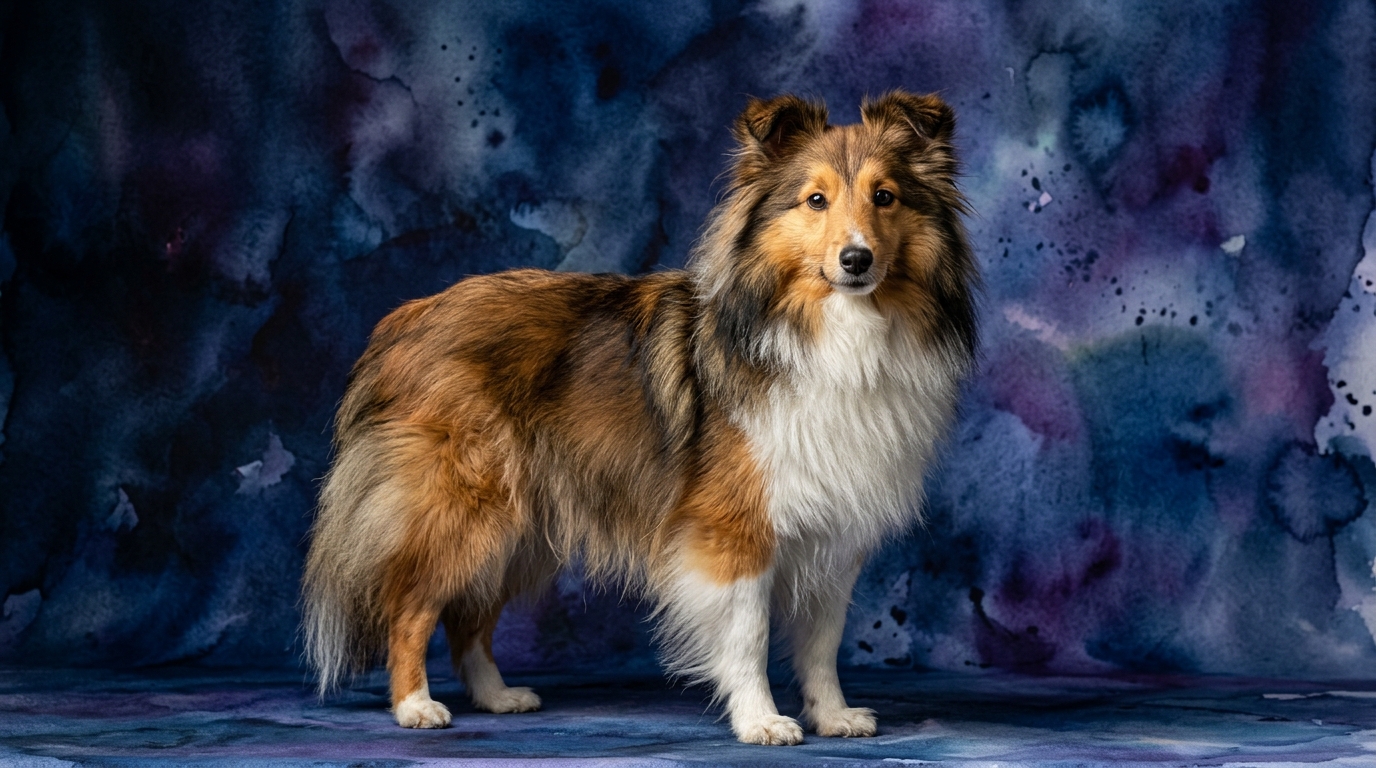
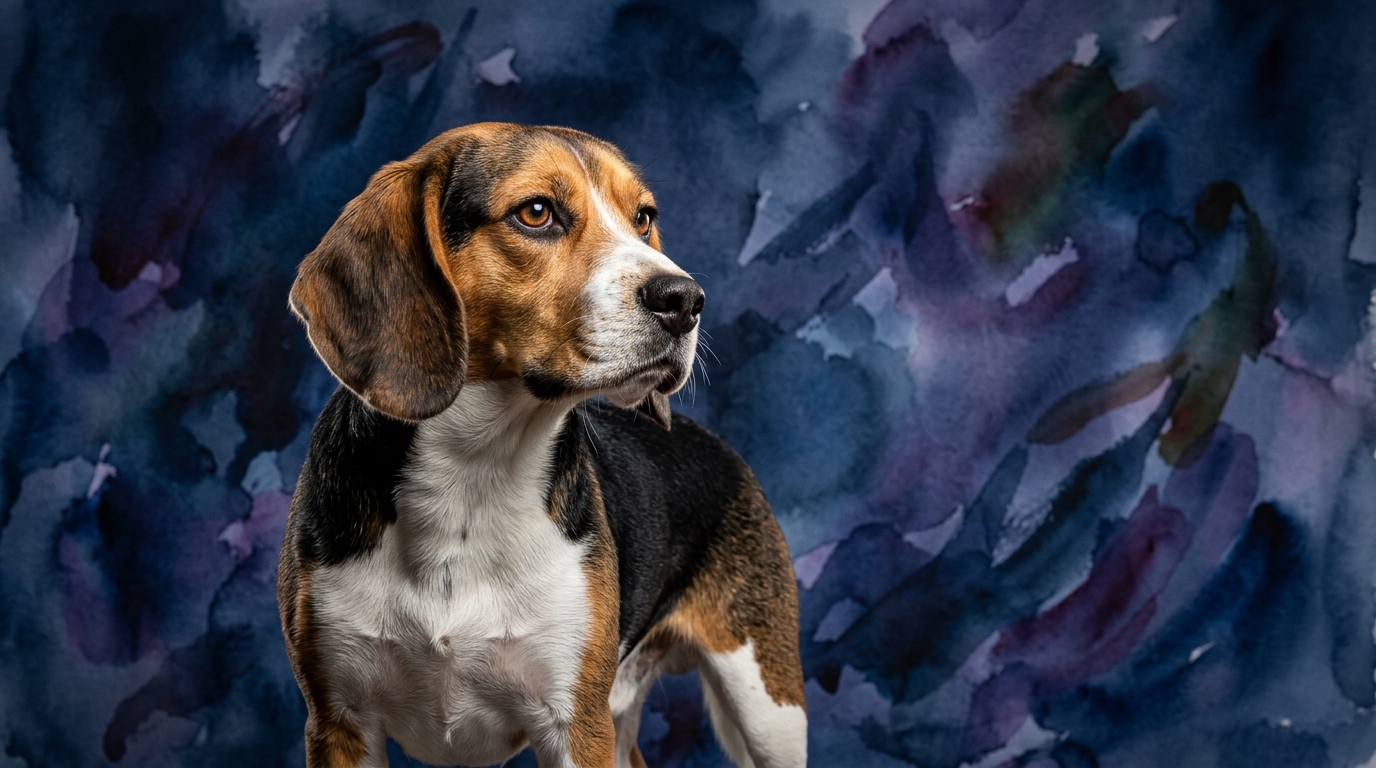
Side-by-Side Cognitive Profile: Shetland Sheepdog vs. Beagle
To understand the unique mental landscapes of these two breeds, we turn to The Cosmic Pet Pet IQ Lab's five-dimensional assessment, alongside their Coren rankings, which evaluate a breed's working and obedience intelligence.
The Shetland Sheepdog, with a Coren rank of #6, demonstrates a highly integrated cognitive system. Their Problem Solving is rated 4/5, indicating a strong capacity to figure out complex situations and adapt strategies, reflective of their heritage managing livestock. Training Speed is an exceptional 5/5, meaning they absorb and execute new commands with remarkable rapidity and consistency. Social Intelligence scores 4/5, highlighting their ability to interpret human cues and form deep, responsive bonds. An Instinctive Drive of 5/5 underscores their powerful herding impulse, a foundational motivation for their behavior. Finally, their Memory is a perfect 5/5, ensuring long-term retention of learned behaviors and routines.
In contrast, the Beagle holds a Coren rank of #72, suggesting a different primary cognitive focus. Surprisingly, their Problem Solving ability is also rated 4/5, though this often manifests in their persistent, methodical approach to scent-based puzzles rather than abstract tasks. Training Speed is 2/5, indicating that Beagles typically require more patience and repetition to learn new commands due to their independent nature and powerful distractions. Social Intelligence is 3/5; while friendly, they may be less attuned to subtle human nuances compared to the Sheltie. Their Instinctive Drive is 5/5, an overwhelming compulsion to follow scent trails that often dictates their actions. Their Memory is 4/5, particularly strong for scent associations and locations, though perhaps less reliable for human-initiated obedience commands.
Where the Shetland Sheepdog Wins Cognitively
The Shetland Sheepdog's cognitive strengths shine particularly bright in areas demanding rapid assimilation of information and precise execution. Their exceptional training speed, rated at 5/5, means a Sheltie can grasp new commands and complex sequences with remarkable efficiency, often after just a few repetitions. This contrasts sharply with the Beagle's 2/5 training speed, where consistent effort over much longer periods is typically required. Furthermore, the Sheltie's superior social intelligence (4/5 versus Beagle's 3/5) allows them to more readily interpret human body language, vocal inflections, and emotional states, fostering a highly responsive and deeply connected relationship. This sensitivity means a Sheltie is often a step ahead, anticipating an owner's next move or mood. Their perfect 5/5 memory also gives them an edge, ensuring that once a skill is learned, it is retained with enduring reliability, facilitating advanced training and consistent behavior over their lifetime.
Where the Beagle Wins Cognitively
While the Shetland Sheepdog excels in obedience and social attunement, the Beagle's cognitive prowess is uniquely tailored to its ancestral purpose, offering a distinct set of strengths. Their problem-solving ability, rated equally at 4/5, manifests differently; for a Beagle, it's less about manipulating objects and more about persistent, methodical deduction through scent. A Beagle can unravel an intricate olfactory puzzle that would leave many other breeds baffled, demonstrating a singular focus and analytical capacity within their sensory world. Their instinctive drive, also a perfect 5/5, is entirely dedicated to their nose, allowing them to track, trace, and locate with an unwavering determination that few breeds can match. This drive isn't just about following a trail; it's a cognitive process of filtering, prioritizing, and memorizing scent information, a complex mental feat that is the cornerstone of their being. While their memory might be rated 4/5 overall, their olfactory memory is arguably peerless, allowing them to recall specific scents and their associated locations with impressive accuracy over time.
Training Dynamics: Which is Easier and Why?
Without question, the Shetland Sheepdog presents an easier training journey for most owners due to several key cognitive factors. Their unparalleled training speed (5/5) means they pick up new commands and routines with impressive swiftness, often eager to please and quick to offer desired behaviors. A Sheltie typically thrives on positive reinforcement, rapidly associating actions with rewards and understanding expectations. This is bolstered by their high social intelligence, which enables them to keenly observe and respond to human cues, making communication during training highly effective. Their strong memory (5/5) ensures that once a behavior is learned, it tends to stick, contributing to their consistent performance in various obedience disciplines.
In contrast, the Beagle’s training speed (2/5) indicates a much slower learning curve. Their powerful instinctive drive (5/5) for scent often acts as a significant distraction; a fascinating smell can completely override a command, making consistent focus a considerable challenge. While a Beagle's problem-solving skills are robust, they are often applied to following a scent trail rather than deciphering human instructions. Their moderate social intelligence (3/5) means they might not be as finely tuned to an owner's subtle directives. Successful Beagle training demands immense patience, creativity to make training more engaging than external stimuli, and a deep understanding of their motivation, often requiring more specialized techniques to maintain attention and instill obedience. Owners must learn to work with the Beagle's natural drive, rather than against it, perhaps incorporating scent games into their training regimen to harness their inherent cognitive strengths.
Matching Breeds to Lifestyles: Active vs. Relaxed Owners
For active owners seeking a highly engaged and cooperative canine partner, the Shetland Sheepdog is often an ideal match. Their high instinctive drive (5/5) translates into a need for purposeful activity, whether it's herding, agility, or advanced obedience, which active owners can readily provide. Shelties thrive on mental stimulation and physical exercise that involves working alongside their human, leveraging their quick training speed and strong social intelligence. These dogs excel in dog sports and enjoy complex tasks that challenge their problem-solving abilities. Their desire for partnership means they flourish in environments where their cognitive capacities are regularly engaged in shared activities. Conversely, relaxed owners might find a Sheltie’s need for engagement overwhelming, potentially leading to boredom-related behaviors like excessive barking or compulsive chasing if not adequately stimulated.
The Beagle, with its 5/5 instinctive scent drive, also requires an active outlet, but of a different nature. They are best suited for owners who enjoy long walks, scent work games, or even tracking activities, allowing them to indulge their primary cognitive strength: their nose. While they are energetic, their activities are often more self-directed or focused on exploration rather than cooperative tasks. A Beagle's problem-solving skills are often applied to navigating complex scent environments, which requires focused mental energy. A relaxed owner might struggle with a Beagle's tendency to follow its nose into trouble or their need for consistent, if less structured, physical and mental exertion. Their moderate training speed also means they require an owner committed to patient, consistent engagement. Neither breed is truly suited for a sedentary lifestyle, but the *type* of activity they thrive on differs significantly, with Shelties preferring partnered tasks and Beagles favoring independent olfactory exploration.
The Verdict
If you seek a highly responsive, eager-to-please partner for obedience, dog sports, and a deep, socially intelligent bond, the Shetland Sheepdog stands out.
However, if you are drawn to a charming, independent spirit whose world revolves around an extraordinary sense of smell, and you are prepared for patient, consistent training focused on engagement rather than strict compliance, the Beagle will offer a unique and rewarding companionship.
🧠 Find Your Pet's IQ Score
Our Pet IQ Lab assessment covers 25+ tests across 5 cognitive dimensions — personalized to your breed.
Take the Full IQ Test →Frequently Asked Questions
Does a Beagle's lower Coren rank mean it's not smart?
Not at all. A Beagle's Coren rank primarily reflects its willingness to obey human commands quickly, which is often overshadowed by its powerful independent scent drive. Their problem-solving abilities, especially related to scent work, are highly developed and demonstrate a distinct type of intelligence.
Can a Beagle be trained for complex tasks like a Shetland Sheepdog?
While a Beagle can learn complex tasks, their training journey will typically be longer and require more dedication than with a Shetland Sheepdog. Their strong independent nature and focus on scent mean trainers must be highly creative and persistent to achieve similar levels of precision and speed in obedience.
Which breed is better for a first-time dog owner?
For a first-time dog owner, the Shetland Sheepdog is generally a more forgiving breed due to its higher training speed and social intelligence, making it easier to teach basic manners and build a strong bond. A Beagle's independence and strong scent drive can be challenging for those new to dog ownership, requiring a deeper understanding of breed-specific motivations.