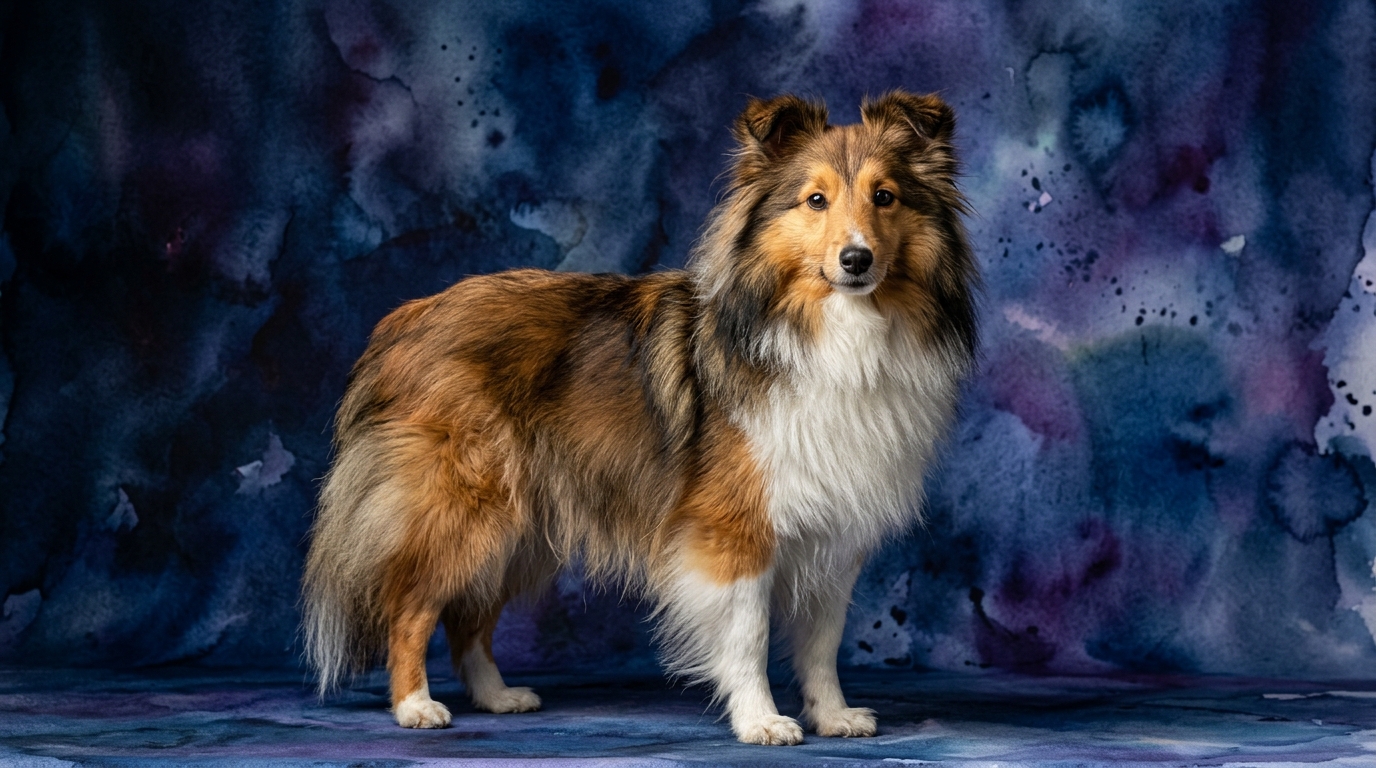
Side-by-Side IQ Profile: Shetland Sheepdog
Shetland Sheepdogs, with their Coren rank of #6, showcase a remarkable blend of cognitive strengths. Their Problem Solving is rated 4/5, indicating a strong capacity for analytical thinking and adaptability in new situations, whether navigating complex agility courses or understanding multi-step commands. Training Speed is an exceptional 5/5; Shelties absorb new commands and routines with impressive rapidity, requiring minimal repetition due to their eagerness to please and sharp focus. Their Social Intelligence, at 4/5, highlights a sophisticated understanding of human communication, body language, and emotions, fostering deep, empathetic bonds. The Instinctive Drive of 5/5 reflects a powerful, innate herding instinct that translates into a strong work ethic and a desire for structured activity. Finally, their Memory is rated 5/5, demonstrating superior recall for commands, routines, and past experiences over long periods, underpinning their consistent performance and rapid learning.
In essence, the Sheltie's cognitive makeup is geared towards cooperative problem-solving, rapid acquisition of knowledge, and nuanced social interaction, all driven by a powerful instinct to engage and work alongside humans.
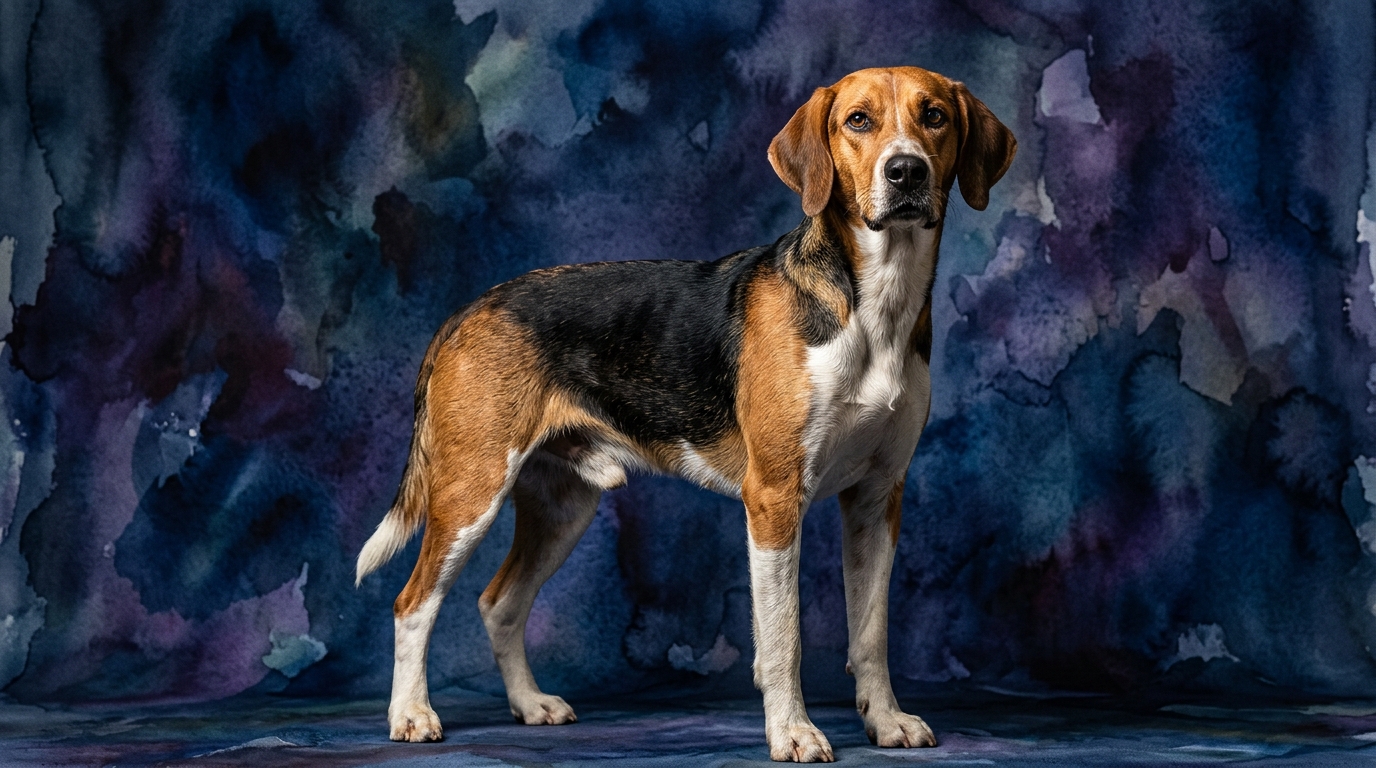
Side-by-Side IQ Profile: English Foxhound
The English Foxhound, while not Coren-ranked, possesses a distinct set of cognitive attributes tailored to its ancestral role as a scent hound. Their Problem Solving is rated 3/5; their cognitive efforts are largely directed towards interpreting and following scent trails, requiring persistence and concentration rather than abstract reasoning. This means they excel at practical, scent-based challenges but may require more repetition for human-defined abstract tasks. Training Speed is 3/5; while capable of learning, their independent nature and powerful olfactory distractions can make sustained focus on human-initiated tasks challenging, demanding patience and consistent, engaging methods. Social Intelligence stands at 3/5; Foxhounds are sociable and thrive in pack environments, yet their social awareness is often directed more towards canine peers and hunt dynamics than the nuanced interpretation of human emotional states seen in herding breeds. Their Instinctive Drive is 3/5, primarily focused on the pursuit of scent, which fuels their endurance and determination in the field, making them relentless trackers. Their Memory is also 3/5, effective for recalling scent trails, familiar territories, and hunting routines, though their attention can be powerfully diverted by an interesting scent, impacting recall for abstract commands.
The English Foxhound’s intelligence is specialized, demonstrating unwavering dedication and robust memory for tasks central to their hunting heritage, rather than general obedience or complex human-directed problem-solving.
Where the Shetland Sheepdog Wins Cognitively
The Shetland Sheepdog's cognitive strengths distinctly outshine the Foxhound's in areas demanding precision, rapid learning, and a tight partnership with a human. Their superior problem-solving (4/5) enables them to quickly grasp intricate sequences in dog sports like agility or rally obedience, where quick thinking and nuanced adjustments are crucial. The Sheltie's remarkable training speed (5/5) means they absorb new concepts and commands with minimal repetition, allowing them to master complex tricks or service tasks efficiently. Furthermore, their highly developed social intelligence (4/5) allows them to interpret human intentions and emotions with impressive accuracy, facilitating seamless communication and a deep, responsive bond. This allows for a proactive, rather than reactive, partnership, where the Sheltie often anticipates a handler's next move, making them exceptional candidates for advanced obedience and cooperative work.
Where the English Foxhound Wins Cognitively
While not excelling in the same cognitive domains as a herding dog, the English Foxhound possesses a unique set of cognitive advantages perfectly suited for its original purpose. Their instinctive drive (3/5) is singularly focused on scent, endowing them with an unparalleled ability to concentrate on a trail for extended periods, ignoring environmental distractions that would overwhelm many other breeds. This involves a specialized form of problem-solving (3/5) where they meticulously analyze scent patterns, make complex decisions about direction, and demonstrate unwavering persistence. Their memory (3/5), while perhaps not for abstract commands, is robust when it comes to scent recognition and terrain, allowing them to track efficiently and effectively over vast distances. The Foxhound's cognitive strengths lie in their unwavering dedication to a scent, demonstrating a relentless mental stamina for a specific, demanding task that few other breeds can match.
Which is Easier to Train and Why
There is a clear distinction in ease of training between these two breeds, primarily driven by their inherent motivations and historical roles. The Shetland Sheepdog, with its 5/5 training speed and 4/5 social intelligence, is generally far more straightforward to train. Shelties were bred to work in close cooperation with shepherds, requiring them to be highly attentive to human cues and eager to please. Their strong instinctive drive (5/5) to herd often translates into a desire for structured activity and a willingness to engage in tasks directed by their human partners. They thrive on mental engagement and positive reinforcement, quickly forming associations between commands and actions, making them highly responsive to consistent training methods.
In contrast, the English Foxhound's training speed (3/5) and social intelligence (3/5) scores reflect a more independent and scent-driven approach. Foxhounds were bred to follow a scent trail autonomously, often ranging far from their human companions and making decisions based on their olfactory senses rather than direct commands. This independent spirit, combined with a powerful instinctive drive (3/5) for tracking, means they can be easily distracted by interesting smells, making sustained focus on obedience a significant challenge. Training an English Foxhound requires immense patience, creativity to make training more engaging than a scent trail, and a deep understanding of their hound nature. Their motivation is often internal, derived from the thrill of the chase or scent, rather than external, such as pleasing a human, which necessitates a different training philosophy.
Which Suits Active Owners vs. Relaxed Owners
Both breeds require active owners, though the *nature* of that activity differs significantly. The Shetland Sheepdog suits owners who are not only physically active but also eager to provide consistent and varied mental stimulation. Their high problem-solving and instinctive drive demand engagement in activities like obedience, agility, trick training, or even herding games. A Sheltie with a relaxed owner who doesn't provide sufficient mental outlets can become bored, potentially leading to undesirable behaviors; they thrive on interactive play and daily learning. Owners who enjoy teaching new things and participating in dog sports will find a Sheltie a fulfilling partner.
The English Foxhound, conversely, demands an owner capable of providing extensive physical exercise, ideally centered around their natural instinct for scent work. A 'relaxed' owner, in the sense of someone who prefers short, infrequent walks, would be ill-suited. Foxhounds are endurance athletes who need ample opportunities to run, explore, and follow scents in secure environments. While they might be content to lounge after a long day, their daily requirement for vigorous physical activity, often for several hours, is non-negotiable. Owners who appreciate long hikes, scent games, or even participation in field trials would be a good match, as their mental stimulation comes more from the challenge of the trail than from intricate puzzle toys or structured obedience classes.
The Verdict
Choose a Shetland Sheepdog if you seek a highly trainable, responsive companion eager for mental challenges, capable of mastering complex tasks, and forming a deeply communicative bond.
Choose an English Foxhound if you are an owner dedicated to providing extensive physical exercise focused on scent work, appreciate an independent spirit, and are prepared for a training journey that respects their powerful natural instincts.
🧠 Find Your Pet's IQ Score
Our Pet IQ Lab assessment covers 25+ tests across 5 cognitive dimensions — personalized to your breed.
Take the Full IQ Test →Frequently Asked Questions
Is a Shetland Sheepdog good for apartment living?
While adaptable, a Shetland Sheepdog needs significant daily mental and physical stimulation to thrive in an apartment. Owners must commit to regular walks, training sessions, and interactive play to prevent boredom and ensure their well-being.
Do English Foxhounds get along with other pets?
English Foxhounds generally have a strong pack mentality and often do well with other dogs. However, their strong prey drive means careful introductions and supervision are necessary with smaller pets like cats or rabbits.
How much exercise does an English Foxhound need daily?
English Foxhounds require a substantial amount of vigorous exercise, typically at least one to two hours daily, ideally involving running or long, scent-driven walks. They are endurance athletes who benefit from secure, expansive areas to explore.