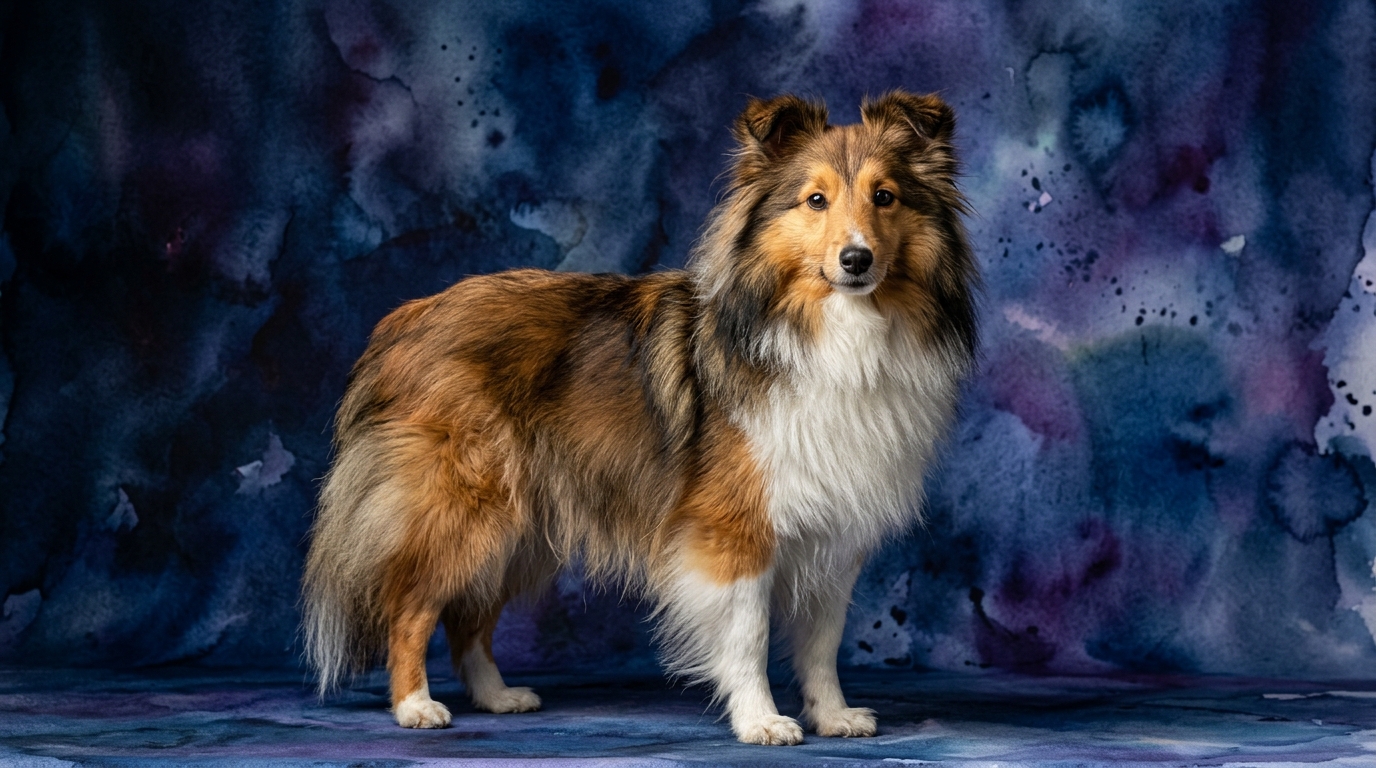
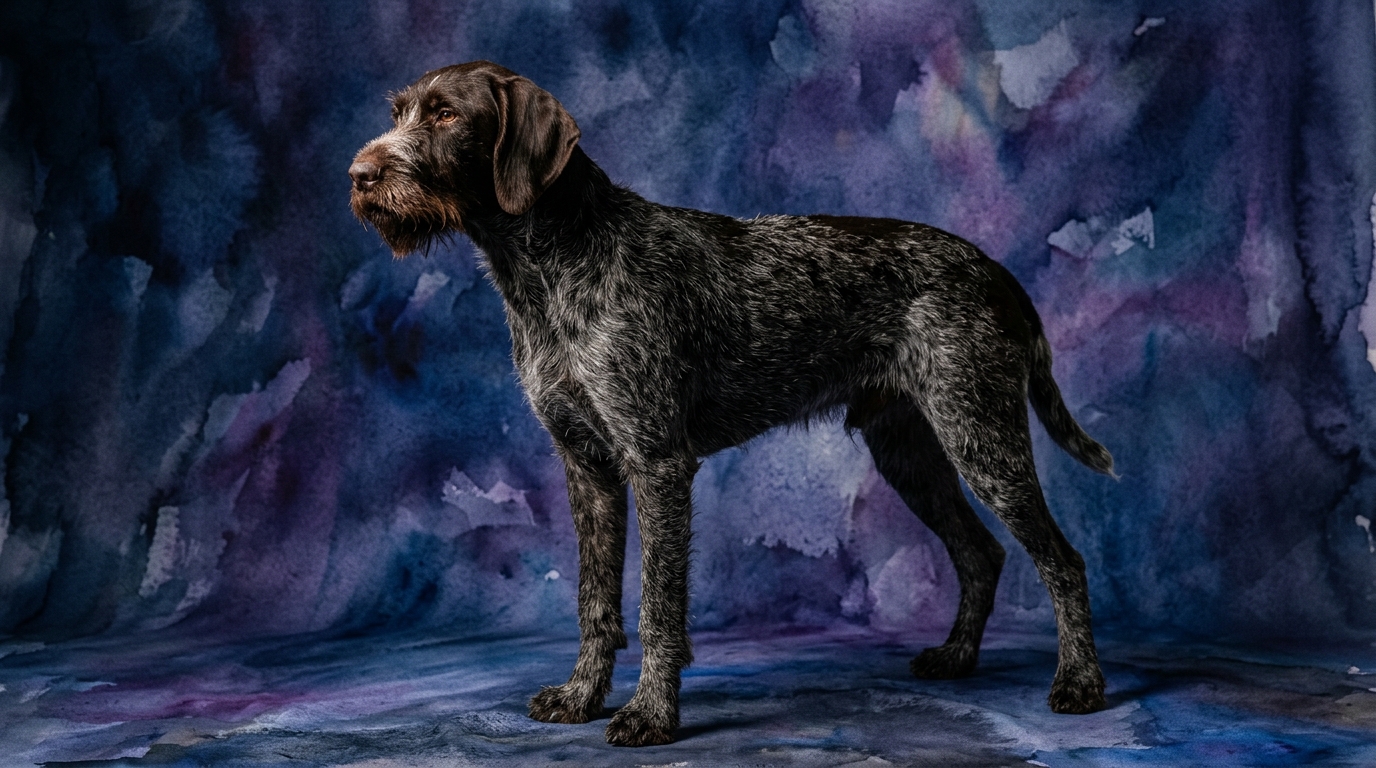
Side-by-side IQ profile
Shetland Sheepdog: Ranked #6 by Coren, the Shetland Sheepdog exhibits a robust cognitive profile. Their Problem Solving score of 4/5 indicates a strong capacity for independent thought and navigating complex situations, while an exceptional Training Speed of 5/5 highlights their readiness to absorb and execute commands swiftly. Social Intelligence, at 4/5, suggests a nuanced understanding of human cues and group dynamics, essential for their herding heritage. An Instinctive Drive of 5/5 underscores their powerful innate urges, particularly for herding, and their Memory score of 5/5 signifies an impressive ability to retain learned information and experiences over time.
German Wirehaired Pointer: The German Wirehaired Pointer, with a Coren rank of #28, presents a capable, specialized cognitive makeup. Matching the Sheltie with a Problem Solving score of 4/5, these dogs demonstrate effective independent decision-making, crucial for their hunting tasks. Their Training Speed of 4/5 indicates a good pace for learning, though slightly less rapid than the Sheltie. Social Intelligence, at 3/5, suggests a functional understanding of interactions, primarily focused on their working partnership. An Instinctive Drive of 3/5 points to a moderate but focused urge for hunting behaviors, and their Memory score of 4/5 indicates good retention of training and experiences.
Where Shetland Sheepdog wins cognitively
The Shetland Sheepdog's cognitive strengths distinctly outshine the German Wirehaired Pointer in several key areas. Their superior Training Speed of 5/5 compared to the GWP's 4/5 means Shelties typically grasp new commands and routines with remarkable alacrity, often requiring fewer repetitions to achieve mastery. This rapid acquisition of knowledge is a hallmark of their breed and a significant advantage in competitive obedience or complex skill training. Furthermore, the Sheltie's Social Intelligence, rated at 4/5, surpasses the GWP's 3/5, indicating a more profound ability to interpret human body language, vocal inflections, and emotional states. This heightened social awareness contributes to their reputation as empathetic companions and makes them highly responsive to subtle cues from their handlers. Their Instinctive Drive, at a compelling 5/5 versus the GWP's 3/5, reflects a deep-seated and persistent urge to perform their ancestral herding duties, which translates into a strong desire for engagement and a natural inclination towards structured tasks. Lastly, the Sheltie's perfect Memory score of 5/5, exceeding the GWP's 4/5, ensures that once a lesson is learned or an experience is had, it is retained with impressive fidelity, making their training durable and their recall of past events sharp. These combined factors solidify the Sheltie's position as a breed with a broad and highly adaptable cognitive toolkit.
Where German Wirehaired Pointer wins cognitively
While the German Wirehaired Pointer may not outscore the Shetland Sheepdog in as many individual metrics, its cognitive profile is uniquely tailored for its demanding role, particularly shining in its specific application of problem-solving. Both breeds share an impressive Problem Solving score of 4/5, but the GWP's cognitive strength in this area is channeled into the complex, dynamic challenges of field work. This involves independently tracking scent, navigating varied terrain, flushing game, and retrieving, often without direct, immediate human instruction. Their problem-solving isn't just about figuring out a puzzle box; it's about making real-time, critical decisions in a constantly changing environment, prioritizing sensory input, and adapting strategies to secure game. This requires a specific type of cognitive flexibility and initiative that is highly valued in a hunting companion. While their Instinctive Drive is rated 3/5 compared to the Sheltie's 5/5, this moderate drive is intensely focused on their quarry, allowing them to maintain concentration on a task for extended periods without being overly prone to the generalized high-energy demands seen in some other working breeds. Their cognitive process is geared towards efficient, purposeful action in their specialized field, making them exceptionally adept at their designated tasks. The GWP's mental acuity is thus defined by its practical, independent application in the field, where self-reliance and intelligent decision-making are paramount.
Which is easier to train and why
When ease of training is the primary consideration, the Shetland Sheepdog generally holds an advantage due to its exceptional Training Speed score of 5/5 compared to the German Wirehaired Pointer's 4/5. Shelties are remarkably eager to learn and grasp new commands with impressive rapidity. Their herding heritage instilled a strong desire for collaborative work with a handler, making them highly receptive to instruction and quick to form associations. This translates into fewer repetitions needed during training sessions and faster progression through various obedience levels. Their high Social Intelligence (4/5) further aids this, allowing them to readily interpret a trainer's intentions and adapt their behavior, often anticipating expectations.
The German Wirehaired Pointer, while capable with a 4/5 Training Speed, may require more patience and consistency. Their hunting background means their attention can sometimes be drawn more towards environmental stimuli like scent or movement than solely on the handler. While proficient at learning complex tasks, their training often benefits from incorporating elements that engage their natural hunting instincts, making the process more rewarding. Their moderate Social Intelligence (3/5) suggests they might not be as finely tuned to subtle human cues, necessitating clearer communication. For owners prioritizing swift, relatively effortless command acquisition, the Shetland Sheepdog typically offers a smoother training experience.
Which suits active owners vs relaxed owners
Determining suitability for active versus relaxed owners hinges on how each breed's instinctive drive manifests. The Shetland Sheepdog, with its powerful Instinctive Drive of 5/5, thrives on constant mental and physical engagement, a legacy of its herding past. These dogs require owners who are prepared for daily structured activities, dog sports like agility, or regular training sessions that challenge their agile minds and bodies. Unchanneled, this high drive can lead to behaviors such as excessive barking or “herding” family members. Thus, Shelties are best for highly interactive, active households committed to providing their dog with a consistent “job.”
Conversely, the German Wirehaired Pointer, with an Instinctive Drive of 3/5, possesses a more focused drive primarily geared towards hunting tasks. They need robust physical exercise, such as long runs or field work, to be content. Once their significant physical needs are met, particularly their desire to explore and utilize their keen nose, GWPs can be surprisingly calm and settled indoors. They typically don't demand the same pervasive mental “work” as a Sheltie outside of their specific hunting-related activities. Therefore, a GWP suits an active owner who enjoys substantial outdoor adventures and can provide ample physical outlets, but who also appreciates a dog that can relax once its exercise requirements are fulfilled. Neither breed is for truly relaxed owners, but the Sheltie demands more constant mental engagement from its owner.
The Verdict
Choose the Shetland Sheepdog if you seek a highly trainable, socially attuned companion eager for constant mental challenges and collaborative work, excelling in obedience and dog sports.
Opt for the German Wirehaired Pointer if you desire a robust, independent working partner for outdoor adventures, particularly hunting, appreciating a dog that settles once its significant physical needs are met.
🧠 Find Your Pet's IQ Score
Our Pet IQ Lab assessment covers 25+ tests across 5 cognitive dimensions — personalized to your breed.
Take the Full IQ Test →Frequently Asked Questions
Does a higher Coren rank always mean a “smarter” dog for every task?
Not necessarily; while Coren ranks indicate general working and obedience intelligence, a breed's suitability often depends on the specific task. A breed with a lower rank might excel in specialized areas like scent work or instinctual tasks where its cognitive profile is perfectly aligned.
How does "Instinctive Drive" differ between these two breeds despite their working origins?
The Sheltie's 5/5 Instinctive Drive points to a pervasive urge for herding, requiring constant mental engagement, whereas the GWP's 3/5 indicates a more focused, yet powerful, drive specifically for hunting tasks like tracking and retrieving. This means their “work ethic” manifests differently.
Can a German Wirehaired Pointer learn complex tricks as well as a Shetland Sheepdog?
While a GWP (Training Speed 4/5) is certainly capable of learning complex tricks, a Sheltie (Training Speed 5/5) will typically pick them up faster and with fewer repetitions due to their exceptional trainability and eagerness to please.