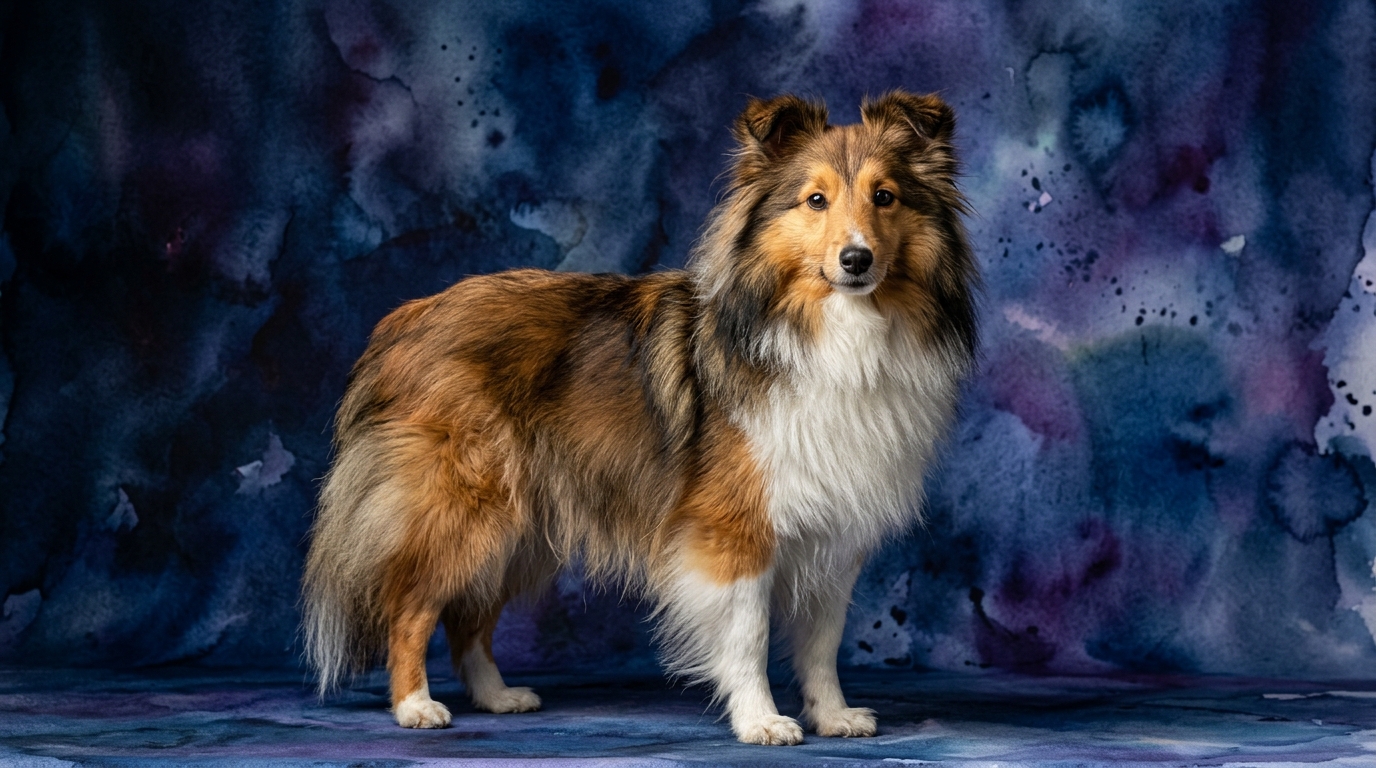
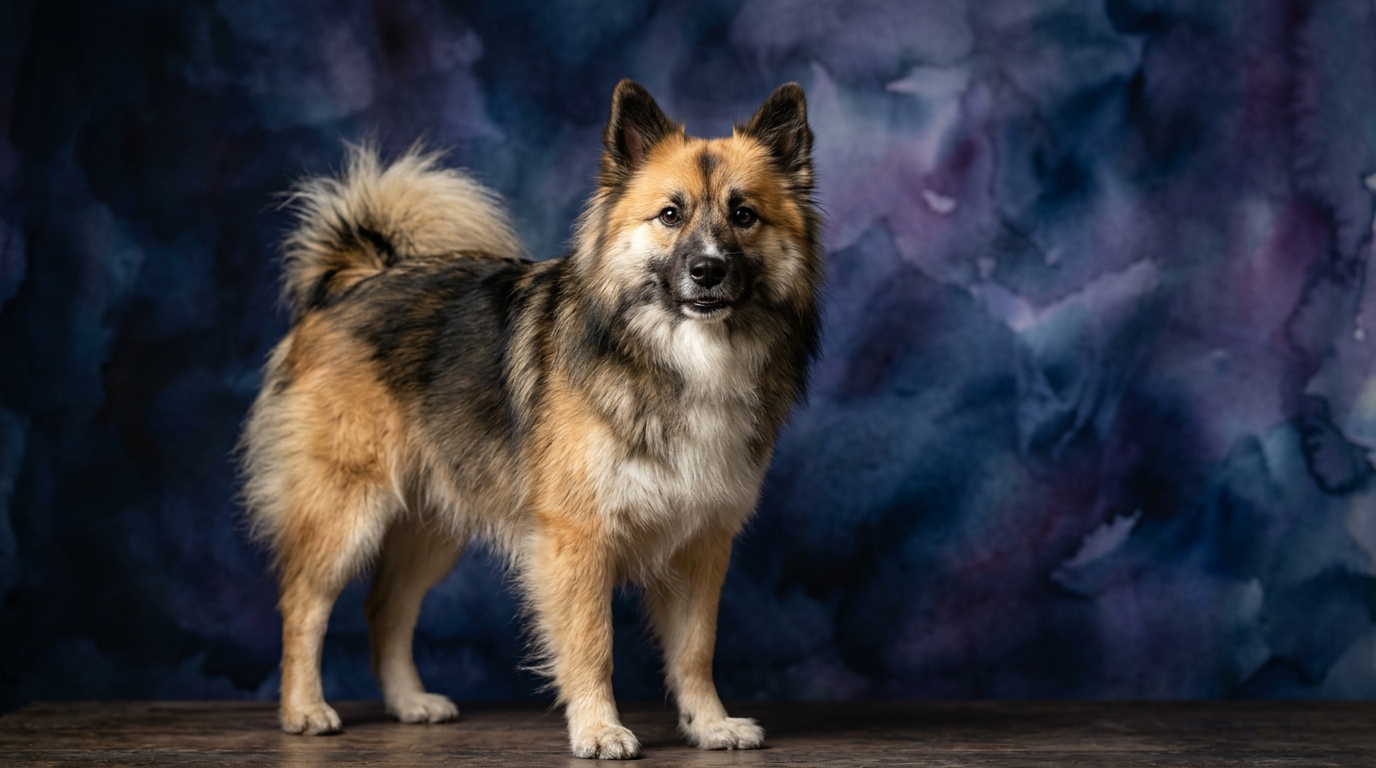
Side-by-Side Cognitive Profiles: Shetland Sheepdog vs. Icelandic Sheepdog
To understand the unique cognitive makeup of these two breeds, The Cosmic Pet Pet IQ Lab provides a detailed breakdown across five crucial dimensions:
**Shetland Sheepdog (Coren Rank #6):** This breed demonstrates a remarkable aptitude across the board. Their **Problem Solving (4/5)** indicates a strong capacity to analyze novel situations and devise solutions, often figuring out how to open latches or navigate complex obstacles without explicit instruction. Their cognitive flexibility allows them to adapt quickly to changing environments. With a **Training Speed (5/5)**, Shelties are exceptionally quick learners, often grasping new commands and complex sequences in just a few repetitions. This rapid acquisition makes them highly receptive to advanced obedience, agility, and other dog sports. Their **Social Intelligence (4/5)** is well-developed, allowing them to interpret human cues, moods, and intentions, often anticipating their owner's next move and responding sensitively to emotional nuances, fostering a deep, communicative bond. The Sheltie’s **Instinctive Drive (5/5)** to herd is profound, manifesting as a keen desire to gather and control movement, a powerful asset in structured training and working roles. Finally, with an outstanding **Memory (5/5)**, Shelties retain learned behaviors, routes, and associations over long periods, contributing significantly to their training retention and ability to perform intricate, multi-step tasks reliably.
**Icelandic Sheepdog (Not Coren-Ranked):** This breed presents a consistent and charming cognitive profile. Their **Problem Solving (3/5)** suggests a moderate ability to solve problems, often relying on learned strategies rather than quickly innovating new ones. They can navigate challenges but may require more guidance or trial-and-error to find solutions. In terms of **Training Speed (3/5)**, these dogs learn at a steady pace, requiring consistent repetition and clear, positive reinforcement to solidify new commands. While capable of learning a wide range of behaviors, their acquisition rate is more deliberate than rapid. Icelandic Sheepdogs are generally attuned to human interaction and social cues with a **Social Intelligence (3/5)**, forming strong bonds and understanding routines, though perhaps less acutely than some other breeds in reading subtle emotional shifts. Their **Instinctive Drive (3/5)** for herding is present but often expressed with less intensity than breeds specifically bred for high-drive work, making them adaptable companions who enjoy activity without an overwhelming urge to control movement in a domestic environment. Finally, Icelandic Sheepdogs possess a functional **Memory (3/5)** for commands and routines, retaining information with consistent practice, though they might need occasional refreshers for less frequently performed tasks compared to breeds with higher memory scores.
Where the Shetland Sheepdog Excels Cognitively
The Shetland Sheepdog clearly excels across several cognitive dimensions, particularly in training speed and memory. Their ability to acquire new commands almost instantly (5/5 training speed) means they can master a vast repertoire of cues, from basic obedience to complex agility sequences, with remarkable efficiency. This rapid learning is synergistically supported by their exceptional memory (5/5), allowing them to retain intricate routines and past lessons over extended periods. For instance, a Sheltie can learn a multi-stage trick or an agility course layout in fewer repetitions and perform it reliably months later, demonstrating a profound capacity for long-term retention. Their 4/5 problem-solving skill further means they're not just rote learners; they can apply learned principles to novel situations, like figuring out a new puzzle toy or adapting a known command to a different context. This combination makes them exceptionally versatile and capable of sophisticated behavioral output.
Where the Icelandic Sheepdog Shows Unique Strengths
While the Icelandic Sheepdog's scores are consistently at 3/5, this profile offers unique advantages, particularly for owners seeking a companion with a specific cognitive rhythm. Their moderate instinctive drive (3/5) means they possess the desirable work ethic of a herding breed without the intense, often overwhelming, compulsion to gather and control movement that can be challenging in a pet home. This translates into a dog less likely to 'herd' children or other pets with high energy, fostering a more relaxed inter-species dynamic. Furthermore, their steady training speed (3/5) encourages a patient, consistent training approach, which can build a very robust and reliable foundation over time, even if it takes more repetitions initially. This deliberate learning style can result in deeply ingrained behaviors that are less prone to breaking down under pressure, as the dog has truly processed and solidified the information at its own pace. Their social intelligence, while not hyper-acute, is perfectly suited for forming strong, affectionate family bonds without exhibiting overly anxious or demanding behaviors based on subtle human emotional shifts.
Ease of Training: Behavioral Differences
Without question, the Shetland Sheepdog presents as the easier breed to train, primarily due to their stellar training speed (5/5) and memory (5/5). A Sheltie typically picks up new verbal cues and hand signals with just a handful of repetitions, often eager to offer behaviors or anticipate the next command. For instance, teaching a Sheltie 'stay' might involve a few short sessions before they reliably hold the position, even with distractions. Their strong desire to work and please, combined with their ability to quickly process and retain information, makes them highly responsive to positive reinforcement and eager participants in training sessions. In contrast, the Icelandic Sheepdog, with a training speed and memory score of 3/5, requires a more patient and consistent approach. They will learn, but it takes more repetitions and a slower progression through training stages. An Icelandic Sheepdog might need numerous sessions to reliably master 'stay' across different environments, and they might not generalize commands as quickly. Their learning process is more akin to a steady, thoughtful absorption rather than a rapid acquisition, demanding greater persistence and clarity from their trainer.
Matching Breeds to Lifestyles: Active vs. Relaxed Owners
The distinct cognitive profiles of these two breeds naturally align with different owner lifestyles. The Shetland Sheepdog, with its 5/5 instinctive drive, training speed, and memory, coupled with 4/5 problem-solving and social intelligence, is an ideal match for active owners who relish engaging in structured activities. These dogs thrive when given opportunities for advanced obedience, agility, herding trials, or even complex trick training, leveraging their rapid learning and exceptional retention. Their cognitive energy needs consistent outlets, meaning owners who can dedicate time to daily training sessions, puzzle toys, and mental enrichment will see their Sheltie flourish. Conversely, the Icelandic Sheepdog, with its consistent 3/5 scores across all cognitive dimensions, is better suited for owners who appreciate a more relaxed, yet still active, companionship. While they enjoy walks and play, their moderate instinctive drive and deliberate learning pace mean they aren't constantly seeking intensive mental challenges. They are content with consistent, gentle training and enjoy being part of family activities without the pressure of needing to master complex routines. Owners looking for a steady, affectionate companion who enjoys outdoor adventures but isn't demanding of constant, high-level cognitive engagement would find a wonderful partner in an Icelandic Sheepdog.
The Verdict
Choose the Shetland Sheepdog if you are an owner eager to engage in advanced training, dog sports, or other mentally demanding activities, valuing a partner who learns with exceptional speed and retains complex information.
Opt for the Icelandic Sheepdog if you prefer a companion with a more moderate cognitive drive, who thrives on consistent, patient training and affectionate family integration without the intense demand for constant, high-level mental stimulation.
🧠 Find Your Pet's IQ Score
Our Pet IQ Lab assessment covers 25+ tests across 5 cognitive dimensions — personalized to your breed.
Take the Full IQ Test →Frequently Asked Questions
Do Shetland Sheepdogs require more exercise than Icelandic Sheepdogs?
While both are active herding breeds, Shetland Sheepdogs often require more *mental* exercise alongside physical activity due to their higher cognitive drive and training speed. Icelandic Sheepdogs need regular physical outlets but might not demand the same level of complex cognitive engagement daily.
Are Icelandic Sheepdogs harder to live with because their IQ scores are lower?
Not at all. Lower IQ scores simply indicate a different cognitive style, not a deficiency in companionship. Icelandic Sheepdogs are affectionate and adaptable, but they may require more patience in training and might not pick up on subtle cues as quickly as a Sheltie.
Can an Icelandic Sheepdog still participate in dog sports?
Absolutely. While their training speed is 3/5, Icelandic Sheepdogs are capable learners and can excel in dog sports like agility or obedience with consistent, positive training. They may progress at a more deliberate pace than a Sheltie, but their dedication and willingness to work are strong assets.