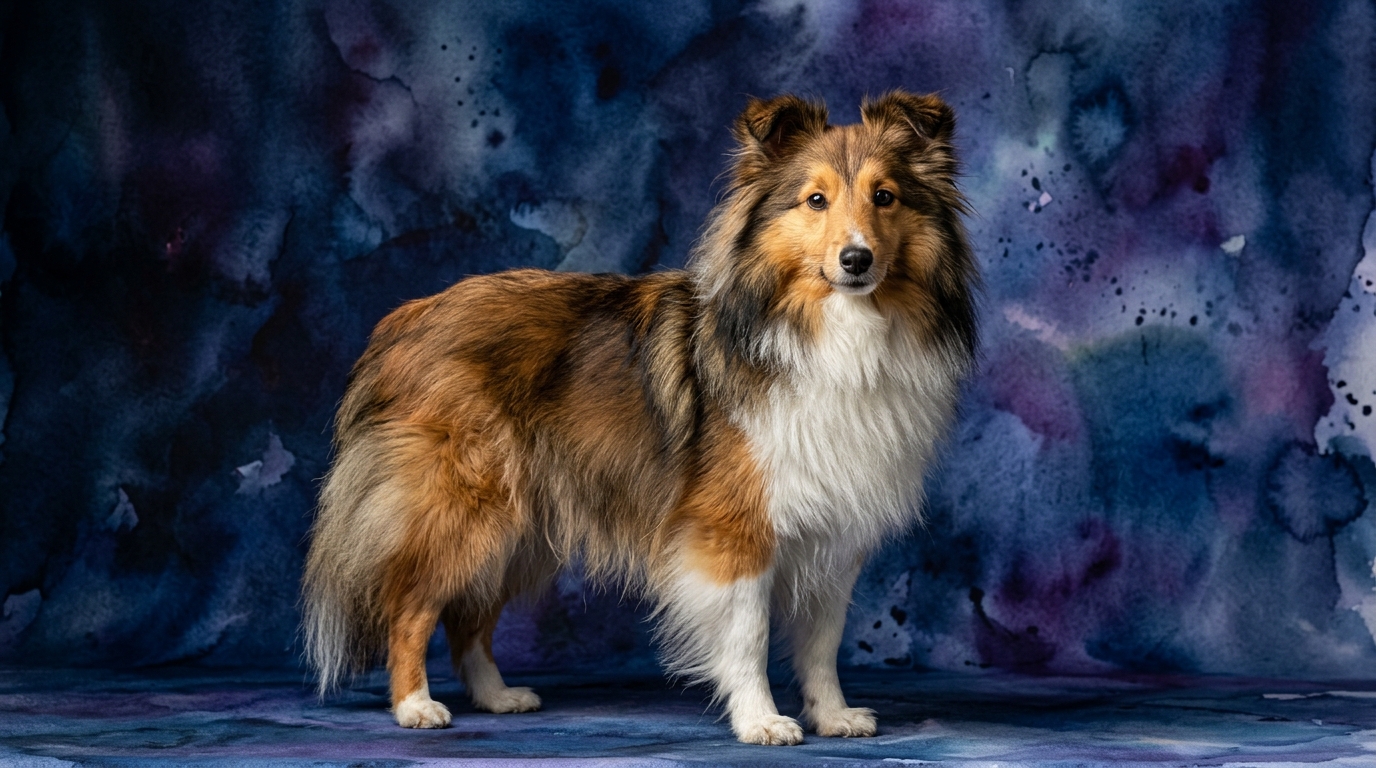
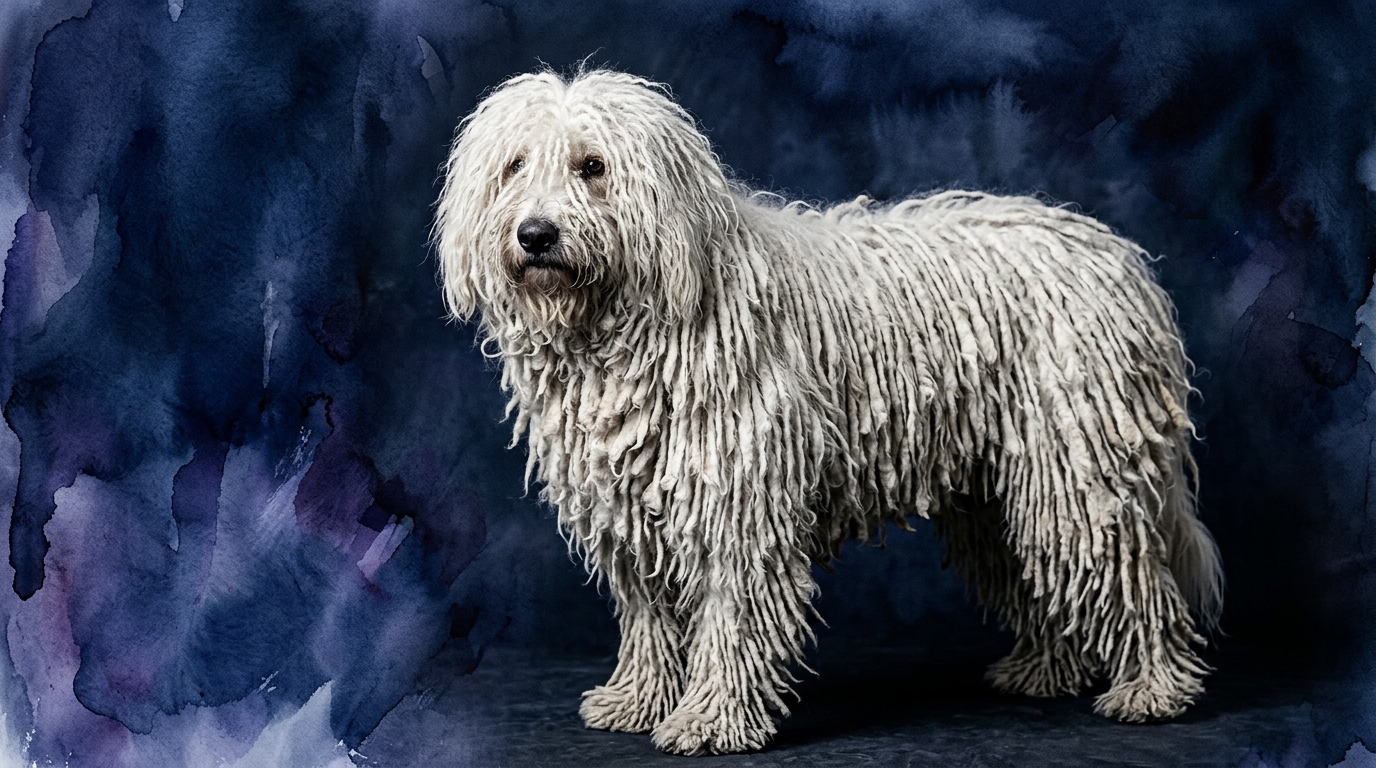
Side-by-Side IQ Profile: Shetland Sheepdog vs. Komondor
At The Cosmic Pet Pet IQ Lab, we evaluate canine intelligence across five key dimensions, providing a nuanced understanding of each breed's cognitive strengths. Here's how the Shetland Sheepdog and Komondor compare:
**Shetland Sheepdog (Herding Group, Coren Rank #6)**
**Problem Solving (4/5):** These agile thinkers excel at navigating complex situations, whether it's figuring out a new puzzle toy or strategizing during a herding trial. Their cognitive flexibility allows them to quickly adapt their approach and innovate solutions.
**Training Speed (5/5):** Shetland Sheepdogs absorb new commands and behaviors with remarkable alacrity, often needing just a few repetitions to grasp a concept. Their inherent desire to work with their handler makes them exceptionally responsive and quick to learn.
**Social Intelligence (4/5):** Highly attuned to human emotions and subtle cues, Shelties form deep, empathetic bonds. They often anticipate their owner's moods and needs, displaying a keen understanding of social dynamics within their family unit.
**Instinctive Drive (5/5):** Their robust herding instincts manifest as a powerful desire to gather, chase, and control movement. This drive, if properly channeled, provides immense motivation for training and interactive activities, showcasing their focused energy.
**Memory (5/5):** With outstanding recall for commands, routines, and past experiences, Shelties demonstrate a capacity for retaining vast amounts of information. This exceptional memory underpins their advanced trainability and ability to perform complex sequences with precision.
**Komondor (Working Group, Coren Rank #67)**
**Problem Solving (3/5):** Komondors possess a specialized form of problem-solving centered on independent decision-making in guardian roles. They are adept at assessing threats and responding autonomously, though less inclined towards abstract puzzles or rapid environmental adaptation compared to herding breeds.
**Training Speed (3/5):** While capable of learning, Komondors often require more patience and consistent repetition due to their independent and self-reliant nature. They tend to evaluate commands based on their perceived utility rather than offering immediate, eager compliance.
**Social Intelligence (3/5):** Their social intelligence is primarily geared towards protective vigilance, forming deep, unwavering bonds with their immediate family but remaining reserved or aloof with strangers. They are observant of their inner circle but less outwardly demonstrative.
**Instinctive Drive (3/5):** The Komondor's primary instinctive drive is guarding livestock and property, manifesting as watchful vigilance and territorial protection. This drive is a steady, pervasive commitment rather than a high-energy, chase-oriented impulse.
**Memory (3/5):** Komondors retain learned behaviors and recognize familiar individuals and routines, contributing to their reliability as guardians. However, their independent streak means their recall might appear less immediate compared to breeds bred for close cooperation and swift obedience.
Where the Shetland Sheepdog Wins Cognitively
The Shetland Sheepdog's cognitive strengths are particularly evident in dynamic, interactive scenarios. Their superior problem-solving ability, rated at 4/5, allows them to excel in complex tasks, like navigating intricate agility courses or figuring out multi-step puzzle toys. This isn't just about finding a solution, but often about finding the most efficient or elegant one, demonstrating genuine strategic thinking.
Paired with a 5/5 training speed and memory, Shelties absorb new information with astonishing alacrity, mastering advanced obedience commands and elaborate trick sequences in fewer repetitions than many other breeds. Their capacity for rapid skill acquisition makes them standouts in competitive dog sports and highly adaptable working roles.
Furthermore, their 4/5 social intelligence translates into a nuanced understanding of human emotions and intentions, making them exceptionally empathetic companions who often anticipate their owner's needs and respond with finely tuned behavioral adjustments. This makes them highly suitable for roles requiring close partnership and communication, such as therapy work or competitive dog sports where precise execution and understanding are paramount. Their 5/5 instinctive drive for herding is also a cognitive asset, providing a powerful, inherent motivation for focused work and a natural aptitude for strategic thinking in movement control, allowing them to excel in tasks that require quick, on-the-fly decisions.
Where the Komondor Wins Cognitively
The Komondor's cognitive profile, while different from the Sheltie's, showcases a specialized intellect forged by centuries of independent guardian work. Their problem-solving, rated 3/5, is specifically tailored for autonomous decision-making in protective situations. A Komondor doesn't wait for a command to assess a potential threat to its flock or family; it evaluates the situation and acts decisively based on its own judgment, a critical cognitive strength for a livestock guardian.
This independent streak, which contributes to their 3/5 training speed, paradoxically becomes an advantage in their primary role, allowing them to remain steadfast and unswayed by distractions when vigilance is required. They possess a mental fortitude that resists external pressures, prioritizing their protective duties above all else. Their 3/5 social intelligence, while not outwardly effusive, is deeply focused on discerning friend from foe within their territory, exhibiting a continuous, low-key cognitive load dedicated to security and assessing social cues within their immediate sphere of influence. This subtle social awareness is crucial for their protective efficacy.
The Komondor's 3/5 instinctive drive is not about rapid, high-energy pursuits, but rather a profound, enduring commitment to their guardian duties, demonstrating a cognitive endurance and unwavering purpose that few breeds possess. They excel at sustained, watchful observation and strategic territorial defense over long periods, a testament to their unique mental architecture that prioritizes unwavering protection over quick, varied responses.
Which is Easier to Train and Why
When it comes to ease of training, the Shetland Sheepdog significantly outperforms the Komondor, a direct reflection of their respective breed purposes and cognitive profiles. The Sheltie's 5/5 training speed and 5/5 memory mean they grasp new commands and complex routines almost effortlessly, often eager to please their handler. Their high social intelligence (4/5) further enhances this, as they are acutely aware of their owner's cues and intentions, responding with enthusiasm to positive reinforcement.
For instance, a Sheltie can typically learn a multi-step agility sequence or a new trick in a handful of sessions, retaining it for the long term with minimal refreshers. Their strong instinctive drive for herding, when channeled into training, manifests as focus and a desire for a 'job,' making them highly biddable and cooperative partners in learning.
In contrast, the Komondor's 3/5 training speed and memory, coupled with their inherent independence, means training requires considerably more patience and consistency. Bred to make autonomous decisions as guardians, they are less inclined to offer immediate, unthinking obedience. A Komondor often weighs a command against its own judgment or perceived utility, and if it doesn't align with their protective instincts or seems unnecessary, compliance may be slow or absent. Teaching a Komondor a new behavior might involve many more repetitions and a deeper understanding of their guardian mindset, focusing on building a trusting relationship where they choose to comply rather than simply obeying. Their social intelligence, while present, is not geared towards eager compliance but rather watchful assessment and independent action.
Which Suits Active Owners vs. Watchful Owners
The choice between a Shetland Sheepdog and a Komondor also hinges significantly on an owner's lifestyle and their preferred level of interaction and activity. Shetland Sheepdogs, with their high instinctive drive (5/5) and need for mental stimulation, thrive with active, engaged owners. They are ideal companions for individuals or families who enjoy participating in dog sports like agility, obedience, or flyball, or who can provide consistent, challenging mental games and regular, vigorous exercise. A Sheltie's sharp mind and energetic nature mean they require daily outlets for their cognitive and physical prowess; an owner who is 'relaxed' in the sense of providing minimal mental engagement or physical activity might find their Sheltie becoming bored, vocal, or developing undesirable behaviors due to unfulfilled needs.
Conversely, the Komondor's suitability for 'relaxed' owners is nuanced. While they are not high-energy in the sense of needing constant running, their role as a guardian demands a specific kind of engagement. They suit owners who appreciate a dog's independent purpose and watchful demeanor, and who can provide a secure environment for them to fulfill their protective duties. A Komondor's activity is often localized vigilance, calmly monitoring its territory and assessing its surroundings. A truly 'relaxed' owner who neglects their Komondor's need for purpose and family integration would be just as problematic as with a Sheltie, though the manifestations of neglect would differ, perhaps leading to excessive aloofness, suspicion, or an inability to trust. They are not a low-maintenance breed, but their activity involves more mental oversight and territorial patrolling than strenuous physical exertion.
The Verdict
Choose a Shetland Sheepdog if you are seeking an exceptionally trainable, highly responsive, and interactive companion eager to participate in dog sports, advanced obedience, or engage in a consistently stimulating family life.
Choose a Komondor if you are looking for a dedicated, independent guardian with a profound protective instinct, and are prepared to understand and respect a dog that values its autonomy and specialized role.
🧠 Find Your Pet's IQ Score
Our Pet IQ Lab assessment covers 25+ tests across 5 cognitive dimensions — personalized to your breed.
Take the Full IQ Test →Frequently Asked Questions
Is a Shetland Sheepdog a good choice for first-time dog owners?
Yes, their high trainability and eagerness to please often make Shetland Sheepdogs a good choice for first-time dog owners, provided they are prepared for the breed's significant mental and physical exercise requirements. They respond exceptionally well to consistent positive reinforcement and clear guidance, making the learning process rewarding for both dog and owner.
How much daily exercise does a Komondor typically need?
Komondors do not require the intense, high-impact exercise of some working breeds; their activity is often more about patrolling and watchful vigilance of their territory. Daily walks and opportunities to move around a secure yard are usually sufficient, focusing more on mental engagement with their guardian role than strenuous physical exertion.
Can a Komondor adapt to apartment living?
Generally, Komondors are not ideally suited for apartment living due to their size, their need for a secure territory to guard, and their independent nature. They thrive in environments with ample space, ideally a fenced yard, where they can fulfill their instinctive desire to monitor and protect their surroundings effectively.