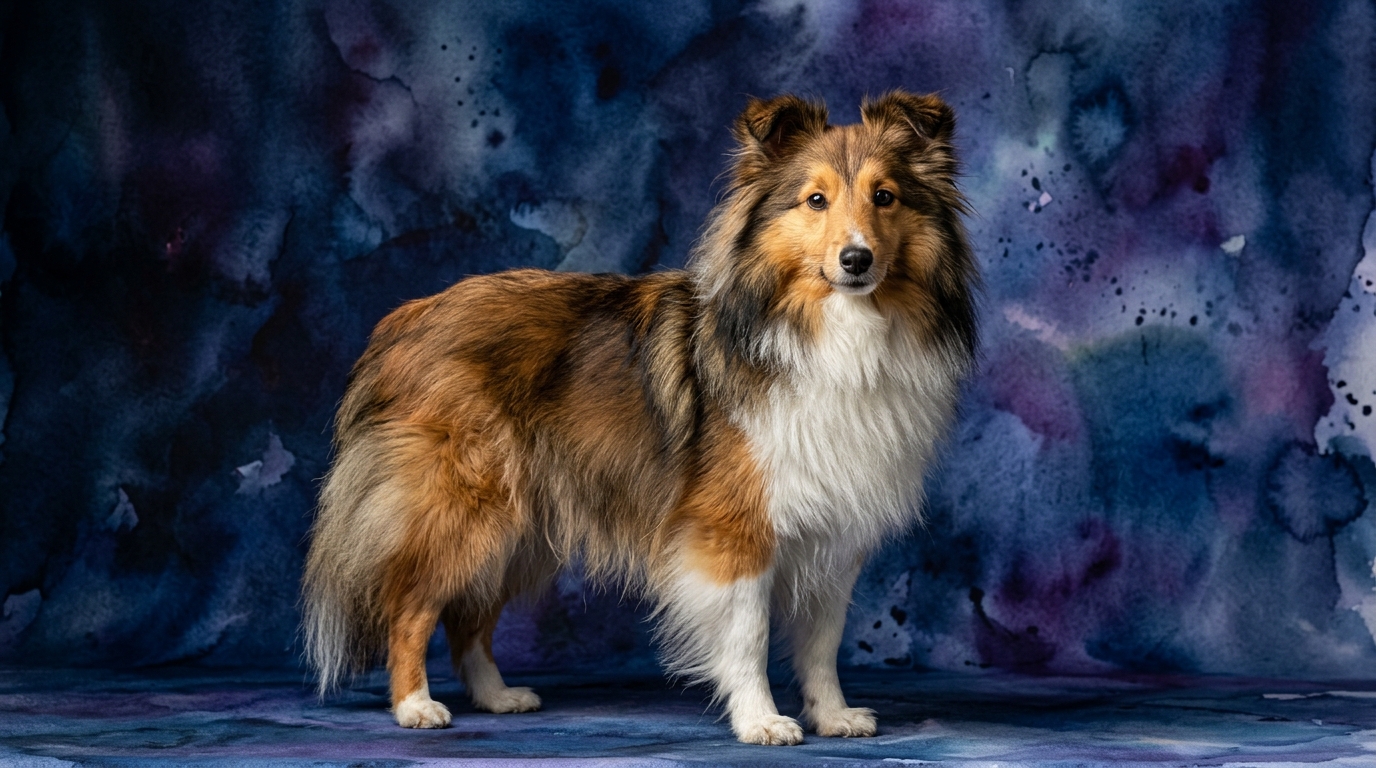
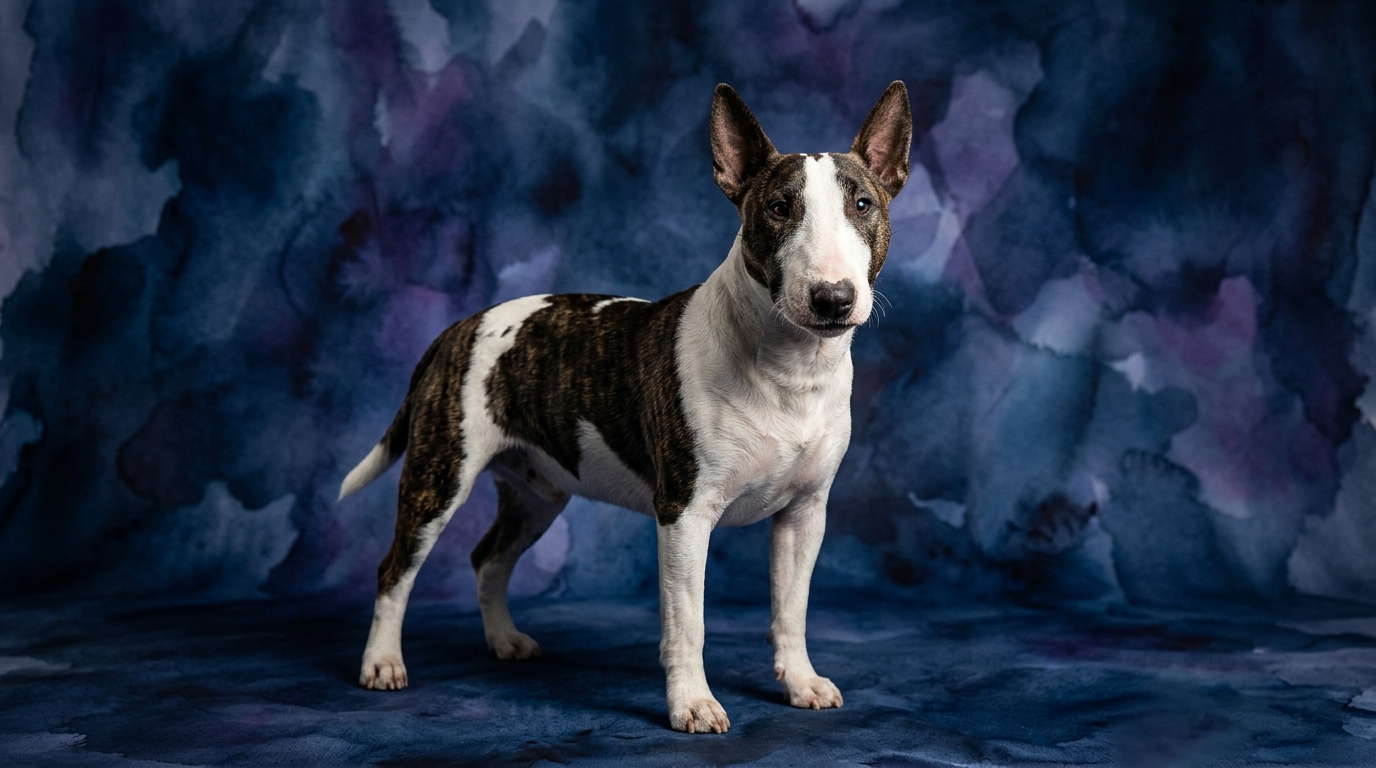
Side-by-Side IQ Profile: Shetland Sheepdog vs. Miniature Bull Terrier
The Cosmic Pet Pet IQ Lab employs a five-dimensional framework to assess canine cognition, offering a granular view of each breed's mental strengths. Here's how the Shetland Sheepdog and Miniature Bull Terrier compare:
**Shetland Sheepdog (Herding Group, Coren Rank #6):** Problem Solving: 4/5, Training Speed: 5/5, Social Intelligence: 4/5, Instinctive Drive: 5/5, Memory: 5/5
**Miniature Bull Terrier (Terrier Group, Not Coren-ranked):** Problem Solving: 3/5, Training Speed: 3/5, Social Intelligence: 3/5, Instinctive Drive: 3/5, Memory: 3/5
**Shetland Sheepdog Cognitive Dimensions:**
**Problem Solving (4/5):** Shelties excel at analyzing novel situations and devising effective strategies. Their herding background promotes adaptability, allowing them to figure out puzzle toys, open latches, or navigate complex tasks with clear purpose.
**Training Speed (5/5):** Exceptional learners, Shelties grasp new commands quickly, often requiring minimal repetitions. This rapid uptake stems from their innate desire to work collaboratively, making them highly responsive to consistent positive reinforcement.
**Social Intelligence (4/5):** Shelties are adept at reading human cues and body language, often anticipating owner intentions. They form strong, empathetic bonds, responding sensitively to household moods and showing good awareness of other animals with proper socialization.
**Instinctive Drive (5/5):** Driven by a powerful herding instinct, Shelties possess an innate desire to gather and manage. This manifests as keen awareness of movement, a tendency to "herd" family members, and a strong sense of purpose when given a task.
**Memory (5/5):** With outstanding memory, Shelties retain learned behaviors and commands over long periods, even after training breaks. They remember people, places, and routines with remarkable clarity, ensuring consistent performance and adaptability.
**Miniature Bull Terrier Cognitive Dimensions:**
**Problem Solving (3/5):** Miniature Bull Terriers approach problems with tenacity rather than immediate strategic brilliance. Their method is often persistent trial-and-error, requiring more time and less nuanced observation compared to breeds with higher scores.
**Training Speed (3/5):** Minibulls learn at a moderate pace, often requiring more patience and consistent repetition to solidify commands. Their independent terrier spirit demands stronger motivation and a creative trainer to maintain engagement and focus.
**Social Intelligence (3/5):** Minibulls possess moderate social intelligence. They bond deeply with family but can be reserved or less attuned to social cues from strangers or other dogs without careful socialization. Their affection is often direct and enthusiastic.
**Instinctive Drive (3/5):** While lacking herding drive, Minibulls retain a moderate terrier drive, manifesting as persistent curiosity, a strong prey drive, and a desire to dig. This drive leans towards independent exploration and pursuit rather than collaborative work.
**Memory (3/5):** Miniature Bull Terriers have functional memory, retaining learned behaviors and routines. However, they may not recall information with the same precision or over extended periods as a Sheltie. Consistency in training reinforces their memory patterns effectively.
Where the Shetland Sheepdog Wins Cognitively
The Sheltie's cognitive profile showcases a dog built for complex engagement. Their superior problem-solving (4/5) enables them to apply learnings to new situations, quickly deducing how to manipulate puzzle toys or understand multi-step command sequences. Their top-tier training speed (5/5) means they grasp new skills almost effortlessly, making advanced obedience or agility a rewarding experience. This rapid learning, combined with exceptional memory (5/5), ensures learned behaviors stick, allowing for a vast, consistent repertoire. Furthermore, high social intelligence (4/5) makes them incredibly attuned to humans, often anticipating needs, making them remarkably intuitive and empathetic partners.
Where the Miniature Bull Terrier Wins Cognitively
While the Miniature Bull Terrier's scores are moderate (3/5), their cognitive strengths lie in unique terrier tenacity. Their problem-solving, though not swift, is characterized by a persistent, unyielding approach. If a Minibull desires something, they'll try every method, demonstrating robust will over immediate strategic insight. This translates into a dog that, once committed, won't easily give up. Their instinctive drive fuels independent exploration and unwavering focus on an objective. This grit, combined with physical robustness, means they excel in activities requiring single-minded determination. Their moderate social intelligence fosters deep, often singular devotion, expressed with endearing, straightforward enthusiasm.
Which is Easier to Train and Why
The Shetland Sheepdog is significantly easier to train due to their cognitive makeup. Their 5/5 training speed results from a strong desire to please, attentiveness, and rapid ability to link actions with rewards. Shelties thrive on collaboration, responding eagerly to positive reinforcement and picking up complex routines quickly. Their herding background makes them naturally biddable, paying close attention to handler cues. In contrast, the Miniature Bull Terrier's 3/5 training speed, coupled with an independent terrier personality, requires more patience and creativity. Minibulls might test boundaries or get bored, needing compelling motivation to stay engaged. Their training often feels like a negotiation, demanding a trainer who makes learning fun on *their* terms.
Suitability for Active vs. Relaxed Owners
The Shetland Sheepdog, with its 5/5 instinctive drive and high energy, suits active owners. They thrive on having a "job," like dog sports or varied daily activities, needing consistent mental and physical stimulation. A relaxed owner unable to provide this might find a Sheltie restless or developing undesirable behaviors. The Miniature Bull Terrier, while robust, has a moderate instinctive drive (3/5) and adapts to a wider range of activity levels. They enjoy vigorous play but don't demand the same intensity. A Minibull can suit an owner who enjoys regular, moderate activity and appreciates relaxation, provided their needs for attention and occasional energy bursts are met.
The Verdict
Choose the Shetland Sheepdog if you seek a highly trainable, responsive, and intellectually eager companion for dog sports, advanced obedience, or a deeply collaborative partnership.
Opt for the Miniature Bull Terrier if you appreciate a resilient, tenacious, and devoted companion with an independent spirit, and you're prepared for a patient, creative approach to training.
🧠 Find Your Pet's IQ Score
Our Pet IQ Lab assessment covers 25+ tests across 5 cognitive dimensions — personalized to your breed.
Take the Full IQ Test →Frequently Asked Questions
Do Shetland Sheepdogs bark a lot?
Yes, Shelties are known for being vocal, often using barking as a communication tool, a remnant of their herding function to alert or move flocks. This can be managed with consistent training, but their natural inclination is to be quite expressive vocally.
Are Miniature Bull Terriers good with children?
With proper socialization and training from a young age, Miniature Bull Terriers can be wonderful family companions. Their sturdy build and playful nature can make them good playmates, but supervision is always recommended, especially with very young children, due to their robust play style.
What kind of mental exercise do Shelties need?
Shelties require significant mental stimulation beyond just physical exercise. This includes puzzle toys, learning new tricks, advanced obedience training, agility, or even scent work, all designed to engage their problem-solving abilities and satisfy their strong drive to work.