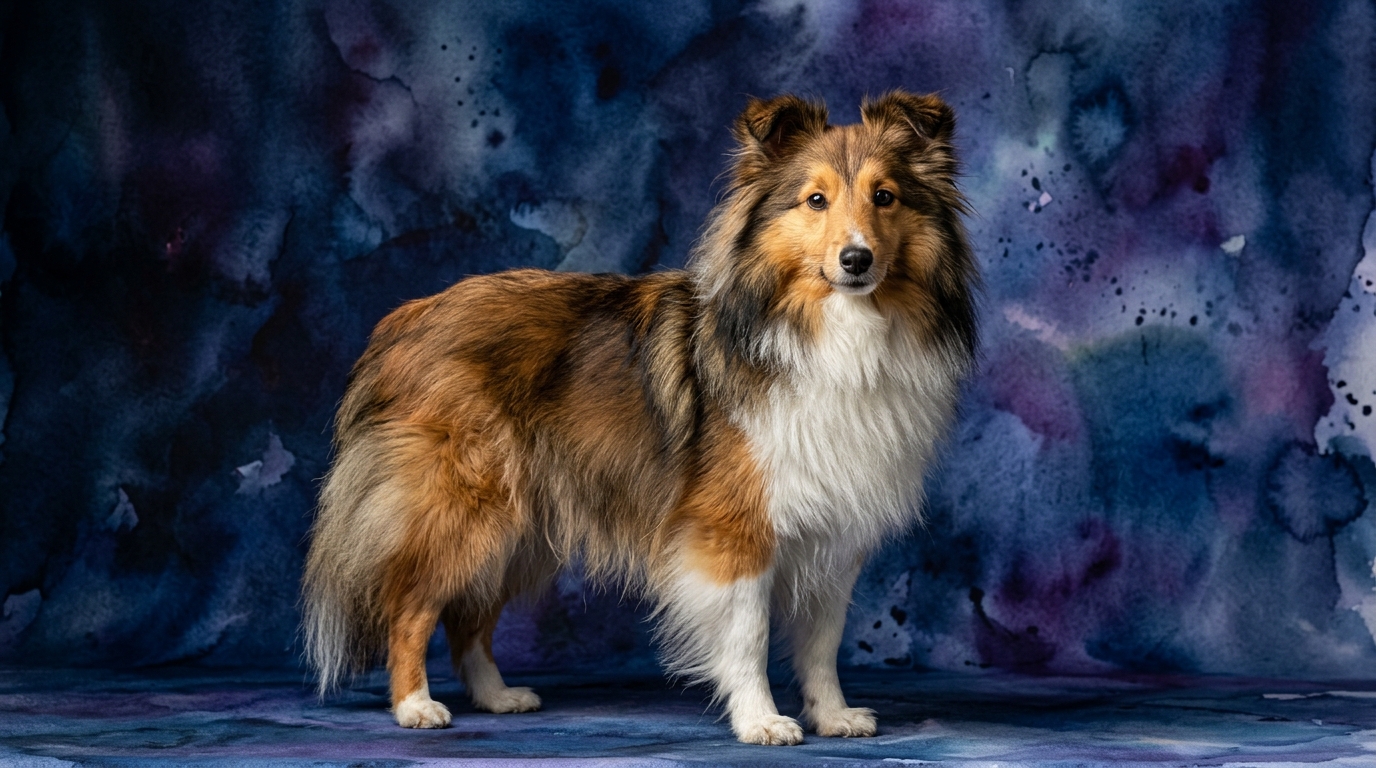
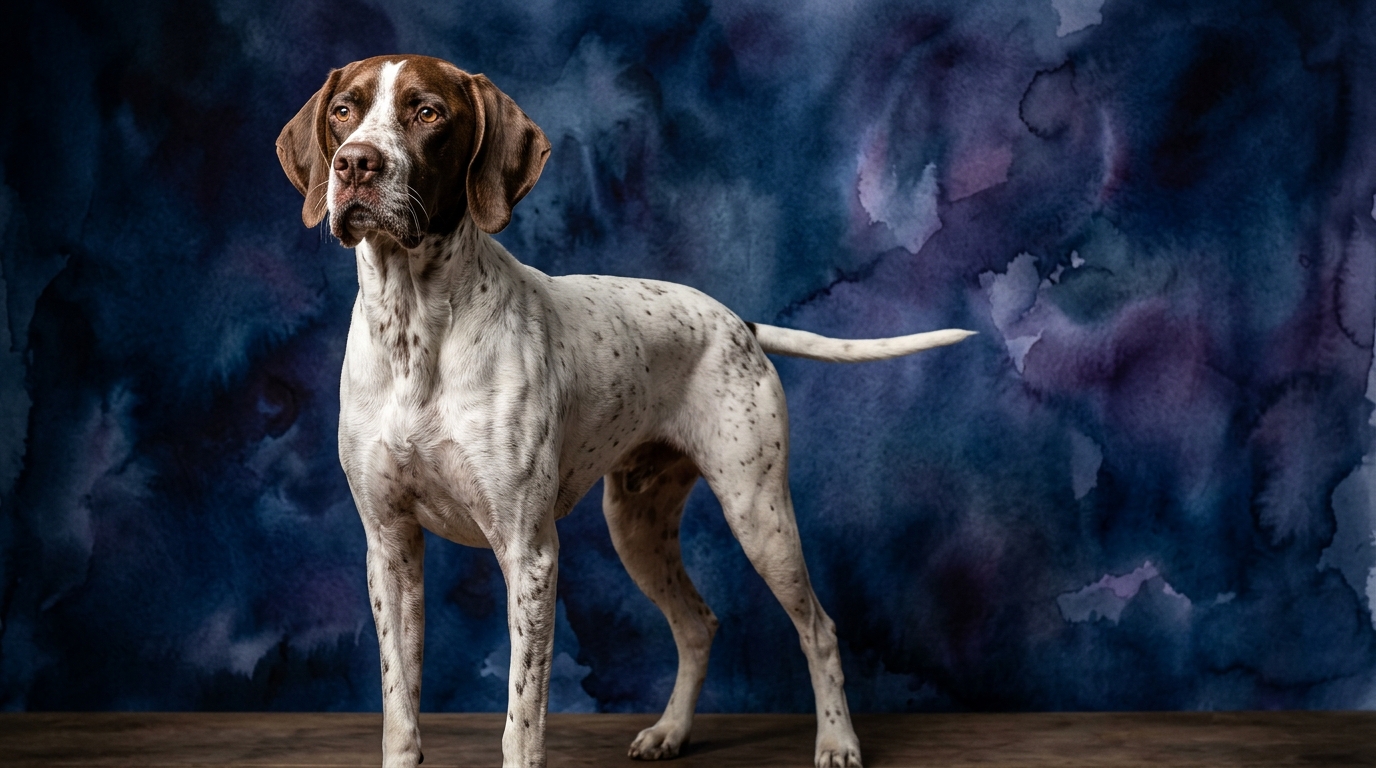
Side-by-Side Cognitive Profiles: Shetland Sheepdog vs. Pointer
At The Cosmic Pet Pet IQ Lab, we evaluate canine intelligence across five key dimensions, offering a nuanced view beyond simple labels. For the Shetland Sheepdog, a breed ranked #6 by Coren for working and obedience intelligence, we observe a consistently elevated cognitive profile. The Pointer, while not Coren-ranked, presents a distinct set of cognitive strengths tailored to its specific purpose.
**Problem Solving:** The Shetland Sheepdog earns a 4/5 in problem-solving, demonstrating a resourceful nature and a quick grasp of complex tasks. They can often devise novel solutions to obstacles, such as figuring out how to open a tricky gate or navigating intricate agility courses with precision. In contrast, the Pointer rates 3/5, adept at tasks directly related to its primary function, like locating game in the field. However, they may show less spontaneous innovation in abstract or novel problems outside their hunting context; their problem-solving tends to be direct and purpose-driven.
**Training Speed:** Here, the Shetland Sheepdog excels with a 5/5, absorbing new information with remarkable speed. They often require very few repetitions to master new commands or behaviors, appearing to anticipate what is expected of them. The Pointer scores 3/5, capable of learning, but typically requiring more consistent repetition and patience to solidify new commands. Their focus might be more externally directed, towards the environment or potential prey, rather than solely on the trainer's immediate instruction.
**Social Intelligence:** With a 4/5, the Shetland Sheepdog is highly attuned to human emotions and intentions, often forming deep bonds and responding sensitively to subtle cues from their companions. They possess a remarkable ability to 'read' their people. The Pointer, at 3/5, is socially engaged with its human companions, but perhaps less nuanced in interpreting complex social signals compared to a herding breed. Their social interactions might be more straightforward, focused on companionship and cooperation in shared activities.
**Instinctive Drive:** The Shetland Sheepdog's score of 5/5 reflects its powerful herding instinct, manifesting as a strong desire to gather, control, and direct. This drive is a fundamental part of their being and can be channeled into various structured activities. The Pointer, with a 3/5, is driven by a strong desire to hunt, point, and retrieve. This instinct is intensely focused on game and is a primary motivator for their behavior, less about control and more about pursuit and indication.
**Memory:** The Shetland Sheepdog demonstrates excellent recall for commands, routines, and past experiences, earning a 5/5. This strong memory contributes significantly to their rapid training and ability to perform complex sequences without error. The Pointer, scoring 3/5, possesses functional memory for learned tasks and routes, especially those related to hunting. However, their recall might not be as expansive or precise as the Sheltie's, particularly for abstract sequences or a vast repertoire of unrelated commands.
Where the Shetland Sheepdog Excels Cognitively
The Shetland Sheepdog's cognitive strengths lie in its overall flexibility and adaptability. Their superior problem-solving (4/5) combined with exceptional memory (5/5) allows them to understand and execute multi-step commands with remarkable accuracy and retain a vast repertoire of learned behaviors. They grasp abstract concepts in training more quickly, leading to faster mastery of new skills. Their sophisticated social intelligence (4/5) fosters a deeply responsive companionship, as they interpret human emotional states and intentions with notable precision. The Sheltie's inherent herding drive (5/5) also translates into an innate desire for structure and order, which they can readily apply to learning and complex tasks, making them eager participants in intellectual challenges.
Where the Pointer Excels Cognitively
The Pointer's cognitive prowess is deeply rooted in its specialized purpose. While its general IQ scores might appear lower, its specific strengths are unparalleled within its domain. Pointers exhibit an unwavering focus and perseverance in scent-based tasks, demonstrating an exceptional ability to concentrate on a single objective, like tracking a scent or holding a point, for extended periods. Their highly developed spatial awareness and navigation skills within a hunting context allow them to efficiently cover ground and remember locations. Their instinctive drive (3/5), though rated lower overall, is intensely specialized and incredibly effective for its purpose, making them an unmatched partner in the field, capable of working independently from a handler over large areas while relying on their own judgment to locate game.
Ease of Training: Behavioral Differences
When considering ease of training, the Shetland Sheepdog clearly emerges as the more amenable student. Their Training Speed of 5/5 means they absorb new information with remarkable quickness, often needing only a few repetitions to grasp a concept. This is significantly aided by their strong social intelligence (4/5), which makes them highly motivated to please their handler and respond enthusiastically to positive reinforcement. Furthermore, their superior memory (5/5) ensures that once learned, commands and behaviors are rarely forgotten, allowing for rapid progression to more complex tasks. Their innate desire to 'work' and organize, stemming from their herding drive (5/5), makes them eager and willing participants in almost any training endeavor, from basic obedience to advanced agility.
The Pointer, with a Training Speed of 3/5, requires a more patient and consistent approach. While certainly capable of learning, their attention can be more easily diverted by environmental stimuli, particularly compelling scents or movement, which aligns with their strong instinctive drive (3/5) for hunting. Their problem-solving (3/5) and memory (3/5) are functional but not as expansive for abstract tasks, meaning trainers need to be patient, make training relevant to their natural inclinations, and provide ample motivation. Pointers learn best when training is engaging and directly tied to their desire to explore and work in the outdoors, rather than solely focusing on repetitive, abstract commands in a sterile environment. They learn, but at a different pace and with a distinct motivational focus compared to the Sheltie.
Suitability for Active vs. Relaxed Owners
Both breeds lean towards active ownership, though their activity requirements differ in nature. The Shetland Sheepdog, despite its moderate size, is an energetic dog that requires significant mental and physical stimulation. Its high instinctive drive (5/5) means it thrives on having a 'job,' whether it's herding, agility, advanced obedience, or even complex trick training. Owners who enjoy engaging in structured activities, competitive dog sports, or long, varied walks and hikes will find a Sheltie a deeply fulfilling companion. Their high problem-solving (4/5) and social intelligence (4/5) mean they can quickly become bored, potentially leading to undesirable behaviors, without adequate mental and physical engagement.
The Pointer is a quintessential active dog, requiring extensive physical exercise and ample opportunities to utilize its natural hunting instincts. Daily strenuous activity, such as long runs, hikes, or dedicated field work, is absolutely essential for their well-being. They are not suited for owners seeking a relaxed, low-activity companion. Their focused instinctive drive (3/5) means they excel when given a purpose related to their heritage, making them ideal for hunters, competitive field trial participants, or individuals who enjoy extensive outdoor adventures like trail running or cycling with their dog. A Pointer's contentment is directly linked to its ability to expend energy and fulfill its innate desire to range and explore.
The Verdict
Opt for a Shetland Sheepdog if you seek a highly trainable, cognitively flexible companion eager for structured learning, complex tasks, and a deep, responsive social bond, especially if you can provide consistent mental and physical engagement.
Select a Pointer if you are an avid outdoors enthusiast or hunter seeking a resilient, focused partner for extensive physical activity and field work, valuing their specialized instincts and unwavering dedication to their primary purpose.
🧠 Find Your Pet's IQ Score
Our Pet IQ Lab assessment covers 25+ tests across 5 cognitive dimensions — personalized to your breed.
Take the Full IQ Test →Frequently Asked Questions
Does a Pointer's lower IQ rating mean they aren't smart?
Not at all. A Pointer's IQ profile reflects a specialization in tasks related to their sporting heritage, where their focus, scenting ability, and perseverance are paramount. Their cognitive strengths are simply different from a herding breed's, not inferior overall; they excel in their specific domain.
Are Shetland Sheepdogs prone to anxiety due to their social intelligence?
Shetland Sheepdogs, with their strong social intelligence, are highly attuned to their owners and environment. This sensitivity can manifest as anxiety if they are not properly socialized, receive inconsistent training, or are left alone for extended periods without adequate mental stimulation and companionship.
Can a Pointer be a good family dog despite its hunting drive?
Yes, Pointers can be devoted family dogs, known for their affectionate nature with their human pack. However, their strong hunting drive necessitates ample exercise and mental engagement to ensure they are calm and content indoors, preventing boredom-induced behaviors and channeling their natural instincts appropriately.