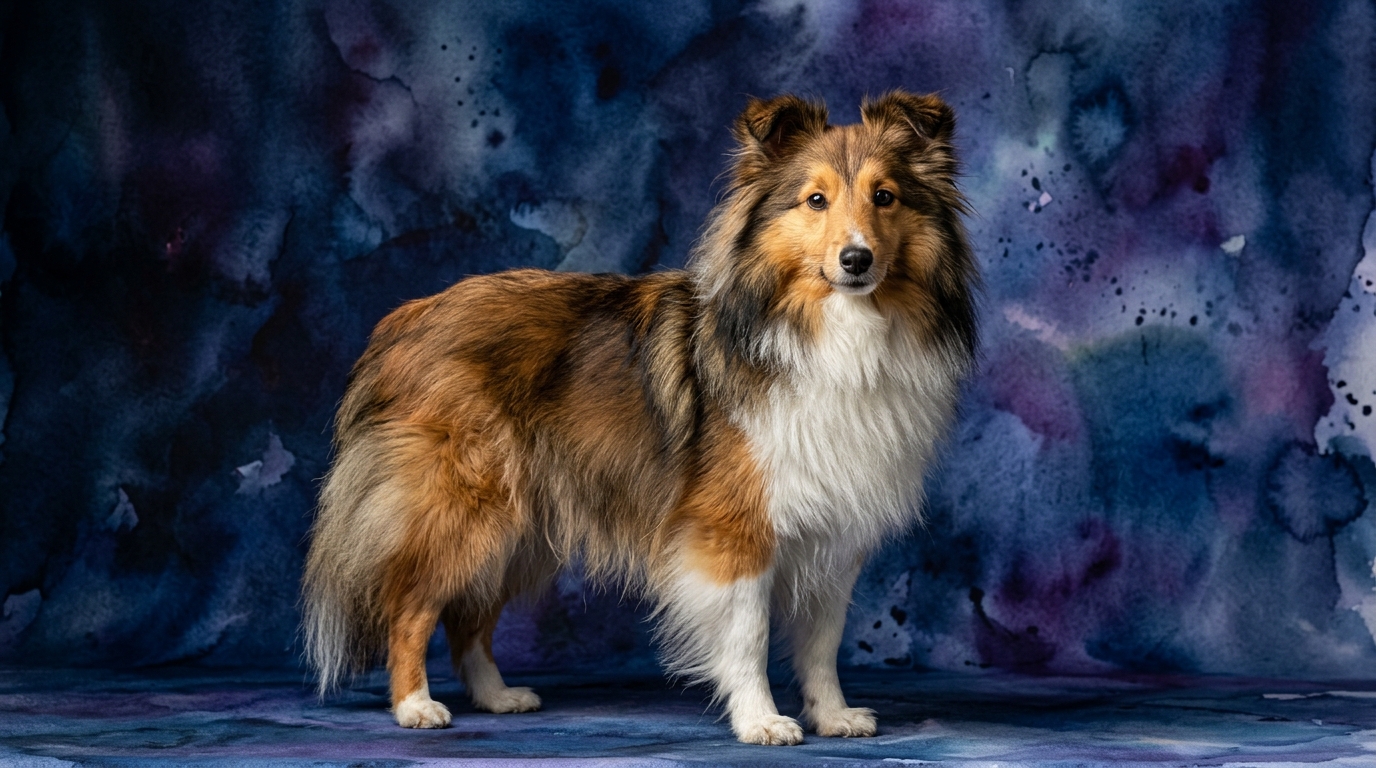

Side-by-Side IQ Profile: Shetland Sheepdog vs Rat Terrier
The Cosmic Pet Pet IQ Lab employs a multi-dimensional approach to assess canine cognition, moving beyond simple obedience to explore the nuanced ways breeds interact with their environment. For the Shetland Sheepdog, a breed renowned for its herding prowess and ranked #6 by Stanley Coren for working and obedience intelligence, this profile paints a picture of exceptional mental agility. Their problem-solving capacity, rated 4/5, manifests in their ability to strategize complex tasks, such as maneuvering livestock or navigating intricate agility courses, often anticipating next steps. Training speed, a perfect 5/5, means Shelties grasp new commands and routines with remarkable rapidity, requiring minimal repetitions. Social intelligence, at 4/5, enables them to keenly interpret human moods and intentions, fostering a deep, responsive bond. An instinctive drive of 5/5 reflects their strong inherent desire to work and manage, often translating into a focused, task-oriented disposition. Finally, their memory, also 5/5, allows for long-term retention of commands, experiences, and social cues, contributing to their consistent performance.
In contrast, the Rat Terrier, a breed developed for independent vermin control and not included in Coren's traditional rankings, presents a different cognitive landscape. Their problem-solving ability, rated 3/5, leans towards practical, immediate solutions, excelling at figuring out how to access a hidden treat or navigate obstacles in pursuit of a scent, rather than abstract strategy. Training speed, also 3/5, indicates a moderate learning curve; they can learn commands effectively but may require more patience and repetition than their herding counterparts. Social intelligence at 3/5 suggests they form strong bonds with their primary caregivers but might be less attuned to subtle social cues from a wider range of people or other animals. Their instinctive drive, 3/5, is powerfully focused on hunting and pursuit, demonstrating persistence and determination when on a scent trail. Memory, at 3/5, is sufficient for their daily routines and learned tasks but may not retain complex sequences or less-reinforced commands with the same tenacity as a Sheltie.
Where the Shetland Sheepdog Wins Cognitively
The Shetland Sheepdog's cognitive strengths truly shine in areas demanding intricate understanding, quick adaptation, and a deep partnership with their human. Their superior problem-solving (4/5) and memory (5/5) allow them to master multi-step commands and remember long sequences of actions, making them stars in advanced obedience, rally, and agility where precision and sequence are paramount. Unlike many breeds, Shelties excel at generalizing learned behaviors to new situations, demonstrating a flexibility in thinking that stems from their herding roots where environments and livestock behaviors are constantly changing. Their high social intelligence (4/5) means they are exceptionally perceptive of human emotions and body language, often anticipating requests before they are even verbalized, fostering an almost telepathic working relationship. This makes them particularly adept at tasks requiring fine-tuned responsiveness and nuanced communication, such as service work where reading subtle human cues is vital. Their strong instinctive drive (5/5), while rooted in herding, translates into an enduring focus and a profound desire to engage in productive tasks, making them relentless learners when motivated.
Where the Rat Terrier Wins Cognitively
While the Shetland Sheepdog excels in structured, cooperative tasks, the Rat Terrier's cognitive advantages are rooted in independence, tenacity, and acute sensory perception. Their problem-solving (3/5), though rated lower, is highly effective for their specific historical role. They demonstrate a remarkable ingenuity in practical, real-world scenarios, such as finding ways to access small prey or navigating complex underground burrows, relying on their keen senses and agile bodies. This isn't about abstract strategy, but rather about persistent, trial-and-error exploration and adaptation. Their instinctive drive (3/5), though numerically lower, is intensely focused on scent and pursuit, giving them an unmatched determination when tracking. This drive, combined with a sufficient memory (3/5) for important sensory information, makes them formidable in scent work and earthdog trials. Rat Terriers also exhibit a robust independence in their thinking; they are not easily deterred from a goal once fixed upon it, a trait that can be channeled into focused sports like barn hunt or competitive obedience for owners who appreciate their spirited autonomy. Their social intelligence (3/5) is particularly strong within their immediate pack, allowing them to form deeply loyal bonds, even if they are less inclined to extend that immediate connection to strangers.
Which is Easier to Train and Why
When considering ease of training, the Shetland Sheepdog generally presents a smoother path for most owners, primarily due to their stellar training speed (5/5), memory (5/5), and social intelligence (4/5). Shelties are often described as "eager to please" because their social cognition drives them to understand and respond to human directives. They learn new commands in very few repetitions, often just 1-5, and retain them reliably over time. Their sensitive nature means they respond well to positive reinforcement and clear, consistent communication, readily understanding what is expected of them. Conversely, the Rat Terrier, with a training speed of 3/5 and memory of 3/5, requires a more patient and persistent approach. Their independent nature and strong instinctive prey drive (3/5) mean they are less inherently motivated by human approval and more by the satisfaction of their own pursuits. Training a Rat Terrier often involves making exercises feel like a game or a hunt, leveraging their natural curiosity and drive for exploration. They can be prone to "selective deafness" when a compelling scent or sight distracts them, demanding greater consistency and higher-value rewards from the handler. While they are capable learners, their engagement often hinges on making the training stimulating and relevant to their terrier instincts, rather than just rote repetition.
Which Suits Active Owners vs. Relaxed Owners
The choice between a Shetland Sheepdog and a Rat Terrier hinges significantly on an owner's lifestyle and their capacity for engagement. Active owners who seek a highly interactive, mentally stimulating companion will find the Shetland Sheepdog an excellent match. Shelties thrive on structured activities like agility, obedience, rally, and even herding, which tap into their problem-solving (4/5), instinctive drive (5/5), and training speed (5/5). They require daily mental challenges and physical exercise to prevent boredom and channel their considerable energy constructively. Their desire for a close working partnership means they are happiest when involved in their family's activities, making them ideal for individuals or families committed to canine sports or extensive training.
For owners preferring a more relaxed pace, the Rat Terrier might initially seem suitable due to their smaller size, but this breed still demands significant engagement, albeit of a different kind. While they can enjoy periods of calm, their strong instinctive drive (3/5) and practical problem-solving (3/5) necessitate outlets for their terrier energy. Relaxed owners who enjoy long walks, interactive play involving scent games, and secure outdoor spaces for digging and exploring would suit a Rat Terrier. They are less about formal, complex obedience and more about vigorous, purposeful activity. Owners who appreciate an independent spirit and can channel their dog's natural hunting instincts into appropriate games, rather than expecting a perpetually passive companion, will find a rewarding relationship with a Rat Terrier. Both breeds ultimately benefit from active engagement, but the type of activity differs: Shelties prefer structured cooperation, while Rat Terriers prefer independent, exploratory pursuits.
The Verdict
Choose a Shetland Sheepdog if you desire a highly responsive, cooperative companion eager to learn complex tasks and participate in structured dog sports, thriving on a deep, almost telepathic working relationship.
Opt for a Rat Terrier if you appreciate an independent, tenacious spirit with a strong drive for exploration and scent work, and are prepared to engage them in practical, stimulating activities that appeal to their instinctive nature.
🧠 Find Your Pet's IQ Score
Our Pet IQ Lab assessment covers 25+ tests across 5 cognitive dimensions — personalized to your breed.
Take the Full IQ Test →Frequently Asked Questions
Which breed is better for first-time owners?
The Shetland Sheepdog is generally more forgiving for first-time owners due to their eagerness to please, quick learning, and responsiveness to cues. Rat Terriers, while loyal, require more consistency and patience to manage their independent terrier traits effectively.
Which breed requires more mental stimulation?
Both breeds require significant mental stimulation, but in different forms. Shelties thrive on learning new commands and participating in complex, structured activities, while Rat Terriers need outlets for their strong prey drive and enjoy puzzle toys or scent games that challenge their practical problem-solving skills.
Are Rat Terriers difficult to train?
Rat Terriers are not inherently difficult, but they can be more challenging than Shelties due to their independent nature and strong prey drive, which can make them less motivated by pleasing their owner. Consistent, positive reinforcement training that makes learning fun and taps into their natural instincts is key to success.