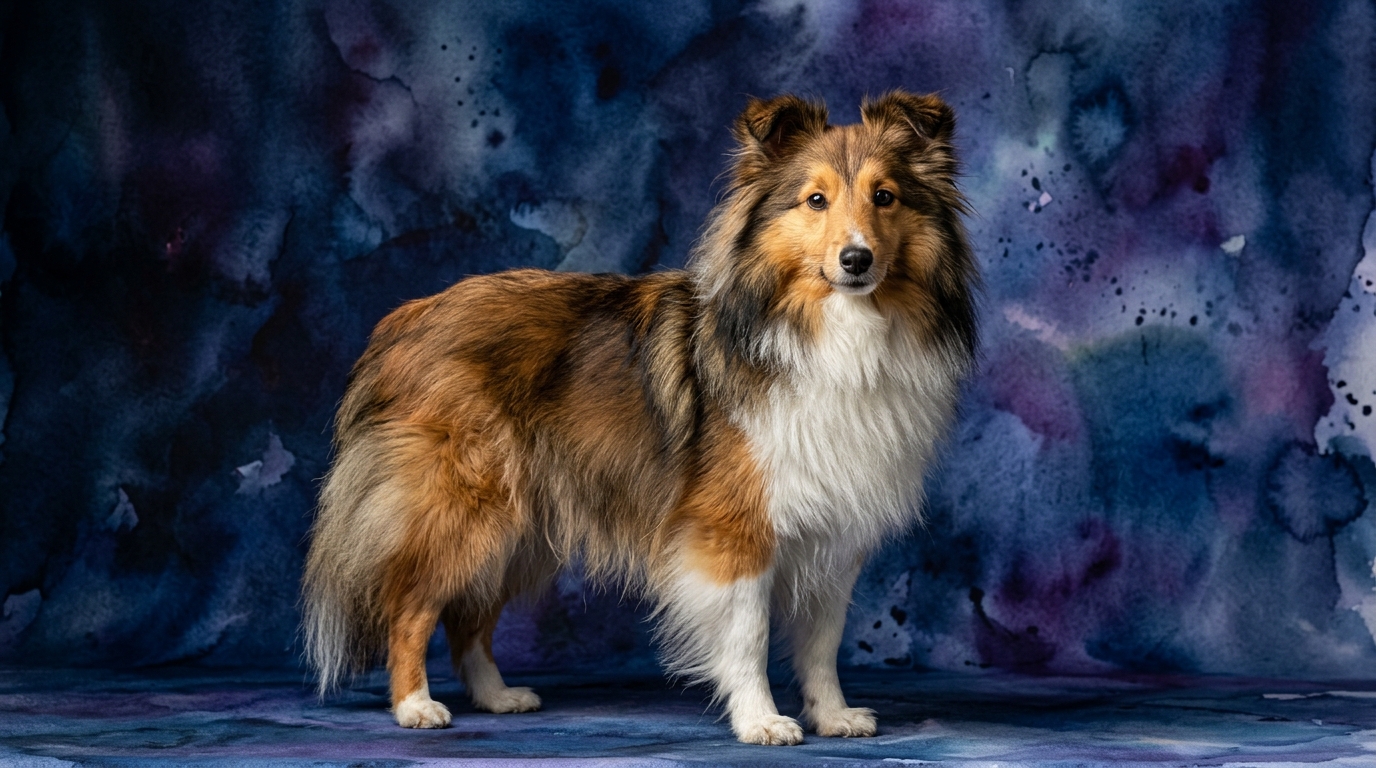
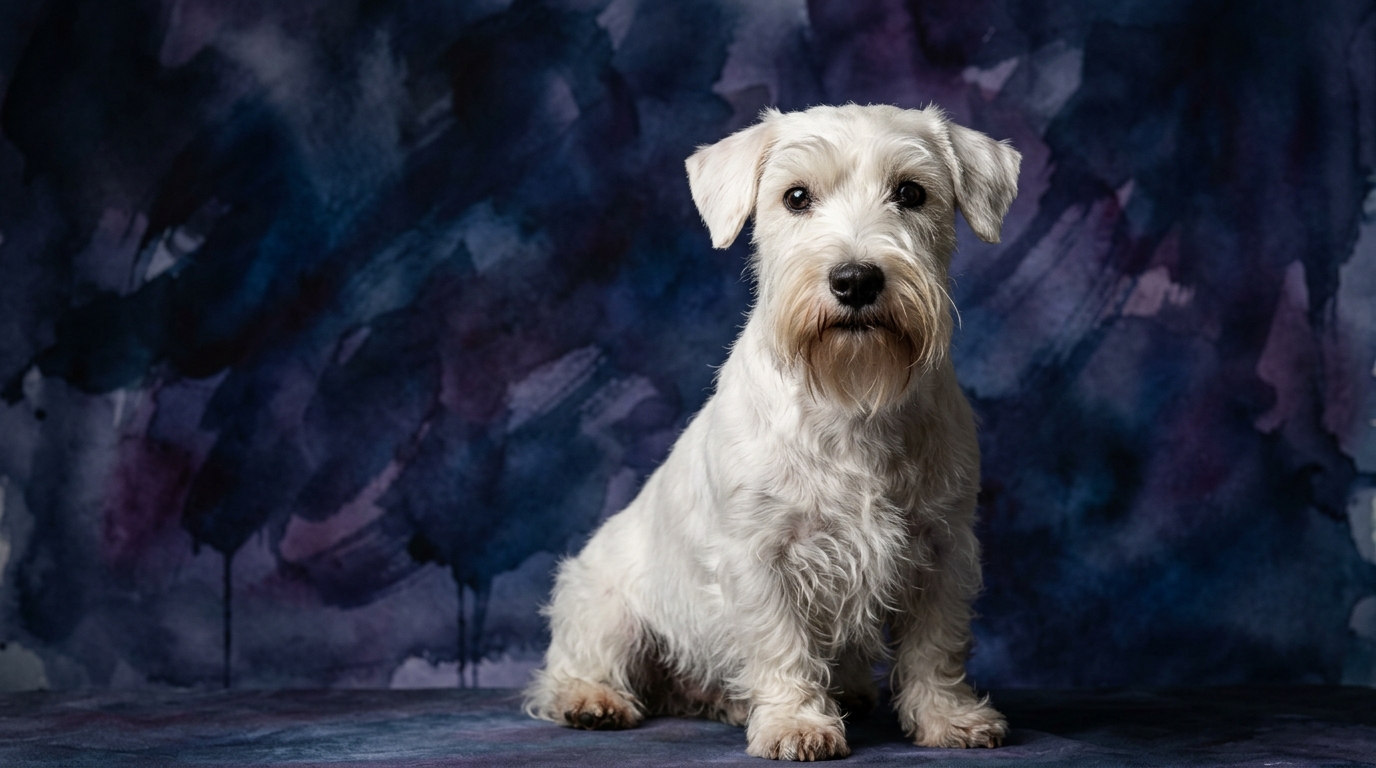
Side-by-Side IQ Profile: Herding Wit vs. Terrier Grit
The Cosmic Pet Pet IQ Lab employs a five-dimensional framework to assess canine intelligence, capturing a nuanced view beyond simple obedience. For the Shetland Sheepdog, a breed ranked #6 by Coren, we observe an impressive cognitive toolkit.
The Shetland Sheepdog's profile includes a Problem Solving score of 4/5, indicating a strong capacity to navigate novel situations and figure out solutions. Their Training Speed is exceptional at 5/5, reflecting their eagerness and rapid assimilation of new commands and behaviors. Social Intelligence, crucial for cooperative work, stands at 4/5, allowing them to read and respond effectively to human cues. An Instinctive Drive of 5/5 highlights their profound herding instincts, channeling intense focus and energy into purposeful tasks. Finally, their Memory is also a perfect 5/5, ensuring consistent retention of learned behaviors and experiences.
In contrast, the Sealyham Terrier presents a profile shaped by its badger-hunting heritage. This breed is not Coren-ranked, suggesting a different cognitive emphasis. Their Problem Solving score is 3/5, indicating a capable but often independent approach to challenges. Training Speed registers at 3/5, meaning they learn, but often at their own pace and with a strong internal motivation. Social Intelligence is 3/5, reflecting a more self-reliant disposition compared to the highly cooperative herding breeds. An Instinctive Drive of 3/5 speaks to their tenacious pursuit of prey-like activities, driven by their own initiative rather than constant human direction. Their Memory score is also 3/5, suggesting they retain information, but perhaps less rapidly or comprehensively than breeds bred for complex, multi-stage tasks.
Where the Shetland Sheepdog Excels Cognitively
The Shetland Sheepdog's cognitive strengths are profoundly rooted in their herding lineage, where precision, responsiveness, and quick thinking were paramount. Their standout attribute is undoubtedly their Training Speed (5/5), allowing them to grasp complex command sequences and intricate routines with remarkable efficiency. This translates into rapid mastery of obedience, agility, and even intricate trick training, making them incredibly rewarding partners for those who enjoy structured learning.
Coupled with their perfect Memory score (5/5), Shelties consistently recall vast repertoires of commands, even after periods of inactivity. This reliability is a hallmark of a cooperative working dog, enabling them to execute tasks accurately time and again. Their high Social Intelligence (4/5) further amplifies this, as they are adept at interpreting human body language and vocal nuances, fostering a deep, almost intuitive connection during training and daily interactions. Their powerful Instinctive Drive (5/5) isn't just about herding; it’s a deep motivation to engage in purposeful activity, making them highly receptive to tasks that provide mental stimulation and a sense of 'job' completion, whether it's navigating an agility course or learning a new game.
Unique Cognitive Strengths of the Sealyham Terrier
While the Sealyham Terrier's IQ scores may appear modest compared to the Sheltie's, their cognitive profile reflects a distinct and equally valuable set of strengths, forged by their independent working role. Their Problem Solving (3/5), though slower, is characterized by a persistent, self-directed tenacity. When faced with a challenge, a Sealyham is likely to methodically work through it on their own terms, relying on their own judgment rather than immediately seeking human guidance.
This independent approach extends to their Instinctive Drive (3/5). While not geared towards cooperative herding, this drive fuels their relentless pursuit of perceived 'prey' or intriguing scents, often requiring significant mental focus and single-mindedness. It's a cognitive engine for self-sufficiency and dedication to a task they deem important. Their Social Intelligence (3/5) allows them to form strong bonds, but their interactions are often punctuated by a charming self-assurance, showing they are capable of discerning situations and making decisions without constant human input. This breed's cognitive strengths lie in their robust independence and unwavering determination, qualities that make them formidable and resourceful in their own right, even if they don't always align with traditional metrics of cooperative intelligence.
Ease of Training: A Matter of Motivation and Cooperation
When it comes to ease of training, the differences between these two breeds are stark, directly correlating with their IQ profiles and historical purposes. The Shetland Sheepdog, with its 5/5 Training Speed and Memory, coupled with high Social Intelligence (4/5) and Instinctive Drive (5/5), is generally a joy to train. They are inherently eager to please, thrive on positive reinforcement, and quickly associate commands with actions. Their herding background necessitates close communication and responsiveness, making them highly attuned to their handler's instructions. A Sheltie often anticipates commands and relishes the mental engagement of learning new skills, making them excellent candidates for advanced obedience, rally, and canine sports.
The Sealyham Terrier, however, presents a different training experience. With a Training Speed of 3/5 and a more independent Instinctive Drive (3/5), they require a patient, consistent, and creative approach. A Sealyham will learn, but they often need a clear 'what's in it for me?' motivation, as their primary drive is not necessarily to cooperate for cooperation's sake. Their problem-solving (3/5) is often self-directed, meaning they might try to figure things out their own way before accepting human direction. Training a Sealyham involves convincing them that your way is the best way, often through high-value rewards and making the process fun and engaging. They are not stubborn out of malice, but rather out of a deep-seated independence that was crucial for their original working role, where individual initiative was prized over constant human direction.
Matching Canine Cognition to Owner Lifestyles
The cognitive profiles of the Shetland Sheepdog and Sealyham Terrier naturally align with different owner lifestyles. The Shetland Sheepdog is an ideal companion for active owners who relish mental engagement and structured activities with their dog. Owners who enjoy dog sports like agility, obedience, flyball, or even advanced trick training will find the Sheltie's rapid learning, excellent memory, and cooperative nature incredibly rewarding. Their high instinctive drive also means they thrive with a 'job,' whether it's formal training or complex puzzle toys, making them excellent partners for those who enjoy integrating their dog into their active hobbies and intellectual pursuits. They need consistent mental stimulation to prevent boredom, which can manifest as unwanted behaviors.
Conversely, the Sealyham Terrier is better suited for owners who appreciate an independent spirit and a dog that can entertain itself to a degree, though still needing engagement. Relaxed owners who enjoy a dog with character, who might be content with less structured play and more self-directed exploration in a secure yard, could find a wonderful match. While they still require exercise and mental stimulation, it doesn't necessarily need to be in the form of highly structured, cooperative tasks. Owners who are patient, consistent, and willing to work with a dog's natural terrier tenacity will find the Sealyham a loyal and amusing companion. They do best with owners who understand and respect their independent problem-solving and spirited nature, providing outlets for their innate drives without expecting instant, unwavering obedience.
The Verdict
Choose the Shetland Sheepdog if you seek a highly trainable, cooperative companion eager for structured learning and active participation in dog sports or complex tasks.
Opt for the Sealyham Terrier if you appreciate an independent, tenacious spirit, are patient with training, and enjoy a dog that offers charming self-sufficiency and determined problem-solving.
🧠 Find Your Pet's IQ Score
Our Pet IQ Lab assessment covers 25+ tests across 5 cognitive dimensions — personalized to your breed.
Take the Full IQ Test →Frequently Asked Questions
Which breed is better for a first-time dog owner?
The Shetland Sheepdog's higher training speed, social intelligence, and cooperative nature generally make them a more forgiving and easier choice for first-time dog owners, especially those committed to consistent positive reinforcement training. The Sealyham Terrier's independence can be more challenging for novices.
Do Sealyham Terriers require less mental stimulation than Shetland Sheepdogs?
Both breeds require mental stimulation, but the *type* differs. Shetland Sheepdogs thrive on structured learning and cooperative tasks. Sealyham Terriers need outlets for their instinctive drives, often involving independent exploration, scent work, or puzzle toys that challenge their tenacious problem-solving, rather than constant human direction.
How do their instinctive drives impact their daily lives?
The Shetland Sheepdog's high instinctive drive manifests as a desire for purposeful activity and 'herding' family members or toys, requiring outlets like training or herding games. The Sealyham Terrier's drive focuses on independent investigation and pursuit, meaning they may be prone to digging or chasing small animals, needing secure environments and appropriate outlets for these natural behaviors.