
Side-by-Side IQ Profile: Sheltie vs Sussex
The Cosmic Pet Pet IQ Lab provides a detailed framework for understanding canine cognition, assessing five key dimensions. Let's explore how the Shetland Sheepdog and Sussex Spaniel measure up.
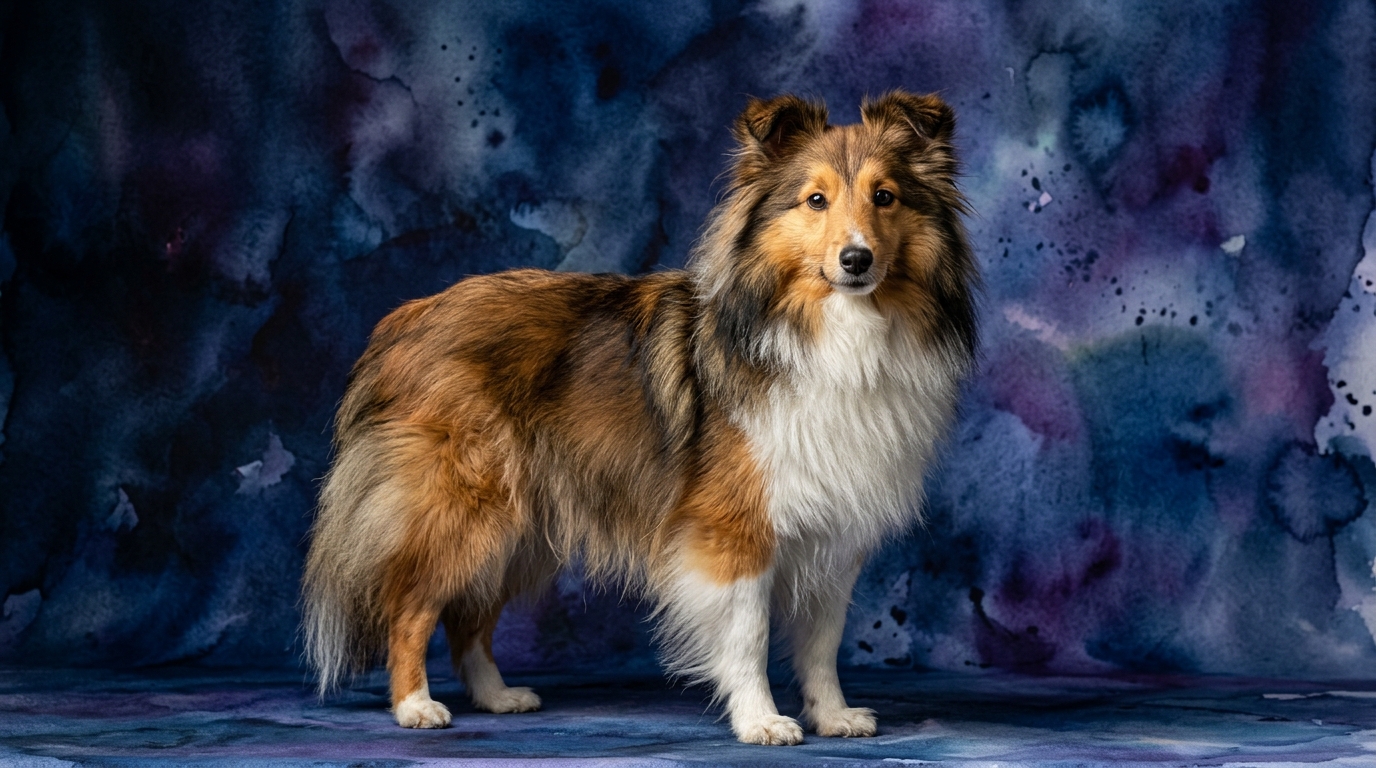
The Shetland Sheepdog, with a Coren rank of #6, demonstrates an impressive cognitive toolkit. Its Problem Solving is rated 4/5, indicating an aptitude for navigating complex situations and devising strategies. Training Speed is a stellar 5/5, suggesting a rapid grasp of new commands and concepts. Social Intelligence sits at 4/5, reflecting a nuanced understanding of human cues and emotional states. Instinctive Drive is 5/5, manifesting in a powerful work ethic and a natural inclination towards herding tasks. Finally, Memory is 5/5, allowing them to retain intricate sequences and past experiences with remarkable accuracy.
In contrast, the Sussex Spaniel, with a Coren rank of #62, presents a different cognitive emphasis. Its Problem Solving is rated 3/5, indicating a more practical, often scent-driven approach to challenges rather than abstract strategizing. Training Speed is 3/5, meaning they learn at a steady pace, requiring patience and consistent reinforcement. Social Intelligence is also 3/5, suggesting they are amiable companions but may not interpret human intentions with the same subtlety as some other breeds. Instinctive Drive is 3/5, primarily focused on scent work and perseverance rather than control or rapid response. Memory is 3/5, sufficient for routines and specific scent trails, but less geared towards multi-step, abstract recall.
Where the Shetland Sheepdog Excels Cognitively
The Shetland Sheepdog's cognitive strengths are particularly evident in its capacity for rapid, multi-faceted learning and its acute social awareness. Their 5/5 Training Speed means they absorb new commands with remarkable efficiency, often requiring fewer repetitions than many other breeds. This rapid acquisition is supported by their 5/5 Memory, allowing them to recall extensive repertoires of behaviors and complex sequences over long periods.
Their 4/5 Problem Solving capability allows them to excel in dynamic environments, quickly assessing situations and adapting their actions, a trait honed by generations of herding work. This isn't just about following commands; it's about anticipating, strategizing, and making independent decisions within a structured framework. Furthermore, their 4/5 Social Intelligence makes them highly attuned to human communication, often picking up on subtle body language and vocal inflections, fostering a deeply responsive partnership in training and daily interactions. They thrive on collaborative mental engagement, demonstrating a desire to understand and respond to their human companions' directives.
Where the Sussex Spaniel Shines Cognitively
The Sussex Spaniel's cognitive profile, while different from the Sheltie's, showcases its own unique and valuable strengths, particularly in areas requiring sustained focus and sensory processing. Their 3/5 Problem Solving, while not geared towards abstract strategy, excels in persistent, methodical investigation, especially when a scent trail is involved. They demonstrate an unwavering determination to follow a scent to its conclusion, showcasing a different kind of cognitive endurance and focus.
Their 3/5 Instinctive Drive is centered around their powerful nose and a desire to explore the world through scent. This drive translates into a patient, deliberate approach to tasks, where the reward is often the process of discovery itself. While their Training Speed and Memory are rated 3/5, this indicates a steady, consistent learning style rather than a lack of ability. They learn best with clear, positive reinforcement and benefit from training that respects their independent, scent-driven nature. Their 3/5 Social Intelligence means they are affectionate and enjoy companionship, often forming strong bonds with their families, thriving in environments where their calm demeanor is appreciated over high-octane mental gymnastics.
Training Ease: Sheltie's Responsiveness vs Sussex's Persistence
When it comes to ease of training, the Shetland Sheepdog generally presents a more straightforward experience due to its higher scores across most cognitive dimensions. Their 5/5 Training Speed and 5/5 Memory mean they grasp new commands quickly and retain them well, making them excellent candidates for advanced obedience, agility, and other dog sports. Their 4/5 Social Intelligence also means they are highly motivated by human interaction and praise, often eager to please and responsive to subtle cues, which streamlines the training process. They are often described as 'biddable,' meaning they are readily amenable to instruction and guidance.
The Sussex Spaniel, with 3/5 in Training Speed and Memory, requires a more patient and consistent approach. Their training is not difficult, but it demands understanding their inherent desire to follow their nose. While they are affectionate, their independent, scent-driven nature (3/5 Instinctive Drive) means they can sometimes be less focused on human commands when a compelling scent presents itself. Training success with a Sussex often hinges on making lessons fun, using positive reinforcement, and incorporating their natural sniffing abilities into activities, rather than trying to suppress them. They will learn, but perhaps not with the same immediate precision or enthusiasm for multi-step tasks as a Sheltie.
Owners: Active Engagement vs Relaxed Companionship
The cognitive differences between these two breeds strongly influence the type of owner they will thrive with. The Shetland Sheepdog, with its high scores in problem-solving, training speed, and instinctive drive, is an excellent match for active owners who enjoy engaging in mentally stimulating activities. These dogs flourish with regular opportunities for complex training, dog sports like agility or obedience, and even herding games that tap into their innate drives. Owners who appreciate a dog that is always 'on,' ready to learn, and eager to participate in various activities will find a Sheltie incredibly rewarding. Their need for mental engagement means they are not content with just a walk around the block; they require a 'job' or consistent mental challenges to prevent boredom.
The Sussex Spaniel, on the other hand, is better suited for owners who appreciate a more relaxed, yet still engaged, companion. While they benefit from regular walks and opportunities to explore scents, their lower scores in training speed and problem-solving suggest they don't require the same intensity of mental gymnastics as a Sheltie. Owners who enjoy leisurely strolls, a calm presence in the home, and are prepared for a consistent, positive training approach will find a Sussex to be a devoted friend. They are happy to be by their owner's side, often content with a good sniff in the yard and a cozy spot on the couch, making them ideal for those seeking a more sedate, yet still characterful, canine companion.
The Verdict
Choose the Shetland Sheepdog if you seek a highly responsive, quick-learning companion eager for advanced training, dog sports, and deep cognitive engagement. Their precise mind thrives on partnership in complex tasks and consistent mental stimulation.
Opt for the Sussex Spaniel if you desire a patient, methodical companion who excels in scent-based exploration and appreciates a steady, positive training approach. They offer calm devotion and thrive with owners who value a less intense cognitive partnership.
🧠 Find Your Pet's IQ Score
Our Pet IQ Lab assessment covers 25+ tests across 5 cognitive dimensions — personalized to your breed.
Take the Full IQ Test →Frequently Asked Questions
Do Shetland Sheepdogs need a lot of mental stimulation?
Yes, Shetland Sheepdogs have a high need for mental stimulation due to their strong problem-solving and instinctive drives. They thrive on learning new commands, engaging in dog sports, and participating in activities that challenge their quick minds to prevent boredom and potential behavioral issues.
Is the Sussex Spaniel difficult to train?
The Sussex Spaniel is not difficult to train, but they require patience and consistency due to their moderate training speed and independent, scent-driven nature. Positive reinforcement and making training sessions engaging, often incorporating their love for sniffing, yield the best results.
Which breed is better for first-time dog owners?
For a first-time owner, the Shetland Sheepdog might be easier in terms of rapid learning and responsiveness if the owner is committed to providing consistent mental engagement. The Sussex Spaniel, while amiable, requires a more patient and understanding approach to training, especially concerning their strong scent drive, which some first-time owners might find challenging without prior experience.