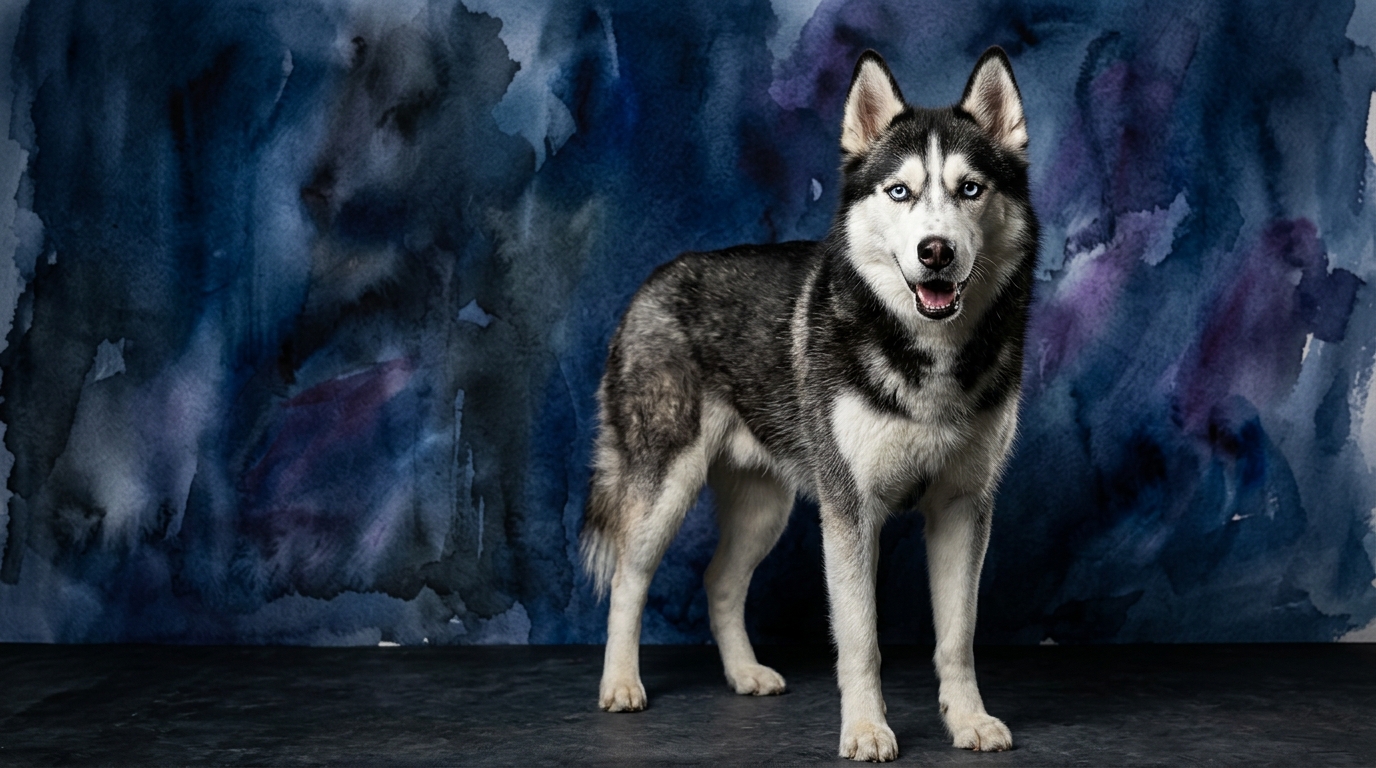
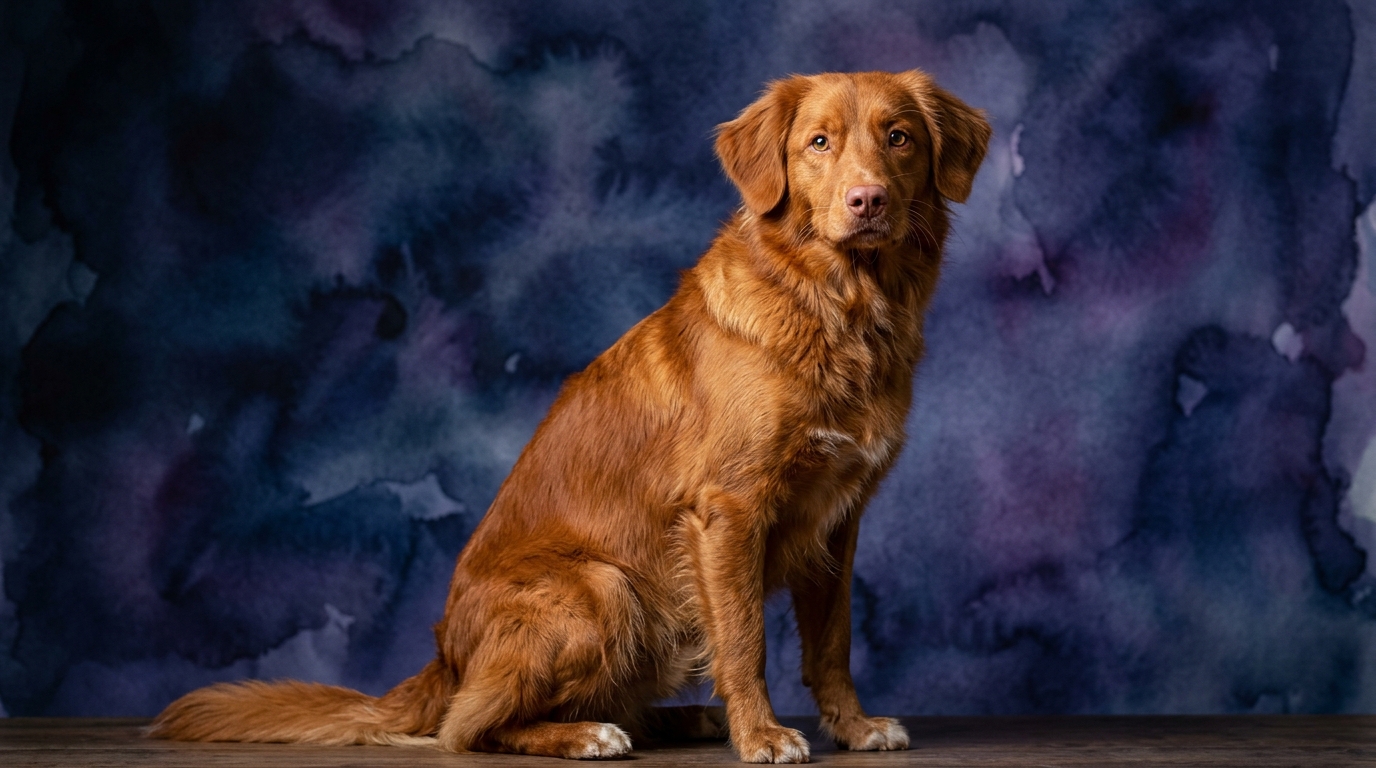
Side-by-Side Cognitive Profile: Husky vs. Toller
The Siberian Husky, a breed often associated with vast, snowy expanses, presents a distinctive cognitive profile shaped by centuries of working in challenging, independent roles. Ranked #45 by Coren, their Problem Solving is rated a robust 4/5, reflecting an inherent resourcefulness and an ability to navigate complex situations autonomously, often relying on their own judgment rather than constant human direction. This strong independence, however, translates to a Training Speed of 2/5; while Huskies are quick to grasp concepts, their compliance is often discretionary, making consistent obedience a nuanced endeavor. Their Social Intelligence sits at 3/5, indicating an ability to form strong bonds within their chosen 'pack,' but often with a more reserved or selective approach to strangers and less of an innate desire to please humans beyond their immediate circle. A powerful 5/5 Instinctive Drive manifests as an intense desire to run, pull, and explore, often fueled by a strong prey drive. Finally, their Memory is a notable 4/5, crucial for remembering routes, locations, and past experiences vital for navigation and survival.
The Nova Scotia Duck Tolling Retriever, while not appearing on Coren's traditional ranking, possesses a cognitive makeup precisely tailored for its specialized retrieving role. Their Problem Solving is a solid 3/5, demonstrating practical intelligence in task-oriented scenarios, such as locating hidden retrieves, though perhaps with less spontaneous innovation than the Husky. Training Speed is rated 3/5, indicating a generally biddable nature and eagerness to learn when appropriately motivated, making them responsive partners in structured training. A Social Intelligence of 3/5 suggests they are capable of forming strong, affectionate bonds with their families, often showing a keen awareness of human cues, though they can be initially reserved with new people. Their Instinctive Drive, also 3/5, is focused and purposeful, primarily revolving around the 'tolling' action of luring waterfowl and efficient retrieving, rather than a broad, independent wanderlust. Memory is assessed at 3/5, sufficient for recalling commands, routines, and the specifics of their retrieving tasks, supporting their role as a consistent working companion.
Where the Siberian Husky Excels Cognitively
The Siberian Husky's cognitive strengths truly shine in environments demanding independence, resilience, and self-reliance. Their 4/5 Problem Solving score means they are exceptionally adept at figuring out situations on their own, whether it involves navigating back to their starting point over long distances, finding creative ways to bypass obstacles, or strategizing to obtain desired resources. This isn't primarily about human approval; it's about efficient, independent execution and self-preservation. This cognitive trait makes them remarkably resourceful in varied and challenging environments, thriving on opportunities to use their intellect to overcome physical or mental hurdles.
Coupled with their powerful 5/5 Instinctive Drive, Huskies possess an unparalleled endurance and motivation for sustained physical activity, making them champions of long-distance travel and exploration. This drive is deeply ingrained, propelling them to run, pull, and investigate, often covering vast territories with unwavering determination. Their 4/5 Memory supports these endeavors, allowing them to recall complex routes, the location of resources, or past interactions that inform their current actions. This combination of robust problem-solving, powerful drive, and strong memory fosters a unique resilience and a capacity for autonomous decision-making that is a hallmark of the breed.
Where the Nova Scotia Duck Tolling Retriever Excels Cognitively
The Nova Scotia Duck Tolling Retriever's cognitive advantages are rooted in their capacity for cooperative work and focused task execution, making them highly effective partners in specific roles. Their balanced 3/5 scores across Problem Solving, Training Speed, Social Intelligence, and Instinctive Drive create a harmonious package for a working companion. While their problem-solving might be less about independent survival, it excels in finding solutions within a defined task, such as efficiently locating and retrieving a hidden dummy or bird in complex terrain, demonstrating practical, applied intelligence.
Their 3/5 Training Speed, paired with their 3/5 Social Intelligence, means they are generally more amenable to learning and retaining commands when working alongside a human. They exhibit a consistent willingness to engage in training sessions, often motivated by the shared activity and positive reinforcement, making them highly responsive. The Toller's 3/5 Instinctive Drive is highly specialized and channeled, specifically for luring and retrieving waterfowl. This focused drive means less independent wandering or strong prey drive for random small animals, making their impulses more predictable and manageable within a working context. They thrive on having a job to do that involves their human companion, demonstrating cognitive strengths in precision, focus, and sustained attention to a cooperative goal.
Which is Easier to Train and Why
When evaluating ease of training, the Nova Scotia Duck Tolling Retriever generally presents a more straightforward path for most owners. The Toller's Training Speed of 3/5, combined with a Social Intelligence of 3/5, means they are typically eager to please their human companions and receptive to instruction. They respond well to positive reinforcement and consistency, often viewing training as a collaborative activity where their engagement is rewarded. Their instinctive drive, while present, is more focused on retrieving tasks, meaning they are less likely to be distracted by independent pursuits like roaming or chasing random wildlife during a training session. They find joy in working alongside their owner, making them relatively biddable and keen to learn new commands and routines.
In contrast, the Siberian Husky's Training Speed of 2/5, coupled with a powerful 5/5 Instinctive Drive and a more independent 3/5 Social Intelligence, makes them significantly more challenging to train for consistent obedience. Huskies understand commands quickly, thanks to their high problem-solving ability, but their strong will means they often weigh whether complying serves their immediate interest. Their intense desire to run, pull, and explore, combined with a high prey drive, means they can be easily distracted by environmental stimuli, often choosing to follow an enticing scent or the urge to bolt rather than obeying a recall. They require highly engaging, varied training to prevent boredom, and an owner who can consistently motivate them without resorting to force, understanding that their independence is a core part of their being rather than defiance. Training a Husky is often about negotiation and building a strong, respectful partnership rather than expecting immediate, consistent obedience.
Which Suits Active Owners vs. Engaged Owners
Both breeds certainly demand active lifestyles, but the nature of that activity and the owner's role within it differs significantly. The Siberian Husky is best suited for owners who are not just active, but also highly resilient, patient, and deeply appreciative of an independent spirit. Their formidable 5/5 Instinctive Drive for sustained physical activity means they require extensive daily exercise, often in the form of long runs, hikes, or sledding. These are dogs built for endurance, and an owner must be prepared to provide consistent outlets for this drive, often involving activities where the dog is a powerful, self-motivated partner. This also includes owners who understand and can proactively manage their independent problem-solving and strong prey drive, which means secure containment and consistent leash work are paramount. They thrive with adventurers who embrace their desire to explore and are comfortable with a companion who makes autonomous decisions.
The Nova Scotia Duck Tolling Retriever, while equally active, is better suited for engaged owners who seek a cooperative partner for structured activities and dog sports. Their 3/5 Instinctive Drive is channeled and focused, making them exceptional candidates for activities like obedience, agility, flyball, and, of course, retrieving. These are dogs that excel when given a job to do with their owner, thriving on mental stimulation through consistent training and physical exertion that involves collaboration. Owners who enjoy consistent training, participate in dog sports, or simply want a dedicated partner for active outdoor pursuits that involve interaction and direction will find the Toller a highly rewarding companion. They are less about independent exploration and more about shared purpose, making them ideal for owners who want a dog deeply involved in their hobbies and daily routines.
The Verdict
Choose a Siberian Husky if you are an experienced, highly active individual or family seeking an independent, resilient companion for endurance sports and long-distance adventures, and appreciate a dog with strong self-preservation instincts. Be prepared for a significant training challenge that requires endless patience and creative motivation.
Choose a Nova Scotia Duck Tolling Retriever if you are an active, engaged owner looking for a cooperative, focused partner for dog sports, retrieving, and consistent training, thriving on shared activities and a purposeful bond. They will excel with owners who enjoy structured interaction and mental stimulation through collaborative work.
🧠 Find Your Pet's IQ Score
Our Pet IQ Lab assessment covers 25+ tests across 5 cognitive dimensions — personalized to your breed.
Take the Full IQ Test →Frequently Asked Questions
Do Siberian Huskies or Nova Scotia Duck Tolling Retrievers bark more?
Siberian Huskies are more known for their vocalizations like howling and 'talking' rather than frequent barking, though they can bark as alerts. Nova Scotia Duck Tolling Retrievers are typically more prone to barking, especially when excited, playing, or alerting to visitors, fitting their role as a working retriever.
Which breed is better with children?
Both breeds can be good with children with proper socialization and training, though their approaches differ. Tollers, with their cooperative nature, tend to be more naturally inclined to integrate into family activities, while Huskies are generally good-natured but might be more independent and less 'sticky' with kids. Supervision is always essential with any dog and child.
Are either of these breeds good for first-time dog owners?
Neither breed is typically recommended for first-time dog owners due to their significant exercise needs, specific training demands, and independent or high-drive temperaments. Both require owners who understand breed-specific traits and are committed to consistent training and enrichment to ensure a well-adjusted companion.