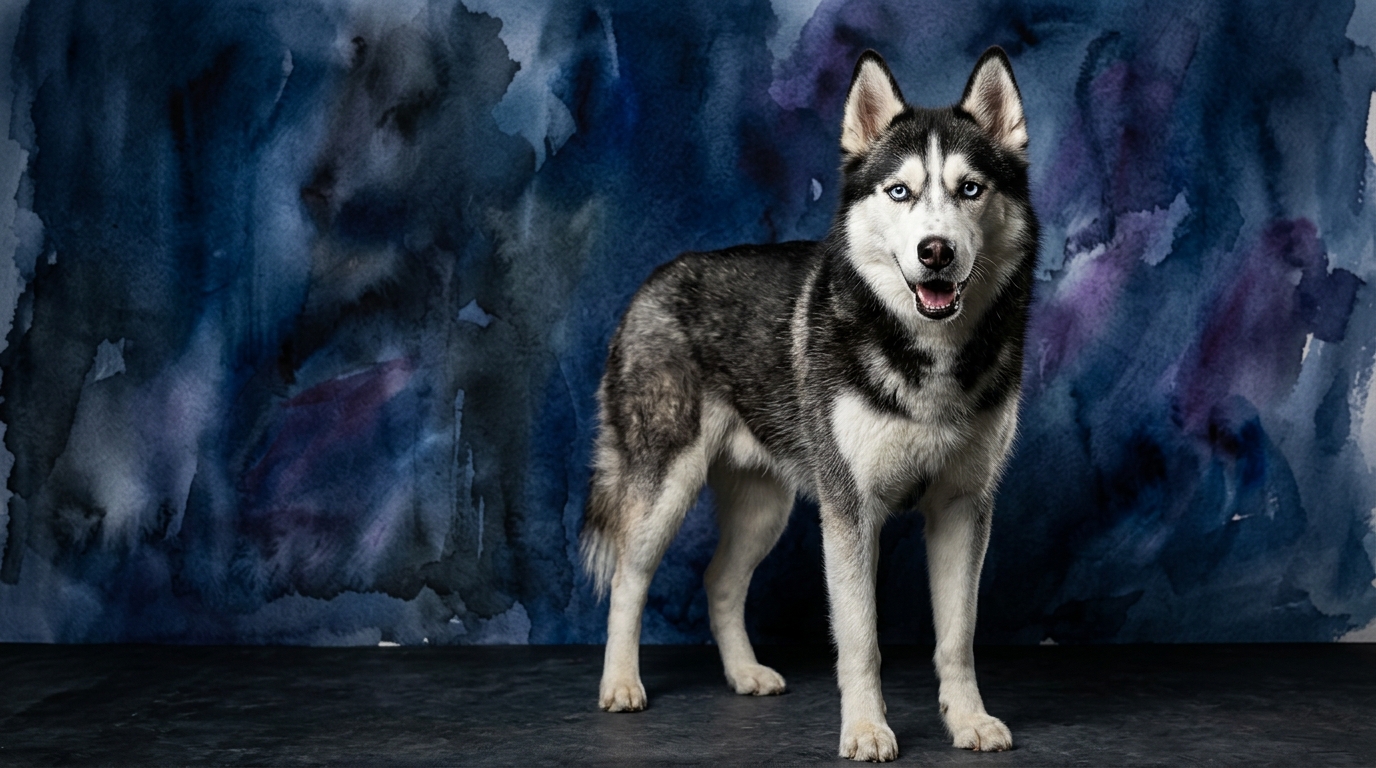
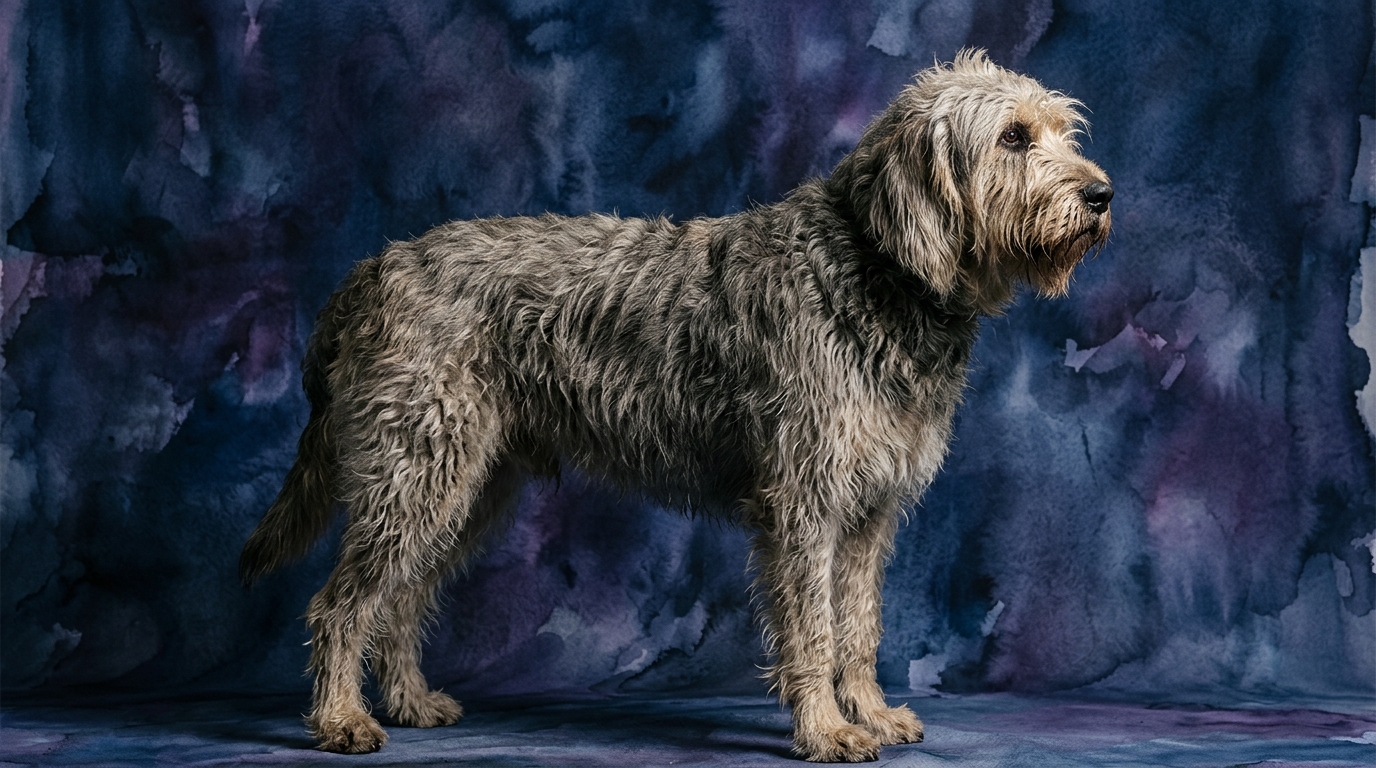
Side-by-Side IQ Profile: Siberian Husky vs. Otterhound
The Cosmic Pet Pet IQ Lab employs five key dimensions to evaluate canine intelligence, offering a nuanced perspective beyond simple obedience. Let’s examine how the Siberian Husky, a Working group dog ranked #45 by Coren, and the Otterhound, a Hound group dog not Coren-ranked, stack up.
The Siberian Husky's cognitive blueprint is defined by its heritage as an endurance sled dog. Its Problem Solving is rated 4/5, reflecting a strong capacity for independent thought and finding solutions to challenges, often in ways that serve their own interests and necessitate minimal human intervention. Training Speed is 2/5; Huskies understand commands but frequently weigh whether complying aligns with their current motivations, making traditional obedience a slower process. Social Intelligence stands at 3/5; they are generally friendly and adaptable, thriving within a pack structure but retaining a distinct self-sufficiency rather than constant human-pleasing. Their Instinctive Drive is an exceptional 5/5, manifesting as an almost insatiable desire to run, explore, and often chase, rooted in their powerful sled dog heritage. Finally, their Memory is 4/5, allowing them to recall routes, past events, and learned behaviors effectively, which is crucial for navigation and survival in harsh environments.
In contrast, the Otterhound's intelligence profile is tailored to its historical role as a relentless otter hunter. Its Problem Solving is 3/5, displaying moderate abilities primarily focused on navigating scent trails and overcoming environmental obstacles during pursuit, rather than abstract challenges. Training Speed is 3/5; they are generally willing to learn, though their strong independent scent drive can sometimes override obedience, requiring consistent positive reinforcement. Social Intelligence is 3/5; Otterhounds are affable, enjoy companionship, and form strong bonds with their families, demonstrating a cooperative social nature within their pack. Their Instinctive Drive is 3/5; while possessing a strong scent drive, particularly for water, it is focused on tracking rather than the wide-ranging exploration or high prey drive seen in some other breeds. Their Memory is 3/5, solid for recalling scent trails and familiar commands, though perhaps less expansive in non-scent-related contexts compared to a Husky's broader recall.
Where the Siberian Husky Wins Cognitively
The Siberian Husky’s cognitive profile shines in areas demanding independent decision-making and self-reliance. Their Problem Solving score of 4/5 reflects an innate ability to assess situations and devise solutions, often without direct human guidance, a trait crucial for their historical role as sled dogs navigating challenging terrains. This manifests as a resourceful cunning, whether it's figuring out how to open a gate or escaping an enclosure. Coupled with a powerful Instinctive Drive (5/5), Huskies possess an unparalleled inner motivation to explore, run, and follow their impulses, making them adept at tasks requiring sustained physical and mental exertion over long distances. Their Memory (4/5) further supports this, allowing them to recall complex routes, past experiences, and the outcomes of their independent ventures, contributing to their adaptability in varied environments. For owners seeking a companion that can think for itself and exhibits a profound drive for self-directed activity, the Husky's cognitive strengths are particularly compelling.
Where the Otterhound Wins Cognitively
While the Otterhound might not possess the Husky's raw independent problem-solving or extreme drive, its cognitive strengths are perfectly tailored to its original purpose. The Otterhound’s moderate Training Speed (3/5) and Social Intelligence (3/5) suggest a more balanced approach to learning and interaction, making them generally more amenable to cooperative tasks than the highly independent Husky. Their Instinctive Drive, while rated 3/5, is specifically tuned for relentless scent work, particularly in and around water, showcasing a specialized cognitive focus. This breed excels at sustained, focused tracking, demonstrating a remarkable ability to process complex olfactory information and maintain concentration on a specific task. Their Memory (3/5) is robust enough to recall scent patterns and the progress of a trail, making them highly effective in their specialized field. For an owner valuing a companion that can engage cooperatively in specific tasks and exhibits a focused, enduring drive for scent-based activities, the Otterhound’s cognitive makeup presents a distinct advantage.
Training Dynamics: Siberian Husky vs. Otterhound
When considering ease of training, the Otterhound generally presents a more straightforward path than the Siberian Husky. The Otterhound’s Training Speed rating of 3/5 indicates a moderate willingness to learn and respond to commands, especially when motivation is high and training is consistent. Their Social Intelligence, also 3/5, means they are typically more inclined to engage cooperatively with their human companions, seeking approval and enjoying the shared activity of training. While their strong scent drive can be a distraction, it can also be harnessed as a powerful motivator in training, making scent games or tracking exercises highly rewarding. This cooperative inclination allows for more predictable responses during training sessions.
In contrast, the Siberian Husky’s Training Speed is rated 2/5, reflecting their profound independence and tendency to prioritize their own agenda. Huskies understand commands readily due to their Memory (4/5), but their high Problem Solving ability (4/5) often means they weigh the benefit of complying against their desire to explore or pursue other interests. For example, a Husky might understand “come” perfectly, but if an enticing squirrel or open gate appears, their powerful Instinctive Drive (5/5) to run and range will often override the command. This makes recall particularly challenging and necessitates consistent, high-value reinforcement and robust management strategies. Therefore, while both breeds require patience and consistency, the Otterhound’s more balanced cognitive profile, with a greater inclination towards cooperation and slightly less overwhelming independent drives, makes them comparatively easier to guide through traditional obedience training.
Matching Breeds to Lifestyles: Active vs. Relaxed Owners
The choice between a Siberian Husky and an Otterhound significantly hinges on an owner's lifestyle and energy levels. Siberian Huskies are unequivocally suited for highly active owners who embrace adventure and can provide extensive physical and mental stimulation. Their Instinctive Drive (5/5) for running, exploring, and engaging in demanding activities means they require daily, vigorous exercise, often beyond a simple walk around the block. Owners must be prepared for their independent Problem Solving (4/5), which often manifests as creative escape artistry, and their strong prey drive, necessitating secure environments and diligent supervision. A Husky thrives with an owner who understands and caters to their need for purpose, whether through sledding, skijoring, long-distance running, or advanced canine sports. Their self-reliant nature means they need an owner who respects their independence while still providing firm, consistent guidance.
Conversely, the Otterhound, while still requiring regular exercise to manage their energy and maintain health, is a better fit for owners who appreciate a more relaxed, yet still engaged, pace of life. Their moderate Instinctive Drive (3/5) means they enjoy walks, hikes, and particularly water activities, but don't possess the same relentless need for high-speed, long-duration exertion as a Husky. They can adapt to a more moderate exercise routine, provided it includes opportunities for scent work or playful exploration that engages their specific cognitive strengths. Their Social Intelligence (3/5) and moderate Training Speed (3/5) make them good companions for owners who enjoy consistent, positive training sessions and value a friendly, albeit sometimes boisterous, presence around the home. An Otterhound owner should be prepared for their unique vocalizations, their love for water and mud, embracing a slightly messy but utterly devoted companion who thrives on companionship and a focused activity like tracking.
The Verdict
Opt for a Siberian Husky if you are an experienced, highly active individual or family committed to providing extensive daily exercise, mental challenges, and can manage a profoundly independent and driven companion that loves to explore.
Select an Otterhound if you seek a friendly, robust companion for moderately active adventures, particularly those involving water or scent work, and appreciate a cooperative learner with a charmingly boisterous personality.
🧠 Find Your Pet's IQ Score
Our Pet IQ Lab assessment covers 25+ tests across 5 cognitive dimensions — personalized to your breed.
Take the Full IQ Test →Frequently Asked Questions
Are Siberian Huskies difficult to train?
Siberian Huskies are not difficult in the sense of lacking understanding; rather, their strong independent will and high Problem Solving ability (4/5) mean they often choose whether to comply. Training requires immense patience, consistency, and finding motivators that outweigh their desire to follow their own instincts, particularly their powerful drive to run.
How do Otterhounds use their problem-solving skills?
Otterhounds apply their moderate Problem Solving skills (3/5) primarily within the context of their scent work, for example, navigating complex terrain or obstacles to follow a trail. While they might not be devising elaborate escape plans, they excel at persistent, focused work within their specialized field.
Which breed is better for a first-time dog owner?
Given their profound independence, high exercise needs, and training challenges, Siberian Huskies are generally not recommended for first-time dog owners. Otterhounds, with their more cooperative nature and moderate drives, could be a better fit for a dedicated first-time owner prepared for their specific needs, especially their vocalizations and love for water.