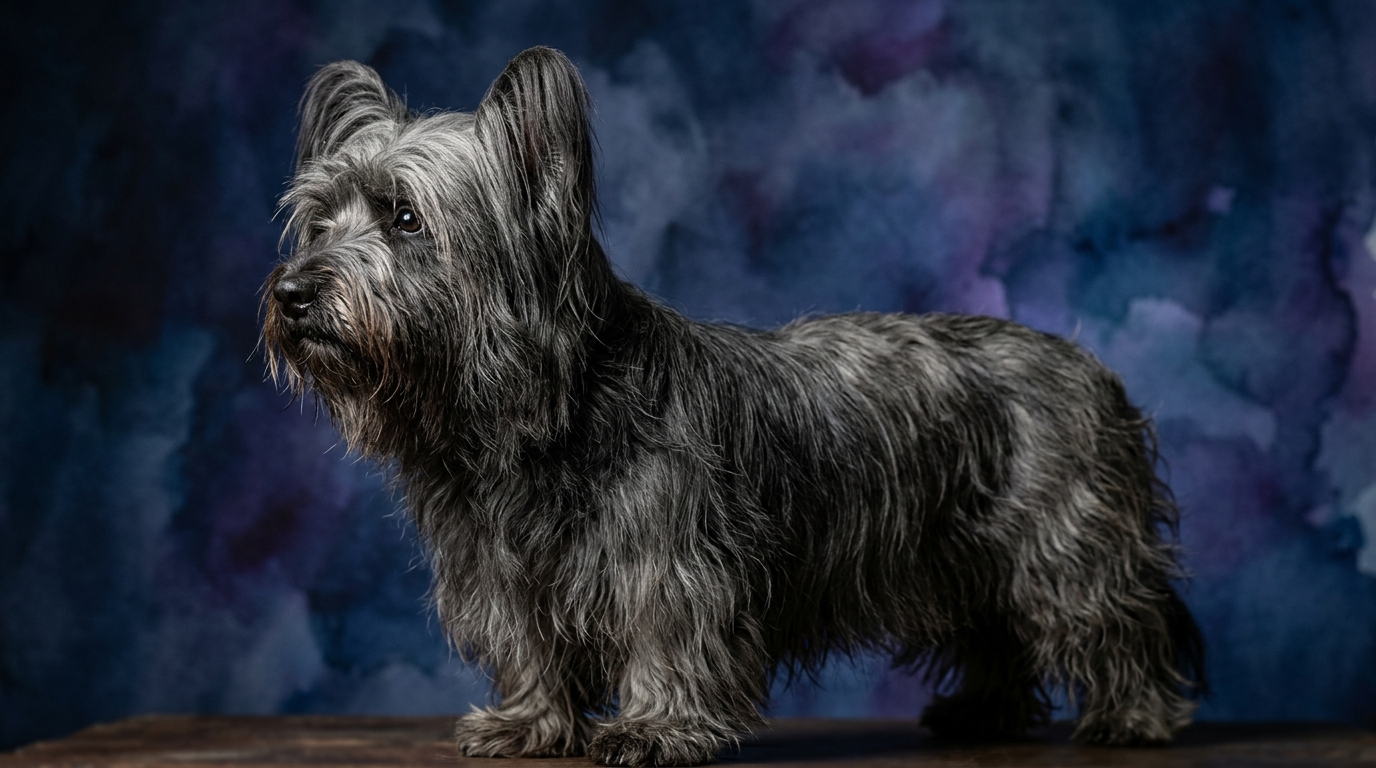
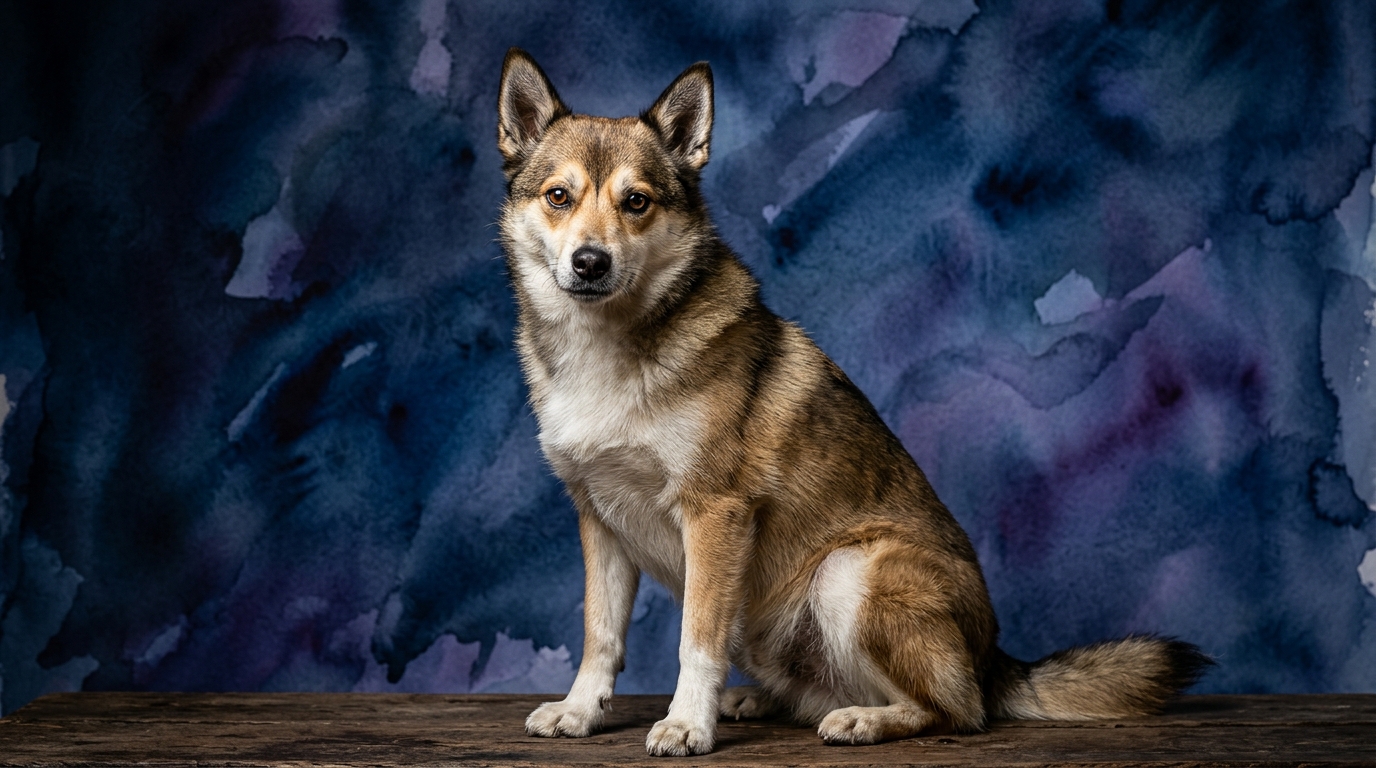
Side-by-Side Cognitive Profiles: Skye Terrier vs. Norwegian Lundehund
At The Cosmic Pet Pet IQ Lab, both the Skye Terrier and Norwegian Lundehund register a balanced 3/5 across all five cognitive dimensions. While these numerical scores are identical, the expression of these traits is profoundly influenced by their historical roles and inherent breed characteristics. Understanding this nuance is key to appreciating their distinct mentalities.
For the **Skye Terrier**, a breed forged in the rugged Scottish Isles for tenacious vermin hunting, a **Problem Solving** score of 3/5 reflects their aptitude for independently strategizing how to locate and extract prey from burrows. This isn't about complex abstract puzzles, but practical, goal-oriented thinking focused on overcoming physical obstacles to achieve a specific outcome. Their **Training Speed** at 3/5 suggests they are capable learners, yet their strong independent streak, characteristic of many Terriers, means they may require consistent, engaging, and patient methods to maintain focus and compliance, often preferring to act on their own initiative rather than constant handler direction. Their **Social Intelligence** rating of 3/5 points to a deep, discerning loyalty towards their immediate family, often accompanied by a reserved or even wary demeanor towards strangers; they are adept at reading the nuances of their inner circle but less inclined to generalize social cues broadly. The **Instinctive Drive** at 3/5 is pronounced, manifesting as a persistent prey drive, a propensity for digging, and vocal communication, all essential traits for their original purpose. Finally, their **Memory** score of 3/5 indicates a reliable recall of established routines, familiar people, and especially locations or experiences linked to their strong hunting instincts or territorial boundaries.
The **Norwegian Lundehund**, a truly unique breed developed to hunt puffins on treacherous coastal cliffs, also earns a 3/5 in each cognitive area, but with a different emphasis. Their **Problem Solving** ability at 3/5 shines in spatial reasoning and environmental navigation; they excel at figuring out complex routes, traversing difficult terrain, and locating hidden nests, demonstrating a remarkable capacity for three-dimensional thinking. The Lundehund's **Training Speed** of 3/5 indicates they learn efficiently, but their inherent curiosity and self-reliant nature, born from solitary hunting, means they can become bored with repetitive drills. Training is most effective when engaging their natural investigative instincts. Their **Social Intelligence** at 3/5 is characterized by an observant and often friendly disposition, though they can be initially reserved. They are skilled at interpreting the social dynamics within their human family or pack, adapting their behavior accordingly. The **Instinctive Drive** at 3/5 is centered around their hunting heritage, expressed through a keen interest in exploring, 'foraging' for hidden items, and an agile, exploratory nature. Their **Memory** at 3/5 is particularly strong for complex geographical layouts, remembering intricate paths through challenging landscapes, and recalling the specific locations of resources or past successful hunts, alongside daily routines.
Where the Skye Terrier Cognitively Excels
The Skye Terrier's cognitive strengths are deeply rooted in its independent hunting legacy. Their 3/5 in Problem Solving, while not about abstract thought, translates to exceptional practical ingenuity when faced with a tangible goal, particularly one involving pursuit or retrieval. They possess a persistent focus that allows them to meticulously work through obstacles, whether it's navigating dense undergrowth or patiently waiting out a burrowed creature. This tenacity, combined with their moderate memory, means they learn and remember effective strategies for achieving their objectives, making them remarkably effective at tasks requiring sustained, self-directed effort.
Where the Norwegian Lundehund Cognitively Excels
The Norwegian Lundehund's unique evolutionary path has honed a distinct set of cognitive advantages. Their 3/5 in Problem Solving truly shines in spatial awareness and environmental mastery; they can process and remember complex three-dimensional landscapes with impressive accuracy. This allows them to navigate intricate routes and adapt to changing terrain, making them highly adept at tasks requiring agility, balance, and strategic movement. Furthermore, their instinctive drive for exploration, paired with their memory, means they are perpetually curious about their surroundings and excellent at mapping their environment, a trait invaluable for navigating new places safely and efficiently.
Training Dynamics: Ease and Behavioral Nuances
When considering ease of training, the identical 3/5 Training Speed scores for both breeds belie significant differences in their behavioral approaches. The Skye Terrier, with its terrier independence, often approaches training as a negotiation. While capable of learning commands, their deep-seated drive for self-direction means they might require more patience and creative motivation to comply consistently, especially when their instincts conflict with a command. They are not necessarily slow learners, but rather selective in their obedience, often weighing the handler's request against their own perceived priorities. Their reserved social intelligence outside their family can also mean they are less inclined to perform for strangers or in overly stimulating environments.
The Norwegian Lundehund, while also independent, often responds well to training that taps into their innate curiosity and problem-solving skills, rather than repetitive drills. Their background as solitary hunters means they are accustomed to making their own decisions, so positive reinforcement and engaging, varied sessions are key. They are generally responsive when they understand the purpose or reward behind a task, and their moderate social intelligence allows them to form strong bonds that aid in training. However, their tendency to explore and 'forage' means they can be easily distracted if not adequately stimulated, requiring a handler who can make learning an adventure rather than a chore. Consistency and clear communication are paramount for both, but the Skye Terrier demands a more persuasive, persistent approach, while the Lundehund thrives on engaging, mentally stimulating methods.
Matching Breeds to Lifestyles: Active vs. Relaxed Owners
For active owners seeking a canine companion, the Norwegian Lundehund might be a more natural fit. Their exceptional agility, love for exploration, and physical adaptations make them ideal partners for hiking, navigating varied terrains, or participating in dog sports like agility. Their moderate instinctive drive for investigation means they thrive on regular opportunities to explore new environments and engage their keen senses. Owners who enjoy outdoor adventures and can provide consistent mental and physical challenges will find the Lundehund a willing and capable companion, leveraging their spatial problem-solving and memory for routes.
Conversely, the Skye Terrier, despite its hunting heritage, often suits a more relaxed owner, provided their needs for moderate exercise and mental engagement are met with focused activities rather than constant high-impact exertion. While they enjoy walks and playtime, their independent nature means they are often content with periods of quiet companionship indoors. Their moderate social intelligence means they are less likely to seek constant external stimulation from strangers and more content within their familiar home environment. Owners who appreciate a dignified, loyal companion, and are prepared to engage in focused, rewarding training sessions and provide opportunities for controlled 'hunting' games, will find a deep connection with the Skye Terrier.
The Verdict
Choose the Skye Terrier if you appreciate a dignified, loyal companion with a strong sense of self, capable of independent thought, and you are prepared for patient, consistent training that respects their assertive nature.
Opt for the Norwegian Lundehund if you are an active explorer who enjoys unique challenges, values a curious and agile companion, and can provide ample opportunities for mental stimulation and adventurous outdoor activities.
🧠 Find Your Pet's IQ Score
Our Pet IQ Lab assessment covers 25+ tests across 5 cognitive dimensions — personalized to your breed.
Take the Full IQ Test →Frequently Asked Questions
Do Skye Terriers enjoy learning new tricks?
Skye Terriers are capable of learning new tricks, as indicated by their 3/5 Training Speed, but they often require highly motivating rewards and patient, engaging sessions. Their independent nature means they might not always be eager to perform if they don't see the immediate value or if the task becomes repetitive.
How does the Norwegian Lundehund's problem-solving manifest in daily life?
The Norwegian Lundehund's 3/5 problem-solving often manifests as a keen ability to navigate complex environments, such as finding creative ways around obstacles in a yard or figuring out how to access interesting nooks and crannies. They are also adept at remembering specific locations where they've found treats or interesting smells.
Are these breeds suitable for first-time dog owners?
Both the Skye Terrier and Norwegian Lundehund, with their independent streaks and specific cognitive needs, are generally better suited for experienced dog owners. Their moderate training speeds and distinct instinctive drives require a committed, knowledgeable handler who understands breed-specific behaviors and can provide consistent, tailored guidance.