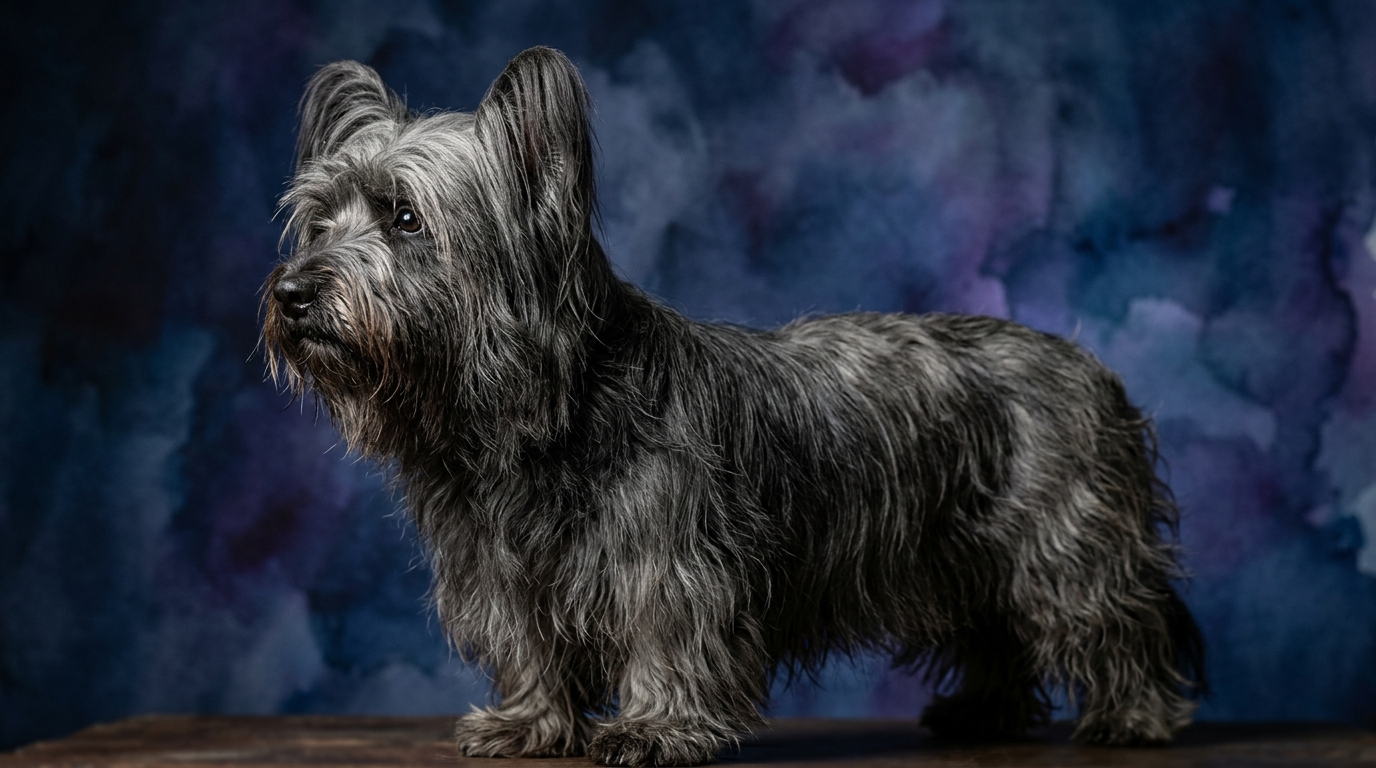
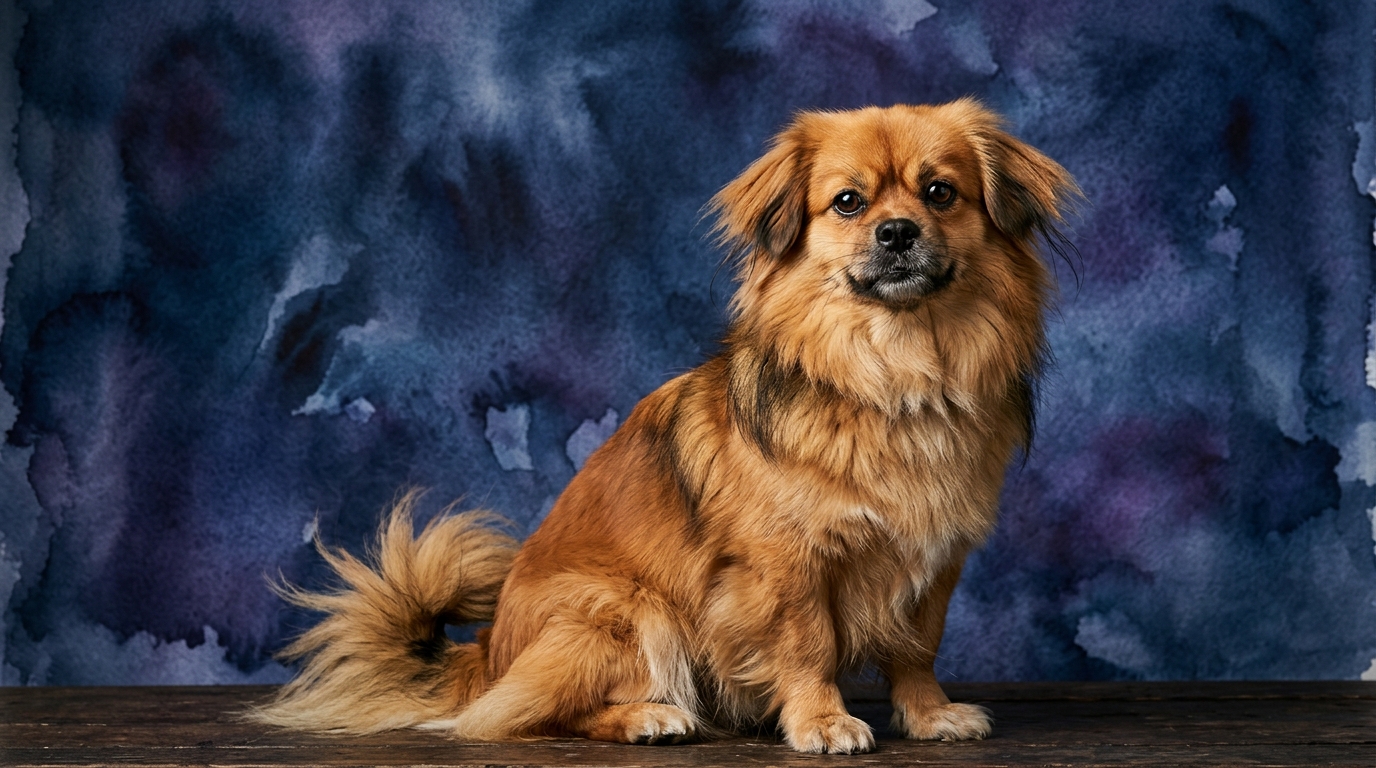
Side-by-Side Cognitive Profile: Skye Terrier vs. Tibetan Spaniel
Despite both breeds receiving a consistent 3/5 across the board in problem solving, training speed, social intelligence, instinctive drive, and memory, their historical roles and inherent temperaments dictate how these capacities are expressed. A 3/5 score indicates a solid, capable level of intelligence, suggesting neither extreme brilliance nor significant challenge, but rather a reliable, functional intellect that serves their breed purposes well.
For the Skye Terrier, a 3/5 in **Problem Solving** reflects a practical, tenacious intelligence, honed for independent work. These dogs excel at figuring out how to navigate tight spaces, outsmart small prey, or determine the quickest route to an interesting scent. Their problem-solving isn't about abstract puzzles but rather about persistent, goal-oriented strategizing in their immediate environment, often involving physical dexterity and determination. Their **Training Speed (3/5)** suggests they are capable learners, but their independent terrier spirit means they require engaging, consistent training. They can grasp commands, yet their inclination to follow their own agenda means success often depends on making training feel like a collaborative effort or an exciting game, rather than rote instruction. In **Social Intelligence (3/5)**, Skye Terriers, while deeply loyal to their chosen family, often display a reserved demeanor with strangers, observing new situations carefully before engaging. Their social intelligence is characterized by a strong bond with their inner circle, understanding household dynamics, and a subtle communication style that values quiet companionship over overt displays. Their **Instinctive Drive (3/5)**, true to their working heritage, manifests as a robust prey drive, a strong inclination to dig, and a territorial instinct, making them keen hunters and vigilant guardians. Finally, their **Memory (3/5)** is reliable for routines, learned commands, and significant experiences, both positive and negative, contributing to their consistent behavior patterns.
The Tibetan Spaniel's 3/5 in **Problem Solving** often manifests as astute observation and strategic positioning. Historically perched on monastery walls, they excel at surveying their surroundings, anticipating events, and identifying optimal vantage points. Their problem-solving leans towards understanding social cues, household routines, and finding clever ways to gain attention or comfort, rather than physical hunting. Their **Training Speed (3/5)** indicates they are intelligent and can learn a wide array of commands, but their “cat-like” independence means they respond best to positive reinforcement and training that feels like a shared activity. They may not always comply simply because they've been asked; they need to perceive a benefit or enjoy the process, which can make training a nuanced endeavor. In **Social Intelligence (3/5)**, Tibetan Spaniels possess a refined capacity, deeply attuned to the moods and routines of their human companions. They are excellent at reading body language and vocal tones, often offering comfort or seeking interaction based on their interpretation of social cues. While sometimes reserved with outsiders, their loyalty and understanding within the family unit are profound. Their primary **Instinctive Drive (3/5)** centers around companionship, watchdog duties, and seeking elevated positions. They exhibit a natural alertness, quick to bark at perceived intruders or unusual sounds, and often enjoy climbing onto furniture to survey their domain, with minimal prey drive. Their **Memory (3/5)** is strong for people, places, and established household routines, which contributes to their consistent and predictable behavior within their home environment, remembering who is part of their inner circle and specific events.
Where the Skye Terrier Demonstrates Distinct Cognitive Strengths
The Skye Terrier's cognitive strengths truly shine in areas demanding independent thought and tenacious application of physical skills. Their 3/5 in problem-solving, when viewed through the lens of their terrier heritage, means they possess a remarkable ability to strategize and execute solutions in real-world, often challenging, environments. They are adept at tasks requiring persistence, such as navigating complex terrain to reach a desired object, figuring out how to bypass an obstacle to pursue a scent, or methodically clearing an area of small pests. This practical ingenuity, coupled with their strong instinctive drive, makes them exceptionally good at tasks that involve seeking, locating, and engaging with their environment in a determined manner. Their memory reinforces this by allowing them to recall successful strategies for hunting or navigating, making them efficient and self-reliant. They exhibit a focused, almost single-minded determination when presented with a task they deem worthy, leveraging their cognitive abilities to achieve their goals with unwavering resolve.
Where the Tibetan Spaniel Demonstrates Distinct Cognitive Strengths
The Tibetan Spaniel excels in a different, yet equally valuable, cognitive domain: observational intelligence and social attunement. Their 3/5 in social intelligence is particularly nuanced, allowing them to interpret human emotions and social dynamics with impressive accuracy. They are masters of reading subtle cues – a change in tone of voice, a shift in posture, or an unspoken desire – understanding household routines, and anticipating their owner's needs or intentions. This translates into a sophisticated ability to integrate seamlessly into family life, often acting as sensitive, intuitive companions who know exactly when to offer a comforting presence or when to playfully demand attention. Their problem-solving, while also 3/5, manifests as clever strategies for communication, finding the most comfortable or strategic spot in a room, or gently soliciting attention, rather than physical prowess. They demonstrate a keen awareness of their domestic world, making them masters of subtle, empathetic interaction and excellent household observers.
Ease of Training: Understanding Behavioral Differences
Comparing the ease of training between the Skye Terrier and the Tibetan Spaniel, both scoring 3/5 in training speed, reveals more about their *approach* to learning than their raw capacity. The Skye Terrier's independent streak and strong prey drive mean that while they can learn commands, they often require a trainer who can make learning more compelling than the allure of an interesting scent or a perceived “job” to do. Their stubbornness, a hallmark of many terriers, means consistency, patience, and positive reinforcement are crucial to overcome their self-directed nature. A Skye Terrier might choose to ignore a command if it conflicts with a more pressing personal agenda, requiring an owner to be firm yet fair, making training a long-term, engaging partnership.
The Tibetan Spaniel, conversely, can also be independent, often described as having a “cat-like” personality where they perform tasks on their own terms. They respond exceptionally well to praise and treats, and training must be engaging and fun to hold their attention. They might be less inclined to outright defiance than a Skye Terrier, but more prone to simply ignoring a command if they don't see the immediate value or if something more interesting catches their observational eye. Their desire for companionship can be a powerful motivator, but it must be leveraged effectively. Ultimately, neither is a “push-button” dog; both require patience, creativity, and a deep understanding of their individual motivations. For an owner looking for a dog that works *with* them in a playful, companion-oriented way, the Tibetan Spaniel might feel slightly “easier” due to their desire to please within a social context, while the Skye Terrier might present more of a challenge for owners who aren't prepared for their strong-willed determination and independent problem-solving approach.
Matching Breeds to Lifestyles: Active vs. Relaxed Owners
When considering owner lifestyles, the Skye Terrier generally aligns better with owners who appreciate and can accommodate an active, engaged companion, even if not intensely athletic. While not requiring marathon runs, their instinctive drive and problem-solving abilities mean they benefit greatly from regular, stimulating activities like brisk walks, scent work, or earthdog trials that tap into their natural instincts. An active owner for a Skye Terrier is someone who enjoys providing consistent mental and physical enrichment, understanding that their activity isn't just about burning energy but fulfilling their deeply ingrained terrier nature. They thrive on having a “job” or purpose, even if it's just exploring the backyard for interesting smells or engaging in puzzle toys that challenge their practical ingenuity.
The Tibetan Spaniel, by contrast, is a more adaptable breed that can comfortably fit into both moderately active and more relaxed households. Their instinctive drive is more focused on companionship and vigilance, meaning they are content with regular walks and engaging play sessions at home. A relaxed owner will appreciate their ability to settle down and enjoy quiet time, often perched nearby, observing the household. However, “relaxed” doesn't mean neglecting their need for mental stimulation and social interaction; they thrive on being part of family activities and appreciate games that engage their observational problem-solving and social intelligence. They are less about intense physical exertion and more about consistent, affectionate interaction and being a watchful, integrated member of the family unit. They are excellent at adapting their energy to their owner's pace, as long as they receive adequate attention and engagement.
The Verdict
Choose the Skye Terrier if you are an owner who values a fiercely loyal, independent, and tenacious companion ready to engage in stimulating activities that challenge its practical problem-solving and keen instincts.
Opt for the Tibetan Spaniel if you desire an intuitive, socially astute, and adaptable companion who thrives on close family bonds and enjoys observing the world from a comfortable, often elevated, vantage point.
🧠 Find Your Pet's IQ Score
Our Pet IQ Lab assessment covers 25+ tests across 5 cognitive dimensions — personalized to your breed.
Take the Full IQ Test →Frequently Asked Questions
Do Skye Terriers and Tibetan Spaniels have similar energy levels?
While both are moderately active, their energy manifests differently. Skye Terriers have a more persistent, driven energy for exploration and "work," whereas Tibetan Spaniels have a more adaptable energy, content with regular walks and interactive play, but less prone to intense, sustained physical activity.
Are either of these breeds good with children or other pets?
Both breeds can be good with children and other pets, but early socialization is key. Skye Terriers are loyal but can be reserved, and their terrier instincts might require supervision with very small animals. Tibetan Spaniels are generally good-natured but prefer respectful interactions and may be wary of boisterous play.
What kind of mental stimulation do these breeds need?
Skye Terriers benefit from scent games, puzzle toys, and activities that allow them to "hunt" or problem-solve independently. Tibetan Spaniels thrive on observational games, interactive toys, and being included in family activities where they can use their social intelligence and watchfulness.