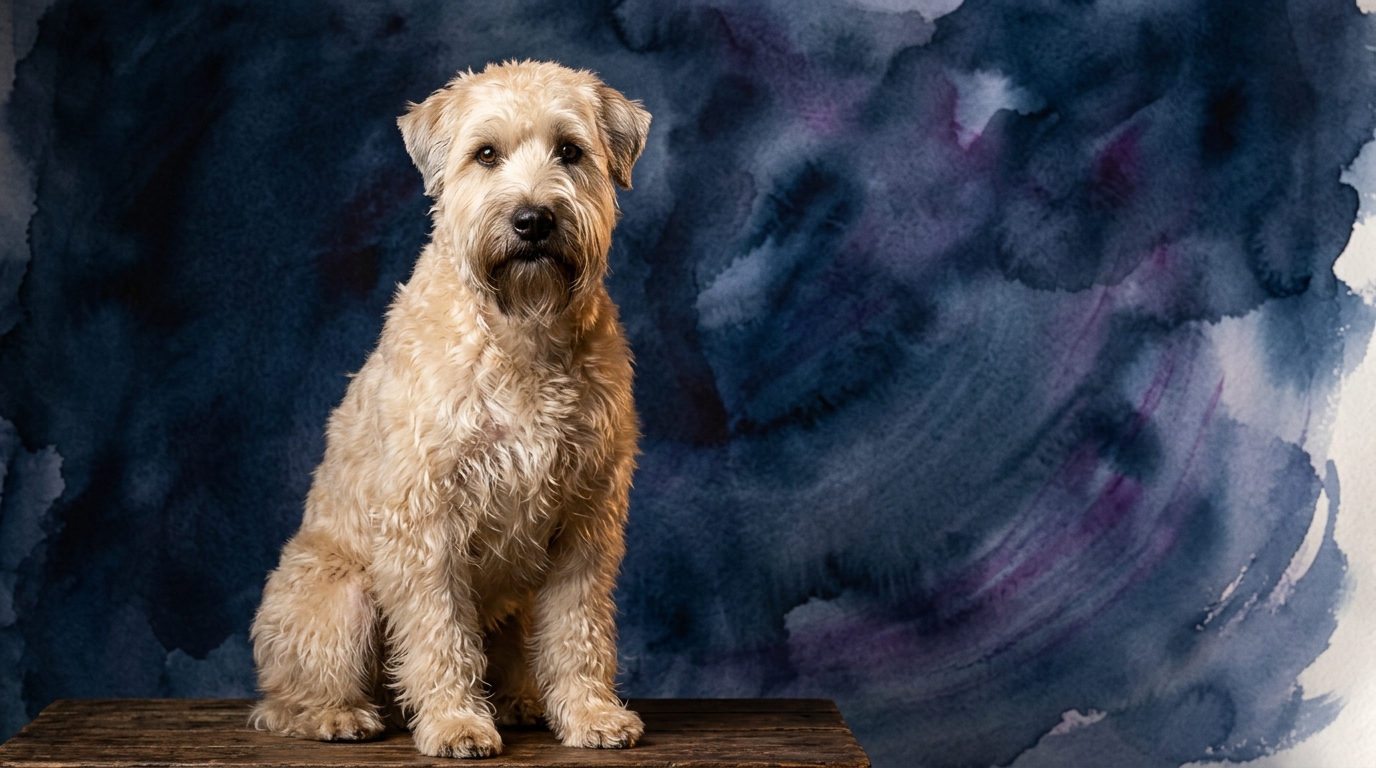
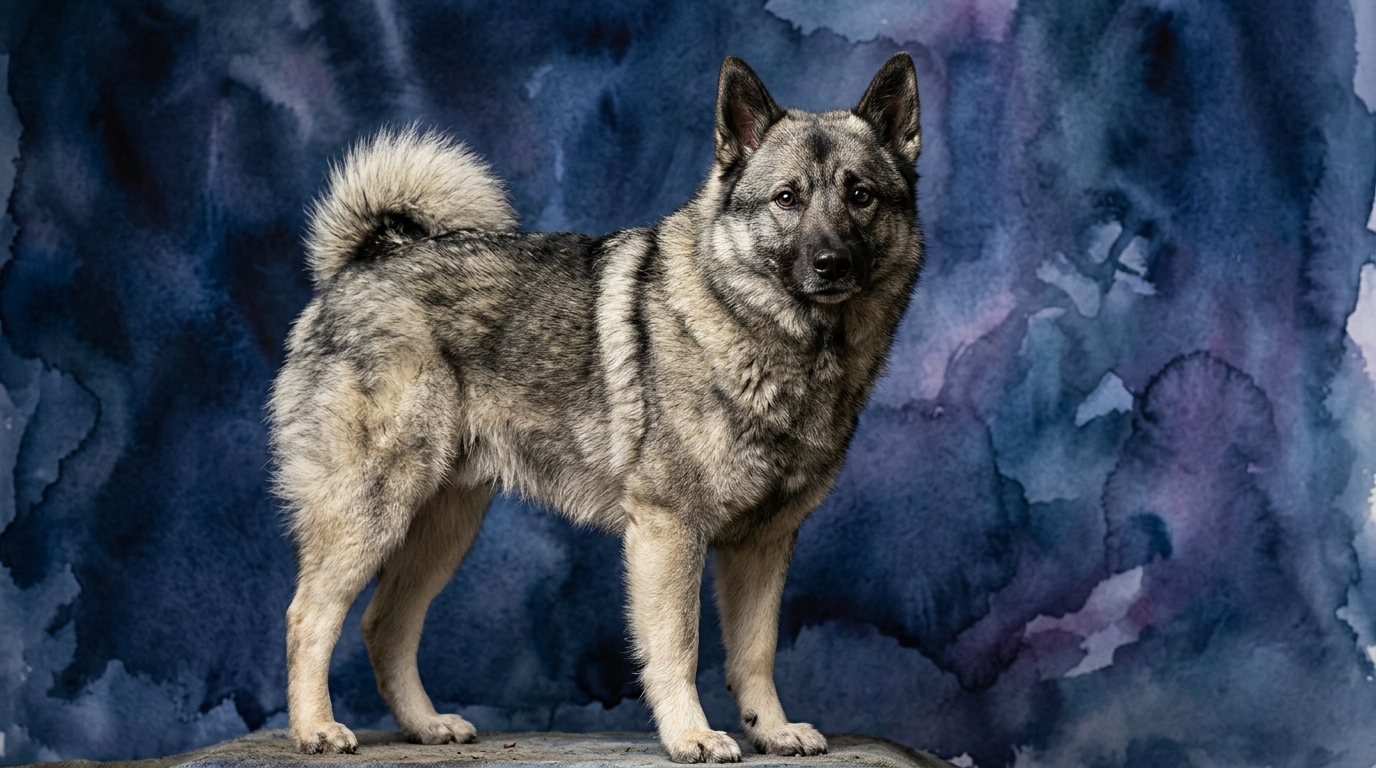
Side-by-Side Cognitive Profiles
The Cosmic Pet Pet IQ Lab assesses canine intelligence across five key dimensions, offering a nuanced view beyond simple obedience. For the Soft Coated Wheaten Terrier, we observe a consistent '3/5' across all categories: problem-solving, training speed, social intelligence, instinctive drive, and memory. This indicates a dog with solid, average cognitive abilities, capable of learning and adapting without extreme tendencies in any single area. Their intelligence is practical and balanced, well-suited to their historical role as versatile farm dogs.
In contrast, the Norwegian Elkhound presents a profile with notable strengths: '4/5' in problem-solving, training speed, and memory, alongside a '3/5' in social intelligence and instinctive drive. This breed's Coren ranking at #36 further highlights its capacity for understanding and learning. These scores point to a dog with a more specialized cognitive toolkit, honed for the demanding tasks of tracking and holding large game in challenging Nordic environments.
Delving deeper into the Soft Coated Wheaten Terrier's 'Problem Solving 3/5' reveals a dog that can navigate daily challenges and learn routines effectively, but may not instinctively seek out or excel at complex, multi-step puzzles. Their 'Training Speed 3/5' means they learn new commands at a steady, manageable pace, responding well to consistent, positive reinforcement without being exceptionally quick to grasp intricate sequences. Their 'Social Intelligence 3/5' suggests they are adequately attuned to human emotions and cues, generally friendly and responsive to their family. The 'Instinctive Drive 3/5' indicates a moderate prey drive, present but not overwhelming, while 'Memory 3/5' means they retain learned information and routines reliably, but might not recall specific, isolated events with exceptional detail.
The Norwegian Elkhound's 'Problem Solving 4/5' signifies a dog adept at strategic thinking, capable of figuring out how to overcome obstacles or track intricate scent trails, requiring sustained focus and decision-making. Their 'Training Speed 4/5' indicates a readiness to absorb new information and commands relatively quickly, making them responsive to structured training environments. 'Social Intelligence 3/5' for the Elkhound points to a dignified, sometimes reserved nature, where they understand human intentions but might not display the effusive people-pleasing typical of some breeds. Their 'Instinctive Drive 3/5' is channeled into their hunting heritage, manifesting as a strong desire to follow scents, though not uncontrollably so. The 'Memory 4/5' is a standout trait, allowing them to remember complex routes, learned sequences, and past experiences with impressive clarity, crucial for navigating vast hunting grounds and recalling specific tasks.
Where the Soft Coated Wheaten Terrier Wins Cognitively
While the Elkhound boasts higher scores in specific cognitive areas, the Wheaten Terrier's balanced '3/5' profile across the board offers a unique advantage: adaptability without excessive demand. Their moderate problem-solving and instinctive drive mean they are less likely to become destructive or overly anxious if not provided with constant, intense mental challenges. This makes them inherently more flexible in diverse family settings, integrating smoothly into various lifestyles without requiring specialized 'work' to feel fulfilled.
Their moderate social intelligence and training speed contribute to a dog that is generally eager to please and forms strong bonds, but isn't overly sensitive or prone to anxiety from subtle shifts in human mood. This cognitive balance can result in a more emotionally resilient and less demanding companion for owners who appreciate a lively, affectionate presence without the need to constantly engage in advanced training or complex mental games.
Where the Norwegian Elkhound Wins Cognitively
The Norwegian Elkhound clearly excels in areas demanding strategic thought and quick learning, particularly in problem-solving, training speed, and memory. Their 'Problem Solving 4/5' allows them to approach complex tasks with a methodical mind, making them proficient in activities that require independent decision-making, such as advanced scent work, agility, or even search and rescue. This cognitive strength means they thrive when given a 'job' that engages their intellect.
Their 'Training Speed 4/5' and 'Memory 4/5' combine to make them highly capable students. They can learn and retain a vast repertoire of commands and intricate sequences, making them excellent candidates for advanced obedience, competitive canine sports, or specialized roles. This allows owners to teach them more sophisticated behaviors and enjoy a highly responsive companion, provided their independent hound nature is respected and channeled appropriately.
Which Is Easier to Train and Why
Based on their IQ profiles, the Norwegian Elkhound, with its 'Training Speed 4/5' and 'Memory 4/5,' generally offers a quicker learning curve for new commands and retains information more readily than the Soft Coated Wheaten Terrier. This means an Elkhound is likely to pick up basic and advanced obedience cues with fewer repetitions and recall them more consistently over time, making the initial stages of training feel more efficient.
However, the Elkhound's independent hound temperament, stemming from its hunting heritage, means that while it learns quickly, it may not always be intrinsically motivated to *obey* if a more compelling scent or stimulus is present. Training an Elkhound requires a confident, consistent leader who can make training engaging and demonstrate why following commands is more rewarding than following their nose. The Wheaten Terrier, despite its 'Training Speed 3/5,' often brings an enthusiastic, charming personality to training sessions. While they might take a bit longer to grasp new concepts, their desire to engage with their human can make the process enjoyable, requiring patience and clear, positive reinforcement to build a solid foundation.
Which Suits Active Owners vs. Relaxed Owners
For owners with a highly active lifestyle and a desire for a canine partner in demanding activities, the Norwegian Elkhound is often the more suitable choice. Their 'Problem Solving 4/5' and 'Memory 4/5' mean they require regular mental stimulation alongside their physical exercise. Elkhounds excel in activities like hiking, running, scent work, and competitive obedience, thriving when their cognitive abilities are challenged. Owners who enjoy structured training and want a dog capable of performing complex tasks will find the Elkhound a rewarding companion.
The Soft Coated Wheaten Terrier, with its balanced '3/5' profile, suits owners who appreciate a lively, affectionate companion but might not be seeking a dog for advanced competitive sports. While energetic and playful, their cognitive needs are met with consistent daily exercise, engaging play, and moderate mental enrichment. They are adaptable to various family dynamics and can thrive with owners who enjoy regular walks, playtime in the yard, and a charming presence by their side, without the intense demand for constant intellectual engagement that a higher-scoring breed might present.
Ultimately, the choice between these two distinct breeds depends on an owner's lifestyle, training goals, and preference for cognitive engagement. Both offer unique rewards, but cater to different expectations of a canine companion.
The Soft Coated Wheaten Terrier offers a balanced, adaptable cognitive profile, making them an excellent choice for families or individuals seeking an affectionate, playful, and moderately active companion who integrates smoothly into a varied lifestyle without demanding constant, intense mental challenges. The Norwegian Elkhound, with its higher problem-solving, training speed, and memory scores, is best suited for active, experienced owners who enjoy structured training, outdoor adventures, and engaging a dog's strategic mind in mentally stimulating activities.
The Verdict
Choose the Soft Coated Wheaten Terrier if you desire an adaptable, affectionate companion with a balanced cognitive profile, fitting well into a moderately active family life without requiring intense, specialized mental work. They offer delightful companionship and moderate trainability for a joyful, engaging pet.
Opt for the Norwegian Elkhound if you are an active owner prepared to engage a dog with a sharp mind, superior memory, and quicker training speed in structured activities like scent work, hiking, or advanced obedience, appreciating their independent spirit and strategic problem-solving abilities.
🧠 Find Your Pet's IQ Score
Our Pet IQ Lab assessment covers 25+ tests across 5 cognitive dimensions — personalized to your breed.
Take the Full IQ Test →Frequently Asked Questions
Do Norwegian Elkhounds need more mental stimulation than Soft Coated Wheaten Terriers?
Yes, Norwegian Elkhounds, with their 'Problem Solving 4/5' and 'Memory 4/5,' generally require more consistent mental stimulation. Their cognitive strengths thrive on challenges like puzzle toys, advanced training, and scent work, whereas Wheatens, at '3/5' across the board, are content with more moderate mental engagement.
Which breed is more prone to independent thinking?
Both breeds possess a moderate 'Instinctive Drive 3/5,' indicating a degree of independence. However, the Norwegian Elkhound's background as a hunting hound often manifests as a stronger inclination to follow scents and make decisions autonomously, requiring an owner who understands and can channel this independent spirit effectively.
Are Soft Coated Wheaten Terriers difficult to train because their training speed is lower?
A 'Training Speed 3/5' for the Soft Coated Wheaten Terrier means they learn at a steady pace, not that they are difficult. They respond very well to consistent, positive reinforcement and clear instructions; owners just need to be patient and engaging, as they may require more repetitions than a dog with a '4/5' training speed.