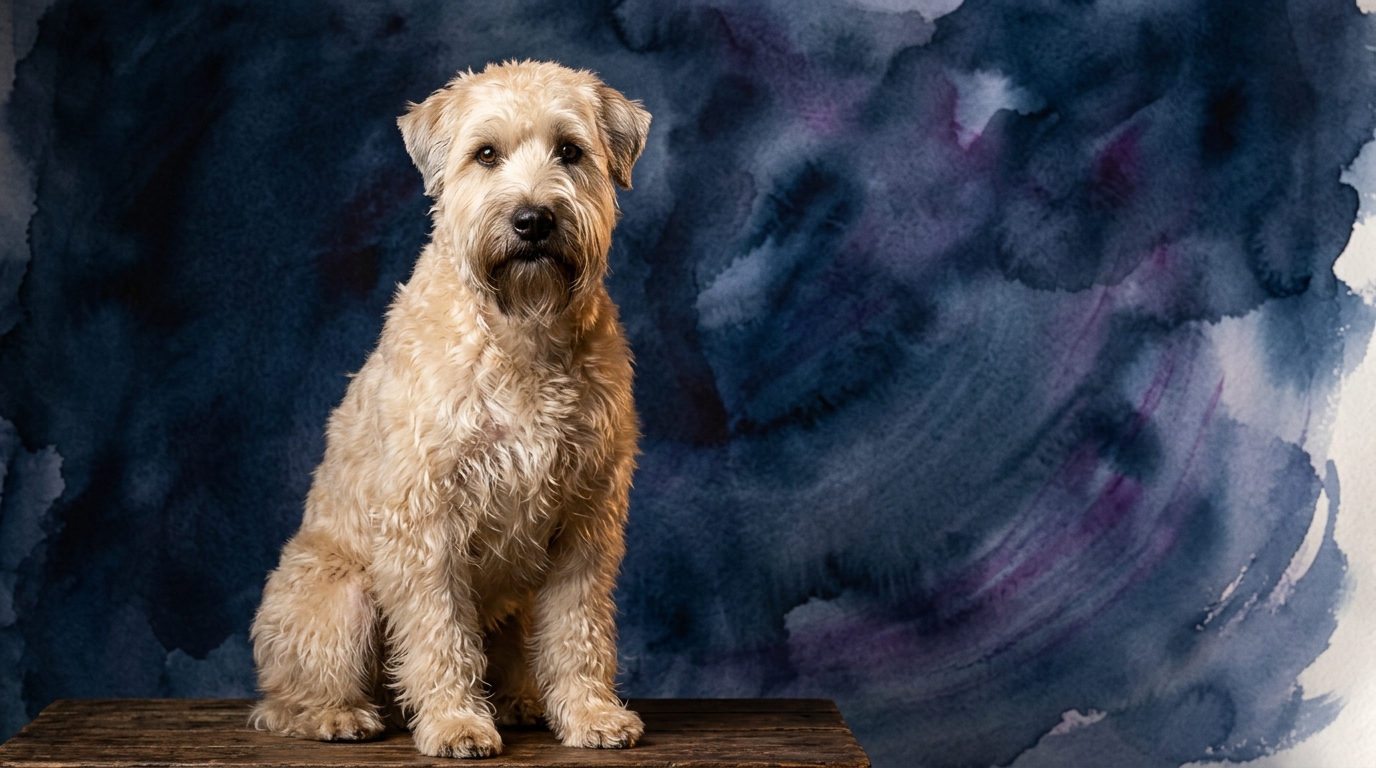
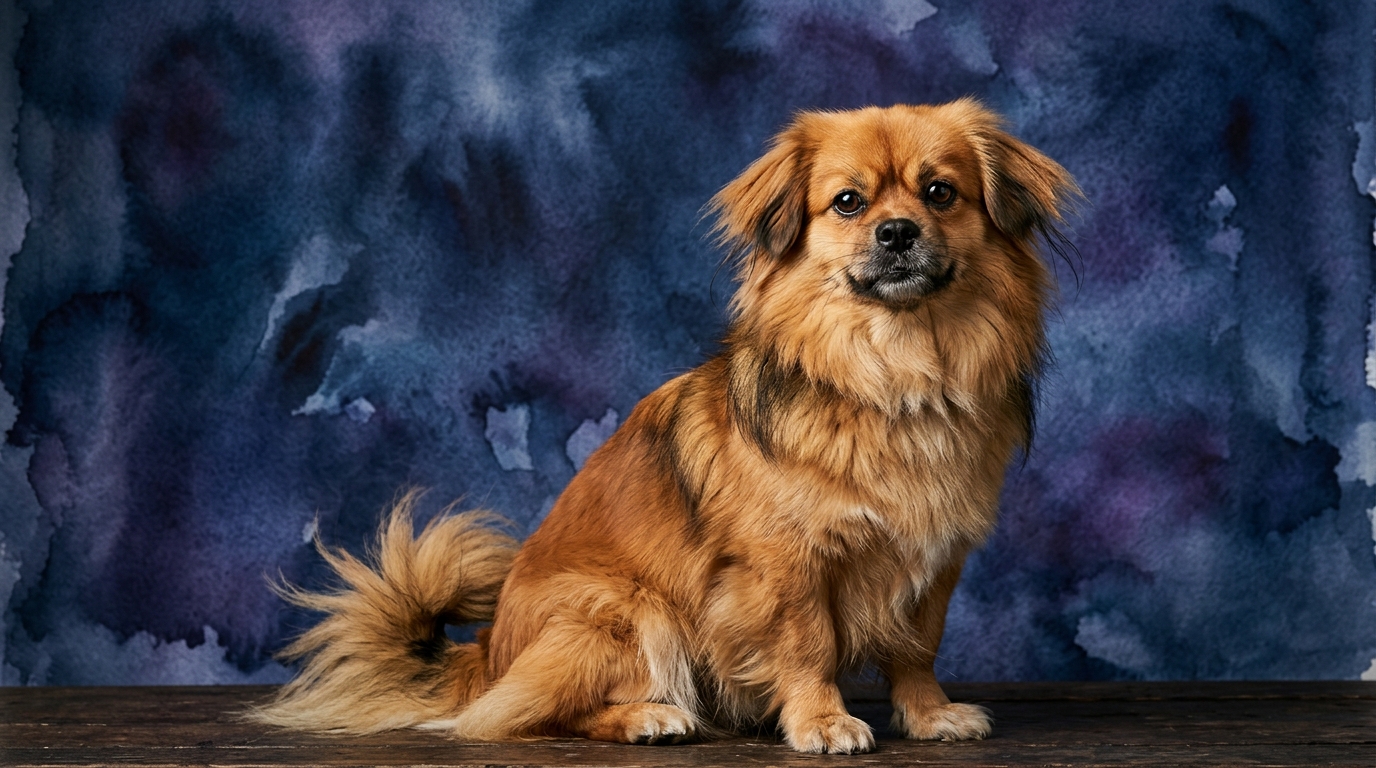
Side-by-side IQ profile
The Cosmic Pet Pet IQ Lab assesses canine intelligence across five key dimensions, each scored out of five. For both the Soft Coated Wheaten Terrier and the Tibetan Spaniel, all dimensions register a solid 3/5. While the numerical score is identical, the practical application and behavioral expression of these capabilities vary significantly between the breeds, reflecting their unique evolutionary paths and breed purposes.
Soft Coated Wheaten Terrier (Terrier Group): This spirited breed’s cognitive profile is deeply influenced by its working terrier heritage, even with average scores. Problem Solving (3/5): Wheatens possess a solid capability for independently deciphering environmental puzzles, leveraging their terrier resourcefulness to overcome obstacles or access desired items. This often involves persistent experimentation and joyful determination. Training Speed (3/5): They learn new commands and routines effectively when engaged, though their independent spirit means training requires consistent, positive, and stimulating methods to maintain focus and compliance. Social Intelligence (3/5): Wheatens generally display good awareness of family dynamics and human moods, often seeking participation. Their social interactions can be boisterous, showing clear communication but sometimes lacking subtlety. Instinctive Drive (3/5): A moderate drive for chasing, digging, and alerting stems from their terrier heritage. This isn't overwhelming but requires outlets to prevent boredom and channel natural inclinations. Memory (3/5): They have a solid memory for routines, learned behaviors, and past social interactions, recalling specific events and commands over time.
Tibetan Spaniel (Non-Sporting Group): The Tibetan Spaniel’s cognitive strengths are rooted in its long history as a companion and watchdog, manifesting as a more nuanced intelligence. Problem Solving (3/5): Tibetan Spaniels exhibit a solid capacity for solving problems, often related to optimizing their comfort or obtaining attention. They cleverly navigate their environment to achieve desired outcomes, displaying a cleverness focused on personal well-being. Training Speed (3/5): They learn at a good pace, especially with positive reinforcement, eager to please their chosen people. However, a charming stubbornness can emerge if tasks seem uninteresting, necessitating patient and creative motivation. Social Intelligence (3/5): Tibbies are highly attuned to their family's emotions and routines, subtly reading moods and reacting appropriately. They form deep bonds with their inner circle but can be reserved with strangers. Instinctive Drive (3/5): Their historical role as watchdogs gives them a moderate alertness drive, expressed through keen observation and vocal warnings. This is less about hunting and more about surveying their domain. Memory (3/5): They possess a good memory for people, places, and established routines, recalling who belongs and where favored spots are, making them reliable in familiar settings.
Where Soft Coated Wheaten Terrier wins cognitively
Despite their matching 3/5 scores, the Wheaten Terrier often displays a cognitive edge in scenarios demanding independent initiative and spirited persistence, characteristic of their working terrier lineage. Their Problem Solving (3/5) manifests as a more proactive engagement with environmental challenges, such as figuring out how to bypass a gate or retrieve a toy from a difficult spot, driven by an inherent curiosity and resourcefulness. This breed's Instinctive Drive (3/5) also provides a unique cognitive advantage in tasks requiring sustained focus on a scent trail or the energetic pursuit of a moving object, translating into a tenacious problem-solving approach rooted in their historical purpose. They excel when the solution requires a degree of physical engagement and a willingness to try multiple approaches until success is achieved, often with a joyful exuberance that fuels their cognitive exploration.
Where Tibetan Spaniel wins cognitively
Conversely, the Tibetan Spaniel, while sharing the same 3/5 cognitive ratings, often demonstrates a subtle supremacy in areas requiring nuanced social understanding and adaptability within a domestic setting. Their Social Intelligence (3/5) allows them to excel at reading the micro-expressions and body language of their human companions, often anticipating needs or moods with remarkable accuracy, a skill honed over centuries as devoted companions. This manifests as a refined capacity for subtle communication and emotional attunement, which can be less overt than a Wheaten's boisterous engagement but no less profound. Their Problem Solving (3/5) often focuses on optimizing their comfort and position within the family hierarchy, such as strategically positioning themselves for maximum attention or finding the sunniest spot, indicating a cleverness geared towards domestic harmony and personal well-being rather than external challenges. Their memory (3/5) is particularly strong for social hierarchies and routines, making them excellent at adapting to and maintaining household order.
Which is easier to train and why
Comparing the training experience for these two breeds, both rated 3/5 in Training Speed, reveals distinct approaches. The Soft Coated Wheaten Terrier, with its independent terrier spirit, can be a joy to train but requires a consistent, engaging handler who understands their need for mental stimulation and variety. Their 3/5 Training Speed means they are perfectly capable of learning, but their inherent curiosity and sometimes stubborn nature can lead to 'selective hearing' if the training isn't fun or if they perceive a more interesting distraction. Success with a Wheaten often hinges on making training a game and harnessing their spirited energy and problem-solving drive. In contrast, the Tibetan Spaniel, also at 3/5 for Training Speed, tends to be more motivated by pleasing their beloved human companions. While they can exhibit a charming stubborn streak, particularly if they don't see the point of a command, their social intelligence and desire for companionship often make them more amenable to positive reinforcement. They thrive on praise and connection, and their training benefits from a gentle, patient approach that leverages their loyalty. Therefore, while both learn well, the Tibetan Spaniel might be perceived as 'easier' for owners seeking a more compliant learner, provided their companion-driven motivation is tapped effectively, whereas the Wheaten requires a more dynamic and persistent handler to channel their independent spirit.
Which suits active owners vs relaxed owners
The cognitive profiles of these breeds, even with their identical 3/5 scores, point to differing ideal owner lifestyles. The Soft Coated Wheaten Terrier, with its spirited Problem Solving (3/5) and moderate Instinctive Drive (3/5), is better suited for active owners. This breed thrives on regular physical exercise and mental engagement, enjoying activities like agility, long walks, or interactive play that allow them to use their natural resourcefulness and energy. Their need for consistent mental stimulation means they appreciate owners who are prepared to integrate training and brain games into daily life, channeling their terrier tenacity constructively. On the other hand, the Tibetan Spaniel, while enjoying walks and play, leans towards a more relaxed owner. Their Social Intelligence (3/5) and focus on domestic harmony make them content with being close to their people, observing their surroundings from a comfortable perch, and engaging in less physically demanding mental exercises like puzzle toys or learning new tricks within the home. While they are observant and alert, their lower physical demands mean they can adapt well to quieter households, providing watchful companionship without the constant need for high-octane activities.
The Verdict
Opt for the Soft Coated Wheaten Terrier if you are an active individual or family who enjoys consistent engagement, spirited training, and a dog that approaches life with independent zest and tenacious curiosity.
Select the Tibetan Spaniel if you seek a watchful, devoted companion who excels at subtle social cues, thrives on close companionship, and prefers a more relaxed, observant lifestyle focused on domestic harmony.
🧠 Find Your Pet's IQ Score
Our Pet IQ Lab assessment covers 25+ tests across 5 cognitive dimensions — personalized to your breed.
Take the Full IQ Test →Frequently Asked Questions
Do Soft Coated Wheaten Terriers get along with other pets?
Wheatens, with their moderate Instinctive Drive, can coexist with other pets, especially if socialized early. However, their terrier nature means they might have a higher prey drive towards smaller, fast-moving animals, requiring careful introductions and supervision.
Are Tibetan Spaniels good with children?
Tibetan Spaniels, with their strong Social Intelligence, are generally good with respectful children within their family. They appreciate calm interactions and can be reserved or retreat if playtime becomes too boisterous, preferring gentle companionship.
How much grooming do these breeds require?
The Soft Coated Wheaten Terrier requires significant grooming to prevent matting, needing daily brushing and regular professional trimming due to its single, soft coat. The Tibetan Spaniel, with its double coat, needs regular brushing several times a week to manage shedding and prevent tangles, but generally less intensive grooming than the Wheaten.