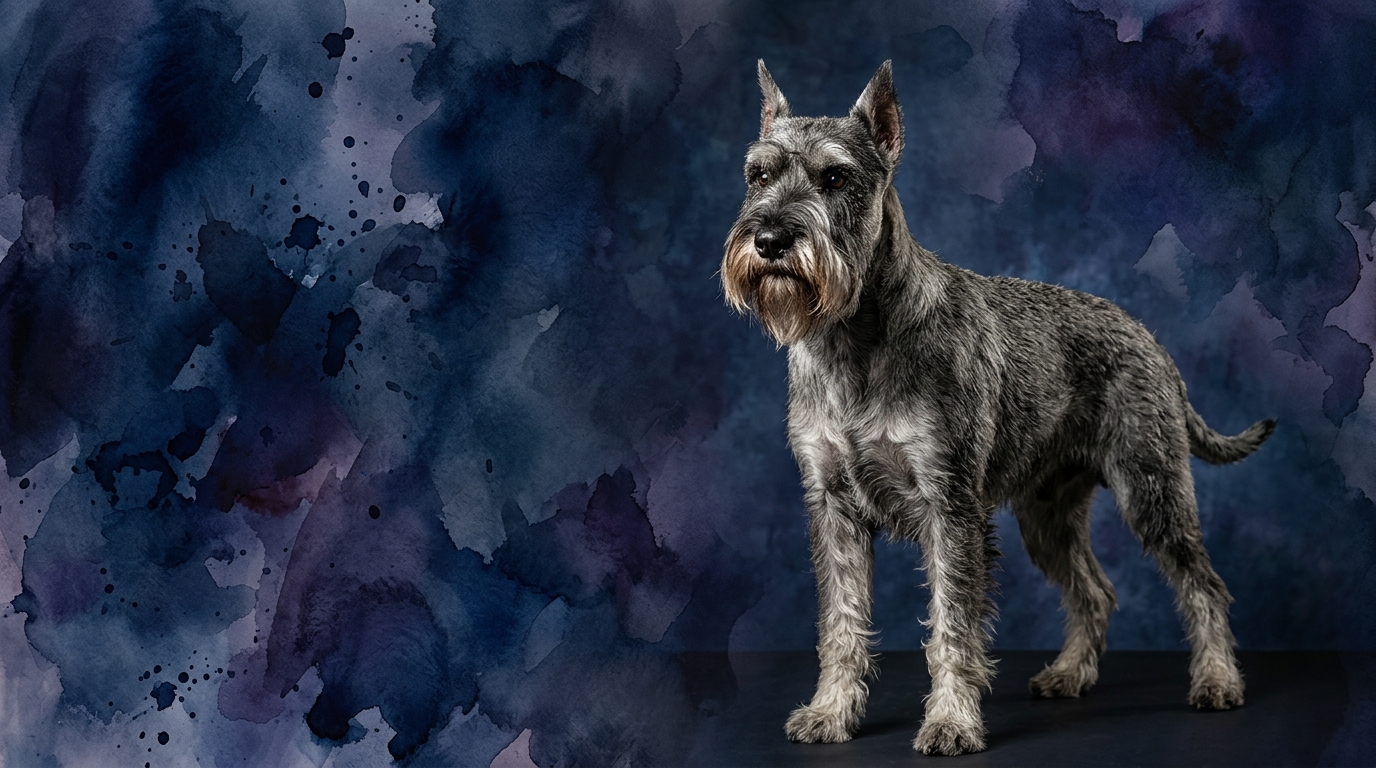
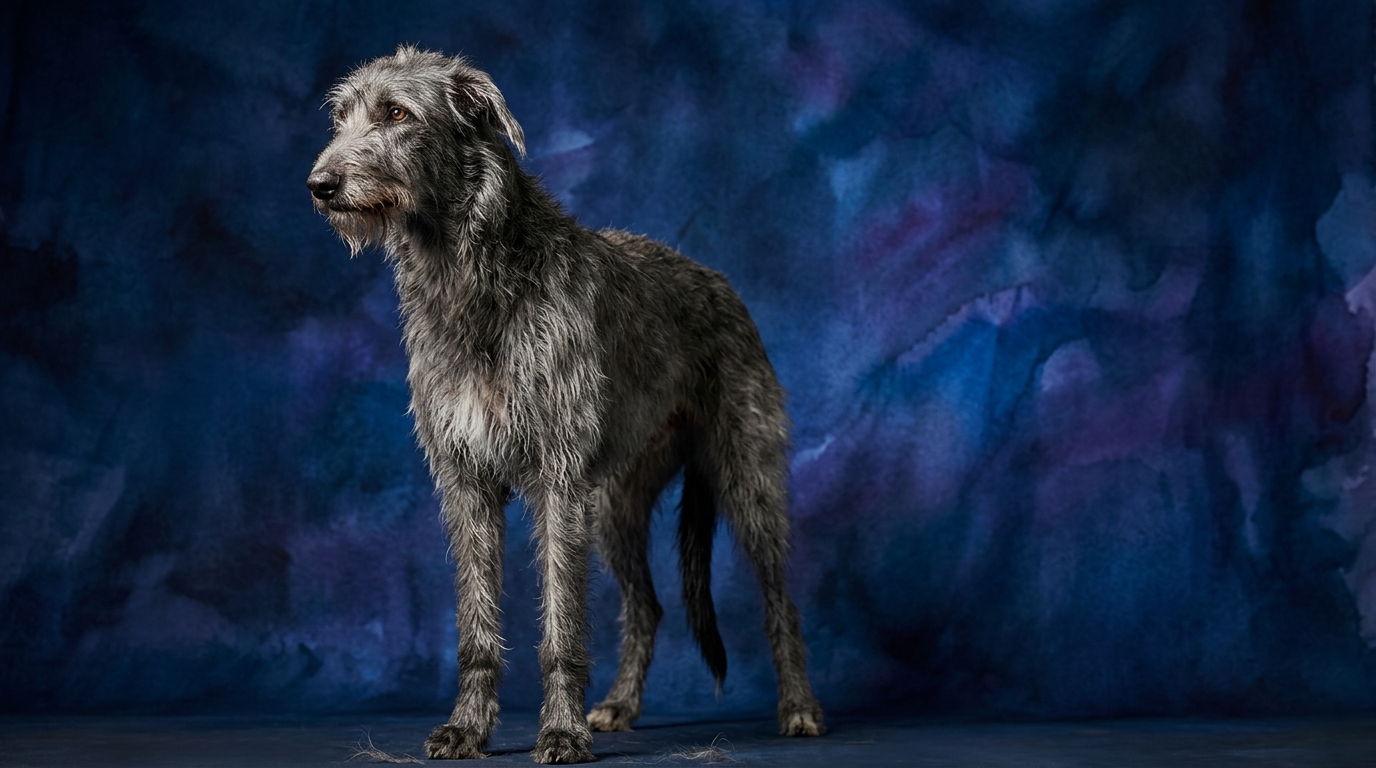
Side-by-Side IQ Profile: Standard Schnauzer vs. Scottish Deerhound
The Cosmic Pet Pet IQ Lab employs a multi-dimensional approach to assess canine cognition, evaluating five key areas. Let's explore how the Standard Schnauzer, a robust Working dog, and the Scottish Deerhound, a dignified Hound, measure up.
The **Standard Schnauzer**, with a Coren ranking of #22, presents a profile geared towards active engagement and learning:
**Problem Solving (4/5)**: These dogs exhibit strong logical reasoning for their breed, adept at navigating complex environments or figuring out how to open gates. Their cognitive approach leans towards active engagement and manipulation of their surroundings to achieve goals.
**Training Speed (4/5)**: Standard Schnauzers typically grasp new commands and routines quickly, often requiring fewer repetitions than many other breeds. Their eagerness to learn and work alongside their human companions contributes significantly to their rapid acquisition of skills.
**Social Intelligence (3/5)**: While capable of forming deep bonds, their social interactions can be discerning, showing a clear preference for their established family unit. They interpret human cues effectively within their trusted circle but may be more reserved with strangers.
**Instinctive Drive (3/5)**: Their historical role as farm dogs and guardians means a pronounced drive for protection and a keen sense of territory. This translates into alert behaviors and a readiness to respond to perceived threats or changes in their environment.
**Memory (4/5)**: Standard Schnauzers retain learned behaviors and routines with notable tenacity, remembering past training sessions or experiences over long periods. This strong memory aids in consistent performance and predictable behavior once concepts are ingrained.
The **Scottish Deerhound**, not Coren-ranked, showcases a cognitive style reflecting its sighthound legacy:
**Problem Solving (3/5)**: Deerhounds approach problems with a blend of observation and instinct, often relying on their keen senses and physical prowess rather than intricate manipulation. Their solutions are often direct and efficient, particularly concerning movement and spatial awareness.
**Training Speed (3/5)**: While capable of learning, Scottish Deerhounds require a patient and consistent approach to training. Their independent hound nature means they process information at their own pace, often needing more motivational reinforcement to solidify new commands.
**Social Intelligence (3/5)**: Deerhounds display a gentle and dignified social demeanor, forming strong, quiet bonds with their families. They are generally polite with strangers but not overly effusive, preferring calm interactions and observing social cues rather than actively seeking engagement.
**Instinctive Drive (3/5)**: Their powerful sighthound heritage manifests as an intense prey drive, particularly for fast-moving objects. This instinct is deeply ingrained, influencing their focus and reaction to stimuli in open environments, requiring careful management.
**Memory (3/5)**: Scottish Deerhounds possess a functional memory for routines and familiar people, but their recall for specific, detailed commands might require more frequent refreshing. They remember experiences and associations, which informs their general behavior and comfort levels.
Where the Standard Schnauzer Wins Cognitively
The Standard Schnauzer's cognitive strengths distinctly shine in areas demanding active mental engagement and structured learning. With a Problem Solving score of 4/5, they demonstrate a superior capacity for analytical thought, often devising clever strategies to overcome obstacles, whether it's figuring out how to manipulate a latch or untangle a puzzle toy. Their Training Speed, also rated 4/5, means they pick up new commands and complex sequences with remarkable alacrity, making them receptive partners in advanced obedience or dog sports. Furthermore, their 4/5 Memory score ensures that once a lesson is learned or a routine established, it tends to stick, contributing to their reliability and consistency in performance over time. This combination of quick learning, effective problem-solving, and robust memory makes the Schnauzer particularly adept at tasks requiring sustained mental effort and precision.
Where the Scottish Deerhound Wins Cognitively
While the Scottish Deerhound’s cognitive profile leans into different strengths, it excels in areas defined by their sighthound heritage. Their Problem Solving at 3/5, though lower than the Schnauzer's, is acutely attuned to environmental observation and rapid, decisive action, particularly in open spaces. They are masters of spatial reasoning and route planning when pursuing something, showcasing a unique form of practical intelligence. Their Instinctive Drive, rated 3/5, while equal to the Schnauzer's, manifests as an unparalleled focus and swift reaction to visual stimuli, making them exceptional at tasks requiring acute visual tracking and bursts of speed. This translates into a profound understanding of movement and space. Their Social Intelligence (3/5) allows them to be remarkably gentle and discerning companions, reading subtle emotional cues within their trusted family unit, offering a calm and empathetic presence without being overly demanding. Their wins are often subtle, rooted in their dignified composure and profound connection to their sighthound instincts, making them exceptionally graceful and intuitive in their specific domain.
Which is Easier to Train, and Why?
The Standard Schnauzer is generally considered easier to train due to its superior Training Speed (4/5) and higher Problem Solving (4/5) and Memory (4/5) scores. Their working breed heritage instills a strong desire to cooperate and a readiness to engage in structured learning. They typically grasp new commands with fewer repetitions and are more inclined to focus on their handler, making them responsive to various training methods. Conversely, the Scottish Deerhound, with a Training Speed of 3/5, requires a more patient and nuanced approach. As sighthounds, they possess an inherent independence and a strong prey drive, meaning their attention can be easily diverted by visual stimuli. Training a Deerhound often involves making learning feel like a collaborative game, utilizing positive reinforcement and short, engaging sessions to maintain their focus and build a strong relationship rather than relying on rote repetition. Their tendency to "process at their own pace" means trainers must be adaptable and understand that consistent motivation is key to overcoming their independent streak.
Active Owners vs. Relaxed Owners: A Cognitive Fit
For owners seeking an active, mentally stimulating companion, the Standard Schnauzer is an excellent match. Their high Problem Solving and Memory scores, combined with a robust Instinctive Drive, mean they thrive on regular exercise coupled with consistent mental challenges like obedience work, agility, or puzzle toys. They require owners who are prepared to provide daily structured activities and engagement to prevent boredom and channel their considerable energy constructively. A Schnauzer without sufficient mental and physical outlets can become inventive in less desirable ways.
The Scottish Deerhound, while needing significant bursts of exercise, particularly ample space for galloping, often suits owners who appreciate a more relaxed indoor companion. After their exercise needs are met, typically through a good run or two in a secure area, they are content to lounge gracefully, often described as "couch potatoes." Their dignified demeanor and lower general activity level indoors make them suitable for owners who enjoy a calm presence at home but are committed to providing the necessary outdoor freedom for their sighthound's unique exercise requirements. They don't typically demand constant mental "work" in the same way a Schnauzer does but benefit from calm, consistent interaction.
The Verdict
Select a Standard Schnauzer if you desire a highly trainable, mentally engaged companion eager for structured activities, problem-solving tasks, and a strong partnership in various dog sports or advanced obedience.
Opt for a Scottish Deerhound if you appreciate a noble, calm, and independent companion who thrives on brief, intense exercise followed by relaxed indoor lounging, and you are prepared for patient, relationship-based training.
🧠 Find Your Pet's IQ Score
Our Pet IQ Lab assessment covers 25+ tests across 5 cognitive dimensions — personalized to your breed.
Take the Full IQ Test →Frequently Asked Questions
What specific activities best suit the Standard Schnauzer's problem-solving skills?
Standard Schnauzers excel in activities like agility, rally obedience, tracking, and advanced trick training, which all leverage their strong problem-solving abilities and quick learning. Interactive puzzle toys and complex scent games are also great for their mental stimulation.
How does the Scottish Deerhound's instinctive drive impact daily life?
The Scottish Deerhound's strong prey drive means they can be instantly compelled to chase anything small and fast-moving, requiring a secure fenced yard and leashed walks. This instinct also informs their love for running and coursing activities, where it can be safely channeled.
Are Standard Schnauzers and Scottish Deerhounds good with children?
Both breeds can be good with respectful, older children, especially when raised together. Standard Schnauzers can be protective and playful, while Scottish Deerhounds are generally gentle and tolerant, though their large size means supervision is always wise with very young children.