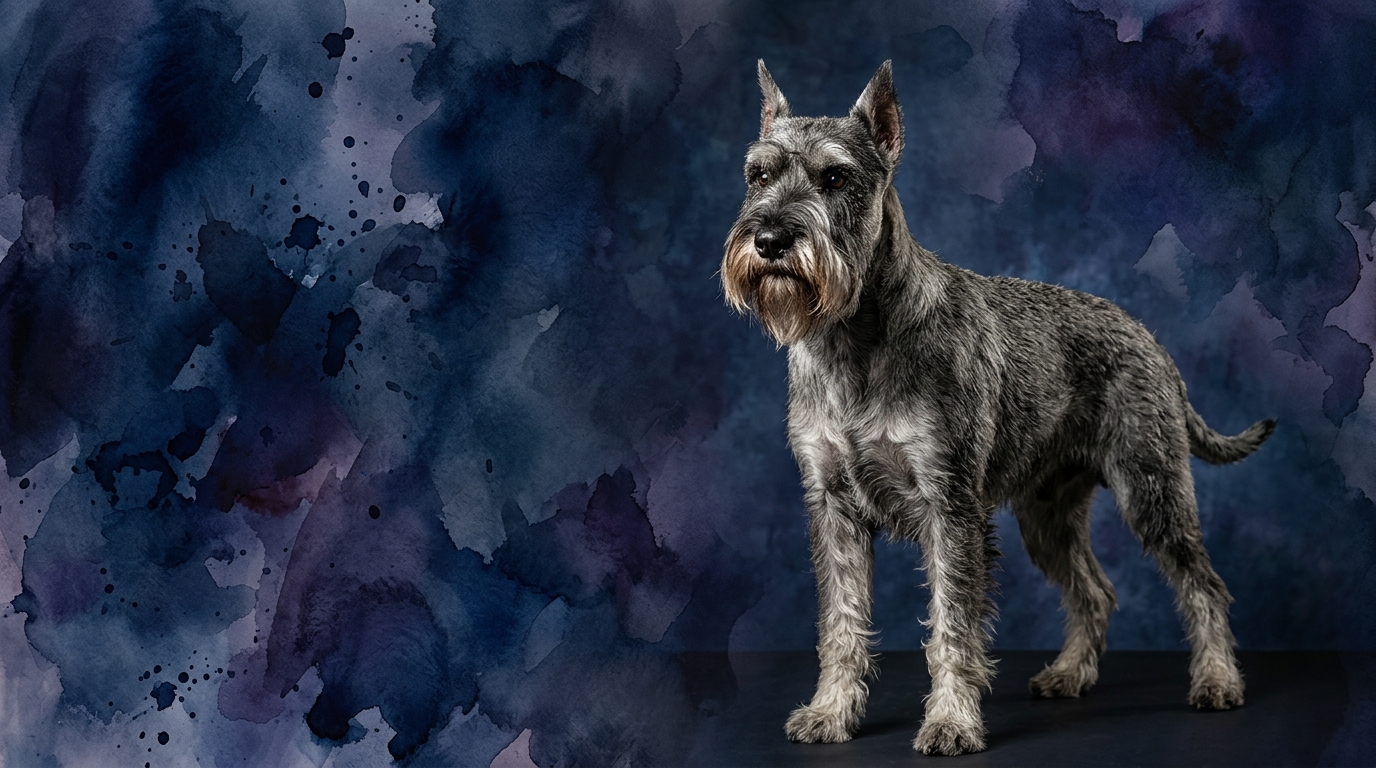
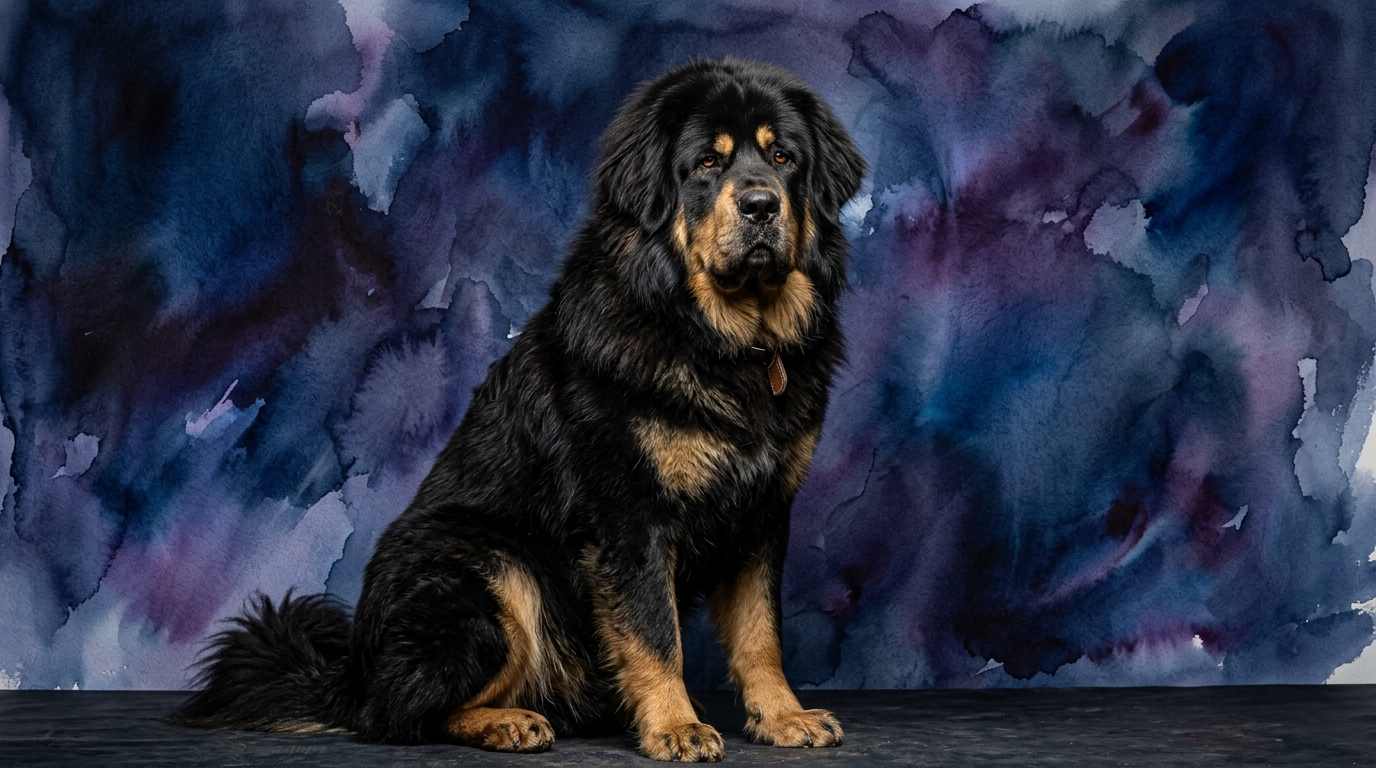
Side-by-Side IQ Profile: Standard Schnauzer vs. Tibetan Mastiff
The Cosmic Pet Pet IQ Lab employs a multi-dimensional approach to assess canine cognition, moving beyond simple obedience to understand a breed's full mental landscape. For the Standard Schnauzer, a breed recognized for its mental agility and ranked #22 by Stanley Coren for working intelligence, we see a profile geared towards active engagement and learning.
The Standard Schnauzer exhibits a Problem Solving score of 4/5, indicating a strong capacity to analyze novel situations and devise effective solutions. Their Training Speed, also 4/5, points to a quick grasp of new commands and an eagerness to participate in structured learning. Social Intelligence at 3/5 suggests a reasonable understanding of human cues and social dynamics, while their Instinctive Drive of 3/5 reflects a balanced blend of historical working roles, including ratting and guarding, with a cooperative nature. Finally, their Memory, rated 4/5, signifies excellent retention of learned behaviors and experiences.
In contrast, the Tibetan Mastiff, while not Coren-ranked, presents a cognitive profile more aligned with its ancient role as an independent guardian. Their Problem Solving score of 3/5 indicates an ability to think independently and adapt, though perhaps with a different strategic approach than the Schnauzer. Training Speed at 3/5 suggests they are capable learners but often require more patience and consistency due to their independent streak. Social Intelligence, also 3/5, typically manifests as deep loyalty to their family but reservedness towards strangers. Their Instinctive Drive of 3/5 is heavily focused on territorial protection and vigilance, guiding much of their behavior. Lastly, their Memory, at 3/5, is sufficient for their guarding duties, enabling them to recall important people, places, and established routines.
Where the Standard Schnauzer Wins Cognitively
The Standard Schnauzer's cognitive strengths distinctly shine in areas requiring quick processing, adaptability, and a cooperative learning spirit. Their superior Problem Solving score (4/5) means they are often adept at navigating complex environments or figuring out how to bypass obstacles, demonstrating a resourceful and strategic mind. This isn't just about simple tasks; it extends to understanding sequences of actions and anticipating outcomes.
Their elevated Training Speed (4/5) is a significant advantage, as they typically pick up new commands and routines with fewer repetitions than many other breeds. This quick learning ability makes them highly responsive to structured training and allows for the rapid introduction of complex skills, fostering a dynamic partnership with their handler. The Schnauzer's impressive Memory (4/5) further amplifies this, ensuring that once a lesson is learned, it is retained effectively over time, reducing the need for constant re-training.
Furthermore, their Coren ranking of #22 among all breeds underscores a generalized cognitive competence that translates into versatility. This breed is often observed to enjoy mental challenges and thrives on engaging with their human companions in learning activities, making them excellent candidates for advanced obedience, agility, or even trick training where rapid learning and retention are paramount.
Where the Tibetan Mastiff Wins Cognitively
While the Tibetan Mastiff's IQ scores might appear lower in a direct comparison, their cognitive strengths are profoundly tailored to their historical purpose, demonstrating a specialized form of intelligence. Their Problem Solving score of 3/5 manifests as a robust capability for independent assessment of their environment, particularly regarding security and threat evaluation. They are adept at evaluating potential threats and determining appropriate responses without constant human direction, a crucial aspect of their role as guardians.
Their Social Intelligence, also 3/5, translates into a discerning understanding of their immediate family unit and a keen awareness of perceived outsiders. This allows them to effectively differentiate between accepted individuals and potential intruders, a specialized form of social cognition that prioritizes loyalty and protection over broad gregariousness. This isn't a lack of social understanding, but rather a focused application of it.
The Tibetan Mastiff's Instinctive Drive of 3/5 is intensely focused on territorial protection, demanding a complex interplay of vigilance, memory for familiar faces, and the capacity to act decisively when their charge is threatened. This isn't a generic drive but a highly refined, purpose-driven cognitive function that requires sustained attention and independent judgment. Their Memory (3/5) serves this guarding purpose well, enabling them to remember who belongs and who doesn't, and to recall past events or threats relevant to their territory, ensuring consistent security protocols are maintained.
Which is Easier to Train and Why
Based on their respective IQ profiles, the Standard Schnauzer is generally easier to train than the Tibetan Mastiff, primarily due to their higher Training Speed (4/5) and stronger drive to engage with human instruction. Standard Schnauzers typically pick up new commands quickly, enjoy the process of learning, and readily seek to understand what is expected of them, making structured obedience sessions highly effective. Their Coren ranking further supports their amenability to training.
The Tibetan Mastiff, with a Training Speed of 3/5, is certainly trainable, but their inherent independence and ancient guarding instincts often mean a different approach is required. They are less inclined to perform simply to please and will often assess a command's utility from their own perspective. Training a Tibetan Mastiff demands immense patience, unwavering consistency, and a deep understanding of their unique temperament; it's about building a respectful partnership rather than expecting immediate compliance. They may understand a command but choose not to execute it if they deem it unnecessary or contrary to their protective duties, a distinct behavioral difference.
Which Suits Active Owners vs. Owners Seeking a Watchful Companion
For owners seeking an active, mentally engaged, and versatile canine companion, the Standard Schnauzer is often a more suitable match. Their higher Problem Solving (4/5) and Training Speed (4/5) scores mean they thrive on mental stimulation and physical activity, enjoying everything from agility and obedience trials to long hikes and interactive games. They are partners in adventure, requiring consistent engagement to prevent boredom and channel their considerable mental energy constructively.
The Tibetan Mastiff, while requiring significant exercise due to its size, is better suited for experienced owners who appreciate a watchful, independent companion with a strong sense of territory. Their "relaxed" nature refers less to a lack of needs and more to their preference for observing and guarding rather than constant interactive play. They are not typically suited for owners desiring a dog for competitive dog sports or extensive public outings, preferring the security of their own domain. This requires owners who understand and respect their deeply ingrained guarding instincts, providing a secure environment and consistent, patient guidance without trying to suppress their core nature.
The Verdict
Choose the Standard Schnauzer if you desire an engaged, highly trainable companion for an active lifestyle, thriving on mental challenges and shared activities. They are well-suited for owners who enjoy consistent training and participation in dog sports.
Opt for the Tibetan Mastiff if you are an experienced owner seeking an independent, protective guardian, capable of making its own assessments, and are committed to consistent, patient training tailored to their unique temperament and guarding role.
🧠 Find Your Pet's IQ Score
Our Pet IQ Lab assessment covers 25+ tests across 5 cognitive dimensions — personalized to your breed.
Take the Full IQ Test →Frequently Asked Questions
Is the Standard Schnauzer a good choice for first-time dog owners?
With their intelligence and trainability, Standard Schnauzers can be a good fit for dedicated first-time owners who are prepared for consistent training and mental stimulation. Their need for engagement means they thrive with owners willing to invest time in their development and activities.
How does the Tibetan Mastiff's guarding instinct impact its social behavior?
The Tibetan Mastiff's strong guarding instinct means they are typically reserved, watchful, and sometimes wary of strangers, while being fiercely loyal to their family. Early and consistent socialization is crucial to help them develop appropriate responses to new people and situations without compromising their protective nature.
Can a Tibetan Mastiff excel in obedience or dog sports?
While capable of learning, a Tibetan Mastiff's independent nature and lower drive to please often mean they may not excel in traditional obedience or fast-paced dog sports like agility to the same degree as more biddable breeds. Success requires an owner deeply committed to understanding their motivation and tailoring training methods to their unique personality.