Side-by-Side Cognitive Profiles
At The Cosmic Pet Pet IQ Lab, we evaluate canine intelligence across five key dimensions, offering a nuanced understanding beyond simple ranking. While both the Swedish Vallhund and Norwegian Elkhound originate from similar northern climes, their ancestral vocations have cultivated differing cognitive strengths and inclinations.
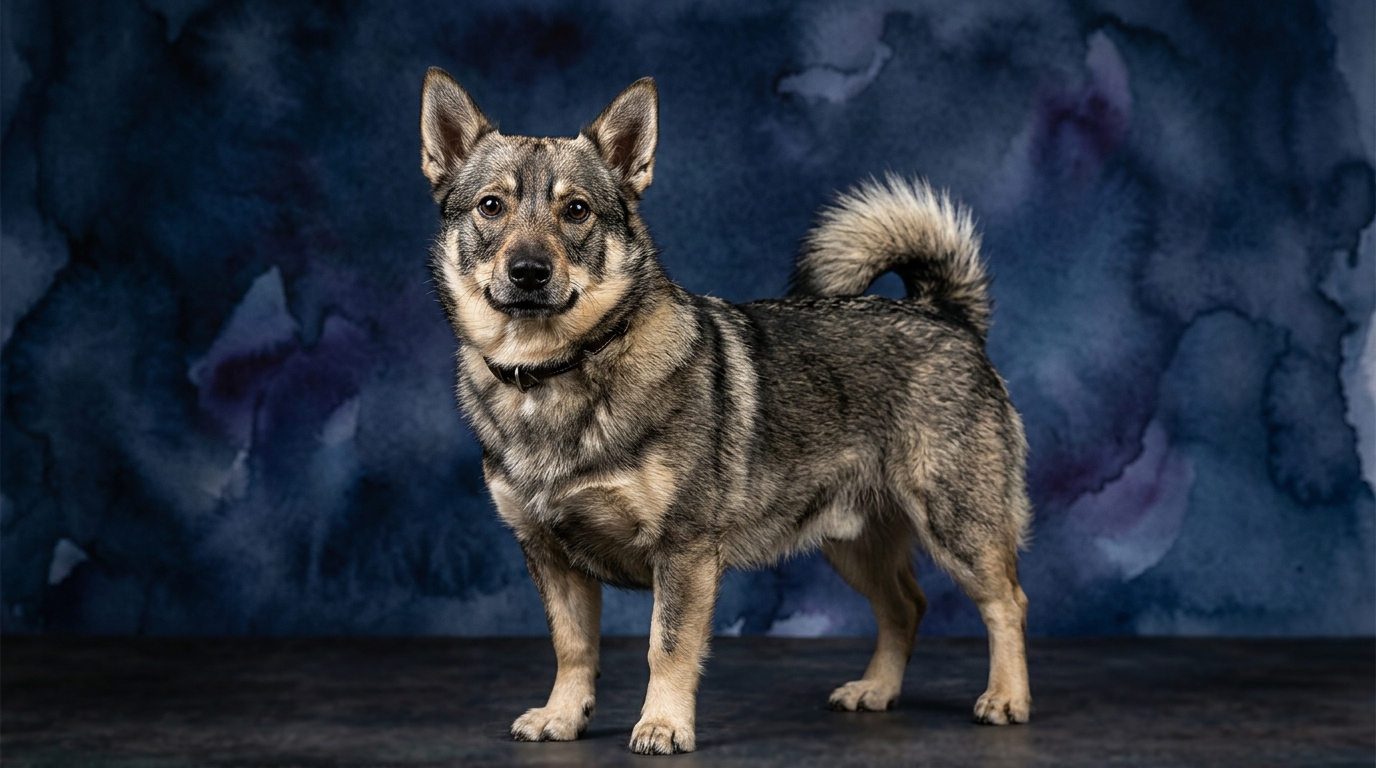
The **Swedish Vallhund**, a herding breed, presents a balanced cognitive profile with scores of 3/5 across the board. This includes Problem Solving (3/5), Training Speed (3/5), Social Intelligence (3/5), Instinctive Drive (3/5), and Memory (3/5). This consistency reflects a practical, adaptable mind well-suited to the dynamic demands of livestock management.
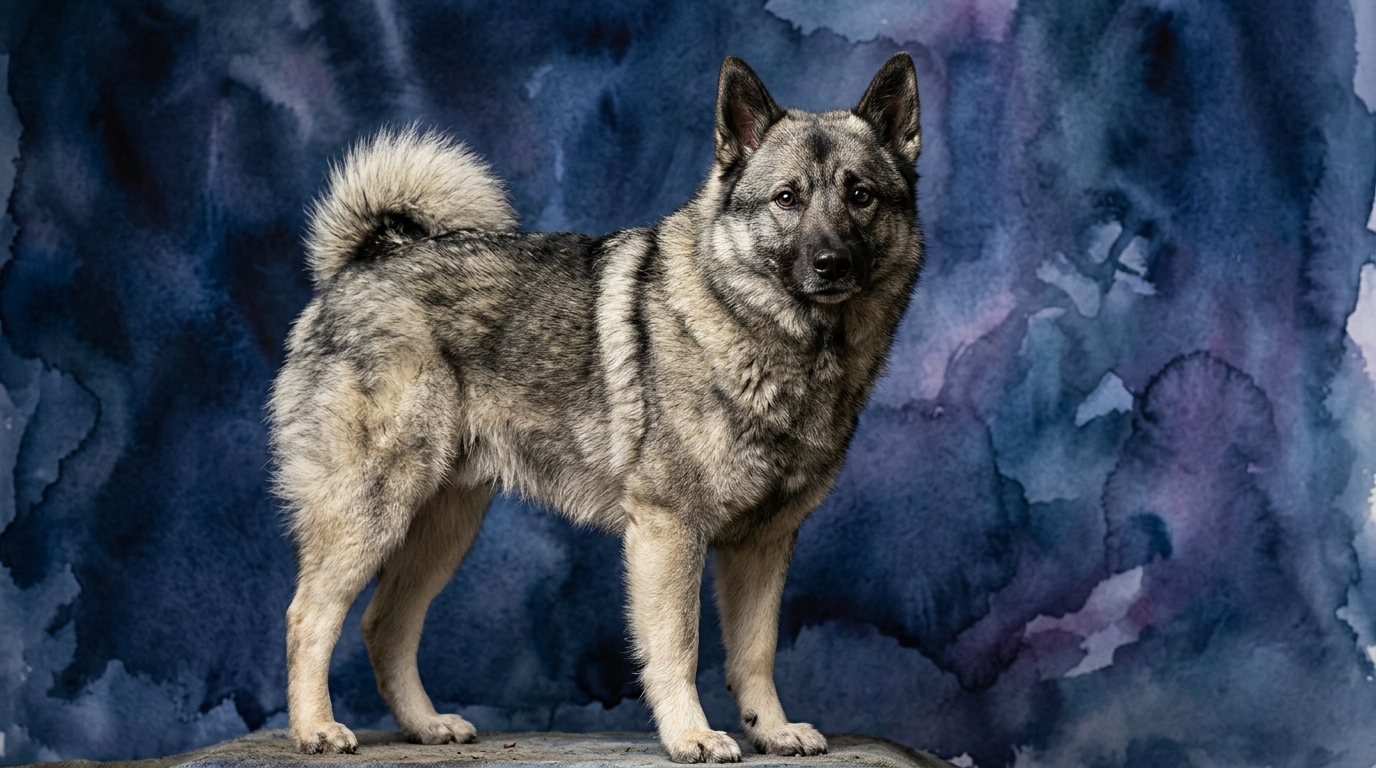
In contrast, the **Norwegian Elkhound**, a hound breed with a Coren ranking of #36, shows a distinct lean towards specific strengths. It scores 4/5 in Problem Solving, 4/5 in Training Speed, 3/5 in Social Intelligence, 3/5 in Instinctive Drive, and 4/5 in Memory. These elevated scores in areas critical for hunting large game highlight a resourceful and tenacious intellect.
Where the Swedish Vallhund Excels Cognitively
While the Elkhound boasts higher numerical scores in several categories, the Vallhund’s cognitive strengths lie in the *application* of its balanced intelligence, particularly within a cooperative framework. Its 3/5 in Social Intelligence, when combined with its herding instincts, means it excels at reading and influencing the movement of livestock, rather than merely observing or pursuing. This requires a unique blend of observational skill and assertive, yet controlled, communication.
The Vallhund's Problem Solving at 3/5 is not about independent, long-range strategizing like a hunter, but rather quick, on-the-spot decisions essential for managing a flock. Imagine moving sheep through a narrow gate or anticipating a breakaway – these scenarios demand immediate, practical solutions within a confined space, often in close concert with a handler. Their instinctive drive, while also 3/5, is geared towards gathering and controlling, requiring a different kind of mental engagement than the Elkhound’s pursuit-oriented drive.
Furthermore, the Vallhund’s consistent 3/5 across all categories suggests a versatile and adaptable mind. This breed is often described as a 'big dog in a small package,' and its cognitive makeup supports this. It can quickly shift from focused herding tasks to learning agility courses or engaging in complex trick training, demonstrating a mental flexibility that allows it to thrive in diverse roles when given appropriate guidance.
Where the Norwegian Elkhound Shows Cognitive Prowess
The Norwegian Elkhound’s intelligence shines brightly in areas directly relevant to its heritage as a big game hunter. Its 4/5 in Problem Solving reflects a superior capacity for independent strategy and navigation. An Elkhound is expected to track game for extended periods, often out of sight of its handler, requiring it to make complex decisions about scent trails, terrain, and potential ambush points autonomously. This is a dog that thinks for itself in challenging wilderness environments.
Similarly, the Elkhound’s 4/5 in Memory is a critical asset for its hunting role. This encompasses an exceptional recall of routes, specific scents, and past experiences, allowing it to efficiently re-trace steps or return to a starting point after a long chase. This robust memory enhances its resourcefulness, enabling it to learn from past encounters and apply that knowledge to future hunting scenarios, making it a highly effective and self-reliant working dog.
While its Training Speed is also 4/5, indicating a quick grasp of new concepts, this is tempered by its inherent independence. An Elkhound learns rapidly, but its strong instinctive drive (3/5) and social intelligence (3/5, often prioritizing its own agenda or a compelling scent) mean that learning a command doesn't always translate into immediate obedience. Its cognitive strengths are geared towards fulfilling its primary instincts, which sometimes makes it appear less biddable than breeds bred for constant human direction.
Ease of Training: Vallhund's Biddability vs. Elkhound's Independence
When considering which breed is 'easier' to train, it’s crucial to look beyond raw learning speed and consider inherent temperament and motivation. The Swedish Vallhund, with a Training Speed of 3/5, learns new commands at a steady pace. Its herding background fosters a natural inclination towards cooperation and working alongside a human partner. This means that while it may not grasp concepts with lightning speed, its willingness to engage and its desire to please its handler often make the training process feel more straightforward and consistent for the average owner.
However, the Vallhund’s herding instinct can sometimes manifest as nipping at heels, requiring consistent redirection and positive reinforcement to channel this drive appropriately. Their vocal nature also needs early management. Despite these points, their general biddability and focus on their handler make them a rewarding breed to teach, particularly for those new to dog training, provided they understand the need for mental stimulation and consistency.
The Norwegian Elkhound, boasting a higher Training Speed of 4/5, can indeed learn commands quickly. However, its independent hound nature and strong prey drive mean that 'knowing' a command doesn't always equate to 'obeying' it, especially if a compelling scent or sight intervenes. Its 3/5 social intelligence suggests it is observant but often prioritizes its own agenda. Training an Elkhound requires a confident, consistent handler who can establish clear leadership and make training more enticing than the call of the wild.
For an experienced owner who understands how to leverage motivation and manage a strong-willed breed, the Elkhound's rapid learning capacity can be incredibly impressive. For a novice owner, however, the Elkhound’s occasional selective hearing and deep-seated instincts might present a greater challenge, making the Vallhund, despite its slightly lower 'speed' score, potentially 'easier' due to its inherent desire for partnership.
Matching Breeds to Lifestyles: Active vs. Relaxed Owners
Neither the Swedish Vallhund nor the Norwegian Elkhound are suitable for truly relaxed owners; both breeds demand significant engagement to thrive. However, the *type* of activity they require differs. The Swedish Vallhund, as a herding dog, needs regular mental and physical stimulation to prevent boredom and potential behavioral issues like excessive barking or destructive chewing. They excel in dog sports like agility, obedience, and of course, herding trials, which tap into their problem-solving and cooperative nature. They are energetic companions who need a purpose and consistent interaction from their family.
The Norwegian Elkhound is also a high-energy dog, but its needs are rooted in its hound heritage. They require extensive outdoor exercise, including long walks, hikes, and opportunities for scent work. Their impressive stamina and desire to explore mean they are ideal companions for active owners who enjoy wilderness adventures, trail running, or even skijoring. While they can be calm indoors after sufficient exercise, neglecting their need for physical exertion and mental engagement (especially through their nose) will inevitably lead to an unhappy, potentially destructive, and vocal dog. They are not suited for a sedentary lifestyle in any capacity.
The Verdict: When to Choose Each Breed
The Verdict
Choose the Swedish Vallhund if you seek a cooperative, versatile companion for dog sports and family life, appreciating a watchful, vocal guardian with a strong herding drive, and are committed to consistent positive training.
Opt for the Norwegian Elkhound if you are an experienced, active owner who enjoys long outdoor adventures, appreciates an independent, resourceful companion with a powerful tracking instinct, and are prepared for a dog that sometimes prioritizes its nose over immediate obedience.
🧠 Find Your Pet's IQ Score
Our Pet IQ Lab assessment covers 25+ tests across 5 cognitive dimensions — personalized to your breed.
Take the Full IQ Test →Frequently Asked Questions
Are Swedish Vallhunds good with children?
Generally, yes, Swedish Vallhunds can be excellent family dogs. Their herding instinct might lead to playful nipping at heels, so supervision and teaching children how to interact respectfully are important. They are typically loyal and enjoy being part of family activities.
Do Norwegian Elkhounds bark a lot?
Yes, Norwegian Elkhounds are known for their vocal nature, using barks to communicate, alert, and express excitement or boredom. Early training and consistent management of their environment can help moderate this tendency, but they are inherently talkative dogs.
Which breed is more adaptable to apartment living?
Neither breed is ideally suited for small apartments without significant daily exercise and mental stimulation. However, the smaller size of the Swedish Vallhund might make it marginally more adaptable *if* its extensive needs are rigorously met, whereas the Elkhound's size and vocal nature present greater challenges in confined spaces.