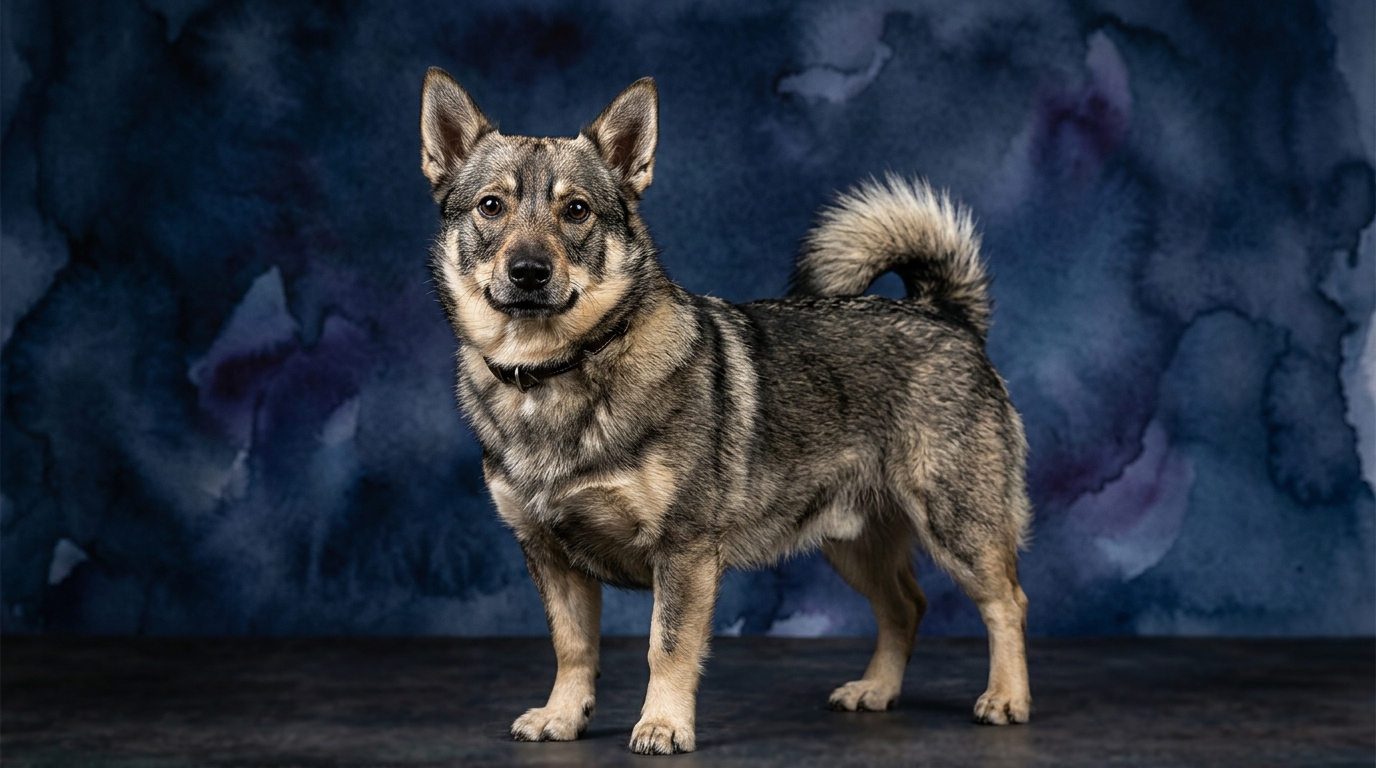
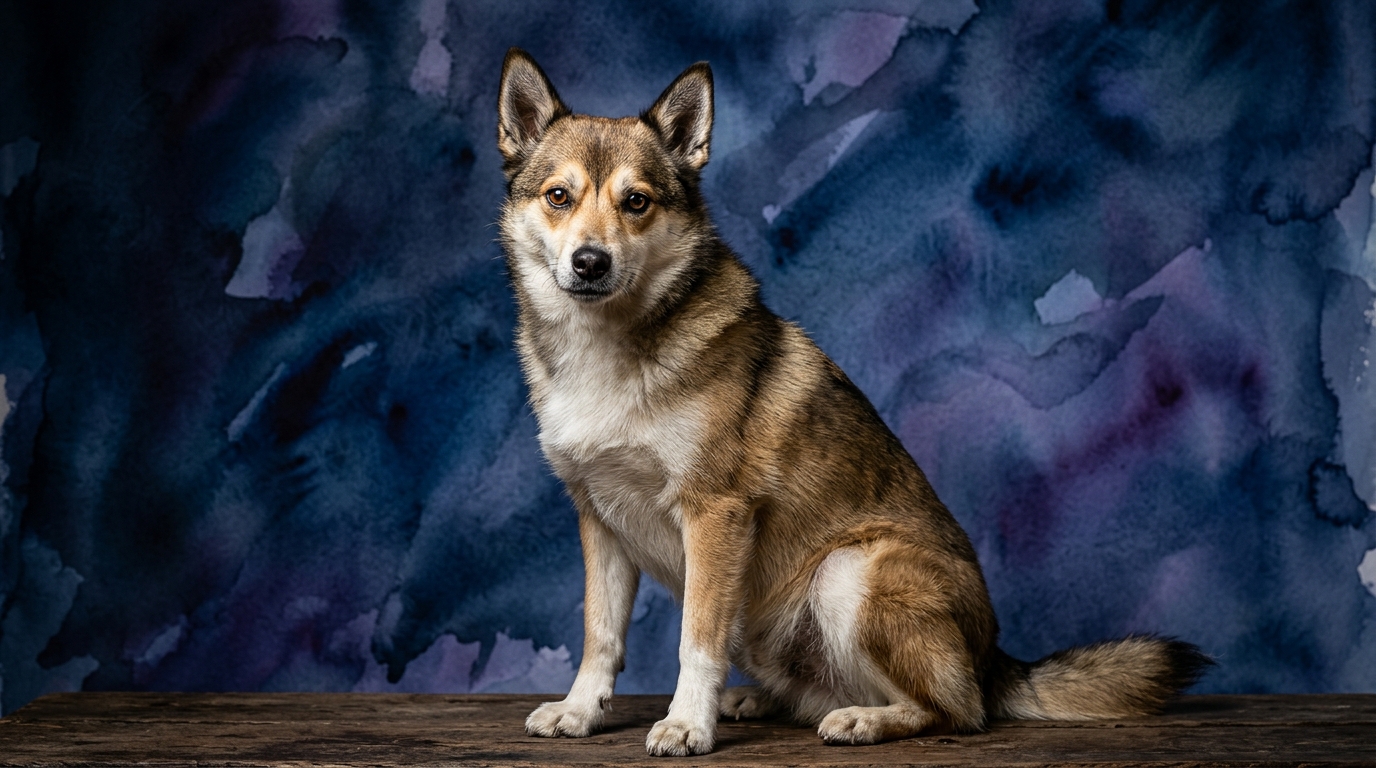
Side-by-Side Cognitive Profile
Despite both the Swedish Vallhund and Norwegian Lundehund scoring 3/5 across all five cognitive dimensions in The Cosmic Pet Pet IQ Lab, their historical purposes dictate vastly different expressions of these capacities. A 3/5 score indicates a solid, functional level of intelligence, but the context of its application truly differentiates these breeds.
Problem Solving (3/5): This score indicates a solid capacity for navigating challenges and devising solutions.
Swedish Vallhund: Their problem-solving centers on managing livestock, requiring spatial reasoning to move animals effectively and anticipate herd behavior within a dynamic, controlled environment.
Norwegian Lundehund: Historically, Lundehund problem-solving involved independent navigation of treacherous cliffs and complex burrow systems to hunt puffins, demanding intricate spatial awareness and strategic access to prey.
Training Speed (3/5): This suggests a reasonable aptitude for learning new commands and routines with consistent positive reinforcement.
Swedish Vallhund: Their training speed reflects a cooperative heritage, eager to learn commands facilitating herding duties and forming strong associations between cues and actions.
Norwegian Lundehund: Influenced by an independent hunting past, their learning might be more self-directed or task-specific, requiring tailored motivation rather than purely cooperative obedience.
Social Intelligence (3/5): This score points to a good understanding of social cues, forming bonds, and navigating interactions.
Swedish Vallhund: Their social intelligence is geared towards cooperative work with a handler and livestock, reading human intent and animal behavior, integrating well into family dynamics.
Norwegian Lundehund: Developed in small, independent hunting packs, their social intelligence fostered group strategy over human direction. They form deep family bonds but can be more reserved or selective outside their immediate circle.
Instinctive Drive (3/5): This indicates a noticeable set of inherent behaviors deeply rooted in their breed purpose.
Swedish Vallhund: Their primary instinctive drive is a strong herding impulse, manifesting as a desire to gather, control movement, and "organize" their environment.
Norwegian Lundehund: Their instinctive drive centers around hunting, exploring, and burrowing, possessing a potent prey drive and an inclination to investigate novel environments and dig.
Memory (3/5): This signifies a reliable capacity to recall learned behaviors, past experiences, and environmental layouts.
Swedish Vallhund: Their memory is well-suited for retaining complex command sequences, recalling herding routes, and remembering routines, contributing to training consistency.
Norwegian Lundehund: Crucial for remembering complex hunting territories, burrow locations, and successful navigation strategies, allowing them to apply effective approaches repeatedly.
Where the Swedish Vallhund Excels Cognitively
The Swedish Vallhund excels in collaborative problem-solving and responsive execution, a direct reflection of their herding origins. Their cognitive strengths lie in their ability to quickly process and respond to human cues, adapting their actions in real-time to manage dynamic situations, such as guiding livestock. This involves a nuanced understanding of sequential commands and an anticipation of outcomes, allowing them to work as a seamless extension of their handler’s will. They demonstrate a superior capacity for structured learning and applying learned principles to varied, yet directed, tasks. Their social intelligence is finely tuned for human cooperation, making them particularly adept at discerning intent and adjusting their behavior to maintain harmony within a family unit or a working team.
Where the Norwegian Lundehund Excels Cognitively
The Norwegian Lundehund’s cognitive strengths shine in independent problem-solving and navigating complex, unstructured environments. Their history as puffin hunters demanded self-reliance, meaning they developed exceptional spatial reasoning and a unique ability to devise solutions without constant human intervention. They are particularly adept at understanding three-dimensional spaces, using their flexible bodies and extra digits to maneuver through tight crevices and over uneven terrain. This translates to a dog that can independently assess a situation, formulate a plan, and execute it, often through trial and error, to achieve a goal. Their memory is particularly strong for recalling intricate physical layouts and successful exploration routes, allowing them to re-employ effective strategies in novel yet similar situations.
Training Aptitude: Vallhund vs. Lundehund
When considering traditional obedience and cooperative tasks, the Swedish Vallhund generally proves easier to train. Their herding background instilled a deep-seated desire to work with their human companions, making them naturally attentive to commands and eager to please. They thrive on structured learning, quickly grasping concepts like 'stay' or 'come' because their purpose was historically tied to receiving and executing directions to manage livestock. Their instinctual drive to organize and control is readily channeled into productive training sessions, leading to a dog that responds reliably and consistently.
The Norwegian Lundehund, while certainly trainable, can present a greater challenge for owners seeking swift, traditional obedience. Their history as independent puffin hunters fostered a self-reliant mindset, where making their own decisions was crucial for survival. This translates into a dog that might "think for itself" rather than automatically complying, often pausing to assess if a command aligns with its own perceived best interest or if there's a more efficient, self-directed solution. Their problem-solving is often self-initiated, and their strong exploratory and burrowing instincts can sometimes override a handler's request, requiring more patience, creativity, and a deep understanding of their unique motivations during training.
Suited Owners: Active vs. Relaxed Lifestyles
Neither the Swedish Vallhund nor the Norwegian Lundehund are suited for truly "relaxed" owners who prefer minimal engagement. Both breeds possess significant energy and cognitive needs that demand active participation.
For active owners who enjoy structured activities, competitive dog sports, and a highly interactive partnership, the Swedish Vallhund is an excellent match. They thrive on having a "job," whether it's agility, obedience, rally, or even mock herding. Their mental stimulation comes from collaborative problem-solving and executing tasks with their human, channeling their herding drive into productive outlets.
The Norwegian Lundehund also requires active owners, but their activity preferences lean towards exploration, climbing, and independent investigation. Owners who enjoy hiking, navigating varied terrains, or engaging in puzzles that require self-directed problem-solving will find a compatible companion. While they benefit from training, their cognitive needs are often met through opportunities to explore and strategize independently, rather than purely through human-directed tasks. Owners who appreciate observing a dog's unique self-reliance and providing outlets for their innate curiosity and physical prowess will find the Lundehund rewarding.
The Verdict
For owners seeking a cooperative, biddable companion eager to engage in structured activities and joint problem-solving, the Swedish Vallhund's herding heritage provides a rewarding partnership.
The Norwegian Lundehund appeals to those who appreciate a self-reliant, inquisitive companion with a unique approach to problem-solving, thriving with opportunities for independent exploration and physical challenge.
🧠 Find Your Pet's IQ Score
Our Pet IQ Lab assessment covers 25+ tests across 5 cognitive dimensions — personalized to your breed.
Take the Full IQ Test →Frequently Asked Questions
Do their identical IQ scores mean they are equally suited for all tasks?
No, identical scores highlight overall cognitive capacity but don't detail how that capacity is applied. Their distinct historical roles mean their problem-solving and social intelligence manifest very differently, making them suited for different types of challenges and human interactions.
Which breed is better for first-time dog owners?
The Swedish Vallhund might be a more straightforward choice for first-time dog owners due to their cooperative nature and responsiveness to traditional training methods. The Lundehund's independent streak and unique physical and cognitive needs can present more nuanced challenges for inexperienced owners.
How does their physical structure relate to their cognitive abilities?
The Vallhund's sturdy, agile build supports quick, directed movements for herding, requiring cognitive agility to respond to a handler and manage livestock effectively. The Lundehund's extreme flexibility and extra toes are physical manifestations of its cognitive capacity for intricate navigation and problem-solving in confined, challenging spaces like puffin burrows.