
A Side-by-Side Look at Cognitive Profiles
At first glance, the Pet IQ Lab scores for both the Swedish Vallhund and the Tibetan Spaniel present a uniform picture: 3/5 across all five cognitive dimensions. This numerical equality, however, belies the rich, distinct ways each breed applies these capacities, shaped by their ancestral roles and inherent temperaments. Understanding these nuances requires looking beyond the numbers to the behavioral contexts from which they arise.
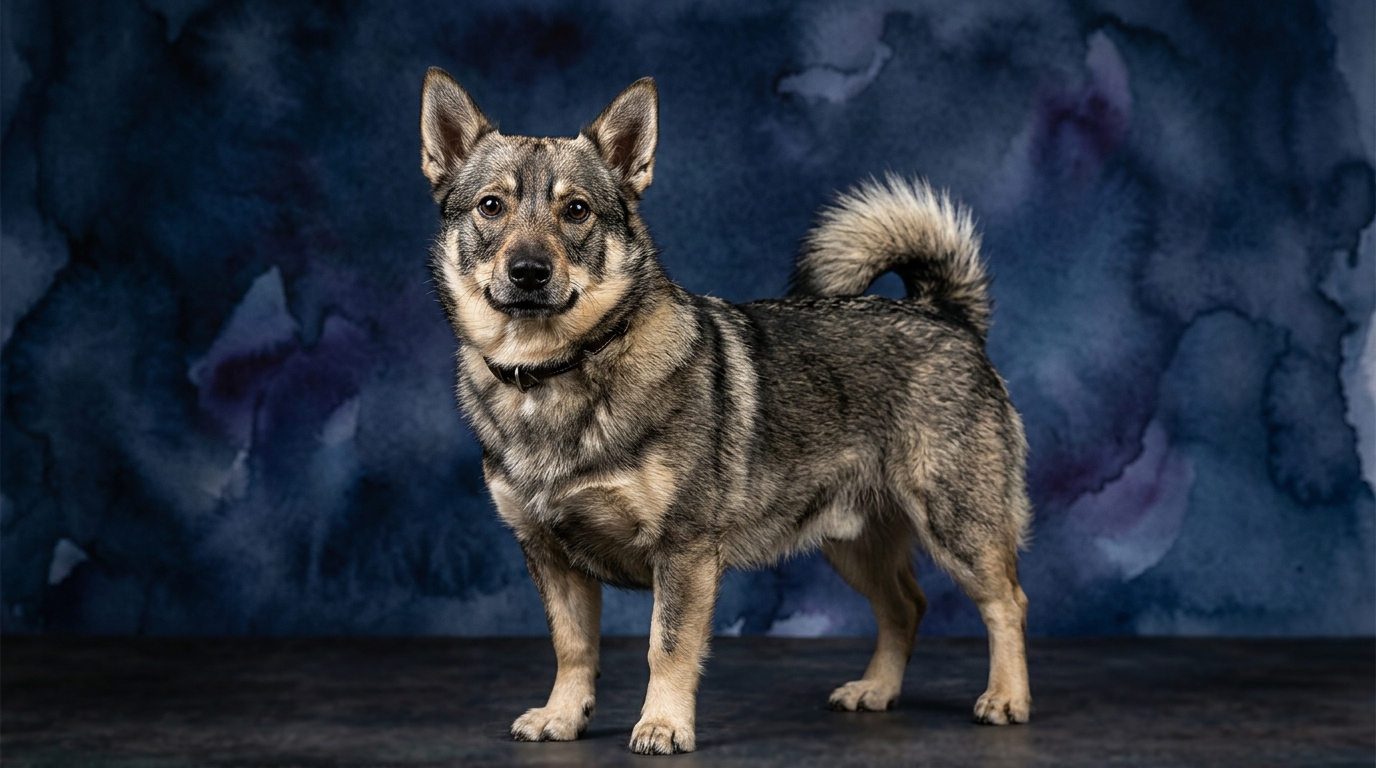
The Swedish Vallhund, originating from Sweden’s Viking Age, was developed as an all-around farm dog, primarily for herding cattle. Their compact, robust build belies an agile mind keenly attuned to their surroundings. Their cognitive profile reflects this working heritage, emphasizing practical application and environmental awareness.
Conversely, the Tibetan Spaniel, with roots stretching back millennia in the monasteries of the Himalayas, served as companion and sentinel. Their role was less about physical labor and more about observation, companionship, and subtle communication. Their cognitive strengths, therefore, lean towards social acuity and an understanding of human-canine dynamics.
Let's break down how each breed approaches the five cognitive dimensions, despite sharing the same 3/5 score, by considering their historical context and behavioral tendencies.
**Swedish Vallhund (Herding Group)**
**Problem Solving (3/5):** The Vallhund's problem-solving skills are rooted in practical, real-world application. They excel at navigating complex environments, anticipating the movement of livestock, or finding the most efficient path around obstacles. Their low-to-the-ground perspective and agility mean they often approach challenges with strategic movement and resourcefulness, rather than abstract conceptualization.
**Training Speed (3/5):** Vallhunds generally grasp new commands and routines with moderate speed, especially when the tasks have a clear purpose or connection to their natural instincts. They learn quickly for practical tasks like agility sequences or complex obedience, but their independent herding drive means they might question or adapt commands if they perceive a more efficient way to achieve a goal.
**Social Intelligence (3/5):** Their social intelligence manifests as a keen awareness of their human handler's intentions and the dynamics within their 'flock' or family unit. They are alert to changes in their environment and can read other dogs and people in a working or protective context, often being reserved with strangers as they assess potential threats or allies.
**Instinctive Drive (3/5):** A strong herding instinct is central to the Vallhund's being, often expressed through nipping at heels, gathering family members, or vigilant barking. This innate drive provides a foundation for engagement and a desire to be useful, needing consistent channeling through activities to prevent misdirected behaviors.
**Memory (3/5):** Vallhunds possess a good memory for learned tasks, routines, and the layout of their territory. They recall specific commands and sequences, which contributes to their consistency in performance. They also remember individuals and experiences, positively or negatively, influencing their long-term interactions and trust.
**Tibetan Spaniel (Non-Sporting Group)**
**Problem Solving (3/5):** For the Tibetan Spaniel, problem-solving often revolves around navigating social situations and achieving comfort or attention within the home. They might cleverly figure out how to open a treat cupboard, manipulate their owner for an extra cuddle, or find the warmest sunbeam. Their approach is often self-serving and uses subtle influence rather than physical exertion.
**Training Speed (3/5):** Tibetan Spaniels learn commands and routines at a moderate pace, particularly when motivated by praise, treats, or the desire for companionship. While they understand quickly, their independent and sometimes stubborn nature means they might choose not to perform if they perceive no immediate benefit or if they're not in the mood, prioritizing their own comfort.
**Social Intelligence (3/5):** The Tibbie excels in emotional acuity and understanding human social cues. They are exceptionally attuned to their human companions' moods, often offering comfort or seeking engagement at opportune moments. This makes them adept at subtle communication and influencing household members, though they can be discerning and aloof with strangers.
**Instinctive Drive (3/5):** Their primary instinctive drives are companionship, acting as a watchful sentinel (often from an elevated position), and a desire to be at the heart of the family. They possess a strong alert bark but are less inclined towards physical work, focusing instead on their social role within the home environment.
**Memory (3/5):** Tibetan Spaniels have an excellent memory for routines, favorite people, and places associated with comfort and security. They remember kindness and slights, which significantly influences their long-term relationships and how they interact with different individuals over time, fostering deep bonds or lasting reservations.
Where the Swedish Vallhund Shows a Cognitive Edge
Despite their identical 3/5 scores, the Swedish Vallhund's cognitive strengths lean towards practical application and environmental mastery, giving them an edge in specific scenarios. Their herding heritage has honed a unique set of skills that translate into distinct advantages in certain cognitive domains.
One area where the Vallhund truly shines is in **spatial reasoning and environmental awareness**. Their historical role required them to understand and manipulate their physical surroundings, anticipate the movements of livestock, and navigate varied terrains. This translates into a superior ability to map out spaces, remember routes, and strategically move through complex outdoor environments. While both breeds score 3/5 in problem-solving, the Vallhund's manifests as a tactical approach to physical obstacles and an innate understanding of spatial relationships, making them adept at agility courses or navigating new trails with confidence.
Another distinct advantage is their **task-oriented focus and stamina**. Their instinctive drive (3/5) for work provides a powerful engine for sustained engagement in purposeful activities. Once a Vallhund understands a task, they tend to maintain focus and apply consistent effort, whether it's learning a new obedience routine, participating in herding trials, or engaging in complex scent work. Their memory (3/5) for these learned routines further reinforces this consistency, allowing them to perform intricate sequences with reliability. This sustained mental stamina for 'jobs' sets them apart from breeds whose focus might be more fleeting.
Finally, Vallhunds often display **independent decision-making in a working context**. While they are receptive to guidance, their herding ancestry meant they occasionally had to make on-the-spot judgments when managing livestock, without direct human command. This fosters a proactive problem-solving ability where they can analyze a situation and act decisively. This isn't stubbornness, but rather an intrinsic capacity to evaluate and respond to dynamic situations, demonstrating a level of situational assessment that differs from the Tibetan Spaniel's more socially-driven problem-solving.
Where the Tibetan Spaniel Exhibits Unique Cognitive Strengths
The Tibetan Spaniel, with its history as a companion and sentinel, showcases cognitive strengths that are more finely tuned to social dynamics and subtle observation, providing them with unique advantages in different contexts compared to the Vallhund.
A key area where the Tibbie demonstrates a unique cognitive edge is in **emotional acuity and social manipulation**. Their social intelligence (3/5) is profoundly geared towards understanding and responding to human emotions and subtle social cues. They are masters at reading body language, tone of voice, and even facial expressions, allowing them to adapt their behavior for social harmony or, quite cleverly, for personal gain (e.g., knowing exactly when to nudge for attention or a treat). Their problem-solving (3/5) often involves influencing human behavior rather than physical tasks, making them exceptionally skilled at navigating the complex social landscape of a home.
Tibetan Spaniels also excel in **observational learning and situational awareness, particularly within the domestic sphere**. As keen observers, they quickly learn the rhythms and routines of the household. They notice every change, anticipating events like meal times, walk schedules, or the arrival of specific family members. This allows them to learn by watching human actions, such as how to open a cupboard or find a hidden toy, without direct instruction. Their memory (3/5) plays a crucial role here, allowing them to recall these observed patterns and apply them effectively.
Furthermore, their **adaptability in social settings**, once trust is established, is a significant strength. While initially reserved with strangers, their social intelligence allows them to integrate smoothly into new social situations within a home environment. They are adept at discerning who is friendly and who might be less so, remembering past positive interactions (memory 3/5) to quickly form bonds. This makes them versatile companions who can adjust to different people and social dynamics, provided they feel secure and valued, contrasting with the Vallhund's more direct and sometimes less subtle social approach.
Training Dynamics: Which Breed is Easier to Shape?
When considering which breed might be 'easier' to train, their identical 3/5 training speed scores can be misleading, as the *how* of their trainability differs significantly based on their innate motivations and behavioral profiles. Both breeds respond well to positive reinforcement, but the nature of that reinforcement and the training approach need to be tailored to their distinct cognitive leanings.
The **Swedish Vallhund** generally responds very well to structured training that offers a clear purpose. They enjoy having a 'job' and thrive on tasks that engage their problem-solving and instinctive drive. Consistency, clarity, and making training feel like a partnership in a shared goal are paramount. They can learn complex sequences quickly, especially in activities like agility or obedience, where their memory for routines (3/5) is a great asset. However, their independent herding streak means they might be stubborn if they don't see the point of a command or if it conflicts with their instincts. For instance, a Vallhund might understand 'stay' but if a squirrel runs by, their instinctive drive might override the learned command, requiring consistent and high-value reinforcement to maintain focus.
The **Tibetan Spaniel**, while also learning quickly with positive reinforcement, is driven more by companionship, comfort, and attention. Training for a Tibbie needs to feel like a fun, engaging interaction rather than a repetitive drill. They can be incredibly eager to please their beloved humans, but their independent spirit means they might resist if they become bored or if they perceive a command as unnecessary or inconvenient. Their social intelligence (3/5) makes them highly sensitive to their handler's mood, which can impact training effectiveness; a frustrated owner might find a Tibbie shutting down. They might also use their memory (3/5) to recall past successful 'negotiations' where they got their way, making consistency crucial. For example, a Tibbie might understand 'come,' but if they're cozy on the sofa, their problem-solving might lead them to weigh the comfort of staying versus the reward for coming, often requiring a more enticing 'offer' from the owner.
Ultimately, neither breed is inherently 'easier' to train; they simply require different pedagogical approaches. A Swedish Vallhund benefits from an owner who can provide clear structure, engage their working drive, and demonstrate the purpose behind commands. A Tibetan Spaniel thrives with an owner who makes training a positive, interactive experience, understands their subtle cues, and respects their independent spirit without letting it become dominant. For a novice owner, the Vallhund's desire for a job might initially seem more straightforward, provided the owner can meet their need for purposeful activity. The Tibbie's charming independence and subtle manipulation might present a more nuanced challenge for someone expecting unquestioning obedience.
Matching Cognitive Profiles to Lifestyles
Choosing between a Swedish Vallhund and a Tibetan Spaniel involves aligning their distinct cognitive profiles and associated behavioral needs with an owner's lifestyle. Their similar IQ scores manifest in very different ways, making them suitable for different types of homes and activities.
The **Swedish Vallhund** is best suited for **active owners** who can provide consistent mental and physical stimulation. Their herding background and robust instinctive drive (3/5) mean they thrive when given a 'job' or an outlet for their energy and problem-solving abilities. Owners who enjoy activities like agility, obedience trials, herding practice, or even long, engaging hikes with opportunities for scent work will find a willing and capable partner in a Vallhund. They need daily opportunities to engage their minds and bodies, otherwise, their intelligence can lead to boredom and destructive behaviors. Their memory (3/5) helps them excel in structured learning environments, making them ideal for owners committed to ongoing training and canine sports. This breed thrives with an owner who appreciates a dog's independent thought within a cooperative framework and can provide consistent, purposeful engagement.
The **Tibetan Spaniel**, while not requiring extensive physical exertion, is an excellent match for **relaxed, yet engaged, owners**. Their profound social intelligence and problem-solving (both 3/5) demand mental engagement primarily within the home environment. They are content with moderate daily walks and enjoy puzzle toys, short, fun training sessions, and being intimately involved in family activities. They are superb companions for those who appreciate a dog's subtle cues, emotional attunement, and desire for close connection, rather than constant high-impact activity. Their memory (3/5) for household routines and personal preferences makes them wonderfully predictable and comforting companions. They thrive in a home where they are cherished family members, allowed to observe and participate in daily life, and receive plenty of affectionate interaction, making them ideal for individuals or families seeking a devoted, observant, and charming indoor companion.
The Verdict
Opt for a Swedish Vallhund if you seek a partner for active pursuits, enjoying structured training, and appreciate a dog that thinks independently within a working context.
Select a Tibetan Spaniel if you desire a devoted, observant companion who excels in navigating social dynamics and thrives on subtle interaction within a comfortable home environment.
🧠 Find Your Pet's IQ Score
Our Pet IQ Lab assessment covers 25+ tests across 5 cognitive dimensions — personalized to your breed.
Take the Full IQ Test →Frequently Asked Questions
Do Swedish Vallhunds bark a lot?
Yes, their instinctive drive for herding and guarding means Vallhunds are prone to being vocal, using barks to alert or communicate. Consistent training from a young age can help manage this natural tendency, but owners should expect a relatively talkative companion.
Are Tibetan Spaniels good with children?
Tibetan Spaniels can be good with older, respectful children who understand how to interact gently with a small dog. Their social intelligence means they appreciate calm, predictable interactions rather than boisterous play, and they may be reserved with very young, boisterous children.
How do these breeds compare in terms of adaptability to apartment living?
The Tibetan Spaniel generally adapts very well to apartment living due to their lower exercise needs and focus on indoor companionship. A Swedish Vallhund can thrive in an apartment if their significant mental and physical exercise requirements are consistently met through daily outings, structured activities, and engaging training sessions.