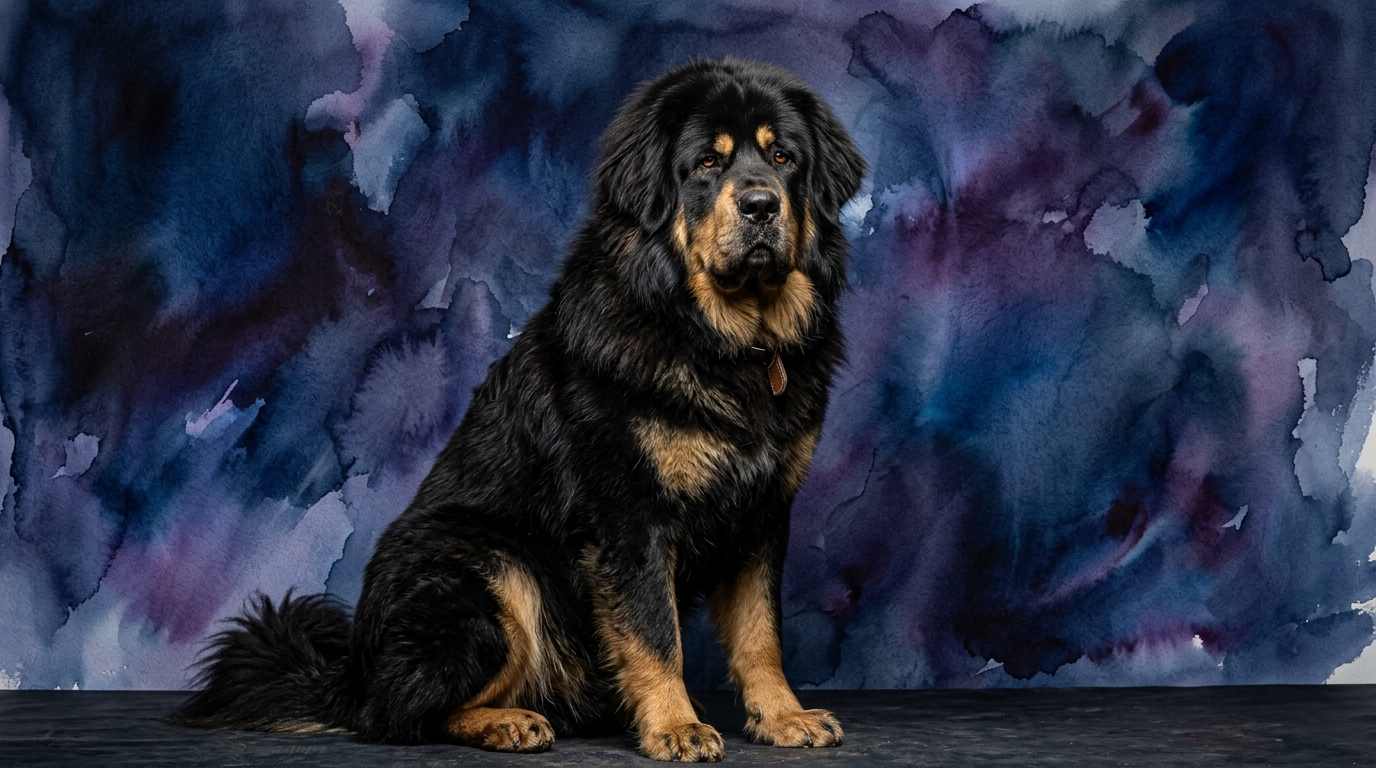
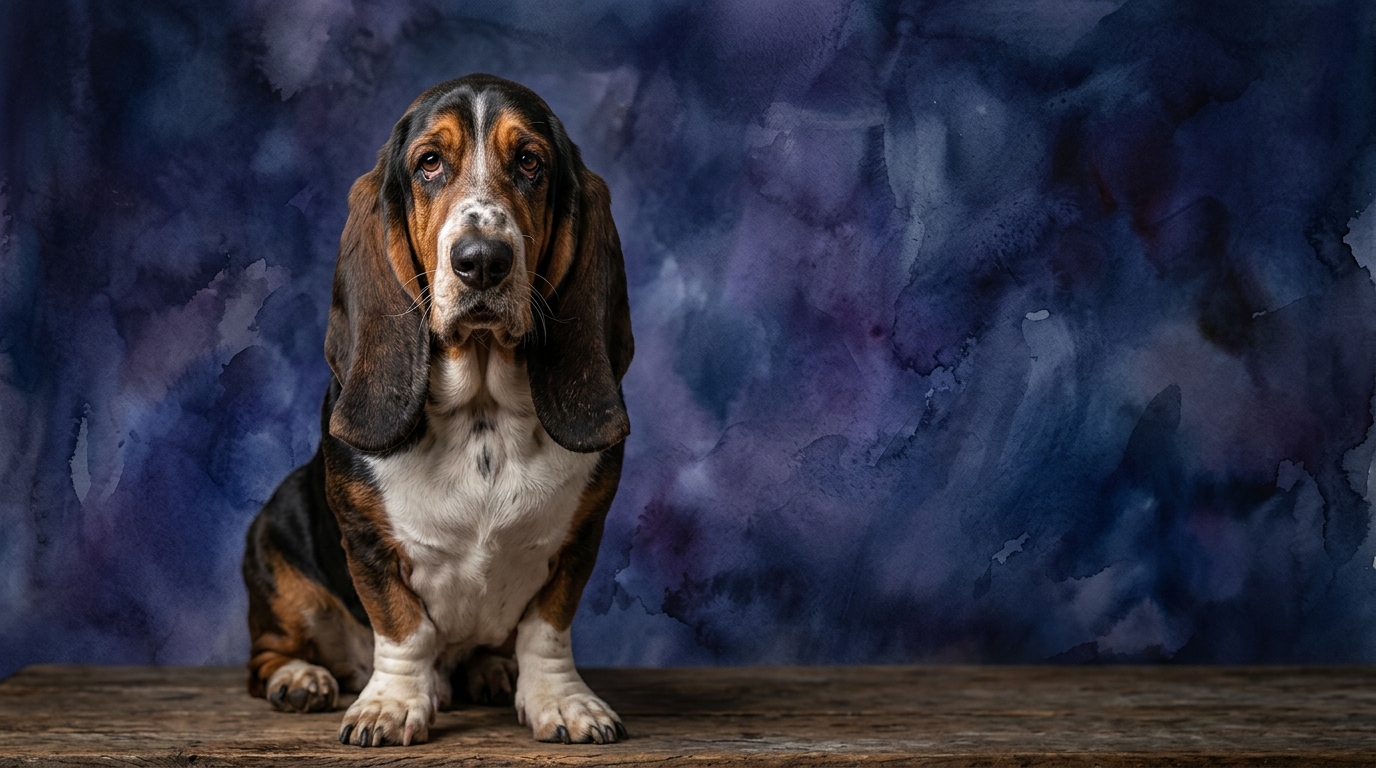
Side-by-Side IQ Profile: Tibetan Mastiff vs. Basset Hound
At The Cosmic Pet Pet IQ Lab, we assess canine intelligence across five key dimensions: Problem Solving, Training Speed, Social Intelligence, Instinctive Drive, and Memory. While both the Tibetan Mastiff and the Basset Hound register a consistent 3/5 across all these metrics, the interpretation of these scores is profoundly shaped by their breed history and inherent purpose. A raw score tells only part of the story; understanding how each breed applies its moderate cognitive capacity is crucial for appreciating their unique mental landscapes.
For the Tibetan Mastiff, a truly ancient working dog, their Problem Solving (3/5) is primarily geared towards their ancestral role as independent guardians. They excel at assessing complex environmental cues, discerning genuine threats from benign stimuli, and making autonomous decisions to protect their territory and family without constant human direction. This isn't about solving puzzle toys quickly, but about strategic, real-world situational analysis. Their Training Speed (3/5) is influenced by their inherent independence and strong will; they absorb information at a moderate pace, particularly commands that align with their protective instincts or seem logical to their discerning nature, but require consistent, firm guidance. Social Intelligence (3/5) manifests as a deep understanding of their immediate family unit, often displaying profound loyalty and sensitivity to their chosen humans while remaining reserved and watchful with strangers. Their Instinctive Drive (3/5) is powerfully rooted in guardianship and territorial defense, a robust, innate compulsion to survey and protect. Finally, their Memory (3/5) is solid, particularly concerning their territory, established routines, and the identities of trusted individuals versus potential threats, contributing to their ability to learn from past experiences.
The Basset Hound, a distinguished member of the hound group, applies its cognitive skills through a distinctly different lens. Their Problem Solving (3/5) aptitude is almost entirely dedicated to the intricate world of scent. They demonstrate impressive cognitive skills in unraveling complex scent trails, navigating varied terrains to locate a source, and persistently working through environmental obstacles to follow a compelling aroma. Their intellect shines in the strategic pursuit of a smell, rather than abstract conceptual tasks. Training Speed (3/5) in a Basset often requires patience, as their moderate pace is frequently challenged by an overriding focus on scent; while they can learn commands, their single-minded pursuit of an interesting smell can make them appear stubborn or distracted. Their Social Intelligence (3/5) typically exhibits as amiable and tolerant, generally getting along well with people and other animals and being affectionate with their families, but their primary sensory input often takes precedence over complex social interactions. The Basset's Instinctive Drive (3/5) is overwhelmingly centered on their powerful sense of smell and the compulsion to track, a deeply ingrained, persistent desire to follow a trail that can be all-consuming. Their Memory (3/5) is reliable, particularly for scent pathways, the locations of interesting smells, and routines related to food or walks, crucial for their tracking abilities.
Where the Tibetan Mastiff Excels Cognitively
The Tibetan Mastiff's cognitive strengths distinctly lie in independent decision-making and strategic territorial management. Their problem-solving (3/5) is applied to real-time threat assessment, allowing them to autonomously evaluate situations and respond with appropriate protective actions without needing direct human input. This breed excels at understanding and enforcing boundaries, demonstrating a nuanced grasp of their designated space and the individuals within it. Their social intelligence (3/5) within their family unit is profound, recognizing subtle emotional shifts and responding with steadfast loyalty, making them discerning guardians who operate with an impressive sense of purpose and self-reliance.
Where the Basset Hound Excels Cognitively
The Basset Hound’s cognitive prowess is unequivocally superior in the realm of olfaction and persistent tracking. Their problem-solving (3/5) is a masterclass in interpreting and following complex scent patterns, allowing them to navigate intricate environments purely by smell. No other breed type can rival their dedication and skill in unraveling a scent puzzle, a task that demands immense focus and an incredible ability to filter distractions from their primary sensory input. Their memory (3/5) for intricate scent trails is also a standout, enabling them to retrace steps or pick up a trail days later, showcasing an unparalleled ability to process and recall olfactory information.
Training Dynamics: Independence vs. Instinct
While both breeds share a training speed rating of 3/5, their ease of training diverges significantly due to their distinct motivations and inherent drives. The Tibetan Mastiff, with its independent guardian nature, can be challenging because it often weighs commands against its own judgment of necessity or perceived threat. They respond best to consistent, fair leadership and positive reinforcement that respects their independent spirit, but they may not always comply if a command doesn't align with their protective instincts or seems illogical to them, requiring an owner to earn their cooperation rather than demand it.
The Basset Hound, conversely, isn't necessarily stubborn out of independence, but rather due to an overwhelming sensory focus. Their powerful instinctive drive (3/5) for scenting means that any interesting smell can completely hijack their attention, making it incredibly difficult to break their focus on a trail. Training them requires immense patience, creativity to make commands more rewarding than a scent, and a strong understanding that their nose often dictates their actions, pulling them into their own world of smells. Overall, the Basset Hound's single-minded scent drive often presents a more persistent challenge in general obedience training compared to the Tibetan Mastiff’s discerning independence, as the Basset's internal world is constantly pulling it away from human directives.
Lifestyle Match: Active Engagement vs. Purposeful Pursuit
The choice between these two breeds depends heavily on an owner's lifestyle expectations and definition of 'activity.' A Tibetan Mastiff, despite its imposing size, is not a dog for constant, high-impact physical activity. Its role as a guardian often involves periods of watchful stillness interspersed with bursts of patrolling or protective action. They require owners who are active in the sense of being mentally engaged, consistent in training, and prepared for a dog that needs ample space and a clear role within the family structure. They suit owners who appreciate a dog that is self-possessed and requires a calm, confident handler, rather than someone seeking a jogging partner.
The Basset Hound, while appearing relaxed, has a surprising need for purposeful activity related to its scenting drive. A truly content Basset owner is not necessarily a marathon runner, but someone who can provide opportunities for their dog to engage its powerful nose through scent work, long walks where they can explore smells, or even dedicated tracking games. For owners seeking a truly 'relaxed' companion in the traditional sense, the Basset's potential for stubbornness on a scent trail and its moderate physical needs (beyond just lounging) might be surprising. They are generally better suited to owners who appreciate a dog with a distinct hobby and are willing to facilitate that passion, even if it means slow, meandering walks that allow their hound to follow every intriguing aroma.
The Verdict
Choose the Tibetan Mastiff if you are a confident, experienced owner seeking an independent, discerning guardian who will bond deeply with their family and provide steadfast protection, valuing mental presence over constant physical demands.
Opt for the Basset Hound if you appreciate a dog whose world revolves around scent, are prepared to accommodate their powerful tracking drive with purposeful activities, and desire an amiable, low-slung companion with a distinctive character.
🧠 Find Your Pet's IQ Score
Our Pet IQ Lab assessment covers 25+ tests across 5 cognitive dimensions — personalized to your breed.
Take the Full IQ Test →Frequently Asked Questions
Are Tibetan Mastiffs difficult to train?
Tibetan Mastiffs have a moderate training speed (3/5), but their independent nature means they often decide if a command is worth following. Consistent, patient, and respectful training from a confident owner is essential to gain their cooperation, as they respond best to leadership they trust.
Do Basset Hounds need a lot of exercise?
Basset Hounds require moderate exercise, but it's crucial that this exercise engages their powerful scent drive. Long, meandering walks where they can follow smells, or dedicated scent work games, are more beneficial than intense, high-speed activities, satisfying their innate tracking needs.
Which breed is better with children?
Both breeds can be good with children when properly socialized and raised together with supervision. Tibetan Mastiffs are fiercely protective of their family but can be wary of strangers, while Basset Hounds are generally amiable and tolerant, though their scent focus might mean they're less actively engaged in play.