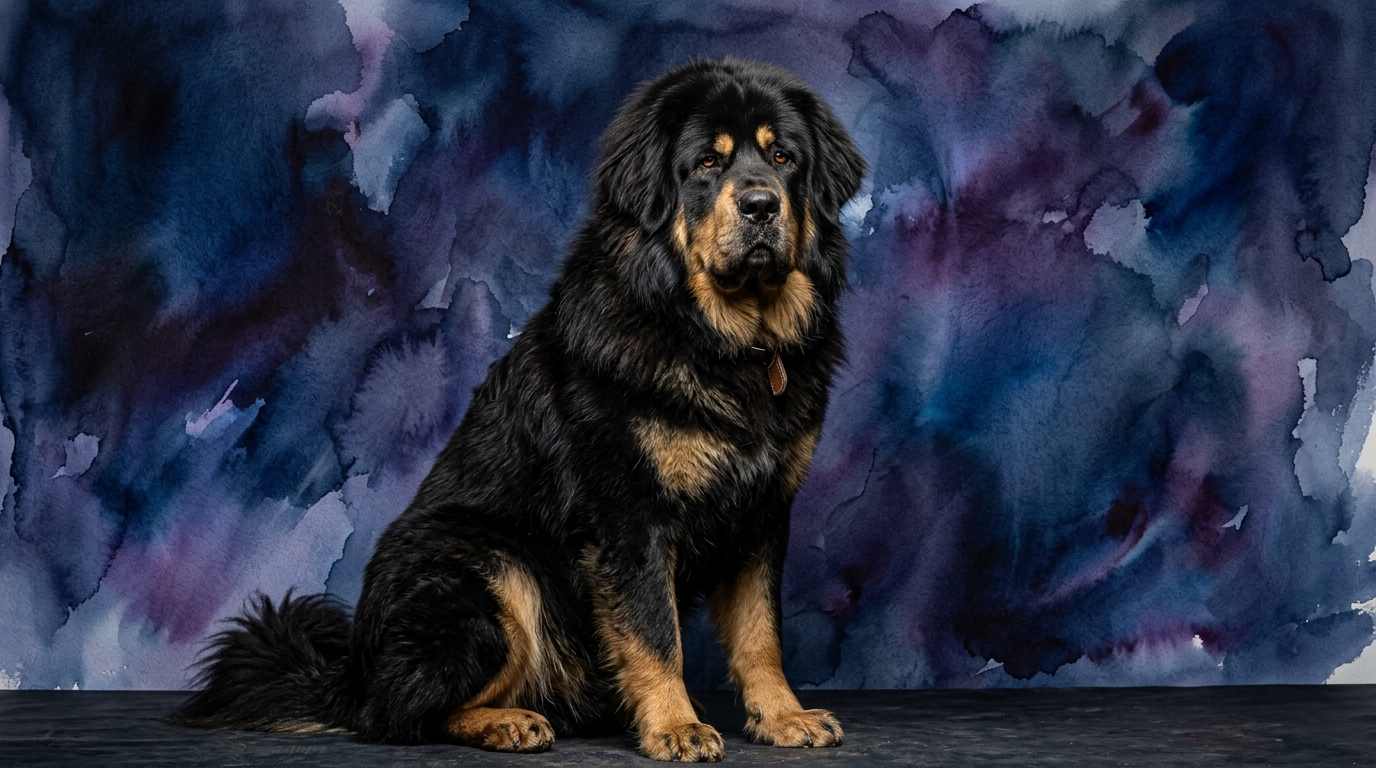
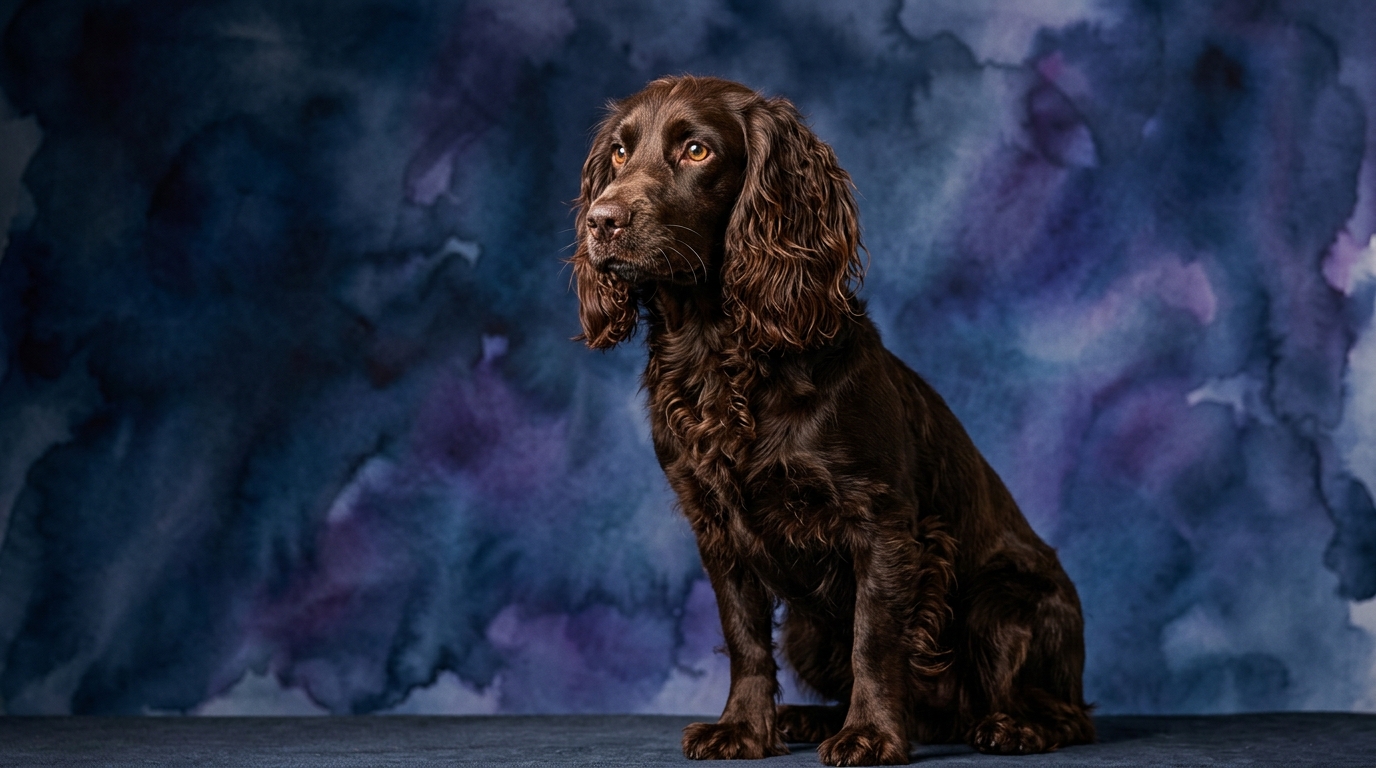
Side-by-Side IQ Profile: Tibetan Mastiff vs. Boykin Spaniel
The Cosmic Pet Pet IQ Lab assesses canine intelligence across five key dimensions. While both the Tibetan Mastiff and the Boykin Spaniel are not Coren-ranked, their individual scores of 3/5 across all categories present a unique opportunity to explore how similar cognitive ratings can translate into vastly different behavioral expressions, shaped by millennia of distinct evolutionary pressures and human partnership.
For the **Tibetan Mastiff (Working Breed)**, its intelligence is intrinsically tied to its role as a formidable guardian of livestock and property in harsh, remote environments. This necessitates a specific blend of cognitive traits focused on independence, vigilance, and discerning judgment.
**Problem Solving (3/5)**: The Tibetan Mastiff approaches problem-solving with independent thought, particularly when assessing threats or protecting its territory. Their intelligence here is rooted in self-reliance, making decisions without constant human direction to ensure security and situational awareness.
**Training Speed (3/5)**: Learning new commands is a deliberate process for the Tibetan Mastiff; they comprehend but often comply based on perceived purpose or alignment with their instincts. Consistency and understanding their independent motivation are crucial for effective training.
**Social Intelligence (3/5)**: This breed forms deep bonds within its immediate family but is reserved and watchful with strangers, using careful observation to assess new individuals. Their social acumen prioritizes loyalty and protection over universal affability.
**Instinctive Drive (3/5)**: The Tibetan Mastiff's drive centers profoundly on guardianship, manifesting as innate territoriality and a strong protective impulse towards family and property. This core instinct guides their responses to environmental stimuli.
**Memory (3/5)**: Possessing a robust memory, they retain knowledge of commands, routines, and crucially, individuals they deem part of their inner circle or potential outsiders. This reinforces their discerning social nature and environmental understanding.
The **Boykin Spaniel (Sporting Breed)**, on the other hand, developed as a versatile hunting companion, specifically adept at flushing and retrieving game from various terrains, including water. Its cognitive profile reflects a need for cooperative intelligence, adaptability, and task-oriented focus.
**Problem Solving (3/5)**: The Boykin Spaniel's problem-solving shines in work-oriented tasks, like navigating dense cover to retrieve game or locating hidden items. Their intelligence here is characterized by adaptability and resourcefulness in dynamic environments to achieve specific goals.
**Training Speed (3/5)**: Boykin Spaniels are enthusiastic learners, picking up commands with moderate speed, driven by a strong desire to work and interact. Their willingness to participate makes them responsive to consistent, positive reinforcement, despite occasional environmental distractions.
**Social Intelligence (3/5)**: Exhibiting a friendly and adaptable social intelligence, the Boykin Spaniel typically interacts well with diverse people and animals, attuned to human emotions. Their social acumen makes them versatile, cooperative companions in various settings.
**Instinctive Drive (3/5)**: The Boykin Spaniel's drive is powerfully rooted in retrieving, including a strong prey drive, innate desire to mark game, and affinity for water. This fuels their enthusiasm for training and focus in the field.
**Memory (3/5)**: This breed demonstrates reliable memory, crucial for recalling complex retrieve patterns, multiple marks in the field, and command sequences. They retain knowledge of environment and routines, enabling consistent performance of intricate tasks.
Where the Tibetan Mastiff Wins Cognitively
The Tibetan Mastiff's cognitive strengths truly shine in independent strategic assessment, particularly when it comes to guarding. Its ability to process environmental changes, identify potential threats, and autonomously decide on a course of action without direct human input is a hallmark of its ancestral role, a unique form of applied intelligence distinct from task-oriented problem-solving.
Its social intelligence, while reserved, is profoundly specialized for discerning true allies from perceived threats. This breed excels at reading nuanced social cues from strangers and evaluating intentions, making it an unparalleled judge of character within its protective scope, giving it an edge in vigilance and discernment.
Where the Boykin Spaniel Wins Cognitively
The Boykin Spaniel's cognitive advantages manifest in its cooperative task execution and adaptability across varied environments. While its Problem Solving score is also 3/5, its strength lies in quickly assessing dynamic situations during a hunt, such as navigating dense cover, and efficiently executing a learned solution. This is a highly practical, active form of intelligence, focused on achieving a shared goal with its human partner.
Its social intelligence, also rated 3/5, allows it to seamlessly integrate into diverse family structures and social scenarios, showing a remarkable capacity for empathy and responsiveness to human emotions. Unlike the reserved Mastiff, the Boykin's social acumen is geared towards amiable engagement and harmonious coexistence, making it exceptionally adept at forming broad, positive social connections.
Which Is Easier to Train and Why
While both breeds score 3/5 in Training Speed, the Boykin Spaniel generally presents as the more straightforward student due to its innate eagerness to please and strong cooperative drive. Their desire to work alongside their human and high motivation for interactive tasks mean they often approach training with enthusiasm. They are typically more forgiving of novice trainers and respond well to positive reinforcement, making the learning process more reciprocal.
The Tibetan Mastiff, by contrast, approaches training with distinct independence. Their 3/5 Training Speed score reflects capability, but their motivation is internal and purpose-driven; if a task doesn't align with their perceived role, they may not comply. Training requires understanding their independent nature, exceptional patience, and demonstrating a command's value, making it a more nuanced endeavor.
Which Suits Active Owners vs. Relaxed Owners
The Boykin Spaniel is a prime match for active owners who relish outdoor adventures, whether hunting, hiking, or dog sports. Their powerful instinctive drive for retrieving, combined with boundless energy and cooperative nature, means they thrive when given a 'job' and ample physical and mental stimulation. Owners committing to daily rigorous exercise will find a joyful, tireless companion.
The Tibetan Mastiff, while needing regular exercise, generally suits owners with a more relaxed yet vigilant lifestyle. Their exercise needs are moderate, often satisfied with a good walk and secure yard time. However, strong guarding instincts mean they are constantly 'on duty,' requiring owners who understand and manage this inherent protective nature. They are for those appreciating a formidable, independent guardian.
The Verdict
Choose the Tibetan Mastiff if you seek an independent, discerning guardian with a profound sense of loyalty, and you are prepared for a dog that thinks for itself and requires patient, consistent guidance rooted in mutual respect.
Opt for the Boykin Spaniel if you desire an enthusiastic, cooperative companion for an active lifestyle, one that thrives on engagement, loves to work, and possesses a generally amiable disposition.
🧠 Find Your Pet's IQ Score
Our Pet IQ Lab assessment covers 25+ tests across 5 cognitive dimensions — personalized to your breed.
Take the Full IQ Test →Frequently Asked Questions
Do identical IQ scores mean these breeds are equally 'smart' in all aspects?
Not exactly. Identical scores like 3/5 across the board indicate comparable levels of capability within each dimension, but the manifestation and prioritization of these capabilities differ greatly based on the breed's historical role. A Tibetan Mastiff's problem-solving focuses on security, while a Boykin Spaniel's centers on task completion, both rated similarly in effectiveness for their respective purposes.
Can a Tibetan Mastiff be a good family dog despite its guarding instincts?
Yes, a Tibetan Mastiff can be an exceptionally loyal and devoted family dog, forming deep bonds with its immediate human family. However, their guarding instincts mean they will naturally be reserved or wary of strangers and require extensive early socialization and consistent training to ensure they are well-adjusted and differentiate between true threats and normal visitors.
How much exercise does a Boykin Spaniel truly need?
Boykin Spaniels are highly energetic sporting dogs that require substantial daily exercise, typically an hour or more of vigorous activity. This can include running, swimming, retrieving games, or long walks. Without adequate physical and mental stimulation, they can become bored and develop undesirable behaviors, making consistent activity crucial for their well-being.