Side-by-Side IQ Profile: Unpacking Cognitive Dimensions
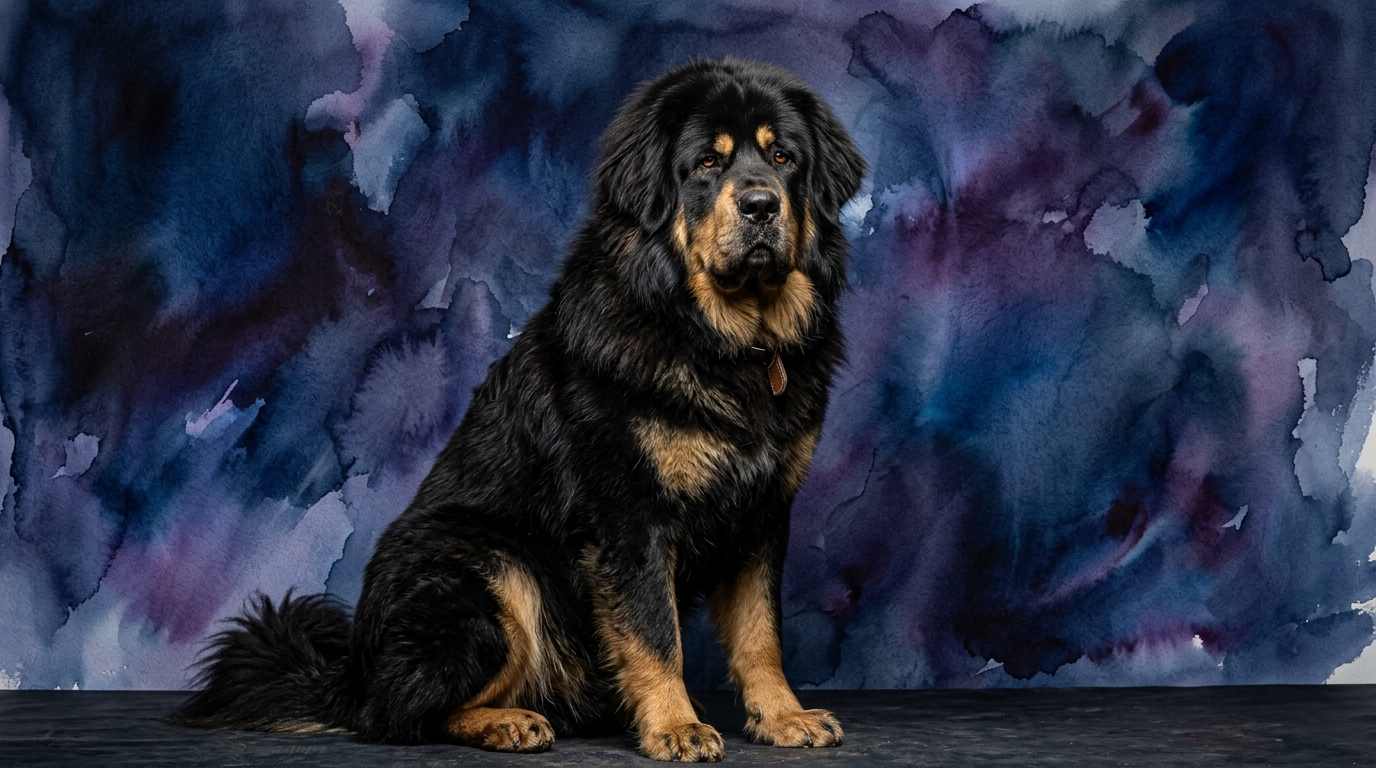
The Cosmic Pet Pet IQ Lab utilizes five distinct dimensions to paint a comprehensive picture of canine intelligence, moving beyond simple obedience scores. For the Tibetan Mastiff, we observe a consistent score of 3/5 across Problem Solving, Training Speed, Social Intelligence, Instinctive Drive, and Memory. This indicates a balanced but independent cognitive profile, where their problem-solving capacity is often directed towards their primary guarding role, making autonomous decisions regarding territory and potential threats. Their training speed reflects a deliberate learning style, often requiring patient, consistent methods that respect their independent nature rather than demanding rote compliance. Social intelligence for the Mastiff is characterized by a discerning approach, forming deep bonds with their immediate family while remaining reserved or cautious with strangers, a trait vital for effective guardianship. Their instinctive drive is profoundly rooted in protection and territoriality, a cognitive blueprint for vigilance. Lastly, their memory, at 3/5, supports their ability to recall routines, boundaries, and the individuals within their trusted circle, crucial for their role.
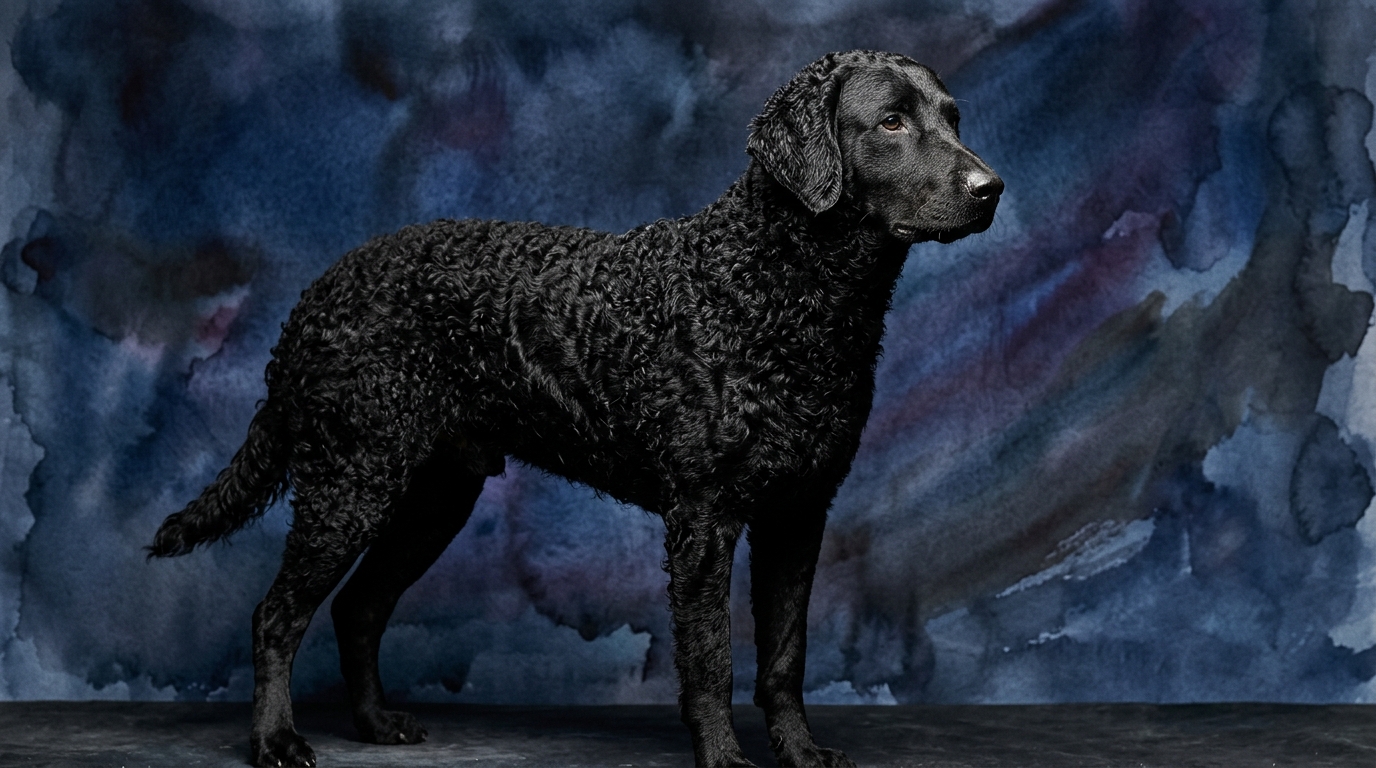
The Curly-Coated Retriever, a breed from the Sporting group, presents a slightly different cognitive fingerprint. It scores 3/5 in Problem Solving, Training Speed, Social Intelligence, and Instinctive Drive, but notably achieves a 4/5 in Memory. This indicates that while their problem-solving ability is practical and generally geared towards tasks, it doesn't necessarily exhibit the same independent, strategic depth seen in a guardian breed. Their training speed, also at 3/5, suggests they are receptive learners but may still require engaging methods and positive reinforcement to maintain focus, rather than being inherently eager to please in every scenario. Social intelligence in the Curly-Coated Retriever is typically friendly and adaptable within their family unit, though they can exhibit a reserved demeanor with new acquaintances, balancing their retriever enthusiasm with a touch of cautious observation. Their instinctive drive is firmly centered on retrieving, a strong urge to work alongside their human companions, often with a keen focus on scent and game. The standout 4/5 in Memory for the Curly-Coated Retriever highlights an exceptional capacity for recalling complex sequences of commands, retrieving locations, and learned behaviors, making them adept at intricate tasks and consistent performance over time.
Where the Tibetan Mastiff Excels Cognitively
The Tibetan Mastiff's cognitive strengths are deeply intertwined with its ancient purpose as a formidable guardian. While its scores are consistently 3/5, this 'average' masks a profound effectiveness in specific domains. Their Problem Solving at 3/5, for instance, isn't about solving complex puzzles for human amusement, but about independently assessing and neutralizing perceived threats to their territory or family. This involves nuanced decision-making regarding which strangers are genuinely dangerous and which are merely unfamiliar, a sophisticated judgment call that requires observation and discernment rather than rote response. Their Social Intelligence, also 3/5, allows for an intense, almost primal bond with their immediate human family, coupled with a highly selective and protective stance towards outsiders. This isn't a deficiency in social understanding, but rather a specialized cognitive adaptation for their role. They 'win' in their unparalleled capacity for autonomous vigilance and a deeply ingrained, self-reliant protective instinct, making decisions without constant human directives in high-stakes situations.
Where the Curly-Coated Retriever Shines Cognitively
The Curly-Coated Retriever truly shines in its exceptional Memory, scoring a notable 4/5. This elevated capacity for recall is a significant cognitive advantage, allowing them to learn and retain complex multi-step commands and intricate retrieving patterns with remarkable efficiency. An owner can teach a Curly-Coated Retriever a series of specific hand signals and verbal cues for different retrieves, and the dog will reliably remember and execute them, even after a significant time lapse. This superior memory also contributes to their consistency in performance during dog sports or hunting scenarios, where remembering specific locations or sequences of actions is paramount. Furthermore, their Problem Solving at 3/5, while not as independently strategic as a guardian, is highly effective in practical, task-oriented scenarios. They excel at figuring out the most efficient way to retrieve an object from a challenging environment or navigating obstacles to reach a desired target. This blend of strong memory and practical problem-solving makes them exceptionally capable partners in activities requiring precision and consistent application of learned skills.
Training Dynamics: Which Breed is Easier and Why?
When considering ease of training, the Curly-Coated Retriever generally presents a more straightforward path for most owners, despite both breeds scoring 3/5 in Training Speed. The Curly-Coated Retriever's superior 4/5 Memory is a key factor here; they absorb and retain commands, routines, and boundaries more readily than the Tibetan Mastiff. Their instinctive drive is geared towards working cooperatively with a handler, focusing on retrieving tasks, which often translates into a higher level of engagement during training sessions. While they can be sensitive and require positive reinforcement, their innate desire to participate in activities with their human companions, coupled with their excellent recall, makes teaching obedience and complex skills a more fluid process. They are generally responsive to cues and eager to apply what they've learned, making them rewarding partners for consistent training efforts.
The Tibetan Mastiff, with a 3/5 in Training Speed and Memory, presents a different set of training considerations. Their independence and guardian instincts mean they are often evaluating commands through the lens of their own perceived purpose. They are not inherently driven to 'please' in the same way a retriever might be; instead, they are looking for logical consistency and mutual respect. Training a Tibetan Mastiff requires immense patience, understanding of their inherent self-reliance, and the establishment of a clear, benevolent leadership. They learn, but often at their own pace, and may choose to comply only if they perceive value or reason in the command. Their tendency towards territoriality means early and extensive socialization is crucial, but even then, their social intelligence dictates a cautious, discerning approach to new people and situations, which requires careful management during training, rather than expecting broad, immediate acceptance. Their training is more about guiding their powerful instincts than molding them into a compliant follower.
Lifestyle Match: Active Owners vs. Relaxed Owners
For active owners seeking a canine partner for consistent engagement, the Curly-Coated Retriever is often the more fitting choice. Belonging to the Sporting group, they possess a sustained energy level and a strong drive for physical and mental activity. They thrive on regular exercise, such as long walks, runs, swimming, and especially retrieving games that tap into their instinctive drive. Their problem-solving skills and exceptional memory make them excellent candidates for dog sports like agility, obedience, and hunt tests, where they can channel their energy and intelligence into structured tasks. An owner who enjoys daily outdoor adventures and is committed to providing consistent mental stimulation through training and play will find a highly compatible companion in the Curly-Coated Retriever. Neglecting their need for activity can lead to boredom and potentially undesirable behaviors, as their cognitive profile demands an outlet.
Conversely, the Tibetan Mastiff, while requiring space and consistent, calm leadership, might align better with owners who appreciate a more relaxed, yet vigilant, companion. As a Working breed, particularly a guardian, their energy expenditure isn't about constant, high-intensity activity, but rather about patrolling, observing, and being prepared for action. Once past their boisterous puppy stage, adult Tibetan Mastiffs are often content with moderate daily exercise, such as a steady walk, combined with ample outdoor space to supervise. Their cognitive strengths lie in independent thought and territorial awareness, meaning they are mentally stimulated by simply monitoring their environment. A relaxed owner doesn't mean an absent owner; rather, it implies someone who can provide a stable, predictable routine and a calm home environment where the Mastiff can fulfill its inherent sentinel duties without excessive demands for constant interaction or strenuous activity. They are not suited for owners seeking a jogging partner or a dog that constantly craves interactive play; instead, they offer a profound, watchful companionship.
The Verdict: When to Choose Each Breed
The Verdict
Choose a Tibetan Mastiff if you are an experienced owner seeking an independent, self-reliant guardian with a deep, discerning loyalty, prepared for a long-term commitment to patient training and extensive socialization. They thrive in homes that value a watchful, majestic presence over constant activity.
Opt for a Curly-Coated Retriever if you are an active owner eager for a responsive, task-oriented partner who excels in learning and retaining complex commands, and you can provide consistent physical and mental engagement through activities like retrieving and dog sports.
🧠 Find Your Pet's IQ Score
Our Pet IQ Lab assessment covers 25+ tests across 5 cognitive dimensions — personalized to your breed.
Take the Full IQ Test →Frequently Asked Questions
Does the Tibetan Mastiff's 3/5 in Problem Solving mean it's not smart?
Not at all; the 3/5 indicates their problem-solving is often directed independently towards their guardian role, like assessing threats and territory, rather than solving human-devised puzzles. Their intelligence is specialized for self-reliant decision-making in their specific context.
How does the Curly-Coated Retriever's 4/5 Memory impact its daily life?
Their superior memory means they learn routines, commands, and boundaries quickly and retain them well, making them consistent in obedience and adept at complex tasks. This makes them highly trainable for activities requiring precision and recall.
Are Tibetan Mastiffs difficult to socialize given their 3/5 Social Intelligence?
Their 3/5 Social Intelligence reflects a discerning, reserved nature, not an inability to socialize. Early, consistent, and positive exposure to diverse people and environments is crucial to ensure they are well-adjusted, rather than overly suspicious, while retaining their protective instincts.