A Side-by-Side Look at Cognitive Profiles
At first glance, the Cosmic Pet Pet IQ Lab scores for both the Tibetan Mastiff and the Dandie Dinmont Terrier present a curious uniformity, with both breeds scoring 3/5 across all five cognitive dimensions. However, these identical scores belie profound differences in how these breeds apply their mental faculties, rooted deeply in their historical roles and inherent temperaments.
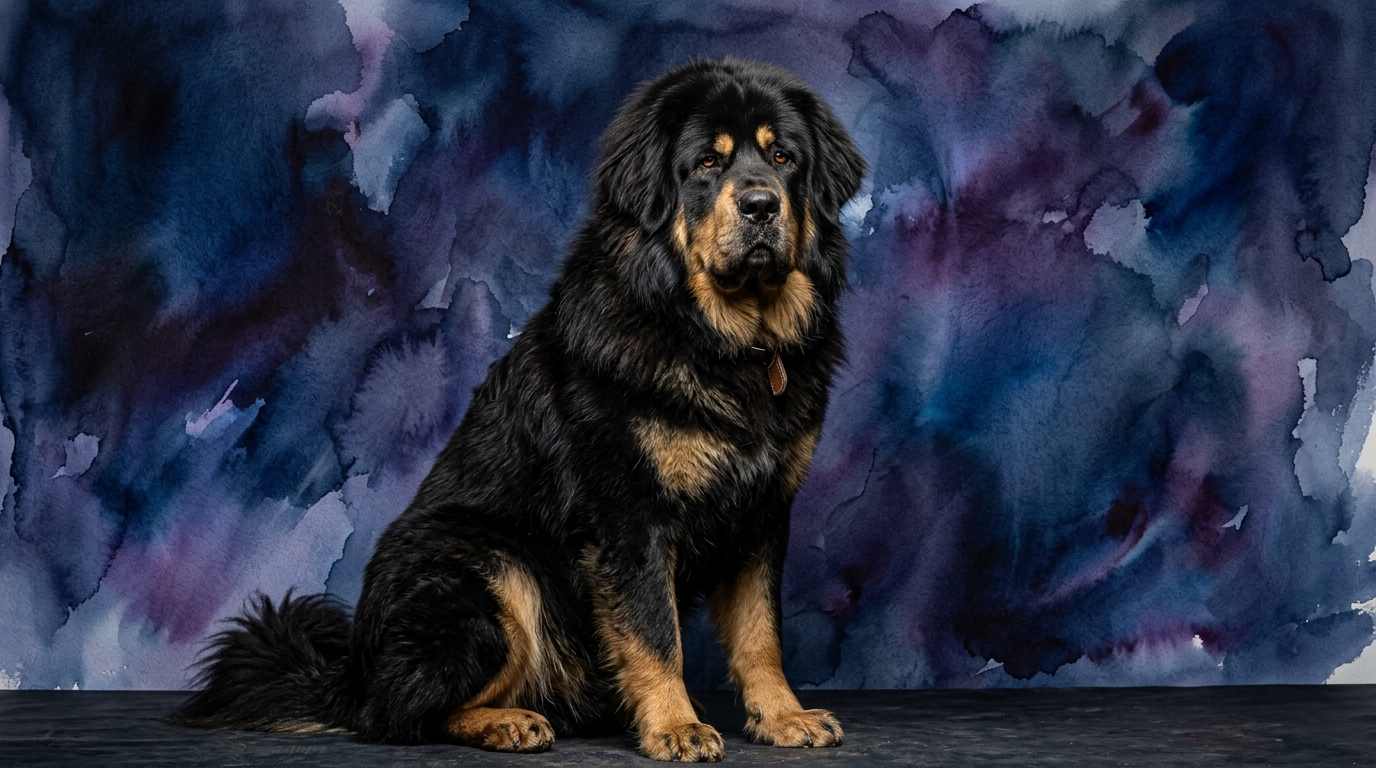
The **Tibetan Mastiff**, a member of the Working group, exhibits a problem-solving aptitude (3/5) primarily focused on strategic assessment and management of its territory and charges, rather than intricate puzzle-solving. Its training speed (3/5) reflects a deliberate learning style; while capable, it often requires clear purpose and respect for compliance, rather than eager-to-please obedience. Social intelligence (3/5) manifests as deep loyalty and discernment within its trusted family, alongside a reserved wariness of outsiders, keenly observing pack dynamics. Its instinctive drive (3/5) is powerfully geared towards guarding and protection. Memory (3/5) is robust for routines, perceived threats, and the family members it protects, contributing to its consistent guardianship.
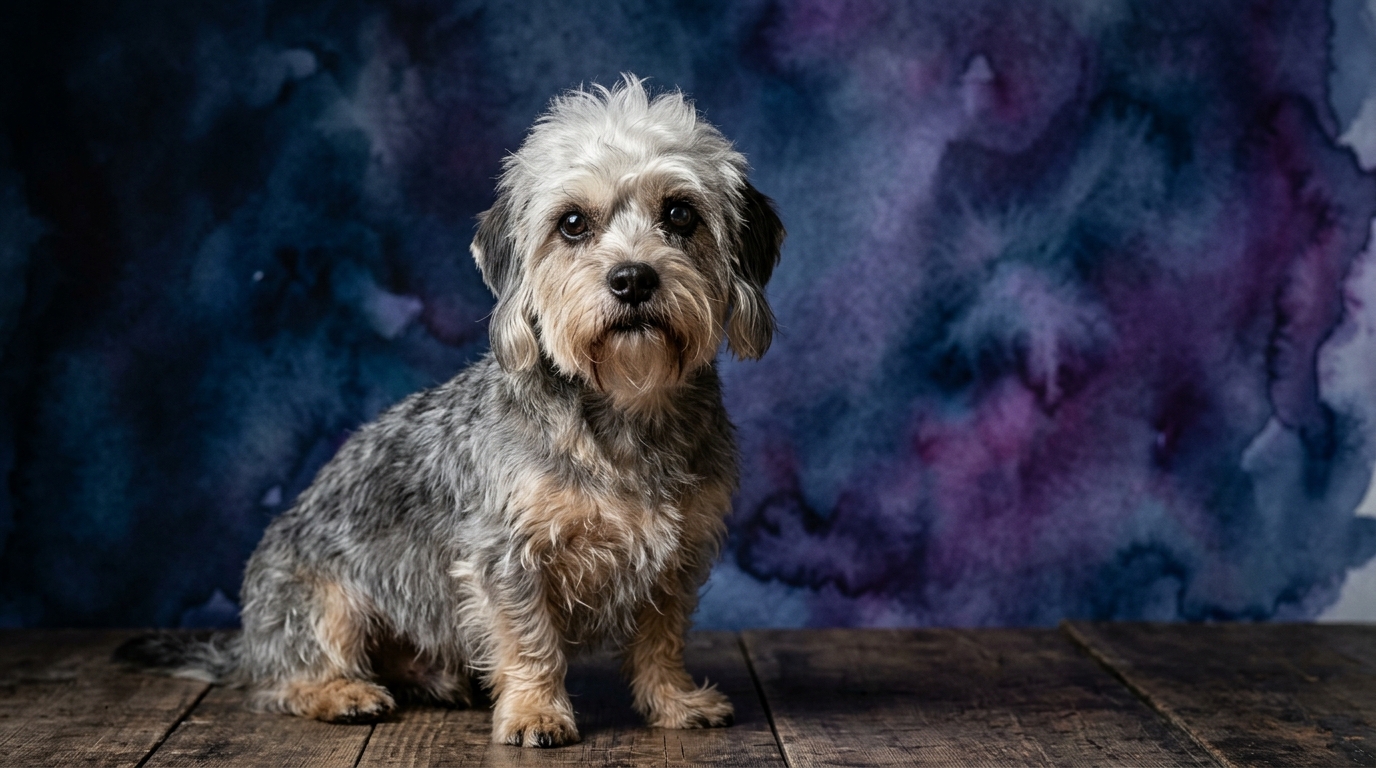
The **Dandie Dinmont Terrier**, from the Terrier group, also scores 3/5 for problem-solving, but its application is geared towards tenacious pursuit and extraction, finding ingenious ways to navigate obstacles in a hunt. Its training speed (3/5) is influenced by an independent spirit and a formidable prey drive, meaning learning occurs but often requires engaging methods to overcome distractions and inherent stubbornness. Social intelligence (3/5) is expressed as affection for its family and a confident, sometimes assertive, stance towards other canines, with a keen ability to read intentions but often a desire to act on its own terms. Instinctive drive (3/5) is strong for hunting, digging, and chasing. Memory (3/5) is excellent for successful hunting strategies, favored scents, and routines, aiding its persistent nature.
Where the Tibetan Mastiff Cognitively Excels
The Tibetan Mastiff’s cognitive strengths are deeply intertwined with its ancient role as a formidable guardian. Its problem-solving abilities, while rated 3/5, are uniquely specialized for assessing and managing potential threats to its designated territory and family. This isn't about solving a complex obedience sequence quickly, but rather about a patient, strategic oversight; it excels at discerning subtle shifts in its environment or the demeanor of strangers, making calculated decisions about when and how to intervene. This nuanced form of cognitive processing allows it to act as a formidable, self-reliant protector.
Furthermore, its social intelligence, also rated 3/5, is profound within the context of its family unit. A Tibetan Mastiff develops an incredibly deep, discerning bond, understanding the emotional states and needs of its trusted humans with remarkable perception. This isn't a broad, universally friendly social intelligence, but a highly focused, protective empathy that makes it an exceptionally devoted family member. Its memory plays a crucial role here, allowing it to retain long-term impressions of individuals and situations, contributing to its consistent and unwavering guardianship.
Where the Dandie Dinmont Terrier Cognitively Excels
The Dandie Dinmont Terrier, despite sharing similar raw IQ scores, exhibits a distinct set of cognitive strengths forged by its terrier heritage. Its problem-solving (3/5) shines brightest in situations demanding tenacity and resourcefulness, particularly when pursuing a goal. Whether it's finding a way to retrieve a deeply hidden toy or navigating a complex scent trail, the Dandie demonstrates an unwavering focus and ingenuity, often employing trial-and-error with remarkable persistence. This is a dog that will not easily give up on a mental challenge related to its inherent drives.
Its instinctive drive (3/5) and memory (3/5) work in concert to support this tenacious problem-solving. A Dandie will recall successful tactics for flushing out prey or navigating familiar hunting grounds, applying past experiences to new situations with a focused determination. This breed's social intelligence (3/5) is also notable for its confident self-assurance and ability to navigate new environments with a spirited curiosity, often adapting quickly to novel situations with a bold, independent flair that can be both charming and challenging.
Training Amenability: A Tale of Two Independent Spirits
Determining which breed is “easier” to train is complex, as both the Tibetan Mastiff and the Dandie Dinmont Terrier present unique challenges stemming from their independence, despite their identical training speed scores (3/5). Neither breed is characterized by an inherent desire to please that simplifies traditional obedience.
The Tibetan Mastiff’s challenge lies in its deliberate, self-assured nature. They are not quick to obey without understanding the 'why' behind a command, often questioning authority rather than blindly complying. Training requires immense patience, consistency, and a foundation of mutual respect, where the owner must demonstrate calm, assertive leadership. Their sheer size and strength mean that managing a disobedient Tibetan Mastiff requires significant physical and mental effort, emphasizing the critical importance of early, consistent socialization and appropriate expectations. They learn, but on their own terms and timeline.
The Dandie Dinmont Terrier, conversely, presents a challenge rooted in its tenacious terrier spirit and powerful prey drive. While capable of learning, their attention can be fleeting, easily diverted by an interesting scent or movement. Training often feels like a constant battle against distraction and an independent will that prefers to follow its own instincts. High-value rewards, short, engaging sessions, and creative approaches are essential to maintain their focus. For general obedience in a typical class setting, the Dandie's distractibility and single-minded pursuit of its own interests might make consistent compliance *feel* more challenging than the Mastiff's deliberate, yet ponderous, independence.
Matching Breeds to Lifestyles: Active vs. Relaxed Owners
When considering owner lifestyles, it's important to clarify what 'active' and 'relaxed' truly mean, as neither the Tibetan Mastiff nor the Dandie Dinmont Terrier are suitable for owners seeking a truly hands-off, low-maintenance companion. Both demand consistent engagement, albeit of different kinds.
The Tibetan Mastiff is not a breed for owners seeking a jogging partner or agility competitor. Its 'activity' needs are more about consistent, moderate exercise—long, structured walks—and extensive mental stimulation related to its guardian role. It thrives with owners who are calm, patient, and assertive, capable of providing consistent leadership and managing a powerful, independent canine. These owners must be prepared for the commitment to early, thorough socialization and a secure, spacious environment. This breed suits owners who appreciate a formidable, watchful presence and are willing to invest in understanding its unique temperament.
The Dandie Dinmont Terrier, while smaller, is far from a sedentary lap dog. Its 'active' requirements manifest as bursts of terrier energy; it needs regular opportunities to dig, chase, and explore. Owners who enjoy engaging in short, focused play sessions, providing puzzle toys, or even participating in earth dog trials will find a rewarding companion. This breed suits owners who appreciate a spirited, tenacious personality and are prepared to manage a strong prey drive and an independent streak with consistent, engaging training. Neither breed is for the 'relaxed' owner hoping for minimal effort; both require dedicated owners who understand and respect their distinct cognitive and behavioral profiles.
The Verdict
Choose a Tibetan Mastiff if you are seeking a deeply loyal, formidable guardian, understanding the commitment required for early socialization and consistent, respectful leadership of a powerful, independent companion.
Opt for a Dandie Dinmont Terrier if you appreciate a spirited, tenacious, and affectionate companion with a strong personality, willing to engage with its terrier drives through consistent, stimulating training and play.
🧠 Find Your Pet's IQ Score
Our Pet IQ Lab assessment covers 25+ tests across 5 cognitive dimensions — personalized to your breed.
Take the Full IQ Test →Frequently Asked Questions
Are Tibetan Mastiffs difficult to train?
Tibetan Mastiffs are challenging to train due to their independent nature and desire to make their own decisions. They require consistent, patient leadership and an owner who can earn their respect, as they are not typically eager to please.
Do Dandie Dinmont Terriers get along with other pets?
Dandie Dinmont Terriers can get along with other pets, especially if raised with them from a young age. However, their strong prey drive means they may instinctively chase smaller animals, and their confident nature can lead to assertiveness with other dogs.
What kind of environment suits a Tibetan Mastiff?
A Tibetan Mastiff thrives in a spacious, securely fenced environment where it can patrol its territory. They require a calm, stable household with owners who can provide consistent guidance and extensive early socialization to manage their guardian instincts.