Side-by-Side Cognitive Profiles
The Cosmic Pet Pet IQ Lab provides a fascinating framework for understanding canine intelligence across five key dimensions. For both the Tibetan Mastiff and the English Foxhound, each dimension scores a 3/5, suggesting a moderate, yet distinct, application of their mental faculties. It's crucial, however, to interpret these scores through the lens of each breed's specialized purpose and evolutionary history, as a numerical parity doesn't imply identical cognitive expression.
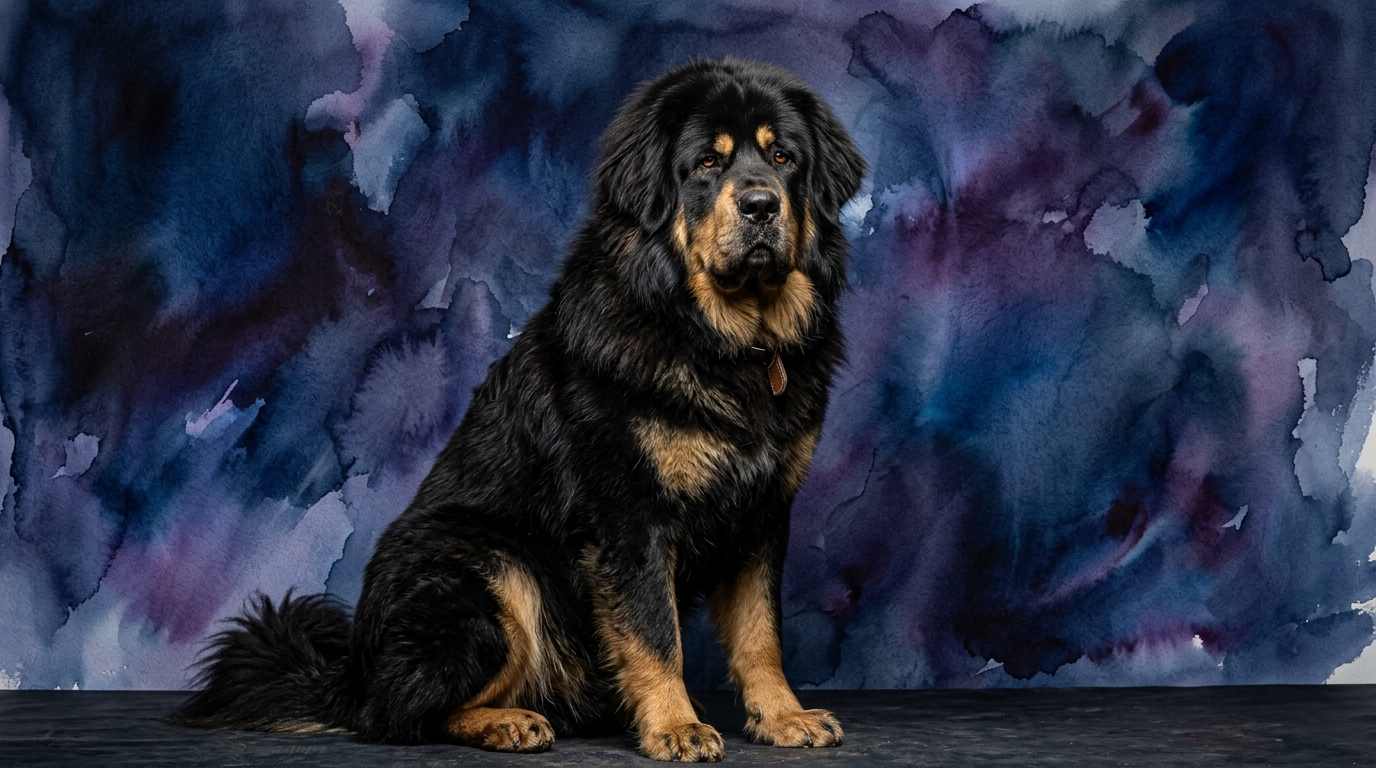
For the **Tibetan Mastiff**, a 3/5 in **Problem Solving** often involves independent assessment of perceived threats and strategic positioning within their territory to deter intruders, relying on their own judgment rather than constant human direction. Their **Training Speed** (3/5) indicates they learn new commands, but their execution is often contingent on their own assessment of necessity, requiring patient, consistent reinforcement and a strong, respectful bond. Their **Social Intelligence** (3/5) is largely directed towards their immediate family unit, discerning true members from potential threats, and understanding hierarchical dynamics within their protective sphere. The Mastiff's 3/5 **Instinctive Drive** is overwhelmingly centered on guardianship, displaying an innate compulsion to protect its family and territory with unwavering vigilance. Finally, their 3/5 **Memory** is particularly robust for recalling past interactions, recognizing individuals, and retaining the layout and boundaries of their protected domain.
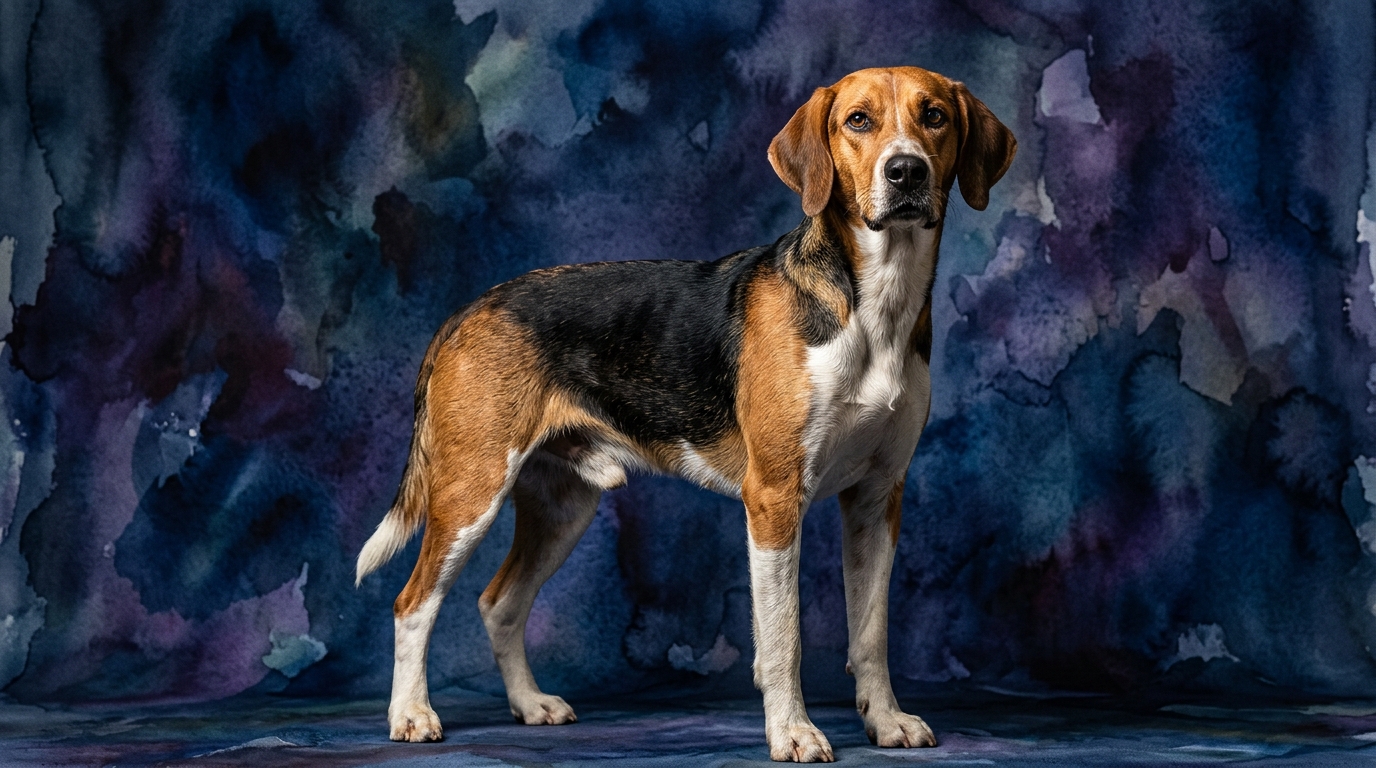
The **English Foxhound**, with its identical 3/5 scores, interprets these dimensions through the lens of pack hunting. For the Foxhound, a 3/5 in **Problem Solving** manifests as adept navigation of complex scent trails, coordinating with a pack to corner quarry, and adapting tactics during a prolonged chase. Their **Training Speed** (3/5) means they grasp concepts quickly, especially when tasks align with their prey drive or involve cooperative effort, though distractions from scent can challenge focus. Rated 3/5 for **Social Intelligence**, Foxhounds excel in pack dynamics, reading canine and human cues to maintain cohesion during a hunt and understand their role within a group. The Foxhound's 3/5 **Instinctive Drive** translates into an intense, almost singular focus on scent and pursuit, an ancient drive essential for their hunting heritage. Their 3/5 **Memory** is adept at storing complex scent information, remembering intricate routes, and recalling the patterns of prey movement across vast landscapes.
Where the Tibetan Mastiff Excels Cognitively
The Tibetan Mastiff's cognitive strengths shine brightest in scenarios demanding independent judgment and self-sufficiency. Originating as formidable guardians of livestock and homes in the Himalayas, their problem-solving (3/5) is profoundly geared towards assessing and neutralizing perceived threats without constant human direction. This manifests as a thoughtful, often cautious approach to new situations, where they meticulously evaluate their environment and the intentions of strangers or perceived intruders. Their memory (3/5) excels at retaining information about their territory's boundaries, recognizing familiar faces, and recalling past encounters, which directly contributes to their effectiveness as a sentinel. Unlike many breeds that defer to human command for every decision, the Mastiff possesses an inherent understanding of its protective role, often acting on its own initiative to maintain the security of its domain. This deep-seated autonomy, while sometimes interpreted as stubbornness in training, is a testament to a mind built for independent guardianship.
Where the English Foxhound Excels Cognitively
Conversely, the English Foxhound demonstrates superior cognitive prowess in tasks requiring sustained focus, cooperative effort, and an unwavering commitment to a singular objective. With a problem-solving score of 3/5, the Foxhound's intellect is honed for the intricate challenges of the hunt. This involves not just following a scent trail but discerning complex patterns, navigating varied terrains, and working in seamless concert with a pack and human hunters. Their instinctive drive (3/5) is almost entirely channeled into the pursuit of quarry, showcasing an unparalleled ability to concentrate on a scent, filtering out other distractions for hours on end. The Foxhound's social intelligence (3/5) is exceptional within a pack dynamic; they communicate effectively through body language and vocalizations, understanding their role and the roles of others to achieve a shared goal. Their memory (3/5) is particularly adept at recalling intricate scent patterns and the topography of hunting grounds, allowing them to pick up old trails or anticipate the movements of their quarry with remarkable accuracy.
Training Dynamics: Independence vs. Cooperation
When considering ease of training, the English Foxhound generally presents a more straightforward path for the average owner, though not without its specific challenges. Their social intelligence (3/5) is geared towards cooperative work, making them typically more responsive to human direction, especially when training taps into their natural pack mentality and desire for a shared activity. While their training speed is also rated 3/5, their willingness to engage and their strong instinctive drive for pursuit can be harnessed effectively with consistent, reward-based methods. However, their potent prey drive means that off-leash reliability, particularly in scent-rich environments, requires rigorous, ongoing training and an understanding that a compelling scent can override learned commands.
The Tibetan Mastiff, despite also having a 3/5 training speed, often requires a different approach. Their inherent independence and guardian mentality mean they will frequently weigh a command against their own judgment or perceived necessity. They are not typically driven by an eagerness to please in the same way a Foxhound might be, making training a longer process that demands immense patience, respect, and a deep understanding of their self-reliant nature. Effective training for a Mastiff hinges on building a relationship of mutual trust and demonstrating consistent leadership, rather than simply expecting rote obedience. Their problem-solving (3/5) in training often involves figuring out how to achieve their own goals, which may not always align with the handler's.
Suitability for Active vs. Relaxed Lifestyles
The choice between these two breeds for active versus relaxed owners hinges significantly on the *type* of activity and mental engagement desired. The English Foxhound is unequivocally suited for highly active owners. Their profound instinctive drive (3/5) and historical role in sustained, vigorous hunts mean they possess incredible stamina and require extensive daily exercise, often several hours of vigorous activity. This isn't just about physical exertion; their minds thrive on structured activities like scent work, long hikes, or even canine sports that tap into their tracking abilities. A relaxed owner would quickly find themselves overwhelmed by a Foxhound's unmet energy demands, potentially leading to destructive behaviors such as incessant barking or destructive chewing.
In contrast, the Tibetan Mastiff, while requiring regular exercise to maintain health, is not a breed for endless, high-intensity activity once past puppyhood. Their 'activity' is often more mental: patrolling their territory, observing, and making independent judgments. They suit owners who appreciate a vigilant, often reserved companion and who can provide a secure, spacious environment for them to supervise. While not demanding constant physical engagement, they require owners who are prepared for their strong protective instincts and who can manage a powerful, independent-minded dog, making them less suitable for truly 'relaxed' owners who prefer a hands-off approach to dog management. Their low social intelligence (3/5) with strangers also means they're not ideal for frequent public outings or dog parks.
The Verdict
Choose the Tibetan Mastiff if you seek an independent, territorial guardian who thinks for themselves, values a secure home, and appreciates a powerful, watchful presence that demands respect rather than constant entertainment.
Opt for the English Foxhound if you are a highly active individual or family who embraces outdoor adventures, enjoys structured activities, and is prepared to channel a powerful prey drive and boundless energy into cooperative tasks.
🧠 Find Your Pet's IQ Score
Our Pet IQ Lab assessment covers 25+ tests across 5 cognitive dimensions — personalized to your breed.
Take the Full IQ Test →Frequently Asked Questions
Are Tibetan Mastiffs good with children?
Tibetan Mastiffs can be good with children in their own family, especially when raised with them, as their social intelligence (3/5) extends to protecting their 'pack.' However, their sheer size and independent nature mean supervision is always necessary, and they may not tolerate rough play from unfamiliar children.
Do English Foxhounds make good apartment dogs?
English Foxhounds are generally not suitable for apartment living due to their immense energy levels and strong instinctive drive (3/5) for activity. They require a large, securely fenced yard and several hours of vigorous daily exercise to prevent boredom and potential destructive behaviors.
Are these breeds prone to excessive barking?
Both breeds can be vocal, but for different reasons. Tibetan Mastiffs often bark to alert or deter perceived threats, a manifestation of their guardian drive. English Foxhounds use their voices during tracking or when frustrated by lack of activity, a trait tied to their pack hunting heritage.