Side-by-Side IQ Profile: Unpacking the 3/5 Scores
At first glance, the identical 3/5 scores across all five IQ dimensions for both the Tibetan Mastiff and the Finnish Spitz might suggest cognitive parity. However, the true insight lies in understanding *how* each breed achieves these scores, reflecting their deeply ingrained historical roles and behavioral predispositions. A 3/5 score indicates an above-average competency, not exceptionalism, but it's the nature of that competency that truly differentiates them.
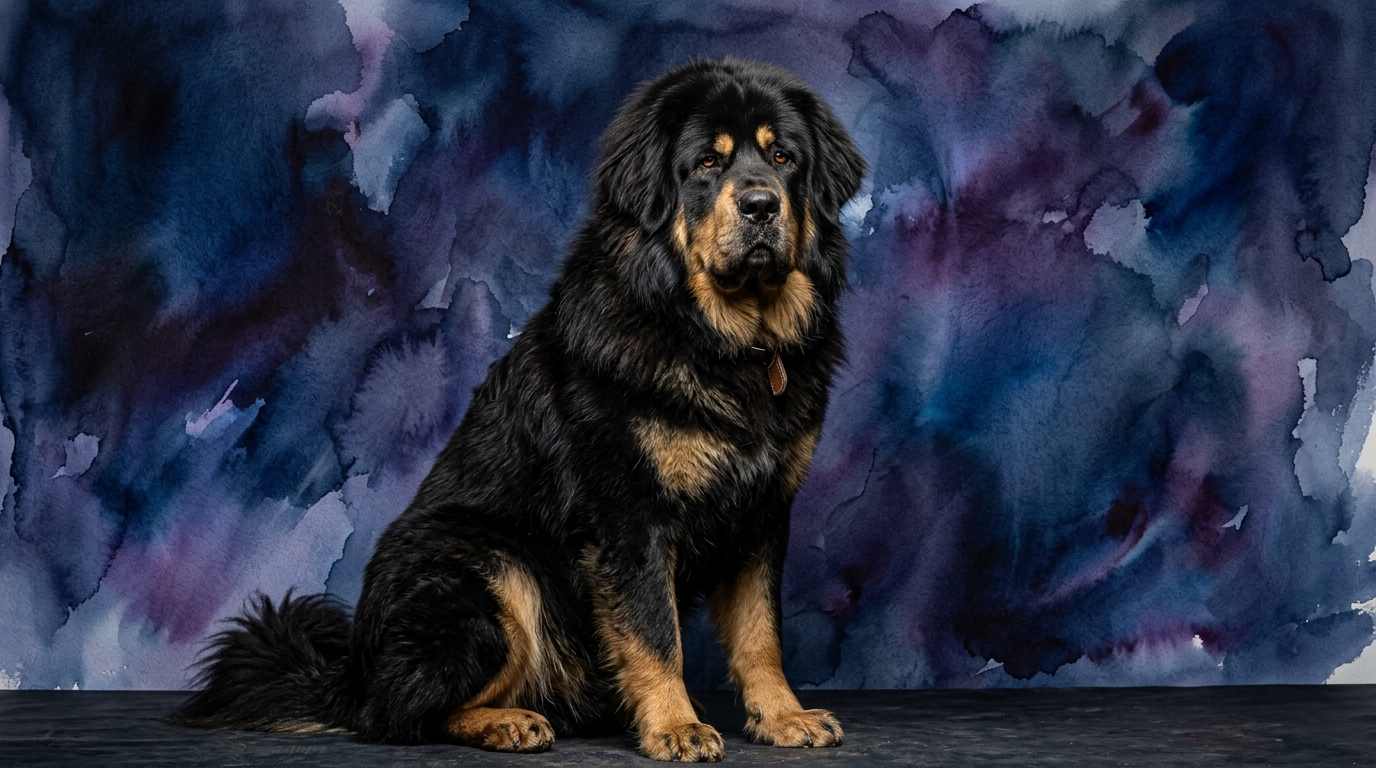
The **Tibetan Mastiff**, a majestic guardian from the Himalayan mountains, demonstrates its Problem Solving (3/5) through an independent, strategic assessment of its environment. This isn't about complex tricks, but rather evaluating threats, discerning intentions, and making autonomous decisions to protect its territory and family. Its solutions are often cautious and self-reliant, reflecting centuries of solitary guardianship. Training Speed (3/5) for this breed is characterized by a thoughtful, often deliberate learning process; they learn effectively, but typically on their own terms. They require a compelling reason or clear purpose to comply, rather than rote repetition. Social Intelligence (3/5) manifests as a profound loyalty and discernment towards its inner circle, exhibiting deep understanding of its family's moods and needs, while often maintaining a reserved or even suspicious demeanor towards strangers. Its Instinctive Drive (3/5) is powerfully geared towards protection and territorial defense, a deep-seated urge to watch over its domain. Finally, its Memory (3/5) is robust for recalling individuals, routines, and especially past interactions or perceived threats within its established territory, contributing to its vigilant nature.
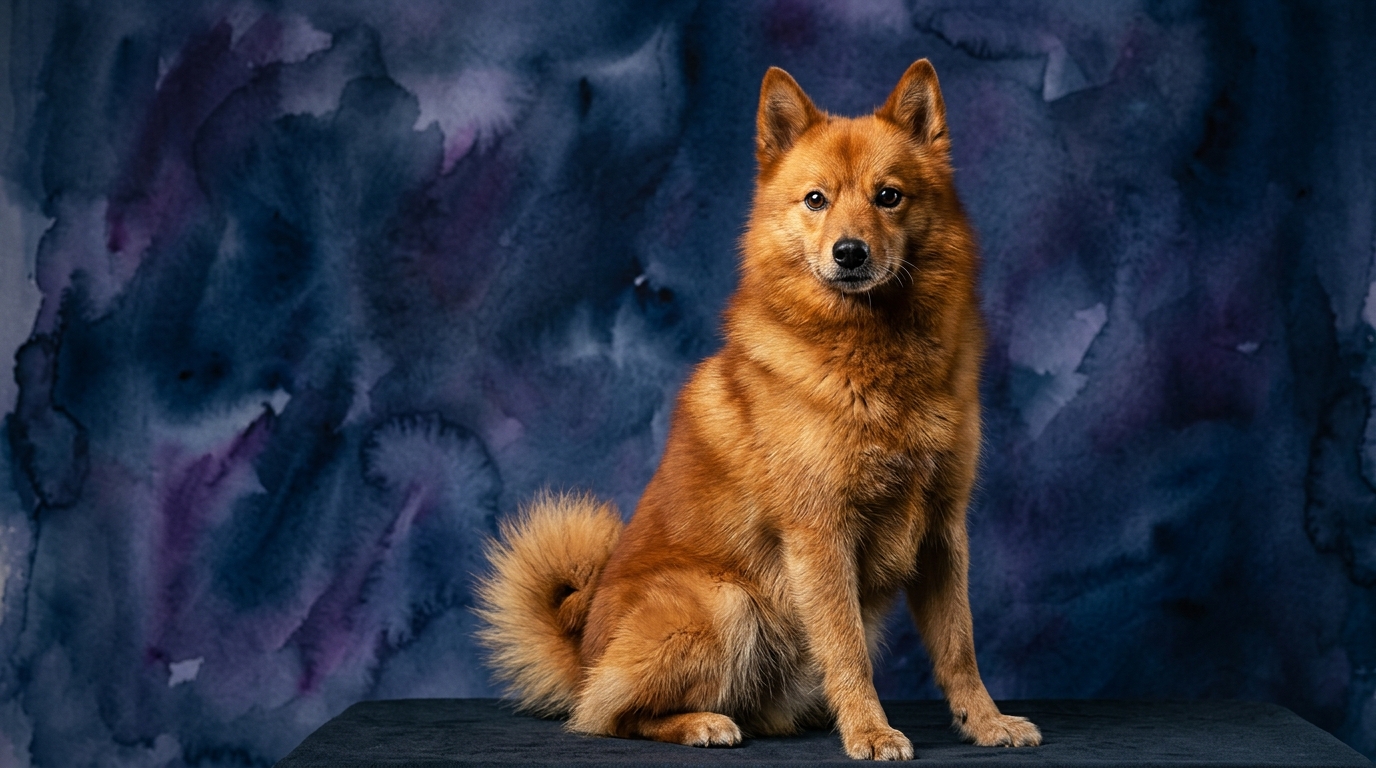
The **Finnish Spitz**, a lively and vocal hunting dog from Scandinavia, showcases its Problem Solving (3/5) primarily within the context of its traditional work: locating and 'pointing' game (usually birds) by barking. This involves rapid assessment of scents, sounds, and terrain, often requiring quick, independent decisions in the field to track and corner prey. Its solutions are agile and instinct-driven, focused on the immediate hunting task. Training Speed (3/5) suggests it can learn specific commands and tasks efficiently, particularly if they align with its strong prey drive or vocal tendencies. However, its independent spirit and distractibility can make sustained, precise obedience a challenge, often requiring highly engaging and varied training methods. Social Intelligence (3/5) for the Finnish Spitz is often expressed through its characteristic vocalizations, communicating its findings to a human hunting partner. It's an alert and cooperative intelligence, though it retains a certain independent streak. Its Instinctive Drive (3/5) is dominated by an intense prey drive and an innate urge to bark at perceived game, a defining trait of the breed. Its Memory (3/5) is excellent for recalling hunting grounds, scent trails, and specific cues related to its working function, aiding its effectiveness as a hunter.
Where the Tibetan Mastiff Excels Cognitively
The Tibetan Mastiff's cognitive strengths lie in its capacity for independent, strategic thought, particularly in situations demanding vigilance and protection. Its 3/5 problem-solving score is less about executing complex tricks and more about its ability to autonomously assess evolving threats and manage its territory with minimal human intervention. This breed excels at maintaining a comprehensive mental map of its surroundings, noting even subtle changes, and applying a discerning social intelligence to distinguish between familiar, trusted individuals and potential intruders. Its memory for past events and individuals within its domain is particularly strong, allowing it to learn from experiences related to security and family welfare, making it a highly effective, self-reliant guardian.
Where the Finnish Spitz Shines Cognitively
The Finnish Spitz demonstrates cognitive superiority in its focused, tenacious pursuit of specific tasks related to its hunting heritage. Its 3/5 problem-solving ability is evident in its swift, often instinctual, decision-making when tracking game, utilizing acute senses to navigate complex environments and pinpoint targets. This breed's social intelligence is adept at communicating its findings through its distinctive barking, a unique form of cooperative interaction with its human handler in the field. Its memory is highly attuned to environmental details, scents, and sounds crucial for hunting success, enabling it to recall productive areas and effective strategies. The Finnish Spitz thrives on engagement that taps into its strong prey drive and provides an outlet for its alert, exploratory nature.
Training Dynamics: Independence vs. Instinct
Neither the Tibetan Mastiff nor the Finnish Spitz is conventionally considered 'easy' to train, both landing at a 3/5 training speed, signifying an average learning pace that demands consistent, informed effort. The Tibetan Mastiff's independent nature means it doesn't automatically defer to human commands; it requires a trainer to build a relationship based on mutual respect and to demonstrate the logical purpose behind each instruction. This breed often processes information deliberately and may resist commands it perceives as arbitrary or unnecessary, leading to slower generalization of learned behaviors across different contexts. Its protective instincts, while valuable, can also make socialization and obedience training challenging, necessitating early, consistent exposure and a patient, firm approach to channel its inherent drives positively.
The Finnish Spitz, conversely, can learn specific tasks with enthusiasm, especially those that engage its powerful prey drive and vocalizations. However, its strong hunting instincts mean it can be easily distracted by environmental stimuli like scents or moving objects, often prioritizing these over human commands. While it can be cooperative, it also possesses a stubborn streak, particularly if not adequately motivated or if the training becomes monotonous. Effective training for the Finnish Spitz often involves short, engaging sessions that leverage positive reinforcement, incorporate play, and creatively channel its natural drives, such as scent work or 'find it' games, to maintain its focus and enthusiasm.
Matching Breeds to Lifestyles: Active vs. Relaxed Owners
The **Tibetan Mastiff** is better suited for owners who can provide a secure, spacious environment and appreciate a more relaxed yet profoundly vigilant canine presence. While they require regular, moderate exercise to maintain physical health and mental well-being, their primary 'work' often involves observing, patrolling, and guarding their territory. They are not typically high-energy dogs in the sense of needing constant, strenuous activity, but they demand significant mental engagement through their guardian role. Ideal owners are those who value a watchful, independent companion and can provide consistent, patient leadership without expecting eager, immediate compliance, thriving in a home where their protective instincts are understood and respected.
The **Finnish Spitz**, in contrast, is an excellent match for active individuals or families who can provide consistent stimulation and outlets for its considerable energy and keen hunting instincts. This breed thrives on regular, engaging activities such as long walks, hiking, scent work, or even participation in dog sports. Its alert and vocal nature means it needs an owner who appreciates its lively spirit and distinct communication style, and who can channel its energy positively to prevent boredom-induced behaviors like excessive barking or mischievous exploration. A relaxed owner who cannot commit to daily engagement might find the Finnish Spitz's needs challenging to meet, leading to an under-stimulated and potentially boisterous companion.
The Verdict
Choose the Tibetan Mastiff if you seek a vigilant, independent guardian who thrives on observation and a clearly defined territory, appreciating a canine companion with a deep, protective bond rather than one focused on eager compliance.
Choose the Finnish Spitz if you are an active individual or family seeking an alert, vocal, and engaging companion who thrives on outdoor adventures, mental challenges, and consistent interaction, valuing its lively spirit and keen hunting instincts.
🧠 Find Your Pet's IQ Score
Our Pet IQ Lab assessment covers 25+ tests across 5 cognitive dimensions — personalized to your breed.
Take the Full IQ Test →Frequently Asked Questions
Do their 3/5 IQ scores mean they are similar in all cognitive aspects?
No, while both breeds score 3/5 across the board in our IQ dimensions, this numerical similarity masks profound differences in *how* their intelligence manifests. Their unique evolutionary pressures have shaped distinct cognitive strengths, despite achieving comparable overall competency in each area.
Which breed is more suitable for a first-time dog owner?
Neither the Tibetan Mastiff nor the Finnish Spitz is typically recommended for first-time dog owners due to their independent natures, strong drives, and specific needs. Both require experienced handling, consistent training, and owners who understand their breed-specific behaviors to thrive.
How does their 'instinctive drive' score of 3/5 differ between the two?
For the Tibetan Mastiff, a 3/5 instinctive drive primarily signifies its deep-seated guardian and territorial protection instincts, manifesting as vigilance and a strong desire to keep its family and property safe. For the Finnish Spitz, its 3/5 instinctive drive is characterized by its intense prey drive, keen desire to hunt, and its characteristic vocalization (barking) to alert hunters to game.