Side-by-Side IQ Profile: Guardian vs. Hunter
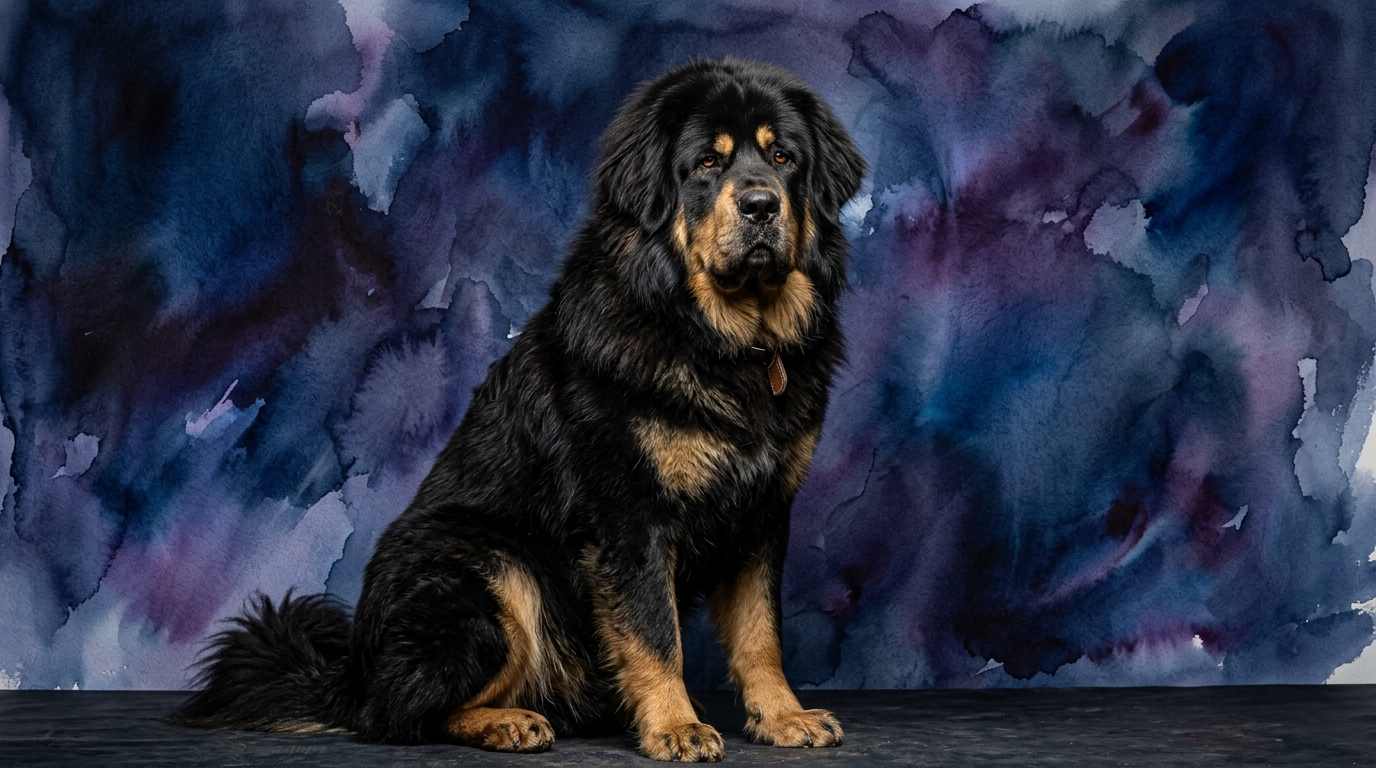
The Cosmic Pet Pet IQ Lab employs a five-dimensional framework to assess canine intelligence, moving beyond simple obedience ranks to capture a fuller picture of a breed's cognitive strengths. For the Tibetan Mastiff, a dog from the Working group, its scores are consistent across the board: Problem Solving 3/5, Training Speed 3/5, Social Intelligence 3/5, Instinctive Drive 3/5, and Memory 3/5. This profile suggests a balanced, self-reliant intellect geared towards its historical role as an independent guardian.
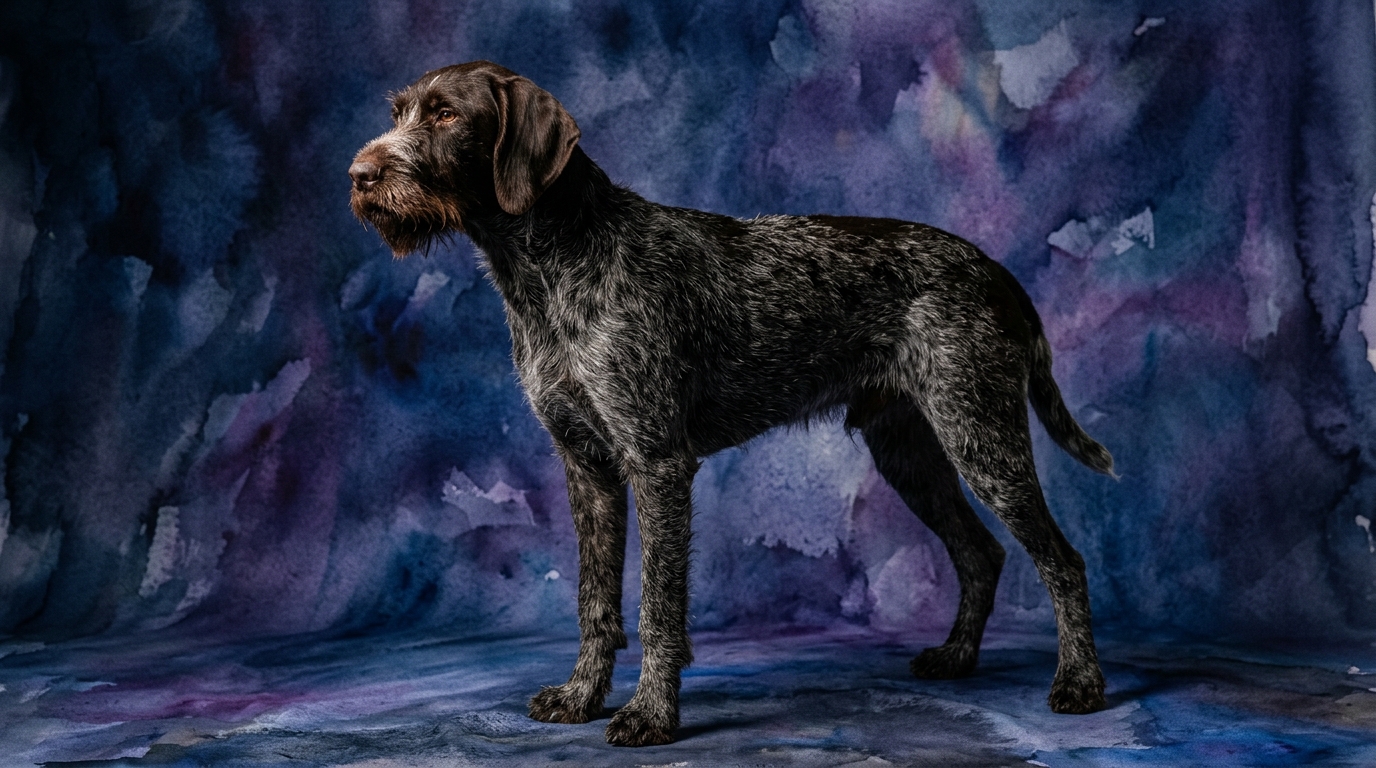
In contrast, the German Wirehaired Pointer (GWP), a member of the Sporting group and notably Coren-ranked at #28 for working intelligence, presents a sharper profile in specific areas. Its scores are Problem Solving 4/5, Training Speed 4/5, Social Intelligence 3/5, Instinctive Drive 3/5, and Memory 4/5. This distribution highlights a mind optimized for cooperative work, quick learning, and effective recall, aligning perfectly with its heritage as a versatile hunting companion.
Delving into Problem Solving, the Tibetan Mastiff's 3/5 indicates a capacity for strategic, independent thought, often related to territorial assessment and subtle threat identification rather than complex, handler-directed puzzles. The GWP's 4/5 reflects an agile mind adept at navigating varied terrain, deciphering scent trails, and adapting quickly to new hunting scenarios. For Training Speed, the Mastiff's 3/5 suggests learning occurs, but often at its own discretion and when it perceives value, requiring patience. The GWP's 4/5 signifies a breed that grasps commands rapidly and enjoys the mental engagement of training sessions.
Social Intelligence stands at 3/5 for both, yet manifests differently. The Tibetan Mastiff's social acumen is deep within its trusted family unit, allowing it to discern subtle emotional cues and protect its own fiercely, while often being reserved or suspicious of outsiders. The GWP's 3/5 points to a cooperative nature with handlers and generally amiable interactions within its social circle, though its primary social focus is often on its working partnership. Instinctive Drive is also 3/5 for both breeds, but their drives are fundamentally different: the Mastiff's is rooted in vigilant protection and territorial defense, while the GWP's is driven by an intense desire to point, retrieve, and track prey. Finally, Memory at 3/5 for the Mastiff implies a solid recall of routines, perceived threats, and familiar individuals, whereas the GWP's 4/5 indicates a superior capacity to remember complex sequences, commands, and scent patterns critical for its hunting tasks.
Where the Tibetan Mastiff Excels Cognitively
While its scores appear more modest compared to the GWP's, the Tibetan Mastiff's cognitive strengths lie in areas deeply tied to its ancient purpose as a nomadic guardian. Its problem-solving, though rated 3/5, is geared towards independent, strategic assessment of its environment. This breed excels at discerning genuine threats from benign activity, often making its own judgments about how to protect its territory and family without constant human direction. This isn't about solving a puzzle for a treat, but rather about proactive vigilance and deterrent strategies.
The Mastiff's social intelligence, also 3/5, is profoundly tuned to its immediate family. It develops an intricate understanding of its human companions' emotional states and routines, allowing it to act as a sensitive, yet formidable, protector. This social depth translates into a nuanced ability to differentiate between a welcome guest and a potential intruder, relying on subtle cues rather than overt commands. Its memory (3/5) supports this by retaining knowledge of individuals, routines, and perceived threats over long periods, contributing to its consistent guardianship. This breed's intelligence is a slow burn, a deep, watchful awareness that prioritizes security and independence above all else.
Where the German Wirehaired Pointer Shines Cognitively
The German Wirehaired Pointer's cognitive profile, particularly its higher scores in Problem Solving (4/5), Training Speed (4/5), and Memory (4/5), showcases an intellect built for dynamic, cooperative work. Its superior problem-solving ability allows it to quickly adapt to changing conditions in the field, whether it's navigating dense cover, locating downed game, or figuring out the most efficient way to retrieve an object. This breed doesn't just follow instructions; it actively processes its environment to achieve its goals.
The GWP's exceptional training speed and memory are hallmarks of its working prowess. Its Coren ranking of #28 underscores its capacity for rapid learning and reliable retention of commands, even complex multi-step sequences. This means a GWP can master a wide repertoire of behaviors and recall them accurately, which is indispensable for a versatile hunting dog that needs to switch tasks and respond precisely to its handler's cues. Its instinctive drive for pointing and retrieving (3/5) is powerfully channeled through this quick learning and memory, making it an incredibly efficient and effective partner in the field.
Training Dynamics: Independence vs. Cooperation
When it comes to ease of training, the German Wirehaired Pointer generally offers a more straightforward experience for most owners due to its 4/5 Training Speed and cooperative nature. GWPs are bred to work closely with humans, possess a strong desire to please, and respond enthusiastically to positive reinforcement. They thrive on consistent training that engages their minds and bodies, quickly associating commands with actions and relishing the challenge of learning new skills. Their higher problem-solving and memory scores mean they are adept at understanding and retaining complex instructions, making them excellent candidates for advanced obedience, hunting trials, and dog sports.
The Tibetan Mastiff, with a 3/5 Training Speed, requires a different approach. This breed is known for its independent nature and strong will, often deciding for itself whether a command is worth obeying. Training a Mastiff is less about rote compliance and more about building a deep, trusting relationship where the dog respects its owner's leadership and genuinely believes in the value of the requested action. They are not 'difficult' in the sense of being incapable of learning, but rather 'deliberate.' Owners must be patient, consistent, and understand that a Mastiff's intelligence is geared towards independent decision-making for protection, not necessarily eagerness to perform tricks on command. They respond best when they feel they are choosing to cooperate, rather than being forced.
Matching Breeds to Lifestyles: Active Pursuit vs. Vigilant Presence
The German Wirehaired Pointer is an ideal companion for active owners who relish outdoor adventures and desire a highly engaged, energetic partner. Their strong instinctive drive (3/5) for hunting, combined with their problem-solving and training speed, means they require significant physical exercise and mental stimulation. Owners who enjoy hiking, running, hunting, or participating in dog sports like agility, flyball, or obedience will find the GWP to be an enthusiastic and capable companion. They thrive in environments where they have a 'job' to do and can channel their considerable energy and intelligence into purposeful activities. A GWP left without sufficient outlets can become restless or destructive, reflecting their need for mental and physical engagement.
The Tibetan Mastiff, while appearing calm, is better suited for owners who appreciate a vigilant, independent presence and are prepared for a specific kind of management. Their 3/5 instinctive drive is focused on guardianship, not constant physical activity. While they need regular exercise, they don't typically demand the same intensity or duration as a GWP. Instead, they require secure containment, consistent socialization, and an owner who can confidently establish leadership and manage their protective instincts. Relaxed owners, in terms of daily high-energy output, might find the Mastiff's calm demeanor appealing, but must be 'active' in their commitment to socialization, training for appropriate behavior, and providing a stable, predictable environment where the Mastiff feels secure in its role. Their intelligence is about observation and strategic defense, not high-octane physical performance.
The Verdict
Choose the Tibetan Mastiff if you seek an independent, formidable guardian with a reserved nature, and are prepared to offer consistent, trust-based leadership and patient understanding of its unique protective intellect.
Opt for the German Wirehaired Pointer if you are an active individual desiring a highly trainable, energetic, and cooperative partner for outdoor adventures, hunting, or competitive dog sports.
🧠 Find Your Pet's IQ Score
Our Pet IQ Lab assessment covers 25+ tests across 5 cognitive dimensions — personalized to your breed.
Take the Full IQ Test →Frequently Asked Questions
Are Tibetan Mastiffs difficult to train?
Tibetan Mastiffs are not inherently difficult to train, but they require a specific approach due to their independent nature. They learn best with patience, consistency, and when they perceive the value in a command, often needing to believe it's their idea to cooperate fully. Their training speed (3/5) indicates they absorb information, but their strong will means immediate, rote obedience is not their primary mode.
How much exercise does a German Wirehaired Pointer need?
German Wirehaired Pointers need substantial daily exercise, typically an hour or more of vigorous activity, to satisfy their high energy levels and strong instinctive drive (3/5). This can include running, hiking, swimming, or engaging in dog sports, as their problem-solving (4/5) and training speed (4/5) mean they also benefit greatly from mentally stimulating activities.
Which breed is better with children?
Both breeds have a social intelligence of 3/5, but their suitability with children varies greatly. The Tibetan Mastiff is typically devoted and protective of its family's children, viewing them as part of its 'flock,' but its sheer size and guardian instincts require careful supervision, especially with unfamiliar children. The German Wirehaired Pointer, being more overtly cooperative and sociable, is generally good with active children who can match its energy, though its exuberance and prey drive warrant supervision around very young children or other small pets.