Side-by-Side IQ Profile: Unpacking Identical Scores
Despite their identical 3/5 ratings across all cognitive dimensions, the Tibetan Mastiff and Miniature Bull Terrier interpret these scores through the lens of their unique breed purposes and temperaments. Understanding these nuances is key to appreciating their individual cognitive styles.
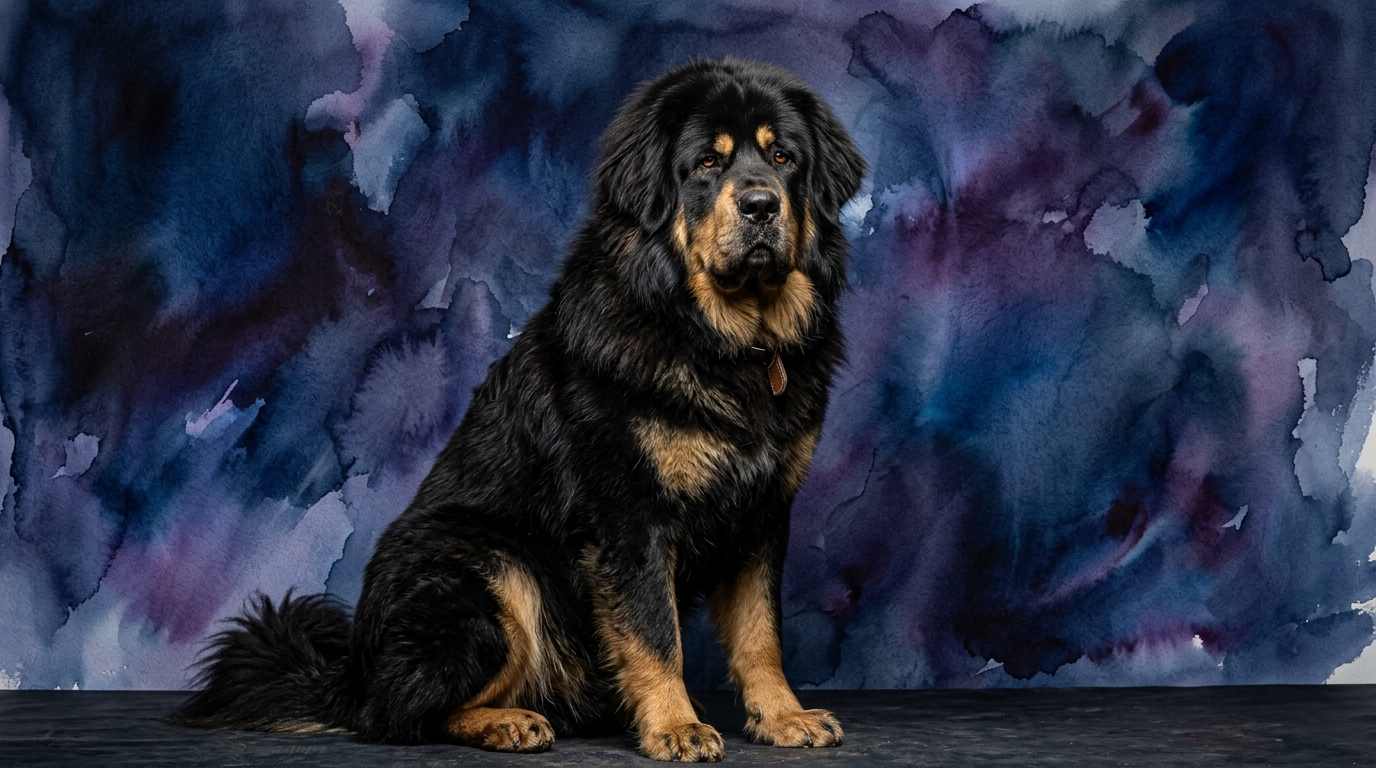
For the Tibetan Mastiff, Problem Solving (3/5) reflects a deliberate, independent approach to challenges, often rooted in their ancient guardian instincts. A Tibetan Mastiff assesses situations thoughtfully, preferring solutions that maintain their perceived order or protect their charges rather than rushing into action, leading to well-considered resolutions.
Their Training Speed (3/5) indicates they learn at a moderate pace, but their willingness to perform depends heavily on their own assessment of a command's utility. They require clear, consistent communication and a strong, respectful bond to internalize lessons, which are then typically retained with impressive fidelity.
Social Intelligence (3/5) in a Tibetan Mastiff is nuanced, expressed through subtle body language and a deep understanding of their family unit's dynamics. While reserved with strangers, they form profound bonds with their chosen people, intuitively grasping human emotions within their immediate circle.
The Tibetan Mastiff's Instinctive Drive (3/5) is primarily centered on guardianship and territoriality. This moderate score indicates a powerful, yet generally controlled, impulse to protect their home and family, manifesting as vigilance and a strong sense of responsibility. Their Memory (3/5) is solid, particularly regarding people, places, and routines relevant to their security, allowing them to recall learned behaviors important for their role over long periods.
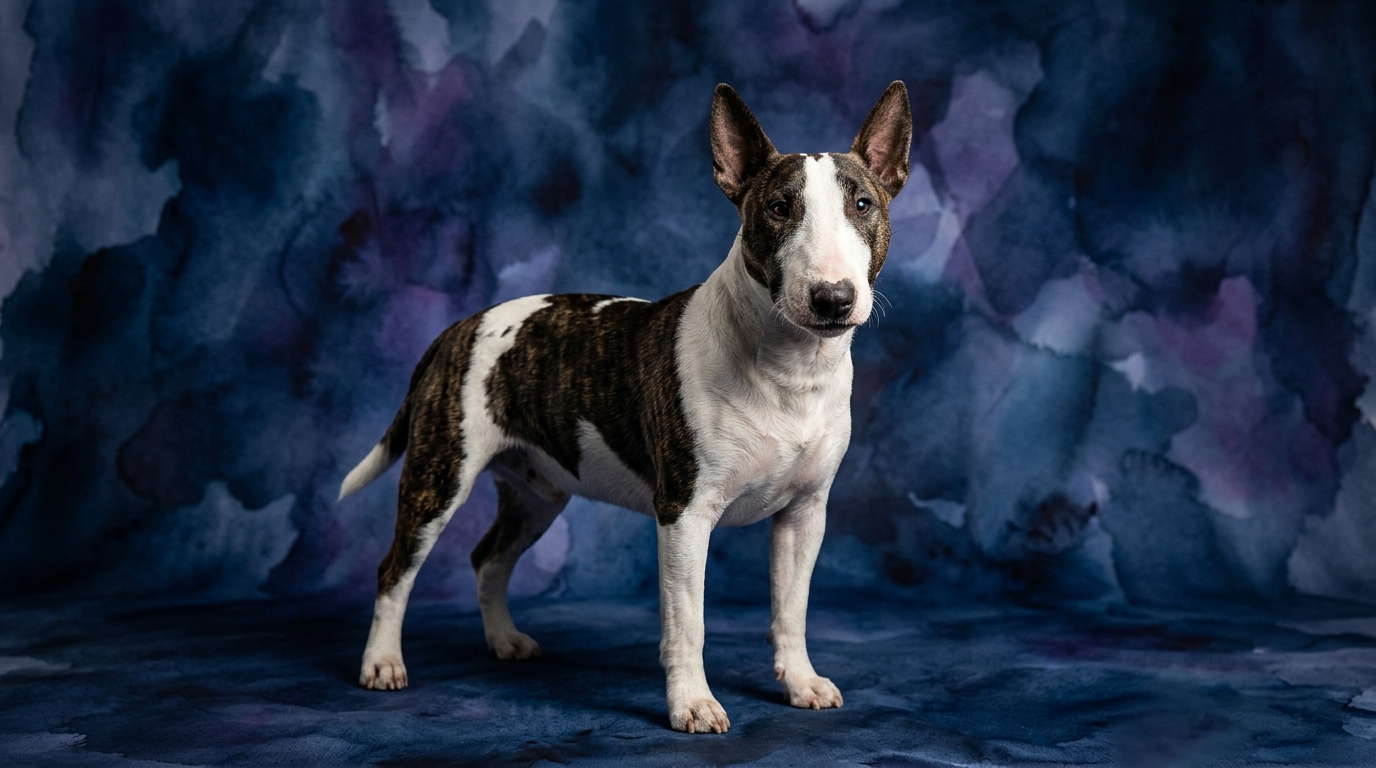
For the Miniature Bull Terrier, Problem Solving (3/5) exhibits a clever, often tenacious, approach. They are adept at figuring out how to get what they want, whether opening a cupboard or outsmarting a puzzle, often with a characteristic terrier ingenuity and persistent spirit.
Their Training Speed (3/5) means they learn new commands at a moderate pace, often with enthusiasm, but their independent streak and occasional stubbornness can challenge consistency. They respond best to engaging, varied training sessions that prevent boredom and leverage positive reinforcement.
Miniature Bull Terriers demonstrate Social Intelligence (3/5) that thrives on engagement with their chosen humans. They are generally outgoing and enjoy interaction, adept at reading human cues for play or attention, though their social interactions can be direct and boisterous.
Their Instinctive Drive (3/5) is pronounced, often manifesting as a strong prey drive and a desire for engaging activity. This moderate score signifies a powerful internal motivation for exploration, digging, and interaction, requiring consistent outlets. Miniature Bull Terriers have a good Memory (3/5) for commands, routines, and experiences, especially those associated with positive reinforcement or exciting events, building on past learning with confidence.
Where the Tibetan Mastiff Wins Cognitively
The Tibetan Mastiff truly excels in cognitive areas demanding independent judgment and long-term strategic thinking related to their guardian role. Their 3/5 problem-solving often manifests as a slow, deliberate assessment of environmental changes or perceived threats, leading to a robust, self-reliant decision that doesn't require immediate human direction. This isn't a quick fix, but a deeply considered response aimed at maintaining the security of their domain. Their enduring memory, coupled with their social intelligence, allows them to build intricate mental maps of their territory and the individuals within it, remembering who belongs and who doesn't over extended periods, critical for their effectiveness as a sentinel.
Where the Miniature Bull Terrier Wins Cognitively
Conversely, the Miniature Bull Terrier's cognitive strengths shine in adaptability and the spirited pursuit of immediate goals. Their 3/5 problem-solving often translates into creative and persistent efforts to overcome obstacles in their environment, whether figuring out a complex toy or devising a novel way to access a forbidden treat. This is a quick, often hands-on, approach to challenges, reflecting their terrier tenacity. Their social intelligence and training speed lend themselves to more dynamic, interactive cognitive tasks, making them adept at learning new tricks and thriving on the mental stimulation of varied activities.
Which is Easier to Train and Why
Defining 'easier to train' when both breeds score 3/5 in training speed requires understanding their distinct motivations and behavioral profiles. The Tibetan Mastiff, with its profound independence, doesn't inherently seek to please in the conventional sense. Training them is less about rote obedience and more about establishing a deep, respectful partnership where they understand the 'why' behind a command and choose to comply because they trust and respect their handler. Their self-sufficiency can lead to a 'what's in it for me?' attitude, meaning consistency, patience, and positive reinforcement are paramount, alongside understanding their guardian mentality might prioritize perceived duties over a command.
The Miniature Bull Terrier, while equally rated at 3/5 for training speed, presents a different set of challenges and rewards. Their terrier nature means they can be stubborn and easily distracted by their environment or strong prey drive. However, they also possess a lively eagerness to engage and a desire for interaction, making them responsive to fun, varied training sessions that prevent boredom and leverage their playful spirit. Training a Miniature Bull Terrier often involves channeling their considerable energy and focus; owners must be creative, consistent, and firm but fair, utilizing positive reinforcement to make training a game and solidify behaviors despite distractions.
Suitability for Active vs. Relaxed Owners
When considering an owner's lifestyle, the definitions of 'active' and 'relaxed' need careful interpretation for these two breeds. A Tibetan Mastiff is not a dog for an owner seeking a jogging partner, but also not for a 'relaxed' owner in terms of mental engagement. They require an owner who is calmly confident, consistent, and deeply understanding of their guardian instincts and independent nature. Their exercise needs are moderate, but their mental needs for a stable, predictable environment and clear leadership are significant, making them suitable for owners who value a steady, protective companion and are prepared for thoughtful management.
The Miniature Bull Terrier, conversely, absolutely suits active owners. Their 3/5 instinctive drive and lively temperament demand consistent physical and mental stimulation. They thrive on interactive play, structured walks, training sessions, and opportunities to engage their curious minds and tenacious spirit. An owner who enjoys dog sports, long walks, or simply engaging in vigorous play sessions will find a willing and enthusiastic partner. Without sufficient outlets for their energy and intellect, they can become bored, leading to destructive behaviors or excessive barking, so they need an owner ready to actively participate in their dog's life.
The Verdict
Choose the Tibetan Mastiff if you seek a majestic, independent guardian who thrives on a predictable environment and a deep, respectful bond, and you are prepared for a deliberate, patient approach to training and management.
Choose the Miniature Bull Terrier if you desire an energetic, playful, and tenacious companion who thrives on active engagement, varied mental stimulation, and consistent, positive training from a dedicated owner.
🧠 Find Your Pet's IQ Score
Our Pet IQ Lab assessment covers 25+ tests across 5 cognitive dimensions — personalized to your breed.
Take the Full IQ Test →Frequently Asked Questions
Are Tibetan Mastiffs good family dogs despite their guarding instincts?
Yes, with proper socialization from a young age and consistent guidance, Tibetan Mastiffs can be devoted and protective family members. They typically form strong bonds with their immediate human family, often showing a gentle and tolerant side to children within their trusted circle, though supervision is always advised for safety.
Do Miniature Bull Terriers get along with other pets?
Miniature Bull Terriers can coexist with other pets, especially if raised with them from puppyhood and properly socialized. However, their strong prey drive (instinctive drive 3/5) means introductions to smaller animals should be managed carefully, and same-sex dog aggression can be a concern, requiring vigilant supervision.
Which breed is better for a first-time dog owner?
Neither breed is typically recommended for first-time dog owners due to their strong personalities and specific needs. Both require experienced handlers who understand independent breeds, consistent training, and significant commitment to socialization and management to ensure they develop into well-adjusted companions.