Side-by-Side IQ Profile: Understanding Identical Scores
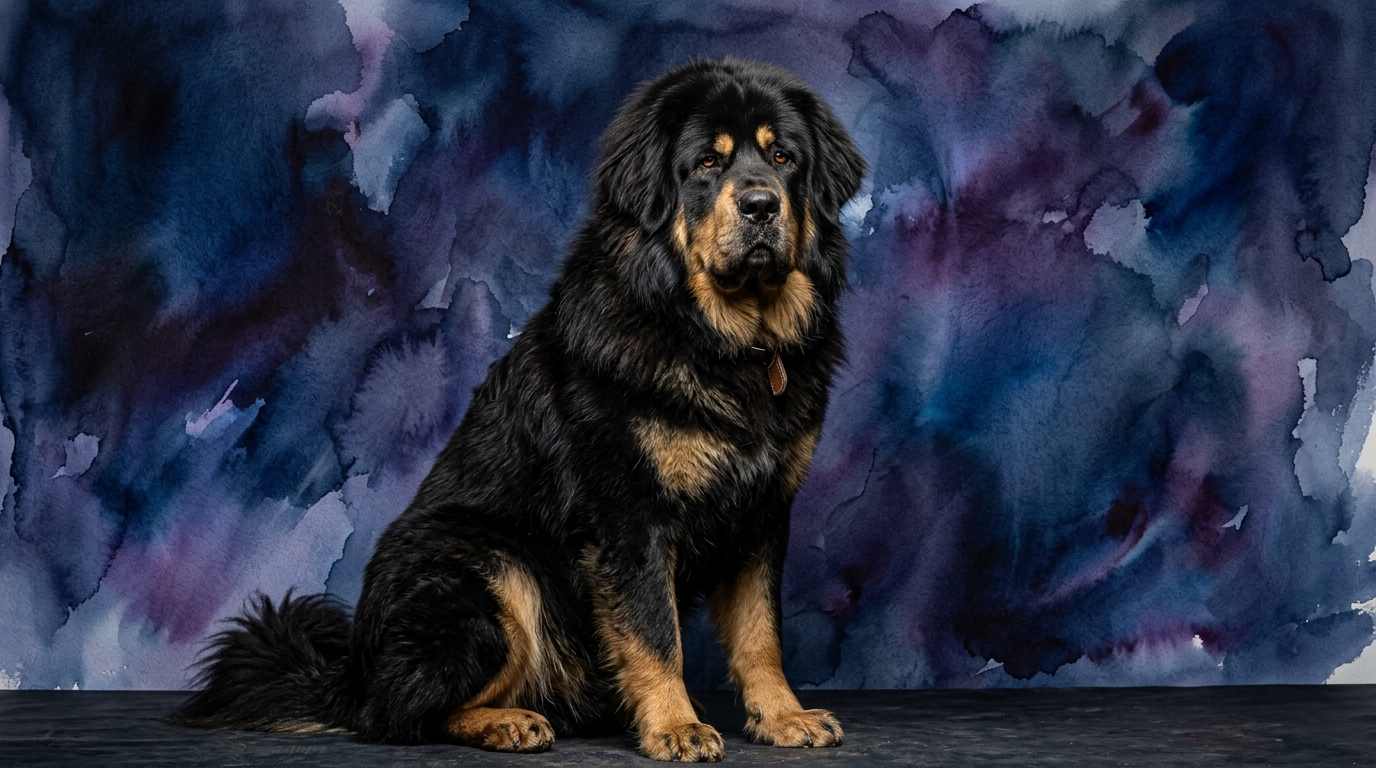
Originating from the Himalayas as formidable livestock guardians, the Tibetan Mastiff's cognitive strengths are rooted in self-sufficiency and protection. Its 3/5 score in Problem Solving manifests as independent decision-making crucial for assessing threats and protecting its charge without constant human direction, rather than solving complex human-designed puzzles. Training Speed at 3/5 reflects a thoughtful learner who processes information deliberately; they are not quick to offer rote compliance but absorb instructions when they understand the purpose, often requiring patient, respectful methods. Social Intelligence at 3/5 allows them to discern nuances in interactions, being reserved with strangers but deeply bonded and protective of their family, reading subtle cues for potential danger. An Instinctive Drive of 3/5 is powerfully expressed in their territoriality and guarding instincts, a deep-seated need to protect their perceived domain and flock. Memory at 3/5 supports their ability to recall routines, boundaries, and past experiences, essential for effective long-term guardianship and recognizing familiar faces or potential threats.
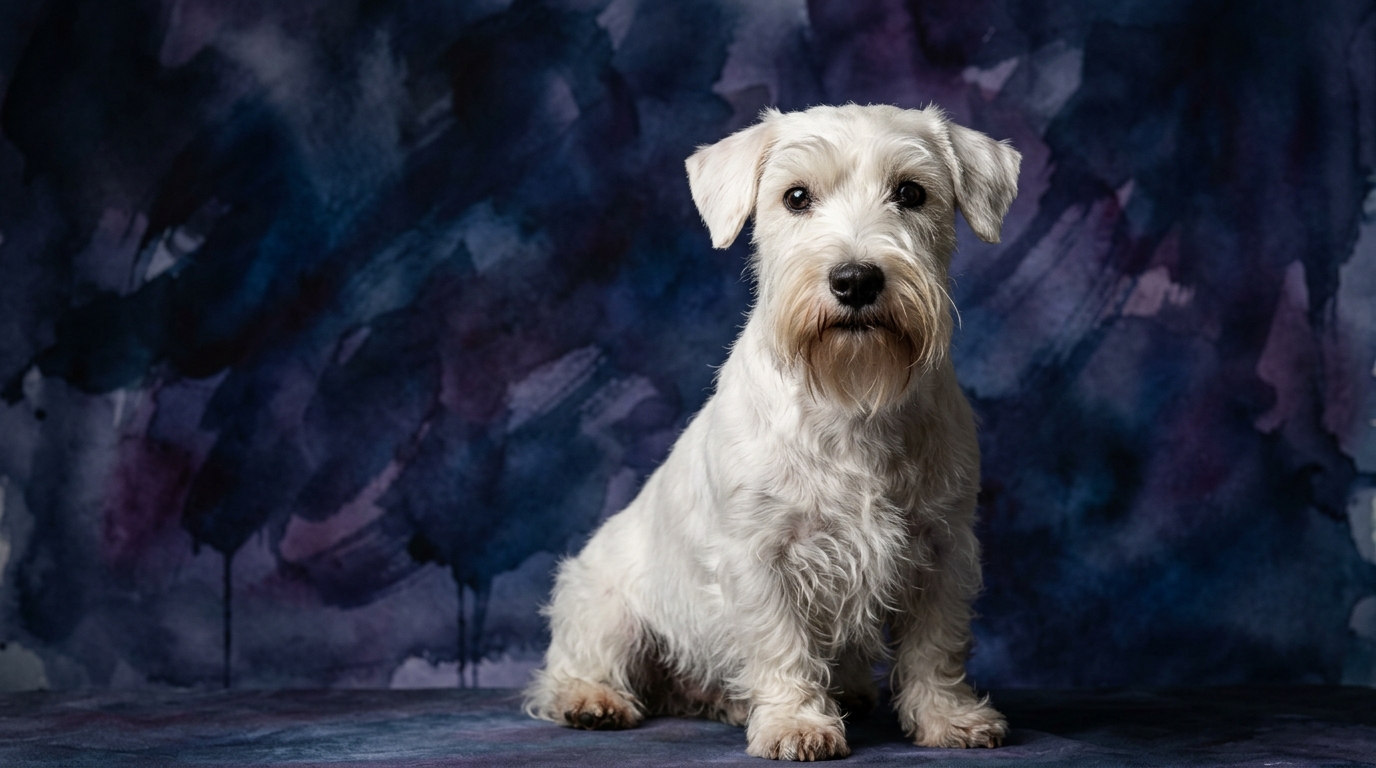
Bred in Wales to hunt badger, fox, and otter, the Sealyham Terrier's intellect is honed for tenacity and independent pursuit. Their 3/5 Problem Solving score shines in navigating complex underground tunnels or outsmarting elusive prey, demonstrating cleverness in practical, field-oriented challenges rather than abstract reasoning. Training Speed, also 3/5, indicates they learn at a moderate pace, but their spirited nature means lessons must be engaging and consistent; they are thinkers who need motivation beyond simple repetition. Social Intelligence at 3/5 enables them to form strong bonds with their families and read human intentions, yet they retain a characteristic terrier independence, capable of cooperative effort but also self-directed action. Their 3/5 Instinctive Drive is a potent force, manifesting as an intense prey drive, a persistent digging instinct, and a relentless determination to follow a scent or pursue quarry. Memory at 3/5 supports their ability to remember hunting routes, learned commands, and the layout of their environment, crucial for effective tracking and recall in varied terrains.
Where the Tibetan Mastiff Wins Cognitively
The Tibetan Mastiff's cognitive profile, while sharing numerical scores, presents distinct advantages when viewed through its ancient purpose. Its 3/5 Problem Solving, for instance, excels in the strategic assessment of vast territories and the nuanced evaluation of potential threats, a skill far removed from a terrier's tactical pursuit. This breed's Social Intelligence, also rated 3/5, allows for an unparalleled discernment in establishing loyalty and identifying intruders; it's a deep, protective bond rather than a boisterous social engagement. The 3/5 Instinctive Drive, specifically channeled into territorial defense, makes them exceptional at independent guardianship, providing a formidable deterrent through presence and considered action. Their Memory, at 3/5, is particularly robust in recalling established boundaries and the identities of those within their accepted circle, a vital asset for a self-sufficient protector. These strengths coalesce to create a dog whose cognitive architecture is optimized for unwavering, independent oversight of its domain, a profound mental fortitude that few breeds can match.
Where the Sealyham Terrier Wins Cognitively
Conversely, the Sealyham Terrier's identical 3/5 scores manifest as a different, yet equally impressive, set of cognitive strengths tailored to its role as a tenacious hunter. Their 3/5 Problem Solving is a masterclass in tactical ingenuity, enabling them to navigate intricate underground networks and creatively overcome obstacles in pursuit of quarry, a highly adaptive form of intelligence for specific, dynamic challenges. The Sealyham's Instinctive Drive, also 3/5, is a relentless engine of determination; this unwavering persistence in tracking and engaging prey is a cognitive triumph for its original purpose, demonstrating a focused mental stamina. Their Social Intelligence at 3/5 allows them to work effectively with human companions in the field, understanding cues and cooperating in the hunt, while maintaining the independent spirit necessary for autonomous action. The breed's 3/5 Training Speed, combined with its zest, means it can absorb complex sequences of commands relevant to hunting or agility, provided the training is engaging and consistent, leveraging its natural drive. This combination of focused problem-solving, tenacious drive, and cooperative independence makes the Sealyham an unparalleled specialist in its field, demonstrating a vibrant, action-oriented intellect.
Which Is Easier to Train and Why
Neither the Tibetan Mastiff nor the Sealyham Terrier is typically described as "easy" to train in the conventional sense, but the nature of their training challenges differs significantly, stemming from their inherent behavioral blueprints. The Tibetan Mastiff's 3/5 Training Speed and 3/5 Problem Solving are coupled with a profound independence and self-reliance, traits essential for a solitary guardian. This means they are not inherently eager to please by performing repetitive tasks; they learn best when they understand the 'why' behind a command and respect the trainer. Their training requires immense patience, consistency, and a deep understanding of their deliberate decision-making process, often feeling less like instruction and more like negotiation.
The Sealyham Terrier, with its identical 3/5 Training Speed and Problem Solving, presents a different hurdle: a spirited, tenacious personality driven by a powerful prey instinct. While they can learn quickly when motivated, their 3/5 Instinctive Drive means distractions are plentiful, and their independent terrier spirit often leads to stubbornness or a preference for self-directed activity over human commands. Training a Sealyham demands creativity, high-value rewards, and a consistent, firm yet playful approach to channel their boundless energy and focus their innate drive.
For an average owner, the Sealyham Terrier might present a *manageably* more approachable training journey due to its smaller size and the ability to leverage its prey drive in structured activities like scent work or agility. The Tibetan Mastiff, by contrast, demands an owner with extensive experience in large, independent guardian breeds, prepared for a long-term commitment to respectful, understanding guidance, where compliance is earned through mutual trust rather than forced.
Which Suits Active Owners vs. Relaxed Owners
When considering lifestyle compatibility, the "activity" required for each breed extends beyond mere physical exercise, encompassing mental engagement and environmental suitability. The Tibetan Mastiff, despite its imposing size, is not a dog built for intense, prolonged athletic endeavors. Its 3/5 Instinctive Drive is geared towards watchful patrolling and independent assessment rather than high-octane pursuits. Owners might find it suits a more "relaxed" pace in terms of constant physical activity, requiring deliberate, moderate walks and ample space for independent exploration and observation of its territory. However, providing mental stimulation through its guarding instincts, ensuring security, and managing its powerful presence demands an owner who is "active" in terms of commitment, consistency, and understanding the specific needs of a self-sufficient guardian.
The Sealyham Terrier, on the other hand, is a compact powerhouse of energy and determination. Its 3/5 Instinctive Drive for hunting means it requires significant physical and mental stimulation to prevent boredom and destructive behaviors. This breed is better suited for truly "active" owners who enjoy daily walks, interactive play, scent games, and perhaps even earth dog trials or agility to satisfy its innate drives. A "relaxed" owner who prefers minimal engagement might find the Sealyham's persistent energy and need for purpose overwhelming, potentially leading to a frustrated and vocal companion. While both breeds demand dedicated ownership, the *type* of activity and engagement they thrive on is fundamentally different, reflecting their distinct cognitive applications.
The Verdict
Choose the Tibetan Mastiff if you are an experienced owner seeking a majestic, independent guardian who thrives on purposeful oversight of a large property and values a reserved, self-sufficient companion. This breed suits those prepared for a long-term commitment to understanding a powerful dog's deliberate nature and providing ample space for its protective instincts.
Opt for the Sealyham Terrier if you desire a spirited, tenacious companion who thrives on active engagement, consistent training, and opportunities to channel its powerful prey drive into structured activities. This breed is ideal for owners who appreciate a dog with a big personality in a compact package and are ready to provide abundant mental and physical stimulation.
🧠 Find Your Pet's IQ Score
Our Pet IQ Lab assessment covers 25+ tests across 5 cognitive dimensions — personalized to your breed.
Take the Full IQ Test →Frequently Asked Questions
Do identical IQ scores mean these breeds are equally easy to live with?
No, identical scores like 3/5 indicate a similar *capacity* for learning and problem-solving, but their breed-specific drives and temperaments dictate *how* these capacities are expressed and the challenges they present. The Tibetan Mastiff's independence and guarding instincts manifest differently than the Sealyham's tenacious prey drive.
How does "Instinctive Drive 3/5" differ between them?
For the Tibetan Mastiff, 3/5 instinctive drive translates to a deep-seated territoriality and protective instinct for its family and property, often expressed through watchful vigilance and a formidable presence. For the Sealyham Terrier, the same 3/5 score signifies an intense prey drive, a relentless determination to hunt, dig, and pursue small animals, fueled by centuries of selective breeding for vermin control.
What training approach is best for a breed with 3/5 training speed?
For breeds scoring 3/5 in training speed, consistency, patience, and positive reinforcement are key, but the *method* must be tailored to the breed's nature. Engaging a Tibetan Mastiff requires earning their respect and demonstrating the 'why,' while a Sealyham benefits from making training fun, challenging, and leveraging its prey drive as motivation.