Side-by-Side IQ Profile: Tibetan Mastiff vs. Skye Terrier
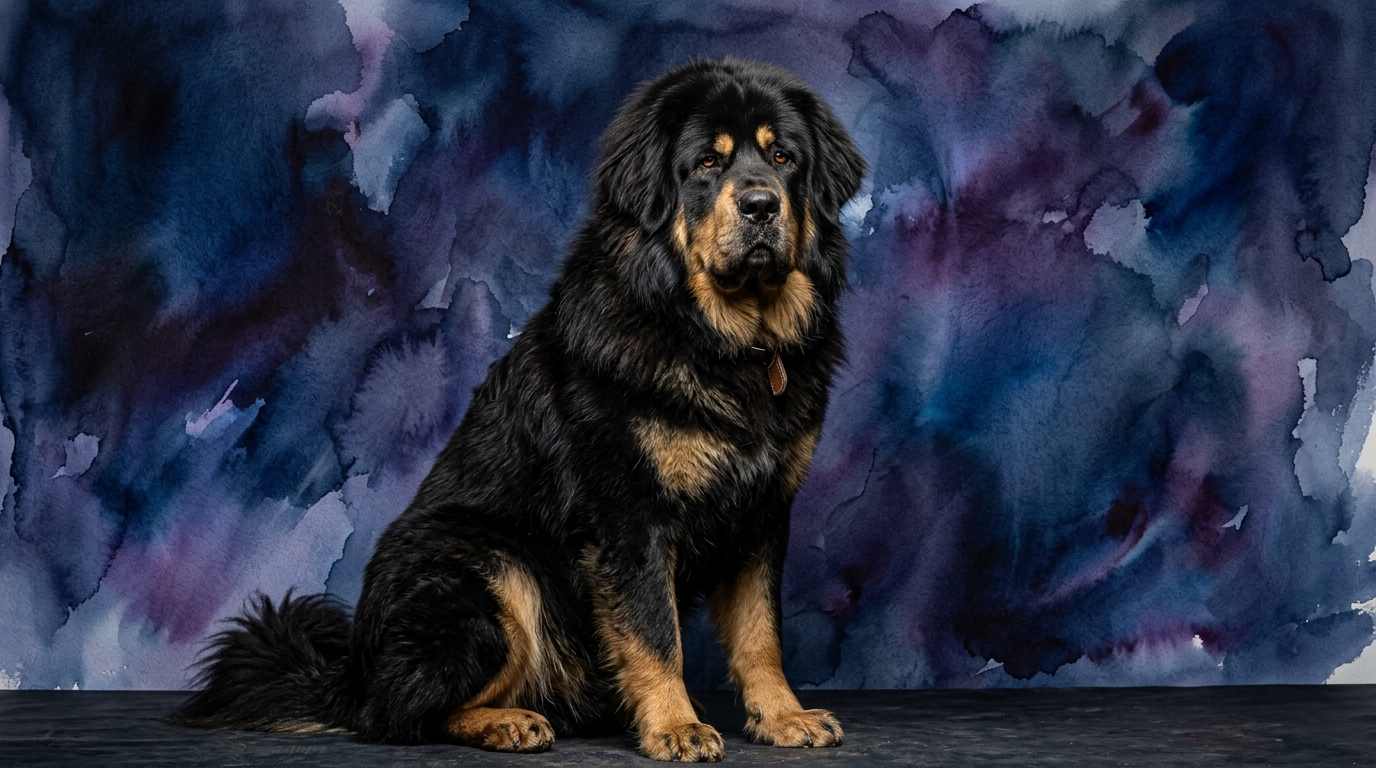
**Tibetan Mastiff:** This imposing breed exhibits a nuanced intelligence deeply rooted in its ancient role as a guardian. Their cognitive strengths are tailored for self-sufficient protection and discernment, making them formidable yet thoughtful companions. **Problem Solving (3/5):** Their problem-solving style is independent and deliberate, focused on evaluating and addressing potential threats to their territory or family. Solutions are often self-initiated, stemming from a deep understanding of their environment. **Training Speed (3/5):** Training a Tibetan Mastiff demands significant patience and unwavering consistency. While they are capable of learning, their independent nature means they often assess commands against their own judgment, leading to a considered, rather than immediate, response to instruction. **Social Intelligence (3/5):** Socially, they are highly selective, forming profound, loyal bonds with their immediate family and displaying intense protective instincts. Towards strangers, they maintain a reserved and watchful demeanor, interpreting social cues with cautious observation. **Instinctive Drive (3/5):** The drive to guard and protect is central to their being, manifesting as strong territoriality, constant vigilance, and an innate sense of boundaries. Their actions are guided by this deep-seated, purposeful instinct. **Memory (3/5):** Tibetan Mastiffs possess a robust memory for routines, individuals they deem safe, and any perceived threats. They retain learned behaviors and social distinctions over extended periods, which contributes to their consistent and reliable guardianship.
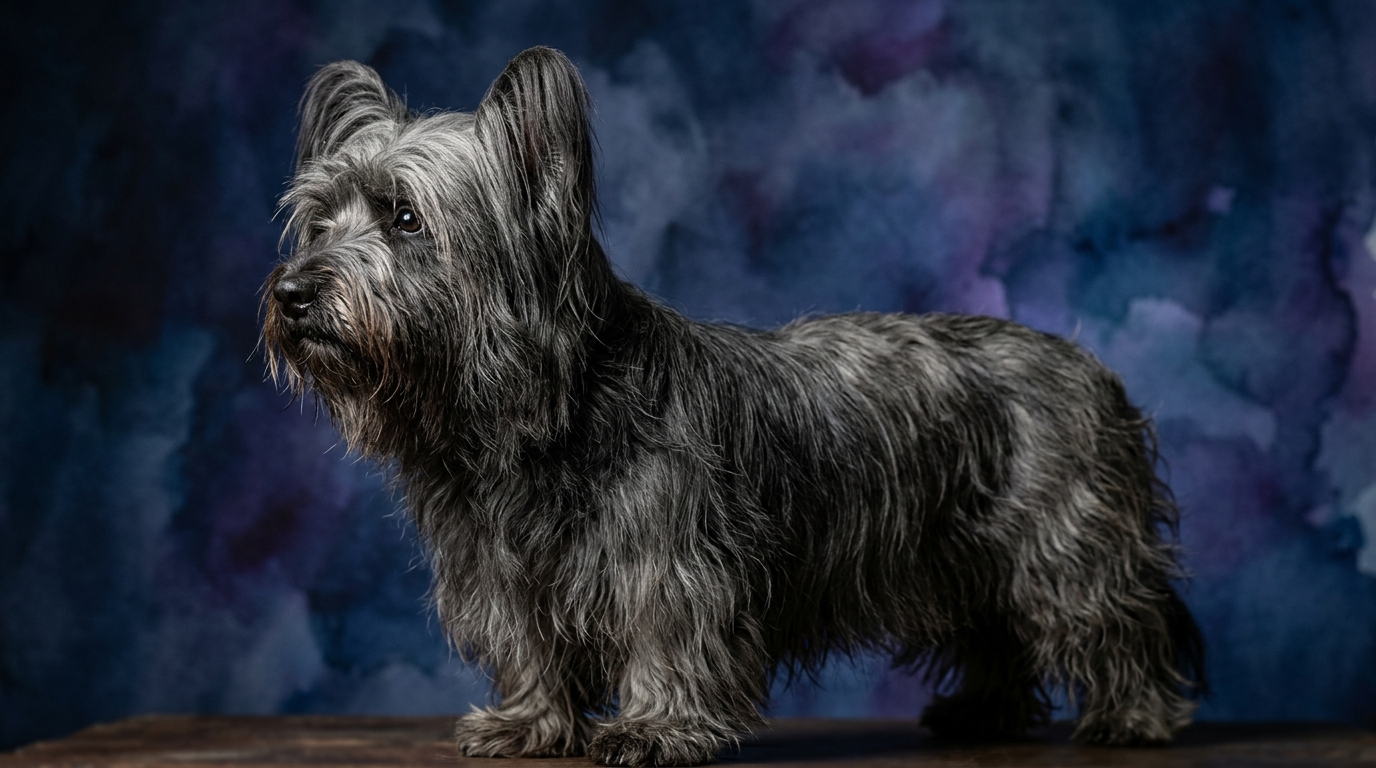
**Skye Terrier:** This charming terrier, despite its smaller stature, possesses a tenacious and intelligent mind, shaped by its history of hunting and companionship. Their cognitive abilities are geared towards determined pursuit and devoted interaction. **Problem Solving (3/5):** The Skye Terrier's problem-solving is characterized by tenacious determination, particularly when encountering obstacles or pursuing a goal. They display ingenuity in navigating tight spaces or outsmarting smaller prey, reflecting their terrier heritage. **Training Speed (3/5):** Training a Skye Terrier requires creativity and positive reinforcement to engage their independent spirit. While they grasp concepts, their inherent stubbornness means they learn most effectively when training is approached as a rewarding game, rather than simply rote compliance. **Social Intelligence (3/5):** This breed forms strong social bonds with its chosen human family, often developing a deep, singular devotion. They can be wary or indifferent towards strangers, preferring the company of their inner circle, and are adept at discerning their family's moods. **Instinctive Drive (3/5):** Their instinctive drive is intrinsically linked to the terrier's original purpose: hunting and digging. This manifests as a strong prey drive, an urge to explore, and a persistent nature, guiding their actions with unyielding focus. **Memory (3/5):** Skye Terriers exhibit a good memory for learned commands, established routines, and the individuals they consider part of their inner circle. They recall both positive and negative experiences, which significantly influences their future interactions and training responses.
Where the Tibetan Mastiff Shines Cognitively
The Tibetan Mastiff's cognitive strengths truly excel in situations demanding independent judgment and self-reliant action within a protective capacity. Their discerning problem-solving, coupled with a powerful instinctive drive for guardianship, enables them to effectively assess complex scenarios, such as distinguishing between a benign visitor and a genuine threat, and act decisively without constant human intervention. Their social intelligence, while selective, is highly effective in identifying and safeguarding their inner circle against external dangers, positioning them as unparalleled in their specific role of territorial defense.
Where the Skye Terrier Excels Cognitively
The Skye Terrier excels in tasks requiring focused tenacity and ingenious persistence. Their problem-solving, driven by a strong instinctive impulse for pursuit and exploration, allows them to navigate challenging environments or overcome obstacles with remarkable determination, often devising creative solutions to achieve a desired outcome. This breed's memory for specific routes and learned techniques, combined with their devoted social intelligence towards their family, makes them incredibly adept at forming strong, responsive partnerships in activities that engage their independent and spirited nature.
Training Dynamics: Tibetan Mastiff vs. Skye Terrier
Neither breed is typically considered 'easy' to train, with both scoring 3/5 in training speed, but the specific challenges arise from distinct aspects of their temperament. The Tibetan Mastiff's independence means they possess a formidable will and often prefer to evaluate commands on their own terms, necessitating a handler who is consistent, exceptionally patient, and commands respect through calm, authoritative leadership rather than force. They will learn, but often on their own timeline, frequently questioning the necessity of an instruction if it doesn't align with their inherent protective instincts or perceived logical purpose. The Skye Terrier, while equally independent, presents a training challenge rooted in its terrier tenacity and potential for stubbornness. They can grasp concepts quickly if motivated, but if a task isn't engaging or they perceive a more appealing alternative, their focus can easily waver. Training them requires making the process fun and rewarding, appealing to their playful nature and strong desire to please their chosen human, rather than relying solely on rote obedience. Therefore, while both demand significant dedication, an owner willing to invest in creative, positive reinforcement techniques that tap into the Skye Terrier's playful, albeit independent, spirit might find them marginally more responsive.
Lifestyle Match: Active vs. Relaxed Owners
The suitability of these two breeds for active versus relaxed owners hinges significantly on the *type* of activity an owner prefers. The Tibetan Mastiff, despite its imposing size, is not typically a high-energy dog demanding extensive physical exertion like marathon runs. Their activity requirements are more centered around patrolling their territory, engaging in regular walks to maintain fitness, and receiving consistent mental stimulation through interaction and training. They suit owners who appreciate a dog with a calm, watchful presence, providing a secure, well-fenced environment and are prepared for their deliberate pace and independent nature rather than expecting constant play or intense physical exercise. Conversely, the Skye Terrier, despite its smaller stature, is a true terrier with surprising stamina and a need for consistent activity to satisfy its instinctive drives. They require regular daily walks, ample opportunities for mental engagement through games or puzzle toys, and secure outdoor spaces for exploration. They suit moderately active owners who enjoy engaging with their dog in playful activities, are prepared for their tenacious spirit, and can provide outlets for their innate curiosity and prey drive, rather than expecting a purely sedentary companion.
The Verdict
Choose the Tibetan Mastiff if you seek an independent, discerning guardian with profound loyalty, thrive on earning respect, and can provide a secure, spacious environment for a dog that prefers observation over constant high-energy engagement.
Opt for the Skye Terrier if you are drawn to a tenacious, devoted companion with a playful spirit, enjoy engaging in consistent, creative training, and can provide regular activity for a dog that thrives on interaction and exploration.
🧠 Find Your Pet's IQ Score
Our Pet IQ Lab assessment covers 25+ tests across 5 cognitive dimensions — personalized to your breed.
Take the Full IQ Test →Frequently Asked Questions
How do the guarding instincts differ between the Tibetan Mastiff and Skye Terrier?
The Tibetan Mastiff exhibits broad territorial guardianship, focused on protecting property and family from perceived large threats, often with a formidable presence. The Skye Terrier's guarding instinct is more personal, primarily directed at their immediate human family, and might manifest as vocal alerts or persistent pursuit of smaller 'intruders' like rodents.
Can a Tibetan Mastiff live in an apartment?
A Tibetan Mastiff is generally not well-suited for apartment living due to their large size, strong territorial instincts, and need for a secure, spacious outdoor area to patrol and observe. They thrive in homes with large, well-fenced yards where they can fulfill their natural guarding behaviors.
Are Skye Terriers good with children?
Skye Terriers can be good with older, respectful children who understand how to interact with dogs, often forming strong bonds with them. However, their independent and sometimes sensitive nature means they may not tolerate rough play or constant teasing, making supervision essential, especially with very young children.