Side-by-Side Cognitive Profiles
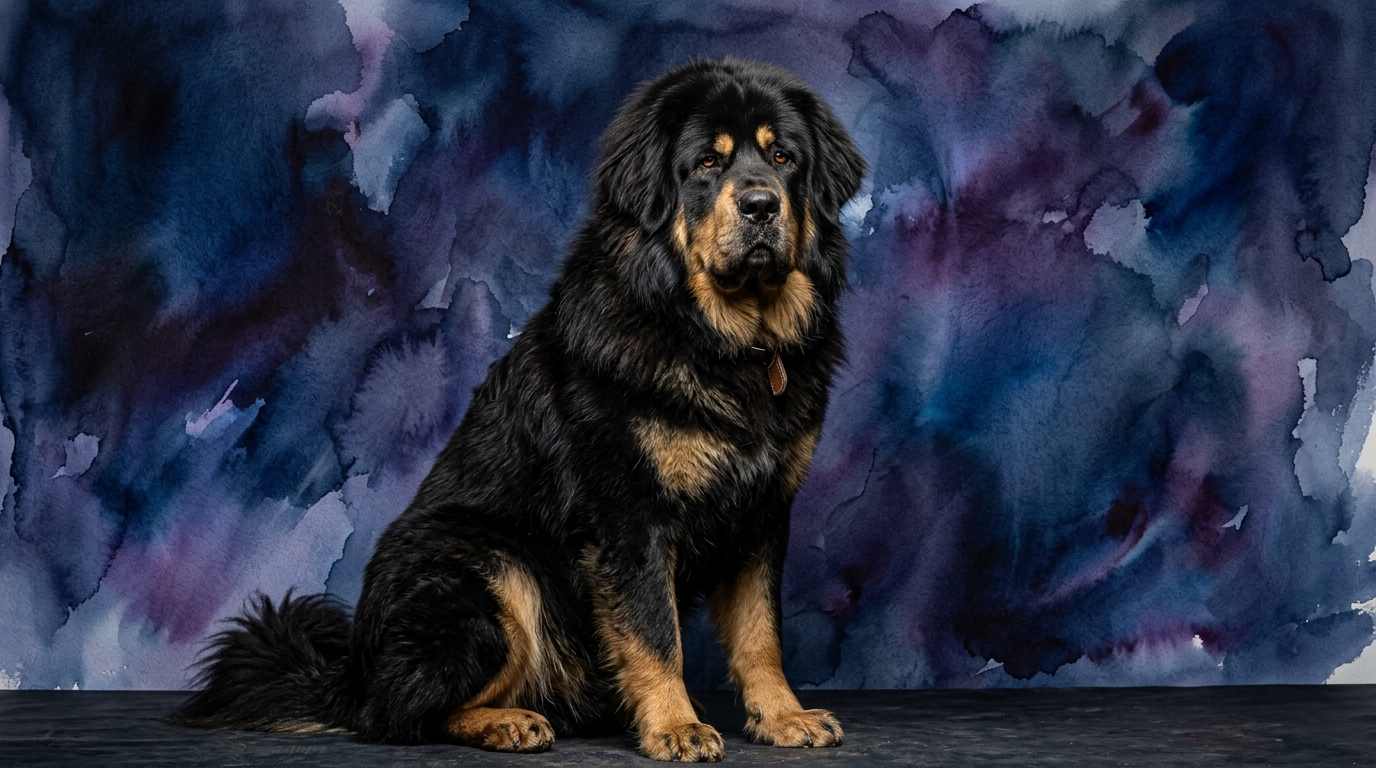
At The Cosmic Pet Pet IQ Lab, we evaluate canine intelligence across five key dimensions, providing a nuanced understanding beyond simple obedience. For the Tibetan Mastiff, a breed not ranked by Coren, we observe specific cognitive strengths tailored to its historical role.
The Tibetan Mastiff's Problem Solving is rated 3/5. This breed is not prone to immediate obedience; they assess situations with a degree of independent thought, often preferring to find their own solutions rather than following explicit commands if they perceive a better way. This manifests particularly in their territorial guarding, where they strategize perimeter defense and react based on their own judgment.
Their Training Speed is also 3/5. Tibetan Mastiffs learn at a moderate pace, but their independent nature means they require consistent, patient, and engaging training methods. Repetitive drill work might bore them, leading to resistance, but they retain learned behaviors well once truly understood and accepted as beneficial.
Social Intelligence for the Tibetan Mastiff stands at 3/5. They display a nuanced understanding of their human family dynamics and can be deeply devoted, yet their social circle is often exclusive. They read intentions well within their established 'pack' but are reserved and watchful with strangers, indicating a selective social acumen focused on protection.
Their Instinctive Drive is 3/5, possessing a strong inherent drive for protection and territorial guardianship, deeply rooted in their heritage. This manifests as vigilance and a natural inclination to survey their domain, rather than a high prey drive or intense desire for retrieving, focusing instead on security.
Finally, the Tibetan Mastiff's Memory is 3/5. They remember experiences, people, and training cues with moderate retention, especially if the learning was positive and reinforced by a strong bond. They often recall perceived threats or past injustices with particular clarity, contributing to their discerning nature.
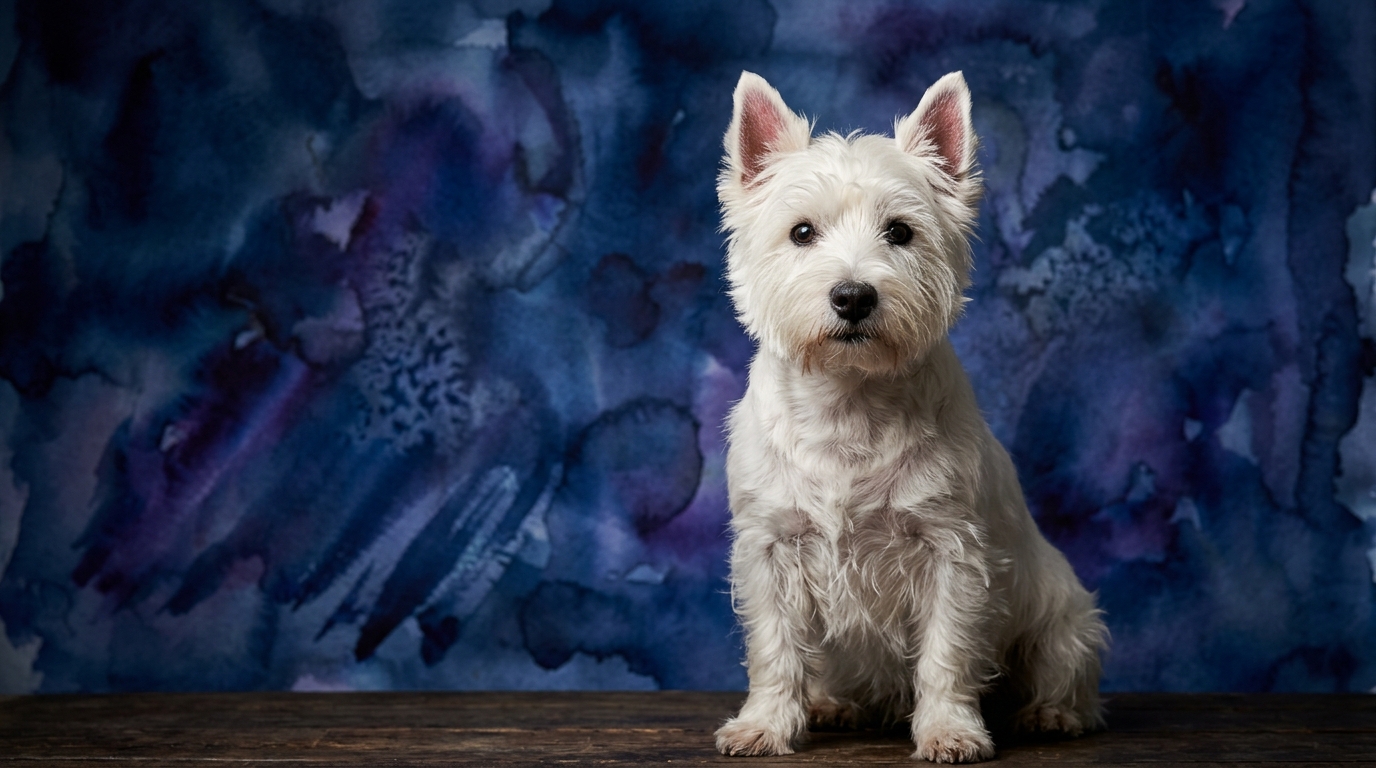
Turning to the West Highland White Terrier, a breed ranked #47 by Coren, we see a distinct set of cognitive attributes reflecting its terrier lineage.
The West Highland White Terrier's Problem Solving is 3/5. This breed exhibits a tenacious approach to challenges, often employing trial-and-error to achieve goals, particularly when it involves digging or finding hidden objects. Their persistence can be mistaken for stubbornness, but it's a form of focused determination to overcome obstacles.
Their Training Speed is rated 3/5. Westies learn commands at a moderate pace, thriving on positive reinforcement and varied training sessions. Their independent terrier spirit means they require engaging methods to prevent boredom and maintain focus, but they are capable of mastering complex tasks with consistency.
Social Intelligence for the Westie is 3/5. Generally affable and adaptable, they read social cues from their family well and enjoy interaction. They can be outgoing with new people but retain a degree of terrier feistiness, indicating a balance between social engagement and an independent, spirited character.
Their Instinctive Drive is 3/5, characterized by a strong prey drive, typical of terriers, manifesting in their love for digging, chasing small animals, and investigating interesting scents. This drive provides motivation for certain tasks but also requires management in urban environments.
The West Highland White Terrier's Memory, however, stands out at 4/5. They possess a notable capacity for remembering commands, routines, and even specific locations where interesting things (like squirrels or toys) were found. This sharp recall aids in consistent task performance and adapting quickly to new environments or training sequences.
Where the Tibetan Mastiff Excels Cognitively
The Tibetan Mastiff's independent problem-solving shines in situations requiring autonomous decision-making, such as assessing potential threats to their territory without direct human instruction. Their ability to weigh a situation and react with self-reliance is a hallmark of their intellect.
Their social intelligence, though selective, allows them to discern subtle shifts in household dynamics and human moods, making them acutely aware of their family's emotional states. This translates into a stoic, watchful presence, often anticipating needs or protecting vulnerabilities without explicit cues.
The instinctive drive for guardianship in the Tibetan Mastiff is unparalleled, enabling them to maintain vigilant watch over property and family with unwavering focus. This cognitive strength is deeply rooted in centuries of purpose, manifesting as an enduring, unwavering dedication to their role.
Where the West Highland White Terrier Excels Cognitively
The West Highland White Terrier's superior memory (4/5 compared to the Mastiff's 3/5) gives them a distinct edge in retaining complex sequences of commands or navigating intricate obstacle courses, often recalling previous successes with precision. This makes them adept at mastering routines and tricks.
While both breeds share a 3/5 in problem-solving, the Westie's manifestation often involves persistent, creative exploration within a confined space, such as figuring out how to retrieve a toy from under furniture. Their tenacity in working through a puzzle to achieve a desired outcome is a terrier hallmark.
Their social intelligence, in contrast to the Mastiff's reserved nature, allows them to adapt quickly to new social situations and bond readily with a wider range of individuals. This makes them more versatile companions in varied social settings, easily integrating into different social groups.
The Westie's instinctive drive, while different from the Mastiff's, provides a powerful internal motivation for engaging in tasks like scent work or agility. Their focused intensity on a 'quarry' or goal can be channeled effectively into various canine sports and activities.
Training Ease: Mastiff vs. Westie
Neither breed is inherently 'easy' in the conventional sense, but the Westie might present fewer hurdles for a novice trainer due to its higher memory score and generally more eager-to-please, albeit spirited, disposition. Their problem-solving is often directed towards achieving a goal, which can be leveraged in positive reinforcement training.
The Tibetan Mastiff's independent nature and strong self-will mean training requires exceptional patience, consistency, and a deep understanding of their guardian mindset. They tend to question commands and need to understand the 'why' behind an action, rather than simply complying. Their problem-solving is about assessing the situation for themselves, which can make them less inclined to follow a human-prescribed solution if they deem it inefficient or unnecessary or if it conflicts with their protective instincts.
Suitability for Active vs. Relaxed Owners
For active owners, the West Highland White Terrier is often the more fitting choice. Their terrier energy and keen mind thrive on regular exercise, mental stimulation through training games, and opportunities to explore. They enjoy activities like hiking, agility, and interactive play that effectively tap into their instinctive drives.
Relaxed owners might find the Tibetan Mastiff more suitable. While they need regular, moderate exercise for their health, their primary requirement is a secure territory to patrol and a calm, predictable home environment. They are not dogs that demand constant high-energy engagement, preferring to observe and guard, and are generally content with a quiet presence once their duties are fulfilled.
The Verdict
Opt for the Tibetan Mastiff if you seek a stoic, independent guardian with a deep, selective bond, valuing a dog that thinks for itself within a secure, stable environment. They are ideal for experienced owners ready to embrace a dog whose intellect is expressed through watchful autonomy rather than eager compliance.
Select the West Highland White Terrier if you desire a spirited, tenacious companion with excellent memory, thriving on engagement, varied activities, and a strong partnership in training. They suit owners who appreciate a lively, adaptable intellect and can provide consistent mental and physical stimulation.
🧠 Find Your Pet's IQ Score
Our Pet IQ Lab assessment covers 25+ tests across 5 cognitive dimensions — personalized to your breed.
Take the Full IQ Test →Frequently Asked Questions
Are Tibetan Mastiffs difficult to train?
Tibetan Mastiffs present a moderate challenge due to their independent problem-solving and self-assured nature. They require consistent, patient training based on mutual respect, often questioning commands if they don't perceive a clear purpose or if it conflicts with their natural guarding instincts.
Do Westies need a lot of mental stimulation?
Yes, West Highland White Terriers thrive on mental stimulation to prevent boredom and destructive behaviors. Their keen memory and problem-solving skills make them excel at puzzle toys, obedience training, and interactive games that challenge their minds and satisfy their terrier drives.
How do their social intelligence scores impact household dynamics?
The Tibetan Mastiff's selective social intelligence means they form deep bonds with their immediate family but are reserved with strangers, requiring careful socialization to ensure appropriate behavior. The Westie's adaptable social intelligence allows them to generally integrate well into various social settings, enjoying interaction with a broader range of people and adapting more readily to new faces.