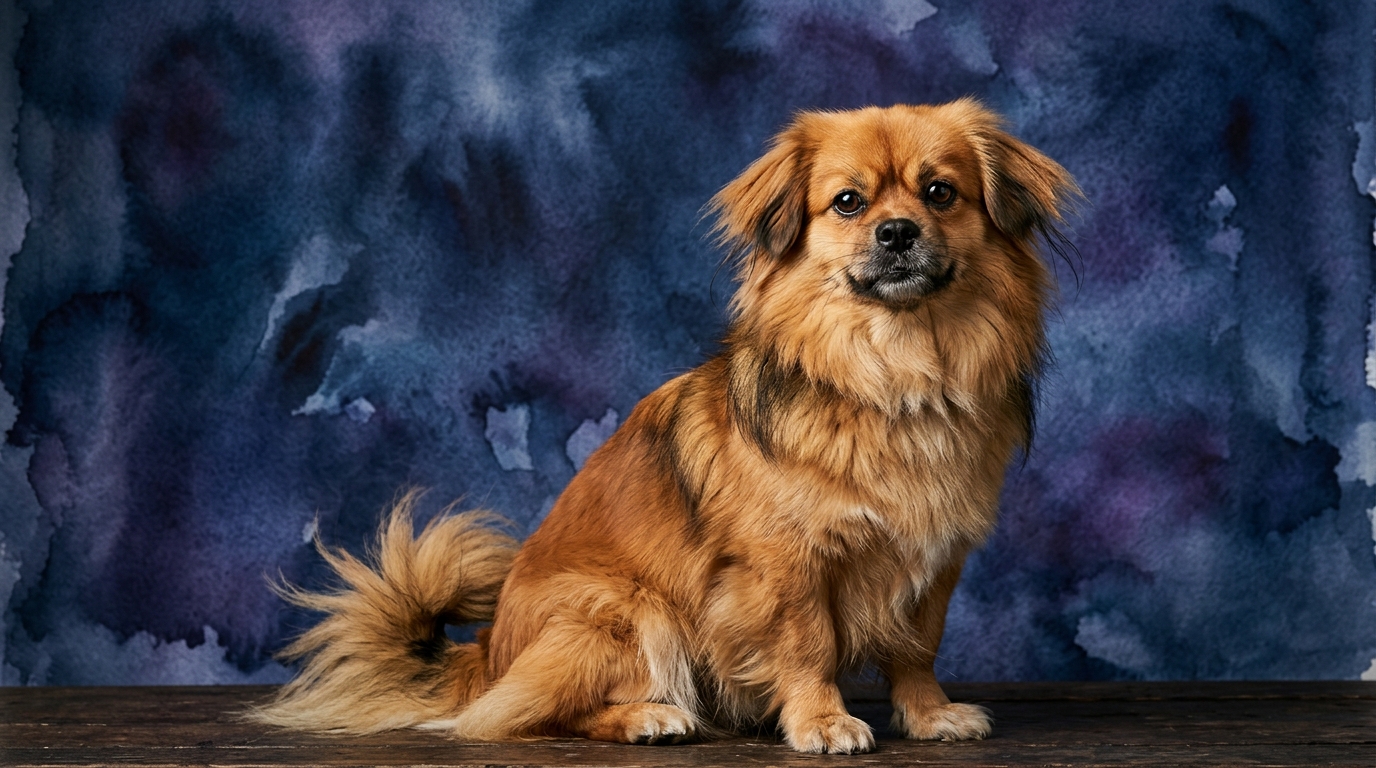
Side-by-Side Cognitive Profile: Tibetan Spaniel
**Problem Solving (3/5):** These small watchdogs exhibit a practical cleverness, adept at navigating their home environment to achieve desired outcomes, whether it's finding a sunbeam or a comfy lap. Their solutions often involve observation and a touch of independent thought, rather than complex multi-step plans.
**Training Speed (3/5):** Tibbies learn at a moderate pace, capable of grasping new commands and routines with consistent, positive reinforcement. However, their independent spirit means they may require engaging methods to maintain focus, as rote repetition can bore them, demanding creativity from their trainer.
**Social Intelligence (3/5):** Tibetan Spaniels are perceptive observers of human emotion and household dynamics, understanding their family's moods and reacting accordingly. While deeply bonded to their own, they often display a reserved, discerning nature towards strangers, evaluating new people carefully before offering trust.
**Instinctive Drive (3/5):** Their historical role as monastery watchdogs fuels a strong alert instinct, prompting them to bark at perceived novelties or intruders. They possess a moderate, practical drive for companionship and a keen awareness of their territory, rather than a high prey drive.
**Memory (3/5):** Tibbies demonstrate a good recall for learned commands, routines, and significant events or people. They can remember both positive and negative interactions, influencing their future responses and relationships, particularly concerning specific individuals or environments.
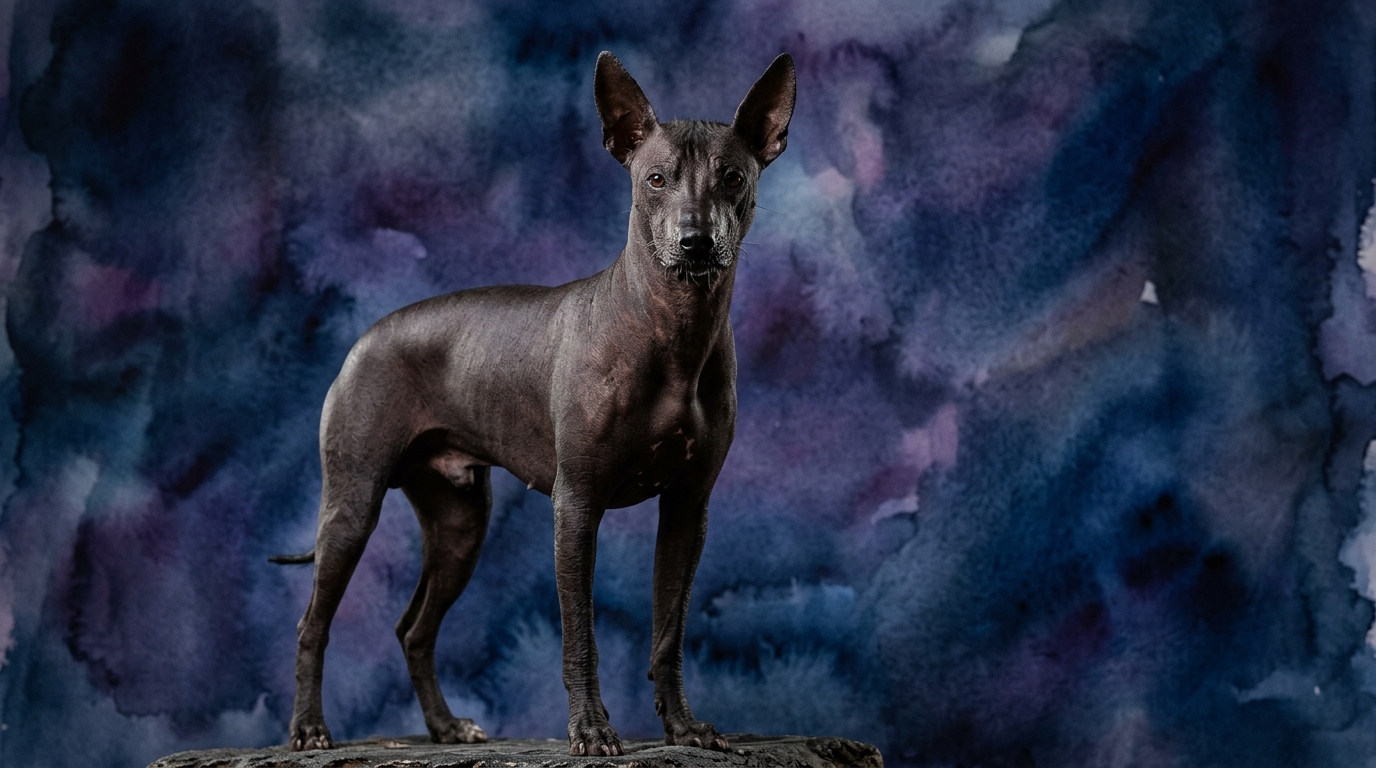
Side-by-Side Cognitive Profile: Xoloitzcuintli
**Problem Solving (3/5):** Xolos apply their problem-solving skills to understanding their environment and the desires of their human companions, often finding direct, efficient ways to achieve comfort or closeness. Their solutions are often rooted in resourcefulness and a deep understanding of household rules, often centered on their family's proximity.
**Training Speed (3/5):** Xoloitzcuintli typically learn commands at a moderate rate, thriving on gentle, consistent training that leverages their strong desire to please their chosen family. Their sensitivity means harsh methods are counterproductive, but positive reinforcement yields steady progress and reinforces their strong bond.
**Social Intelligence (3/5):** These ancient dogs possess a profound social awareness within their family unit, often described as highly empathetic and attuned to human emotional states. They form deep, intuitive bonds, but outside their inner circle, they are typically reserved, watchful, and can be slow to trust new individuals.
**Instinctive Drive (3/5):** Xolos carry a strong, inherent guarding instinct, reflecting their heritage as protectors. This manifests as watchful vigilance over their home and family, coupled with a moderate drive for companionship and a natural inclination to patrol their perceived territory boundaries.
**Memory (3/5):** Xoloitzcuintli exhibit excellent memory for their established routines, learned behaviors, and, crucially, for the people they encounter. They remember both cherished family members and those who may have caused discomfort, influencing their long-term social interactions and trust.
Where the Tibetan Spaniel Wins Cognitively
Despite identical numerical scores, the Tibetan Spaniel’s cognitive strengths often shine in their nuanced approach to social observation and independent navigation. Their 3/5 social intelligence is particularly adept at interpreting subtle family dynamics, not just individual moods; they might be quicker to recognize shifts in household routines or unspoken tensions, acting as sensitive barometers of the domestic atmosphere. This isn't about deep empathy like the Xolo, but rather a keen, almost analytical, understanding of their social structure, allowing them to position themselves advantageously for cuddles or quiet contemplation. Furthermore, their 3/5 problem-solving often manifests with a touch more self-directed ingenuity when it comes to personal comfort or entertainment. A Tibbie might more readily devise a novel way to reach a sunbeam on a high shelf or entertain themselves with a forgotten toy when their humans are occupied, showcasing a resourcefulness born from their independent nature rather than a desire for human interaction as the primary motivator. Their memory, while rated 3/5, can lean towards remembering specific environmental details or opportunities for mischief, making them adept at exploiting forgotten open gates or unattended snack bowls.
Where the Xoloitzcuintli Wins Cognitively
The Xoloitzcuintli, while sharing the same 3/5 scores, often demonstrates a deeper, more profound application of their social intelligence and memory, particularly within their chosen human family. Their 3/5 social intelligence translates into an almost psychic connection with their primary caregivers, intuiting needs and emotions with remarkable accuracy. This isn't just observation; it's a deep, empathetic resonance that allows them to offer comfort or companionship precisely when it's most needed. Their guarding instinct, also 3/5, is underpinned by this profound social bond, making them incredibly discerning protectors who understand true threats versus benign visitors. Coupled with their 3/5 memory, Xolos possess an exceptional ability to recall past interactions and apply those lessons to new situations, especially concerning strangers. They will remember someone who was kind and someone who was not, influencing their future trust levels with remarkable consistency. Their problem-solving, also 3/5, often revolves around optimizing their closeness to their family, finding the best spot on the couch for maximum contact or devising subtle ways to solicit attention without being overly demanding.
Which is Easier to Train and Why
Assessing ease of training between these two breeds, both rated 3/5 for Training Speed, requires looking beyond the raw score to their underlying temperamental differences. The Xoloitzcuintli, with its deep-seated loyalty and profound bond with its family, often presents as the slightly easier candidate for consistent training, provided the approach is gentle and positive. Their sensitivity means they are highly receptive to their owner's emotional cues and desire to please, making them eager participants when motivated by affection and praise. However, their sensitivity also means they can shut down if training is harsh or inconsistent. The Tibetan Spaniel, conversely, while equally capable of learning at a moderate pace, brings a more independent and sometimes stubborn streak to the training arena. Their 3/5 Training Speed is often balanced by their self-assured nature; they learn best when they perceive a clear benefit to themselves or when the training is framed as an engaging game. They might test boundaries more frequently than a Xolo, requiring an owner with consistent patience and a knack for making training sessions fun and varied to prevent boredom. Therefore, while both learn, the Xolo's inherent desire to connect and please their person often makes the process feel smoother for a patient owner, whereas the Tibbie demands more creative engagement.
Which Suits Active Owners vs. Relaxed Owners
When considering activity levels, both breeds, despite their cognitive similarities, lean towards different owner lifestyles. The Xoloitzcuintli, while not requiring marathon runs, benefits significantly from regular, moderate exercise and mental stimulation. Their protective instincts and strong familial bonds mean they thrive on being included in family activities, whether it's a brisk walk around the neighborhood, exploring a new park, or participating in dog sports like obedience or agility. They are well-suited for owners who enjoy integrating their dog into an active family life, providing structure and engagement without necessarily needing high-octane physical demands. Their calm demeanor indoors makes them excellent companions for relaxed evenings, but their need for purpose and interaction means they are not content to be mere couch potatoes. The Tibetan Spaniel, on the other hand, often aligns better with more relaxed owners. While they enjoy walks and playtime, their exercise needs are generally lower. Their independent nature means they are often content to supervise household activities from a comfortable perch or amuse themselves with toys. They are superb companions for those who appreciate a dog that is present and affectionate but doesn't constantly demand rigorous physical outings. Their alert nature keeps them engaged, but their energy output is typically moderate, making them a good fit for quieter households or individuals who enjoy leisurely strolls rather than intense physical activity.
The Verdict
Opt for a Tibetan Spaniel if you appreciate a charmingly independent companion with a keen observational social intelligence and a moderate exercise requirement, thriving in a home that respects their self-assured nature. They are ideal for owners who enjoy a dog that offers affection on its own terms and is content with a more relaxed pace of life.
Select a Xoloitzcuintli if you seek a deeply loyal, empathetic companion with a profound social bond and a watchful, protective instinct. They are best for owners who can offer consistent, gentle training and integrate their dog into an active family life, appreciating their discerning nature and strong attachment.
🧠 Find Your Pet's IQ Score
Our Pet IQ Lab assessment covers 25+ tests across 5 cognitive dimensions — personalized to your breed.
Take the Full IQ Test →Frequently Asked Questions
Are Tibetan Spaniels good with children?
Tibetan Spaniels can be good with respectful, older children who understand how to interact gently with a dog. Their independent nature means they may not tolerate rough play and prefer to engage on their own terms, making supervision important with very young children.
Do Xoloitzcuintli bark a lot?
Xoloitzcuintli are naturally watchful and protective, so they will bark to alert their family to perceived intruders or unusual occurrences. With proper socialization and training, their barking can be managed, but their guarding instinct means they are not typically silent dogs.
Given their identical IQ scores, what's the biggest practical difference in their cognitive application?
The biggest practical difference lies in their primary motivation: Tibetan Spaniels often apply their cognitive skills with a focus on self-interest and independent comfort, while Xoloitzcuintli predominantly leverage their intellect to strengthen their bond with and protect their human family. This distinction influences how they solve problems, interact socially, and respond to training.