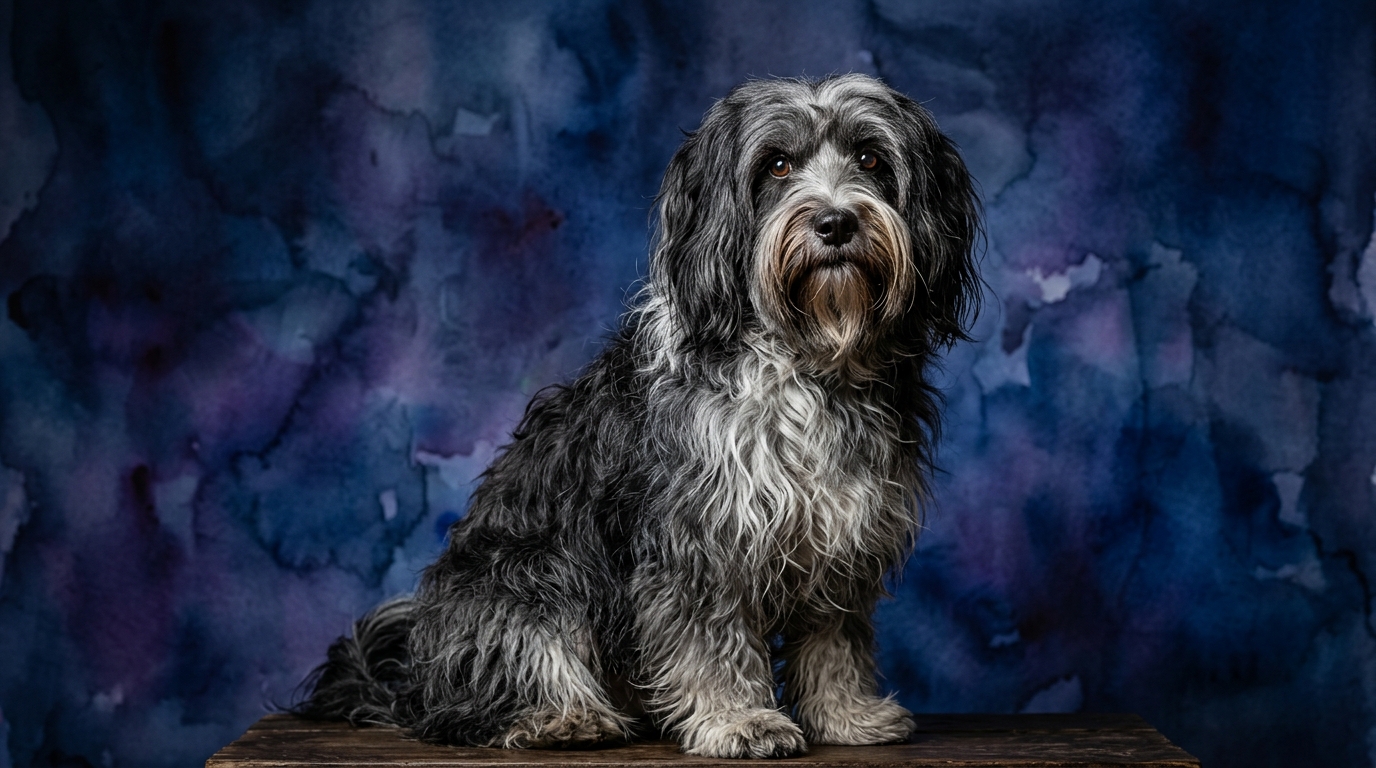
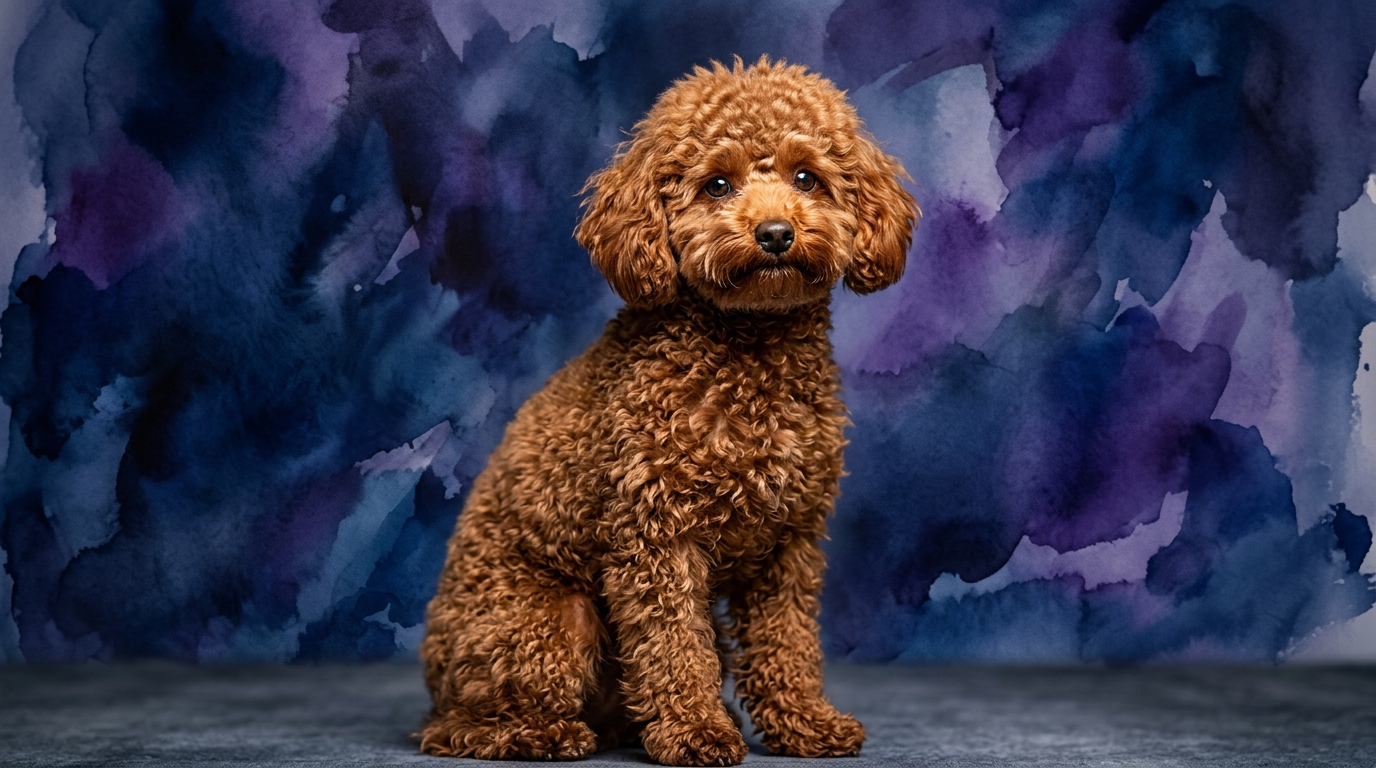
Unpacking Their Cognitive Blueprints: A Side-by-Side IQ Profile
The Cosmic Pet Pet IQ Lab employs five key dimensions to map a dog's cognitive landscape. For the Tibetan Terrier, a breed hailing from the high plateaus, its profile presents a balanced array of scores: Problem Solving 3/5, Training Speed 3/5, Social Intelligence 3/5, Instinctive Drive 3/5, and Memory 3/5. This consistent scoring across the board suggests a dog possessing general competence and adaptability rather than extreme specialization in any single area.
In contrast, the Toy Poodle, a breed celebrated for its elegance and companionship, displays a strikingly different cognitive signature. Its scores are Problem Solving 5/5, Training Speed 5/5, Social Intelligence 3/5, Instinctive Drive 3/5, and Memory 5/5. These elevated scores in specific domains indicate a mind exceptionally geared towards rapid learning, complex thought, and excellent retention, setting it apart in several critical aspects of canine cognition.
Where the Tibetan Terrier's Mind Shines Uniquely
While the Toy Poodle boasts higher scores in several areas, the Tibetan Terrier's balanced 3/5 profile offers a unique set of advantages. Its 3/5 in Problem Solving indicates a resourceful nature without the potential for overthinking or becoming overly bored if not constantly challenged with complex tasks. This means a Tibetan Terrier is capable of navigating everyday challenges and finding solutions to moderate obstacles, such as figuring out how to open a cabinet, but is less likely to engineer elaborate schemes out of pure mental excess.
The consistent 3/5 across all dimensions also points to a dog with a stable mental disposition, less prone to the anxieties that can sometimes arise from extreme cognitive stimulation or lack thereof. Their moderate Instinctive Drive (3/5) means they possess an appropriate level of curiosity and engagement with their environment, perhaps stemming from their ancestral roles as watchdogs and companions in monasteries, without being excessively driven by prey instincts or a constant need for a 'job.' This makes them discerning and observant, rather than relentlessly active, providing a comforting presence.
The Toy Poodle's Cognitive Ascendancy
The Toy Poodle’s cognitive strengths are undeniable, primarily due to its exceptional scores in Problem Solving (5/5), Training Speed (5/5), and Memory (5/5). This combination makes them masters of rapid acquisition and application of knowledge. Their superior Problem Solving ability means they not only excel at complex puzzle toys but can also spontaneously figure out solutions to novel situations, demonstrating a profound capacity for abstract thought and reasoning beyond simple trial-and-error.
Their remarkable Training Speed and Memory work in tandem, allowing them to absorb and retain a vast repertoire of commands, tricks, and routines with minimal repetition. This cognitive agility is a significant asset in competitive dog sports such as obedience, agility, and rally, where precision and quick learning are paramount. A Toy Poodle can master intricate sequences and adapt to new instructions with an efficiency that few other breeds can match, making them incredibly versatile and responsive companions.
Training Dynamics: Speed vs. Steadfastness
When it comes to ease of training, the Toy Poodle holds a clear advantage, primarily due to its 5/5 scores in Training Speed and Memory. These dogs pick up new commands and behaviors with astonishing swiftness, often grasping a concept after just a few repetitions. Their exceptional memory ensures that once a behavior is learned, it is retained long-term, making them incredibly reliable in their responses. This rapid learning curve means training sessions can be shorter, more dynamic, and highly rewarding for both the dog and the owner, as progress is often immediate and tangible.
The Tibetan Terrier, with its 3/5 scores in Training Speed and Memory, requires a more patient and consistent approach. They are certainly trainable and willing to learn, but they will not absorb new information at the Poodle’s pace. Owners must be prepared for more repetitions and a commitment to ongoing reinforcement to solidify commands. Their independent streak, likely a remnant of their ancient roles, means they might occasionally question the necessity of a command or require more motivation than the generally eager-to-please Poodle. This isn't a lack of ability, but rather a different learning style that values understanding and purpose over sheer speed.
Matching Minds to Lifestyles: Active vs. Relaxed Owners
For owners who thrive on mental engagement and enjoy actively challenging their canine companion, the Toy Poodle is an exceptional match. Their high Problem Solving, Training Speed, and Memory scores mean they genuinely flourish when given opportunities to learn new skills, tackle complex puzzles, or participate in dog sports. An owner who enjoys teaching advanced tricks, engaging in regular training sessions, or even exploring canine freestyle will find a willing and enthusiastic partner in a Toy Poodle, whose mental well-being is deeply tied to intellectual stimulation.
Conversely, the Tibetan Terrier is better suited for owners who appreciate a companion with a more moderate and self-contained mental drive. While they certainly enjoy walks, playtime, and learning basic commands, they are not constantly seeking out complex mental gymnastics. Their balanced IQ profile allows them to be content with a relaxed pace, enjoying companionship without needing to be 'on' all the time. An owner who values a discerning, resourceful dog that can relax alongside them, and doesn't demand constant mental work, will find the Tibetan Terrier to be a wonderfully adaptable and serene presence.
The Verdict
For owners seeking a discerning, independent companion who values a steady learning pace and moderate mental engagement, and appreciates a dog with a resourceful yet not overly demanding mind, the Tibetan Terrier is an excellent choice.
For owners who relish the opportunity to engage a highly capable canine mind, enjoy rapid training progress, and seek a companion who thrives on learning and mental challenges, the Toy Poodle stands out as the ideal partner.
🧠 Find Your Pet's IQ Score
Our Pet IQ Lab assessment covers 25+ tests across 5 cognitive dimensions — personalized to your breed.
Take the Full IQ Test →Frequently Asked Questions
Are Tibetan Terriers difficult to train?
They aren't inherently difficult, but require more consistency and patience than some breeds. Their steady learning pace means owners should commit to regular, positive reinforcement sessions, understanding that progress will be gradual but enduring.
Do Toy Poodles need a lot of mental stimulation?
Yes, their exceptional problem-solving and memory mean they benefit greatly from consistent mental challenges. Puzzle toys, interactive games, and continuous opportunities to learn new skills are crucial to keep them content and prevent boredom-related behaviors.
How do their social skills compare with strangers?
Both breeds score 3/5 in social intelligence. The Tibetan Terrier tends to be more reserved and discerning with new people, often preferring to observe before engaging. The Toy Poodle can be friendly but is also sensitive to social cues, potentially requiring careful introductions to ensure they feel comfortable.