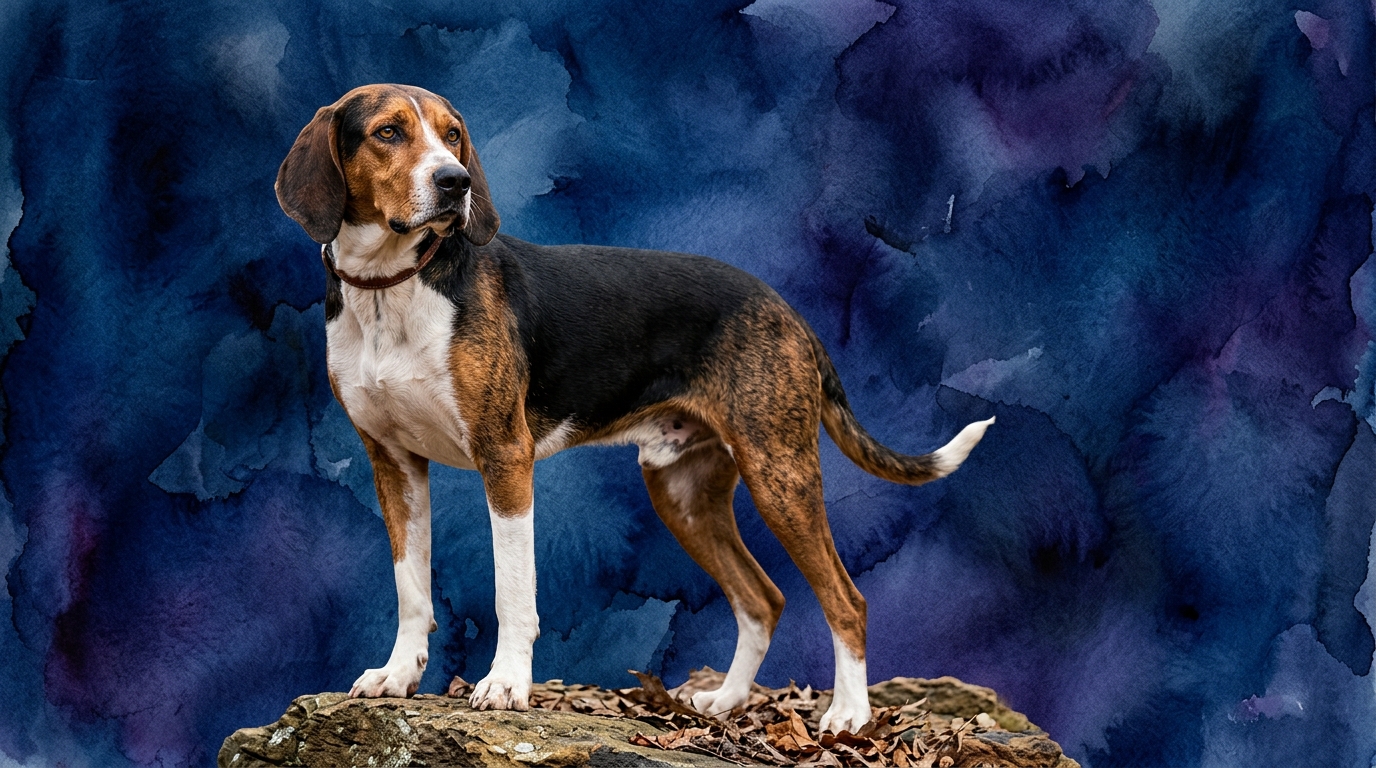

Side-by-Side IQ Profile
**Problem Solving (3/5)**: The Treeing Walker Coonhound's problem-solving prowess is deeply rooted in its hunting heritage, excelling at intricate tasks like unraveling complex scent trails, navigating challenging terrain to locate treed game, and persistent pursuit of a quarry. Their solutions are often physical and instinct-driven, requiring focus and determination in the field. The Tibetan Terrier, conversely, applies its problem-solving acumen to its immediate environment, often figuring out how to manipulate objects, open latches, or outwit their human companions for a desired outcome. Their approach leans towards cleverness and adapting to domestic challenges, rather than purely physical tracking.
**Training Speed (3/5)**: For the Treeing Walker Coonhound, a 3/5 training speed signifies their capacity to learn commands and tasks, particularly those aligned with their strong instincts, such as scent discrimination or recall during a hunt. However, their independent nature and powerful drive can mean they prioritize an intriguing scent over a human command, requiring consistent, patient, and highly motivating methods. The Tibetan Terrier also scores 3/5, demonstrating a solid ability to grasp new concepts and commands. Yet, their independent, sometimes opinionated personality means they learn best with positive reinforcement and variety, rather than rote repetition, often requiring handlers to make training feel like a game.
**Social Intelligence (3/5)**: A 3/5 in social intelligence for the Treeing Walker Coonhound points to their adeptness at understanding pack dynamics, both with other dogs during a hunt and with their human handlers in a working context. They read environmental cues related to their quarry and can form strong, albeit sometimes task-focused, bonds with their human partners. The Tibetan Terrier's 3/5 social intelligence manifests as a keen awareness of human emotions and household routines, making them sensitive companions who often anticipate their family's needs. They are observant of social hierarchies within the home and can be quite attuned to subtle shifts in mood or environment.
**Instinctive Drive (3/5)**: The Treeing Walker Coonhound's 3/5 instinctive drive is overwhelmingly dominated by their powerful prey and scent drive, a relentless urge to trail, tree, and vocalize. This drive is the engine of their existence, guiding their focus and energy, making them tireless workers in their element. The Tibetan Terrier's 3/5 instinctive drive is expressed differently, primarily in their historical roles as watchdogs and companions in harsh environments. This translates to an inherent alertness, a tendency to bark at perceived intruders, and a strong protective instinct towards their family and territory, rather than a predatory chase.
**Memory (3/5)**: The Treeing Walker Coonhound's 3/5 memory is exceptional for remembering complex scent patterns, successful hunting routes, and the locations of game. They can recall specific trails and strategies used in previous hunts, making them effective and experienced trackers over time. The Tibetan Terrier's 3/5 memory is applied to recalling routines, family members, specific house rules, and past interactions, both positive and negative. They remember where treats are kept, who gives the best belly rubs, and which commands lead to rewards, contributing to their adaptability as a household companion.
Where Treeing Walker Coonhound Wins Cognitively
The Treeing Walker Coonhound demonstrates superior cognitive strength in tasks requiring sustained focus on a singular sensory input, specifically scent. Their ability to discriminate, follow, and interpret complex olfactory information over vast distances and varied terrains is unparalleled among these two breeds. This specialized problem-solving, coupled with an enduring memory for successful hunting strategies and locations, gives them a distinct advantage in environments that demand independent, scent-driven work, making them masters of the trailing hunt.
Where Tibetan Terrier Wins Cognitively
The Tibetan Terrier excels in cognitive adaptability to diverse social and domestic settings. Their nuanced understanding of human social cues, emotional states, and household routines allows them to integrate seamlessly into family life, often acting as intuitive companions. Their memory for intricate social interactions and learned household rules, combined with a clever problem-solving approach to navigating their immediate environment, makes them particularly adept at anticipating needs and subtly influencing their human companions.
Which is Easier to Train and Why
Determining which breed is “easier” to train depends entirely on the training goals. The Treeing Walker Coonhound, despite its 3/5 training speed, presents challenges due to its overwhelmingly powerful instinctive drive; a captivating scent will almost always override a command, making reliable recall or off-leash obedience difficult without extensive, dedicated, and highly motivating training. Their independence means they are not inherently eager to please in a conventional sense. The Tibetan Terrier, also with a 3/5 training speed, can be equally challenging due to its independent and sometimes stubborn nature, often requiring handlers to make training engaging and rewarding to maintain their interest. They are not prone to “mindless” obedience and will question the purpose of a command if it doesn't immediately benefit them. For general household manners and tricks, the Tibetan Terrier might appear “easier” because their distractions are often internal or social, rather than an overwhelming external scent. For specialized scent work, the Coonhound is undeniably more adept at learning those specific tasks.
Which Suits Active Owners vs. Relaxed Owners
The Treeing Walker Coonhound is unequivocally suited for active owners, particularly those who embrace outdoor pursuits like hunting, hiking, or extensive trail work. Their boundless energy, powerful vocalizations, and relentless drive necessitate significant physical and mental engagement, often for several hours a day, to prevent boredom and destructive behaviors. They thrive when given a “job” that taps into their instincts. The Tibetan Terrier, while capable of bursts of activity and enjoying regular walks, is more adaptable to owners with a balanced lifestyle. They appreciate playtime and outdoor excursions but are equally content to relax indoors with their family. Their exercise needs are moderate, making them suitable for owners who enjoy daily walks and interactive play without the intensity required by a dedicated working hound.
The Verdict
Choose the Treeing Walker Coonhound if you are an active, outdoors-oriented individual or family, passionate about engaging with a dog whose life revolves around scent work, trailing, and a vibrant, vocal expression of their hunting heritage. They thrive with owners who understand and can channel their intense drive into productive activities, providing extensive physical exercise and mental stimulation that honors their working spirit.
Choose the Tibetan Terrier if you seek a clever, adaptable, and socially aware companion who integrates well into a family setting, offering intuitive companionship and moderate energy levels. They are ideal for owners who appreciate an independent yet loyal personality, enjoy engaging in varied training and indoor activities, and can provide consistent socialization to nurture their keen understanding of human dynamics.
🧠 Find Your Pet's IQ Score
Our Pet IQ Lab assessment covers 25+ tests across 5 cognitive dimensions — personalized to your breed.
Take the Full IQ Test →Frequently Asked Questions
Do their identical IQ scores mean they have the same cognitive abilities?
No, identical numerical scores often mask significant qualitative differences in how those abilities manifest. The Treeing Walker Coonhound's problem-solving is specialized for scent-driven tasks, while the Tibetan Terrier's is more generalized for domestic and social challenges.
Which breed is better with children?
The Tibetan Terrier generally excels with children due to their social intelligence and adaptable nature, often being gentle and patient family companions. The Treeing Walker Coonhound can be good with children, but their high energy and strong prey drive might require more careful supervision, especially with very young children or during boisterous play.
Can a Treeing Walker Coonhound live in an apartment?
While possible with extraordinary dedication, a Treeing Walker Coonhound is generally not suited for apartment living due to their high energy needs, vocal nature (baying), and powerful scent drive that requires ample outdoor space and activity. They thrive in homes with large, securely fenced yards.