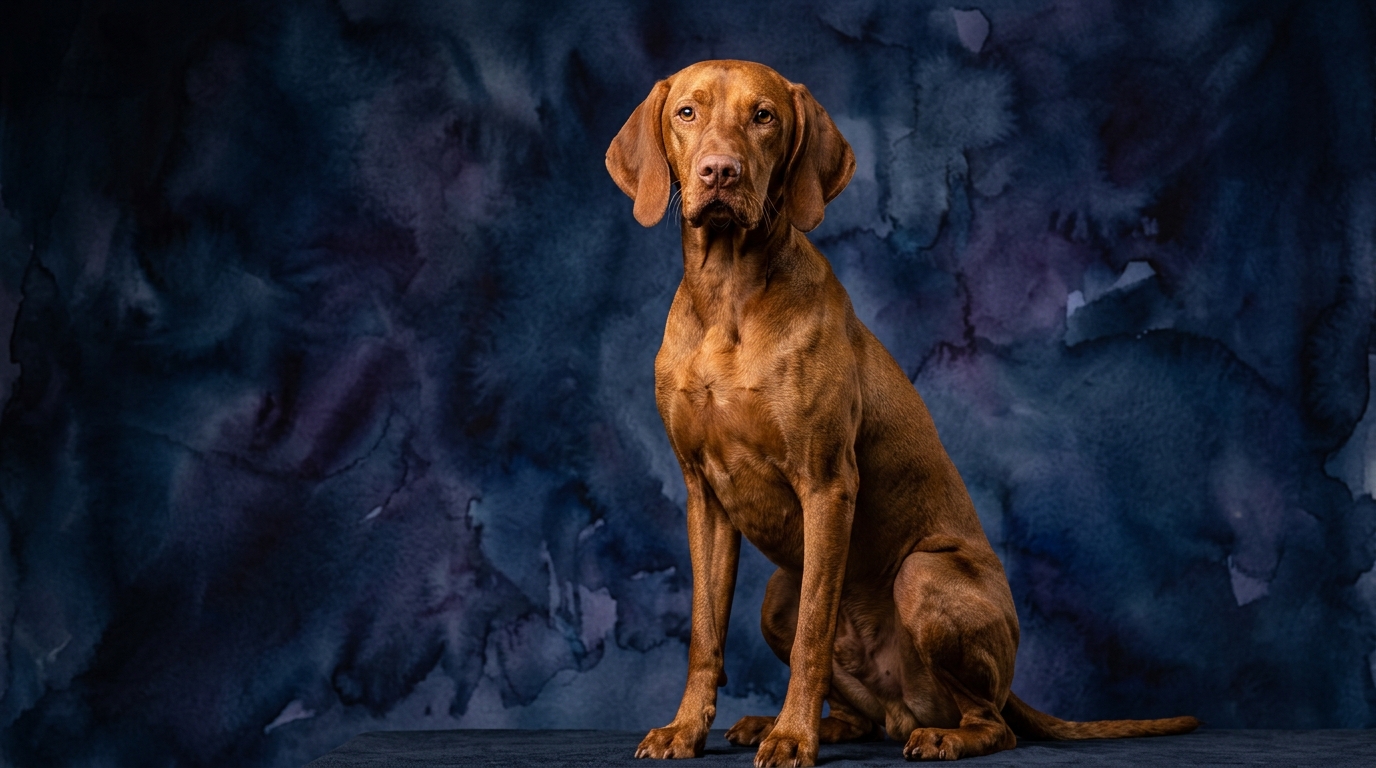
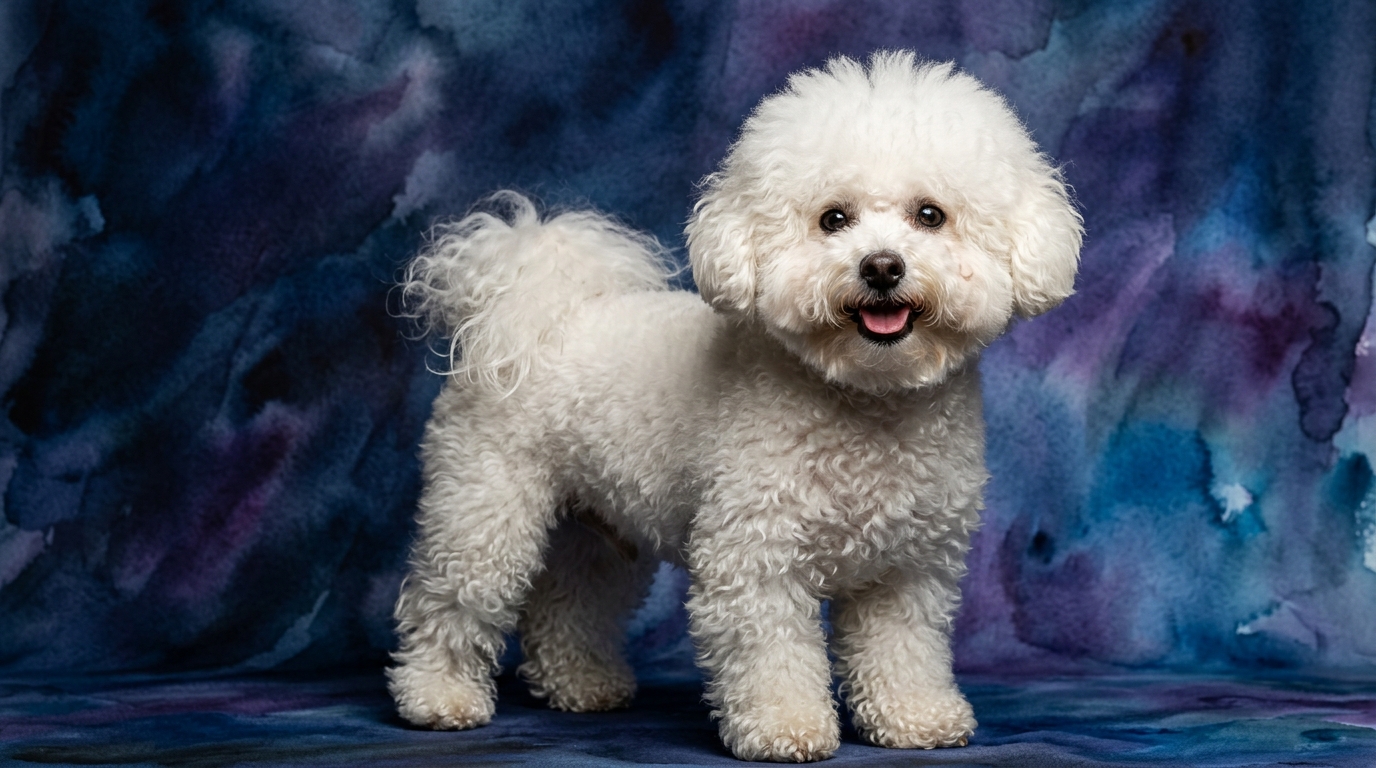
Side-by-Side IQ Profile: Vizsla vs. Bichon Frisé
To understand the distinct cognitive landscapes of the Vizsla and Bichon Frisé, we examine their specific scores across five key dimensions measured by The Cosmic Pet Pet IQ Lab, alongside their Coren rankings.
**Vizsla (Coren Rank #31):**
**Problem Solving (4/5):** This score indicates the Vizsla's robust capacity for independent thought and strategic action when facing new challenges. They quickly analyze situations, devising solutions to reach goals, reflecting their historical need for quick field decisions.
**Training Speed (4/5):** A 4/5 signifies the Vizsla's readiness and eagerness to absorb new commands and routines. They grasp concepts with fewer repetitions, motivated by praise and the opportunity to work alongside their human, making them highly responsive students.
**Social Intelligence (5/5):** Achieving a perfect 5/5, the Vizsla demonstrates exceptional ability to understand and respond to human cues, emotions, and intentions. They form deep, intuitive bonds, often anticipating owner needs, thriving on close interaction.
**Instinctive Drive (5/5):** A maximum score reflects the Vizsla's powerful innate urges for activity, seeking, and engagement, rooted in their hunting heritage. This manifests as a persistent desire to explore, chase, and work, requiring specific outlets.
**Memory (4/5):** With a 4/5, Vizslas possess a strong capacity to recall learned behaviors, commands, and experiences over time. They remember routines, people, and places accurately, contributing significantly to their trainability.
**Bichon Frisé (Coren Rank #45):**
**Problem Solving (3/5):** The Bichon Frisé's 3/5 score suggests a moderate aptitude for tackling complex problems independently. They may rely more on learned routines or human assistance rather than spontaneous, intricate strategizing, often geared towards achieving comfort.
**Training Speed (3/5):** A 3/5 indicates Bichons are capable learners, though they may require more consistent repetition and patience. They respond well to positive reinforcement and clear instructions, but attention might wander if sessions are too long.
**Social Intelligence (5/5):** Matching the Vizsla, the Bichon Frisé's 5/5 highlights their exceptional capacity for understanding and interacting with humans. They are acutely aware of social dynamics, adept at reading body language, and excel at forming strong, affectionate bonds.
**Instinctive Drive (2/5):** A lower score of 2/5 signifies reduced innate working or hunting drives. While they enjoy play, their motivation is less about persistent task completion and more about companionship and comfort, being primarily social.
**Memory (3/5):** The Bichon's 3/5 for memory suggests a solid, but not exceptional, ability to recall information. They remember familiar routines, commands, and people, aiding in house-training and basic instruction, benefiting from consistency.
Where the Vizsla Wins Cognitively
The Vizsla's cognitive profile showcases distinct advantages in areas demanding active engagement and independent action. Their 4/5 problem-solving ability allows them to quickly assess new situations and formulate effective strategies, a crucial trait for a breed tasked with locating and retrieving game. This translates into a dog that can often "think through" obstacles. Coupled with a 4/5 training speed, Vizslas absorb new commands and learn complex sequences with remarkable efficiency, making them highly responsive partners in advanced obedience or field work. Furthermore, their 5/5 instinctive drive provides an inherent motivation to participate in activities that challenge their physical and mental capacities, fueling their desire to work and excel. Finally, their robust 4/5 memory ensures that once a lesson is learned or a skill acquired, it tends to stick, enabling them to build a vast repertoire of behaviors.
Where the Bichon Frisé Wins Cognitively
While the Vizsla excels in task-oriented cognition, the Bichon Frisé demonstrates a unique cognitive strength rooted in its profound social intelligence, scoring a perfect 5/5, mirroring the Vizsla. This isn't merely about friendliness; it signifies an exceptional ability to interpret subtle human cues, emotional states, and social contexts. A Bichon is often uncannily perceptive to changes in household mood, adapting its behavior to offer comfort or solicit interaction with remarkable sensitivity. Their cognitive strengths are geared towards fostering deep, nuanced companionship, making them masters of social bonding and emotionally astute companions.
Which is Easier to Train and Why
Determining which breed is "easier" to train depends heavily on the type of training and the owner's approach. The Vizsla, with its 4/5 training speed and 5/5 instinctive drive, generally proves to be a highly receptive and enthusiastic student for structured, task-oriented training. Their eagerness to work and problem-solving aptitude means they often grasp new commands quickly, motivated by challenge. However, their potent instinctive drive requires diligent focus and early socialization to channel energy constructively. In contrast, the Bichon Frisé, with a 3/5 training speed and 2/5 instinctive drive, may require more patience and creative motivation. While capable, they might not possess the same inherent drive for repetitive tasks. Training a Bichon benefits from shorter, engaging sessions, heavily reliant on positive reinforcement and leveraging their 5/5 social intelligence for a strong, trust-based working relationship.
Which Suits Active Owners vs. Relaxed Owners
The cognitive and instinctive profiles of these two breeds offer clear indicators for owner compatibility. The Vizsla, with its 5/5 instinctive drive and 4/5 problem-solving, is an ideal match for highly active owners who can provide ample opportunities for physical exertion and mental engagement. They thrive in environments where they can run, explore, and participate in activities like hiking, dog sports, or scent work, finding deep satisfaction in constructive outlets. Conversely, the Bichon Frisé, with its 2/5 instinctive drive and pronounced 5/5 social intelligence, is better suited for more relaxed owners seeking a devoted and affectionate companion primarily focused on indoor interaction and moderate activity. Their needs are less about intense physical challenges and more about consistent companionship, fitting perfectly into a home where their social needs are paramount.
The Verdict
Opt for a Vizsla if you're an active individual or family seeking a highly engaged, trainable partner for outdoor adventures, dog sports, or a working role, capable of independent thought and sustained effort. This breed thrives on mental and physical challenges and forms an exceptionally close working bond.
Select a Bichon Frisé if your lifestyle is more relaxed and you desire a charming, socially perceptive companion whose primary joy comes from close human interaction and being a cherished family member. They offer unwavering affection and a delightful presence without demanding extensive physical exercise or complex tasks.
🧠 Find Your Pet's IQ Score
Our Pet IQ Lab assessment covers 25+ tests across 5 cognitive dimensions — personalized to your breed.
Take the Full IQ Test →Frequently Asked Questions
Do Vizslas need a lot of mental stimulation?
Yes, absolutely. With a 4/5 problem-solving score and 5/5 instinctive drive, Vizslas require significant mental engagement alongside physical exercise. Activities like puzzle toys, obedience training, scent work, or learning new tricks are crucial to keep their cognitive abilities sharp and prevent boredom-related behaviors.
Are Bichon Frisés good family dogs for children?
Yes, Bichon Frisés often make wonderful family dogs, especially due to their 5/5 social intelligence. They are typically gentle, affectionate, and perceptive to family dynamics, forming strong bonds with children. However, as with any breed, supervision is important to ensure respectful interactions from both the dog and the children.
How do their memory scores impact daily life?
The Vizsla's 4/5 memory means they quickly recall commands and routines, making consistent training highly effective and long-lasting, even after breaks. The Bichon's 3/5 memory is solid for daily routines and basic commands, but might benefit from more frequent refreshers to maintain sharp recall, especially for less common instructions.