Side-by-Side IQ Profile: West Highland White Terrier vs. Irish Wolfhound
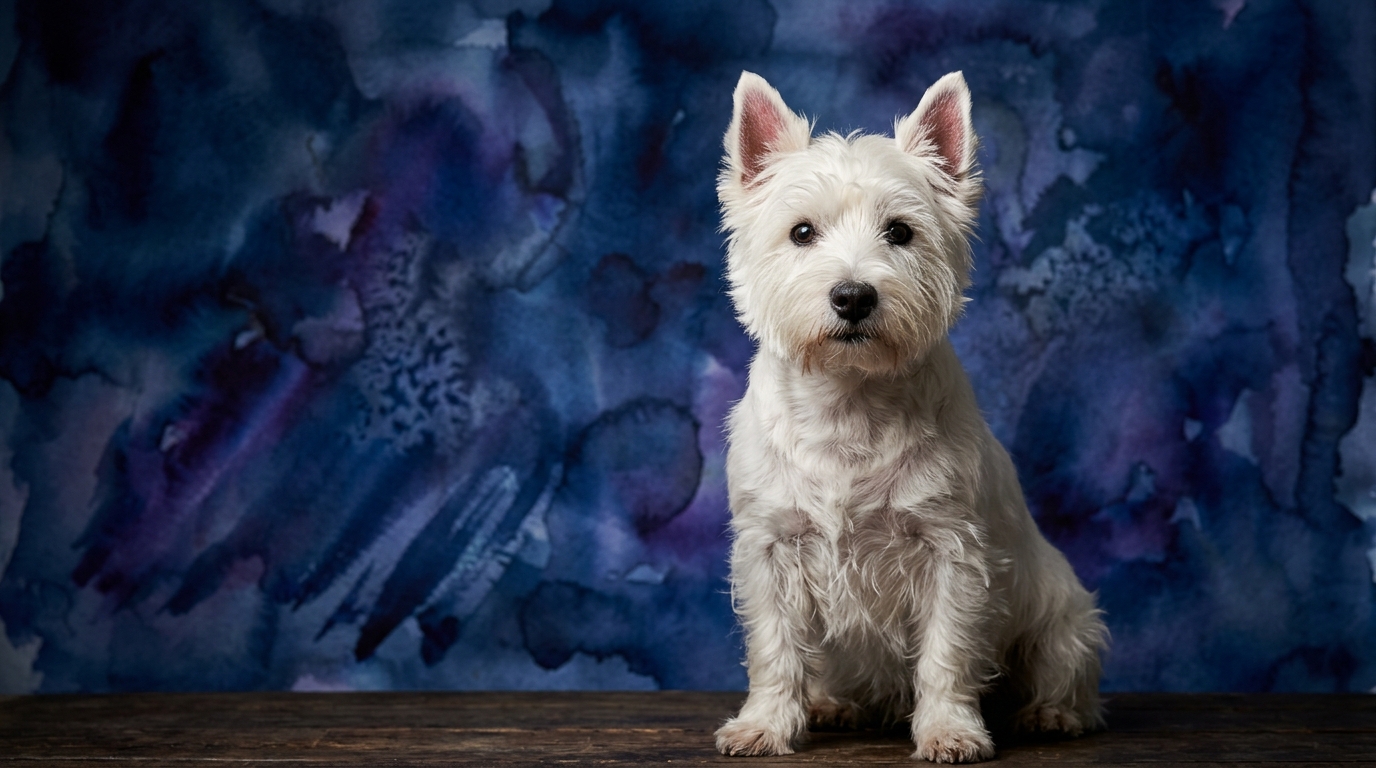
The Cosmic Pet Pet IQ Lab employs a multi-dimensional approach to assess canine cognition, moving beyond simplistic notions of 'smartness.' For the West Highland White Terrier, a breed acknowledged by Coren and ranked #47, its profile paints a picture of a perceptive and adaptable companion. Its Problem Solving score of 3/5 reflects a terrier's inherent resourcefulness, often manifested in figuring out how to access desired objects or outwit small prey. Training Speed, also at 3/5, indicates a moderate pace for learning new commands, requiring consistent and engaging methods to hold its attention. Social Intelligence, rated 3/5, suggests an adequate understanding of human cues and pack dynamics, enabling harmonious integration into a family. An Instinctive Drive of 3/5 highlights its foundational terrier urges for hunting and digging, which are deeply embedded. The Westie's Memory, however, stands out at 4/5, indicating a strong ability to retain learned behaviors, routines, and the locations of favored items or even past transgressions.
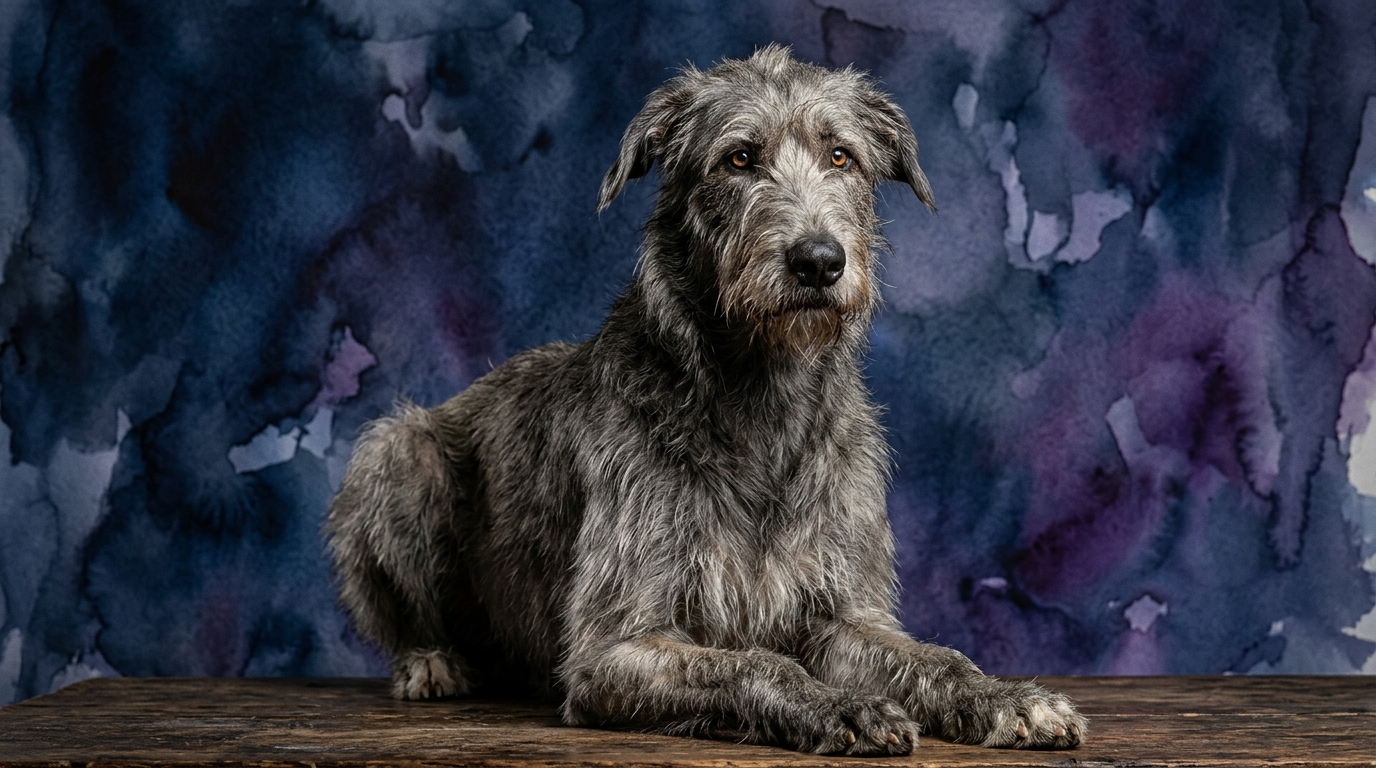
In contrast, the Irish Wolfhound, while not Coren-ranked, presents a unique cognitive blueprint, shaped by its history as a sighthound. Its Problem Solving also scores 3/5, manifesting in a different manner—perhaps in navigating complex terrain during a hunt or understanding spatial relationships. Training Speed, mirroring the Westie at 3/5, suggests a similar learning curve, though its motivations might differ. Social Intelligence likewise scores 3/5, reflecting its generally gentle and family-oriented nature, capable of forming deep bonds. An Instinctive Drive of 3/5 for the Wolfhound speaks to its sighthound heritage, focusing on visual tracking and pursuit rather than the Westie's more tactile predatory drive. Finally, the Wolfhound's Memory is rated 3/5, indicating a solid capacity to recall commands and routines, though perhaps not with the same tenacious detail as the Westie.
Where West Highland White Terrier Wins Cognitively
The West Highland White Terrier truly shines in its memory capabilities, scoring a decisive 4/5. This superior recall means a Westie is more likely to remember complex sequences of commands, the precise location of a buried toy, or the specific times certain activities occur. This strong memory also contributes to their adaptability in new environments once routines are established, as they quickly internalize the 'rules' of their space. Furthermore, their 3/5 in Problem Solving, combined with their terrier tenacity, often translates into a persistent, clever approach to minor challenges, such as figuring out how to open a cabinet or retrieve a toy from an awkward spot. This isn't about abstract reasoning, but rather a practical, goal-oriented persistence rooted in their breed's historical role of independent hunting.
While their Training Speed is on par with the Wolfhound, the Westie's memory often gives them an edge in retaining those learned behaviors over the long term, making consistent training efforts yield lasting results. Their compact size also means their cognitive 'wins' are often applied to more intricate, small-scale problems within a household environment, requiring a different kind of finesse than a larger hound. This breed’s cognitive strengths are perfectly suited for a life of engaging with its environment, exploring, and remembering the details that matter to a small, curious canine.
Where Irish Wolfhound Wins Cognitively
While the Irish Wolfhound's individual scores might not exceed the Westie's in any single category, their cognitive profile is uniquely suited to their historical purpose and gentle temperament. Their 3/5 in Problem Solving, combined with their 3/5 Instinctive Drive as a sighthound, means they excel in tasks requiring observation, spatial awareness, and strategic pursuit over open ground. This isn't about digging out a badger, but rather identifying and tracking movement, making rapid decisions based on visual cues, and navigating complex outdoor environments. Their intelligence is often expressed in a more measured, thoughtful way, rather than the Westie’s quick, often impulsive, terrier-driven approach.
The Wolfhound's Social Intelligence of 3/5, while numerically equal, manifests in a profoundly different manner due to their size and historical role. They often exhibit a calm, perceptive understanding of family dynamics and human emotions, acting as gentle giants who are keenly aware of their surroundings. Their cognitive strengths lie in their capacity for quiet companionship, their ability to discern friend from foe, and their steady, reliable presence. This breed’s mental architecture supports a life of thoughtful observation and loyal, protective partnership, requiring a different kind of mental engagement than the Westie’s feisty independence.
Which is Easier to Train and Why
Assessing ease of training requires looking beyond just the 'Training Speed' score. Both breeds register a 3/5 in this dimension, indicating a moderate learning pace. However, their inherent behavioral differences significantly impact the training experience. The West Highland White Terrier, despite its strong memory (4/5), presents a challenge due to its potent Instinctive Drive (3/5) and the independent streak typical of terriers. They are bred to think for themselves, to pursue prey relentlessly, and to be self-sufficient. This means a Westie might understand a command quickly but choose to obey only if it aligns with its current interest, or if the reward is sufficiently enticing. Training a Westie often requires immense patience, creativity, and consistency to overcome their tendency towards independent action and occasional stubbornness. Their problem-solving skills might even be used to 'outsmart' the trainer.
The Irish Wolfhound, by contrast, while also scoring 3/5 in Training Speed and 3/5 in Instinctive Drive (sighthound pursuit), generally possesses a more amenable and less assertive temperament. Their social intelligence, while rated the same, often translates into a greater desire to please their human companions, making them more receptive to instruction. However, their sheer size means that early and consistent training in manners and obedience is crucial, as an untrained Wolfhound can be an accidental bulldozer. While they might not be as quick to pick up every trick, their gentle nature and willingness to cooperate often make them feel 'easier' to train in terms of compliance and responsiveness, provided the trainer understands their sighthound instincts and gentle spirit. The challenge with a Wolfhound is often managing their size and potential for distraction by visual stimuli, rather than battling outright defiance.
Which Suits Active Owners vs. Relaxed Owners
When considering lifestyle compatibility, both breeds offer distinct profiles that appeal to different types of owners, influenced by their cognitive and physical makeup. The West Highland White Terrier, with its moderate instinctive drive (3/5) and problem-solving acumen, is well-suited for owners who appreciate an active, engaging companion. While not requiring marathon runs, a Westie thrives on daily walks, interactive play, and mental stimulation like puzzle toys or scent work to satisfy its terrier instincts. Their strong memory means they benefit from consistent routines and learning new tricks. They are an excellent fit for owners who enjoy regular, varied activities and can provide consistent mental enrichment, preventing boredom that can lead to mischievous problem-solving.
The Irish Wolfhound, despite its imposing size and sighthound heritage, can surprise some with its suitability for relaxed owners, provided their unique needs are met. Their instinctive drive (3/5) for visual pursuit means they need secure, spacious areas for occasional galloping, but they are often content with moderate daily exercise and long periods of lounging indoors. Their social intelligence and generally calm demeanor make them excellent, gentle companions for those who appreciate a large, affectionate presence in the home. They are well-suited for owners who can provide a quiet, stable environment, ample space, and appreciate a majestic, loving companion who enjoys observing the world from a comfortable vantage point, rather than constantly seeking active engagement.
The Verdict
Choose the West Highland White Terrier if you desire a spirited, clever companion with an excellent memory, ready for engaging activities and consistent training to channel its independent terrier spirit.
Opt for the Irish Wolfhound if you seek a gentle giant, a perceptive and calm companion whose cognitive strengths lie in loyal observation and a quiet, affectionate presence, thriving in a stable, spacious home.
🧠 Find Your Pet's IQ Score
Our Pet IQ Lab assessment covers 25+ tests across 5 cognitive dimensions — personalized to your breed.
Take the Full IQ Test →Frequently Asked Questions
Does the Westie's strong memory make it easier to housetrain?
Yes, a Westie's 4/5 memory score is a significant advantage in housetraining. They can quickly remember routines, designated areas, and the consequences of accidents, making consistent efforts yield faster results compared to breeds with lower memory retention.
How does the Irish Wolfhound's 3/5 problem solving manifest in daily life?
The Irish Wolfhound's problem-solving often appears in practical situations like navigating complex spaces, understanding spatial relationships to get comfortable, or discerning visual cues in their environment. It’s less about intricate puzzles and more about efficient, thoughtful interaction with their surroundings.
Are Irish Wolfhounds prone to wandering due to their instinctive drive?
Irish Wolfhounds, as sighthounds with a 3/5 instinctive drive, can be highly motivated by visual stimuli and may pursue moving objects. While not necessarily wanderers in the same sense as scent hounds, they require securely fenced areas to prevent them from taking off after something they spot, making a strong recall command essential.