Side-by-Side Cognitive Profile: Westie vs. Elkhound
The Cosmic Pet Pet IQ Lab employs a five-dimensional framework to assess canine cognition, offering a granular view beyond simple rankings. While both the West Highland White Terrier (Coren rank #47) and the Norwegian Elkhound (Coren rank #36) demonstrate considerable mental faculties, their strengths lie in different areas, reflecting their divergent evolutionary paths and historical working roles.
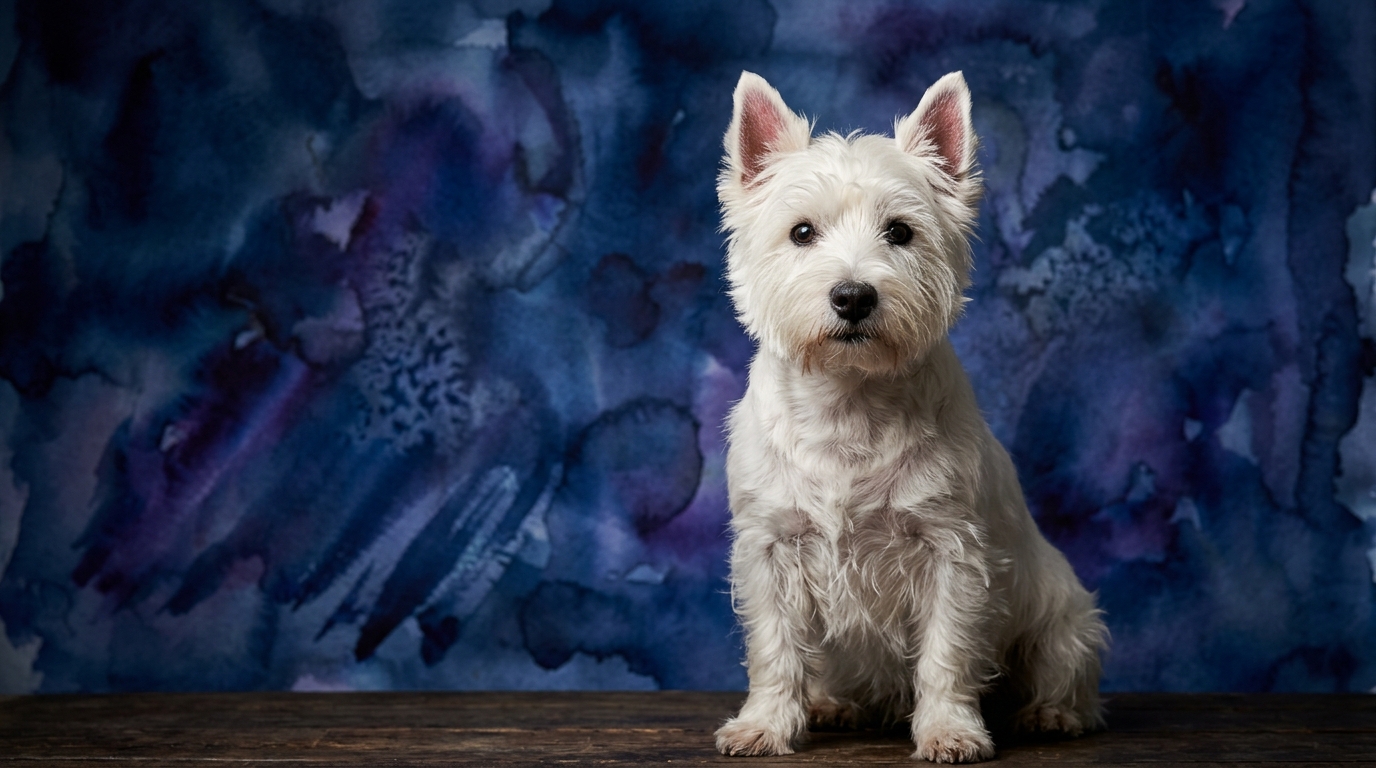
The West Highland White Terrier, a spirited member of the terrier group, exhibits a problem-solving aptitude of 3/5. This rating reflects their resourceful, often independent approach to challenges, preferring cunning and persistence to complex, multi-step reasoning. Their training speed is also rated at 3/5, indicating they learn at a moderate pace, but their inherent terrier willfulness often requires engaging, consistent methods to maintain their focus. Social intelligence stands at 3/5; they are generally adaptable and form deep bonds but can be opinionated in social settings, particularly with other animals due to their prey drive. Their instinctive drive, rated 3/5, is strongly geared towards digging, chasing, and territorial vigilance, which significantly influences their daily cognitive engagement. A notable strength is their memory, scoring 4/5, allowing them to retain routines, commands, and learned boundaries effectively, even if their application of that knowledge can be selective.
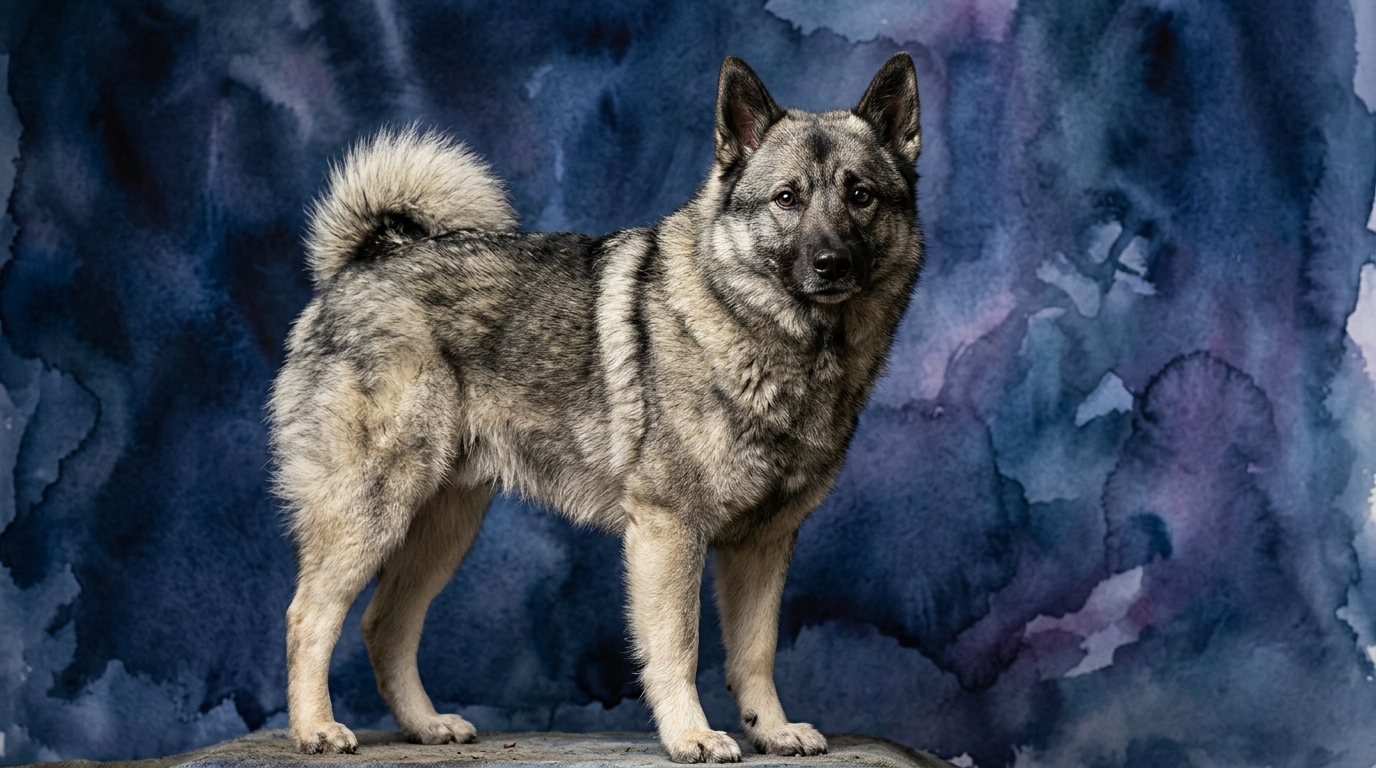
In contrast, the Norwegian Elkhound, a robust hound breed, shows a higher capacity in several cognitive dimensions. Their problem-solving ability is rated 4/5, indicating a greater aptitude for understanding and navigating complex situations, particularly those requiring spatial awareness, tracking, and sequential thought. This is further supported by a training speed of 4/5; Elkhounds tend to grasp new commands relatively quickly and are generally eager to cooperate once a clear purpose is established. Their social intelligence is 3/5, meaning they are typically good-natured and loyal to their families but can be reserved with strangers and require careful management around smaller animals due to their hunting heritage. The instinctive drive for Elkhounds, also 3/5, is powerfully directed towards scent tracking, hunting, and guarding, often manifesting in their characteristic vocalizations. Like the Westie, the Elkhound also boasts an impressive memory score of 4/5, crucial for recalling intricate scent trails, complex command sequences, and geographical layouts during their historical working tasks.
Where the West Highland White Terrier Excels Cognitively
The Westie's cognitive triumphs often manifest in their sheer tenacity and independent resourcefulness. While their problem-solving might not involve complex algorithms, it excels in situations demanding persistence and an almost stubborn determination to achieve a self-motivated goal. For instance, a Westie is adept at figuring out how to bypass a perceived barrier to reach a desired object or simply how to get their own way through charming persistence. Their self-reliance, honed over generations of solitary vermin hunting, means they are often quick to adapt to new environments and unexpected changes without undue reliance on human direction. This self-sufficiency, coupled with their strong memory for their personal 'territory' and its rules, allows them to navigate their daily lives with remarkable confidence and a clear sense of purpose. Their 'terrier grit' is not just a personality trait but a deep-seated cognitive drive to see things through on their own terms, making them exceptionally clever at manipulating situations to their advantage within their understood world.
Where the Norwegian Elkhound Excels Cognitively
The Norwegian Elkhound's cognitive strengths are rooted in their heritage as a hunting companion in challenging Nordic landscapes, demanding a different kind of intellect. Their higher problem-solving score (4/5) reflects a superior ability to process environmental cues, follow complex scent trails, and make on-the-spot decisions during sustained tasks. This breed demonstrates a greater capacity for sequential learning and understanding cause-and-effect relationships, which is vital for cooperative hunting and tracking. For example, an Elkhound can learn and execute a series of commands in a specific order, or consistently follow a scent over varied terrain, demonstrating sustained mental focus and strategic thinking. Their quicker training speed (4/5) also highlights their capacity for absorbing and applying new information more readily, especially when the task involves a clear purpose or a reward. This makes them particularly adept at structured learning and tasks requiring sustained engagement, where they can leverage their excellent memory for learned procedures and spatial understanding.
Training Dynamics: Elkhound vs. Westie
When it comes to ease of training, the Norwegian Elkhound generally presents a more straightforward path for handlers. Their higher training speed (4/5) and problem-solving (4/5) mean they tend to grasp new commands and concepts more quickly. Elkhounds often possess a strong desire to work cooperatively with their human companions, especially when motivated by positive reinforcement and clear guidance. They are less likely to question the 'why' behind a command and more inclined to focus on understanding and executing the task, leveraging their good memory for learned sequences. This makes them responsive to consistent training sessions and capable of learning more intricate routines.
The West Highland White Terrier, with a training speed of 3/5, can be more challenging to train due to their independent nature and strong terrier will. Their problem-solving (3/5) is often directed towards their own agenda rather than immediate compliance with human directives. While they are capable of learning and possess a good memory (4/5), they may choose to 'selectively listen' if a command doesn't align with their current interests or if they perceive a more rewarding alternative. Training a Westie requires exceptional patience, creativity, and consistency. Handlers must make training sessions highly engaging, varied, and fun to capture and maintain the Westie's attention, turning compliance into a game rather than a chore. Repetitive or dull training methods are often met with disinterest or outright defiance from this spirited breed.
Suitability for Active vs. Relaxed Owners
The Norwegian Elkhound is undoubtedly better suited for active owners. Their history as hunting dogs in rugged terrain means they possess significant stamina and require substantial physical exercise. Daily long walks, hikes, runs, or engaging in dog sports like scent work, agility, or tracking are essential to satisfy their instinctive drives (3/5) and problem-solving needs (4/5). A relaxed owner who cannot provide these outlets may find an Elkhound becoming bored, vocal, and potentially destructive, as their robust cognitive and physical energy needs are not met. They thrive on having a 'job' to do, even if it's just a challenging walk or a puzzle toy.
The West Highland White Terrier, while an active and playful breed, typically has more moderate exercise requirements compared to an Elkhound. They enjoy daily walks, playtime in a secure yard, and opportunities to dig or chase toys. Their smaller size makes them adaptable to various living situations, including apartments, provided their mental and physical needs are met. While they don't demand the same level of sustained endurance as an Elkhound, a truly 'relaxed' owner who offers minimal interaction or cognitive engagement might still find the Westie's independent streak and potential for mischievous behaviors challenging. They need mental stimulation through puzzle toys, short training sessions, and interactive play to prevent boredom and channel their innate terrier curiosity and problem-solving skills (3/5).
The Verdict: Choosing Your Canine Companion
The Verdict
Choose the West Highland White Terrier if you appreciate a tenacious, independent companion in a smaller package, are willing to invest in consistent, engaging training to channel their spirited personality, and enjoy a dog with a strong memory for their personal world.
Opt for the Norwegian Elkhound if you are an active individual or family seeking a cooperative, robust companion for outdoor adventures and structured activities, and can provide ample mental and physical stimulation to match their capacity for sequential learning and problem-solving.
🧠 Find Your Pet's IQ Score
Our Pet IQ Lab assessment covers 25+ tests across 5 cognitive dimensions — personalized to your breed.
Take the Full IQ Test →Frequently Asked Questions
Are Westies really stubborn?
West Highland White Terriers often exhibit an independent streak, which can be perceived as stubbornness during training. This stems from their history as self-reliant hunters, meaning they prefer to make their own decisions rather than blindly follow commands. Consistent, positive, and engaging training methods are key to working with their strong will.
Do Norwegian Elkhounds bark a lot?
Yes, Norwegian Elkhounds are known for their vocal nature, often using barking as a communication tool, particularly when alerting their family to perceived threats or expressing excitement. This trait is deeply ingrained from their history as hunting dogs that would bay at game, so early training to manage excessive barking is essential.
Which breed is better for first-time dog owners?
Neither breed is typically recommended as the easiest for first-time owners due to their strong personalities and specific needs. The Westie's independence and the Elkhound's vocal nature and exercise demands require dedicated owners. However, a first-timer committed to consistent training and proper socialization could succeed with either, provided they thoroughly research the breed's temperament and cognitive needs.