Side-by-Side Cognitive Profile
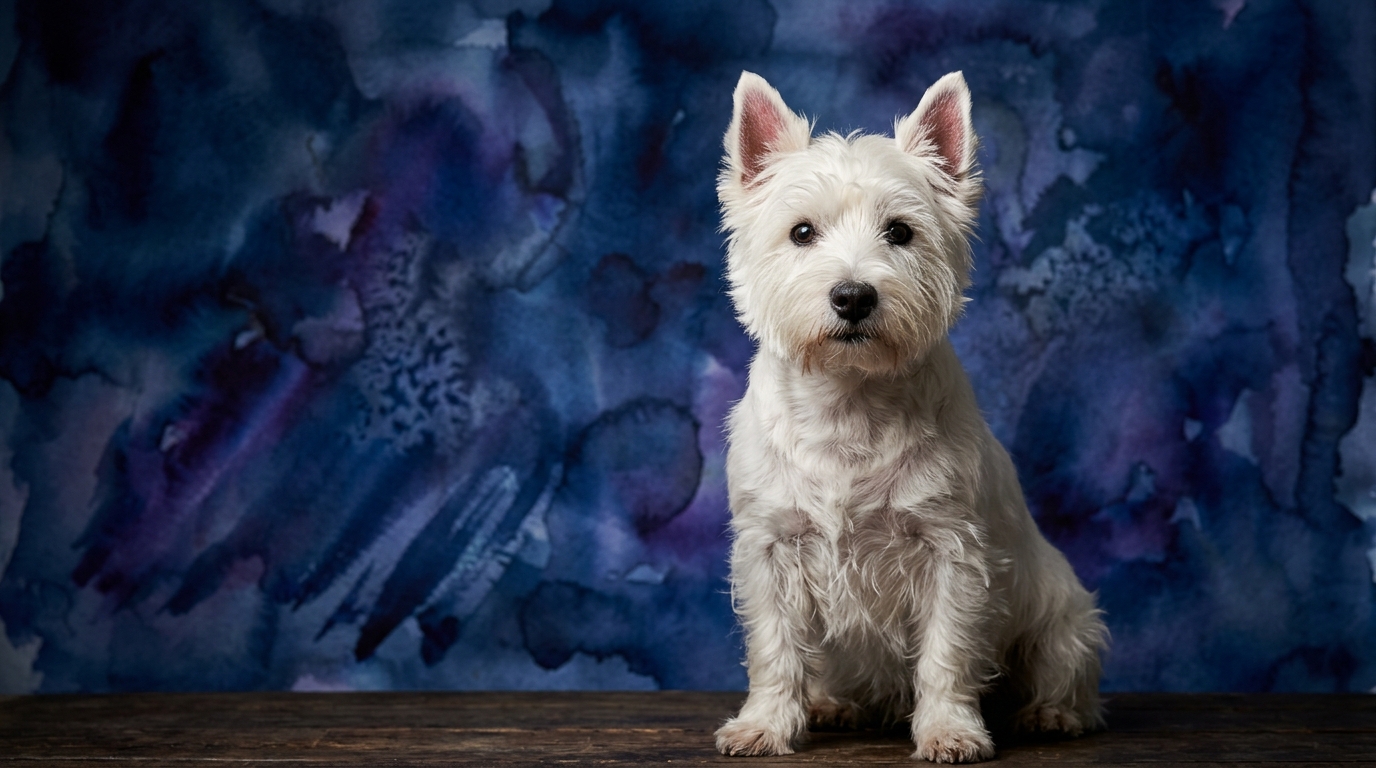
The West Highland White Terrier, a spirited terrier breed, holds a Coren rank of #47, indicating a respectable capacity for obedience and working intelligence. Our Pet IQ Lab assessment scores their Problem Solving at 3/5, reflecting a resourceful mind capable of independent thought when pursuing underground prey or navigating household challenges to reach a desired item. Their Training Speed is 3/5, suggesting they grasp commands effectively, yet their inherent terrier tenacity often means they apply their own judgment. Social Intelligence is also 3/5; they are generally adept at reading human cues but can exhibit a confident assertiveness with other canines. An Instinctive Drive of 3/5 underscores their strong prey drive for small animals, a fundamental aspect of their breed identity. Notably, their Memory stands at 4/5, indicating an excellent ability to recall learned commands, routines, and past interactions over time.
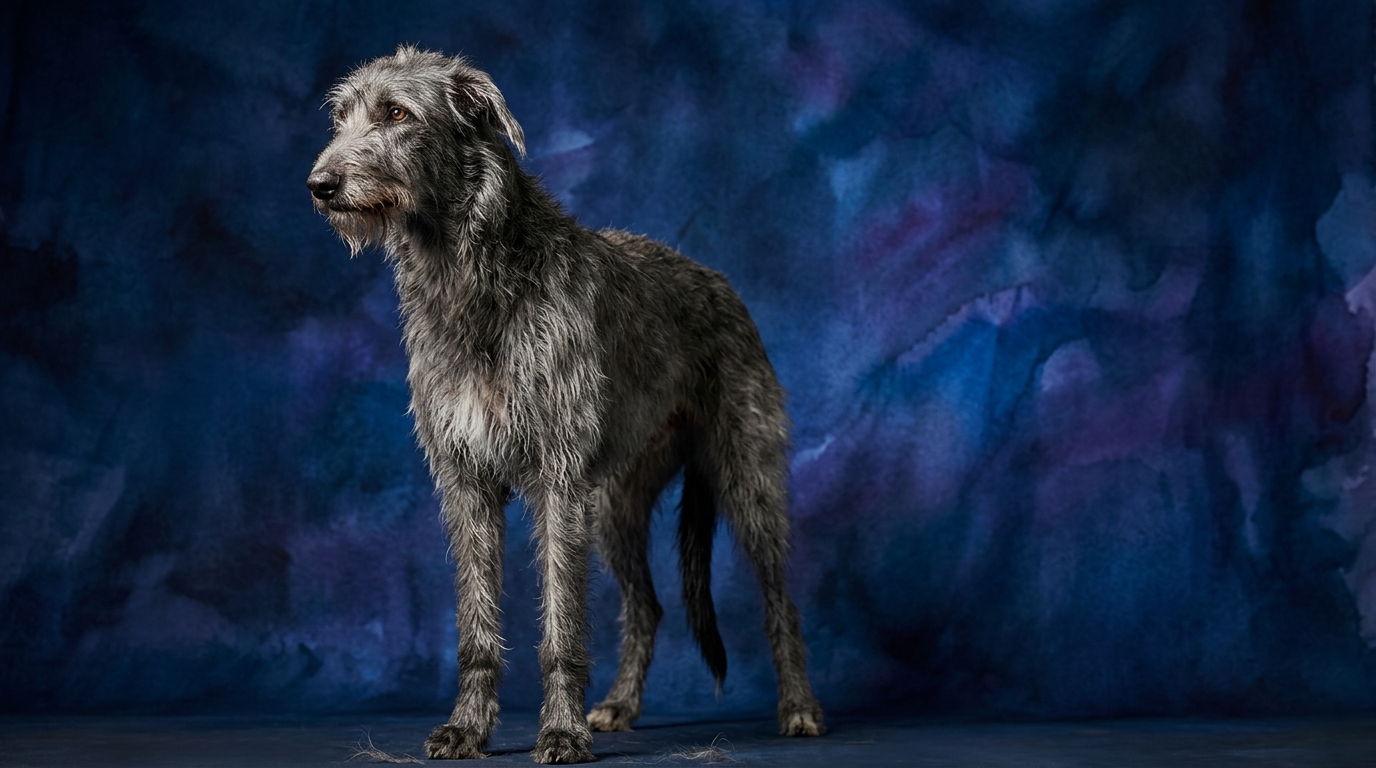
In contrast, the Scottish Deerhound, a majestic sighthound, is not included in Coren's ranking, emphasizing a different spectrum of cognitive aptitudes. Their Problem Solving is rated 3/5, which in their context translates to an innate skill for navigating complex open terrain during a chase or strategically assessing prey movements from a distance, rather than solving intricate puzzles. A Training Speed of 3/5 means they are capable learners, but their sighthound nature often prioritizes visual stimuli and independent pursuit over repetitive obedience drills. Their Social Intelligence is 3/5; they are typically gentle, reserved, and perceptive of their family's emotional states. An Instinctive Drive of 3/5 highlights their powerful, sight-driven urge to chase, a deeply ingrained hunting behavior. Their Memory is assessed at 3/5, meaning they retain training and experiences, though perhaps with less immediate recall for complex sequences compared to the Westie.
Where the West Highland White Terrier Shines Cognitively
The West Highland White Terrier's primary cognitive advantage, according to our metrics, lies in its superior Memory, rated at 4/5 compared to the Deerhound's 3/5. This enhanced recall means a Westie is particularly adept at retaining complex sequences of commands, remembering specific training cues over extended periods, and recalling past social interactions with remarkable detail. This cognitive strength makes them highly capable of learning intricate tricks, mastering consistent household routines, and remembering who is a friend or foe, contributing to their reputation as a clever and engaging companion.
This elevated memory score also subtly influences their Problem Solving (3/5), as they can more readily recall successful past strategies when faced with new challenges. For example, a Westie might remember which hidden toy previously yielded a treat, or which route through the garden offered the quickest path to investigate a perceived 'intruder.' Their ability to hold onto information allows for a more cumulative learning experience, building upon prior knowledge to navigate their world with a keen, observant mind.
Where the Scottish Deerhound's Cognitive Strengths Lie
Where the Scottish Deerhound's cognitive profile truly shines isn't in a numerically higher score, but in the specialized application of its inherent abilities. While its Problem Solving is rated 3/5, this manifests as an innate capacity for strategic pursuit, assessing the most efficient path to intercept a moving object over vast distances. This isn't about intricate puzzle-solving in a confined space, but rather a sophisticated understanding of velocity, trajectory, and terrain in an open field, a cognitive skill intrinsically linked to its sighthound heritage. Their Instinctive Drive, also 3/5, is profoundly channeled into this highly specialized form of hunting, demanding intense focus and rapid decision-making in high-stakes chase scenarios.
Furthermore, the Deerhound's Social Intelligence, while rated 3/5, presents a distinct quality compared to the Westie. They are often described as gentle, reserved, and highly perceptive within their family unit, demonstrating a quiet empathy and awareness of emotional nuances. This manifests not as boisterous engagement, but as a deep, sensitive bond, making them remarkably attuned companions who read their human's moods with subtle grace. Their cognitive strengths lie in these specialized applications of perception and drive, tailored to their unique role as a noble sighthound, rather than in traditional obedience metrics.
Training: Which is Easier to Guide?
Both the West Highland White Terrier and the Scottish Deerhound share a Training Speed rating of 3/5, suggesting a similar pace in learning new commands. However, the Westie's superior Memory (4/5 versus 3/5 for the Deerhound) is a significant differentiator, implying that once a command is learned, it is likely to be retained more consistently over time. Despite this, Westies are terriers; they possess an independent, sometimes stubborn streak that means they often choose when to apply their learning, requiring patient and engaging methods to foster cooperation.
The Deerhound, while also possessing a 3/5 Training Speed and Memory, presents different training considerations due to its sighthound nature. They are often described as sensitive and can become easily bored by repetitive drills, preferring to engage their powerful chase drive. Their independence stems from a deep-seated instinct to pursue anything that moves, making off-leash reliability in unsecured areas a significant challenge. While both breeds demand consistent, positive reinforcement, the Westie's challenge often lies in managing focus and encouraging willingness, whereas the Deerhound's training centers around channeling its profound instinctive drive and minimizing visual distractions.
Lifestyle Match: Active vs. Relaxed Owners
For owners seeking an active companion, both breeds offer distinct experiences. The West Highland White Terrier, despite its smaller size, possesses considerable energy and a keen need for mental stimulation. Their Instinctive Drive (3/5) means they thrive with activities like earthdog trials, agility, or engaging puzzle toys that challenge their problem-solving skills. They are best suited for owners who appreciate their spunky, independent nature and can provide consistent training, varied enrichment, and daily walks to prevent boredom-induced mischief. Their compact size makes them adaptable to various living situations, provided their cognitive and physical needs are met.
The Scottish Deerhound also requires an active owner, though their activity profile is different. They need bursts of intense exercise, particularly vigorous running, but are often calm and relaxed indoors, earning them the nickname 'Royal Couch Potato.' Their strong Instinctive Drive (3/5) for chasing means secure off-leash running space is absolutely crucial for their well-being. Owners who enjoy quiet companionship after a good run will appreciate their gentle indoor demeanor, but those seeking a relaxed pet without dedicated daily exercise will find their needs challenging. They suit owners who understand the sighthound's profound need for open spaces to stretch their legs and are prepared for a large, gentle companion who needs specific, high-intensity exercise sessions.
The Verdict
Choose the West Highland White Terrier if you're seeking a small, tenacious companion who excels at learning routines and remembering commands, provided you appreciate an independent spirit and can offer consistent, engaging mental and physical outlets.
Opt for the Scottish Deerhound if you admire a gentle giant, understand the profound sighthound instinct for the chase, and can provide ample, safe space for running alongside a calm, affectionate indoor presence.
🧠 Find Your Pet's IQ Score
Our Pet IQ Lab assessment covers 25+ tests across 5 cognitive dimensions — personalized to your breed.
Take the Full IQ Test →Frequently Asked Questions
Are West Highland White Terriers easy to train?
Westies have a Training Speed of 3/5 and a strong Memory (4/5), meaning they learn commands well and retain them. However, their independent terrier nature requires consistent, positive, and engaging training to ensure cooperation and prevent stubbornness from taking over.
Do Scottish Deerhounds need a lot of exercise?
Scottish Deerhounds require specific exercise: regular, vigorous running sessions in a safe, securely fenced area to satisfy their strong chase drive. While they are calm indoors, this intense physical exertion is crucial for their physical and mental health.
What's the main cognitive difference between these two breeds?
The primary cognitive distinction lies in the Westie's superior Memory (4/5 vs. 3/5 for the Deerhound), aiding in command retention and routine learning. The Deerhound's cognitive strengths are more specialized, focusing on strategic problem-solving and instinctive drive tailored for open-field pursuit rather than traditional obedience.