
Side-by-Side Cognitive Profile
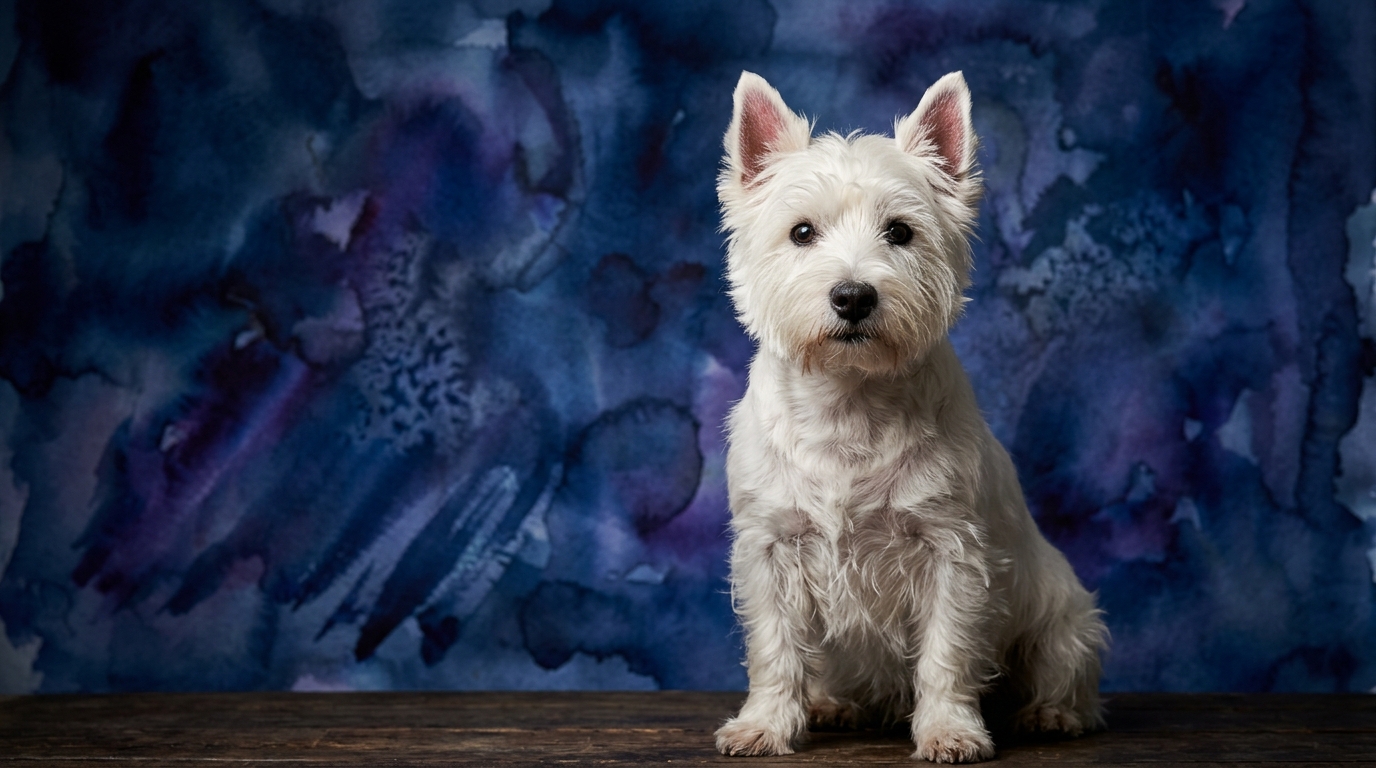
The Cosmic Pet Pet IQ Lab provides a nuanced framework for understanding canine intelligence across five key dimensions. For the West Highland White Terrier, a Coren-ranked breed at #47, its profile includes Problem Solving at 3/5, Training Speed at 3/5, Social Intelligence at 3/5, Instinctive Drive at 3/5, and a notably strong Memory at 4/5. This suggests a dog capable of moderate independent thought, learning at a steady pace, engaging reasonably with its human family, possessing a typical terrier drive, and excelling in retaining information.
In contrast, the Tibetan Spaniel, not specifically Coren-ranked, presents a remarkably consistent cognitive profile: Problem Solving at 3/5, Training Speed at 3/5, Social Intelligence at 3/5, Instinctive Drive at 3/5, and Memory at 3/5. This indicates a breed with a balanced, middle-ground approach across all measured cognitive functions. Its problem-solving abilities are practical, its learning pace is steady, its social interactions are generally appropriate, its instinctive behaviors are present but not overwhelming, and its memory is reliable without being exceptional.
Where the West Highland White Terrier Excels Cognitively
The West Highland White Terrier's standout cognitive strength lies in its Memory, scoring an impressive 4/5. This superior retention capability means a Westie is more likely to remember complex command sequences, learned routines, and even specific positive or negative experiences over extended periods. For an owner, this translates into a dog that, once taught, is less likely to 'forget' its training, assuming consistent reinforcement. This robust memory also aids in its problem-solving (3/5), allowing it to recall past successful strategies when faced with new challenges, such as navigating a puzzle toy or figuring out how to access a forbidden treat. The Westie’s Coren ranking further underscores its capacity for applying learned behaviors and adapting to human expectations, even with its independent terrier spirit.
Its Instinctive Drive, also at 3/5, combined with its strong memory, means a Westie will remember where it last saw a squirrel or where it buried a favorite toy. While this drive can sometimes manifest as independent exploration, its cognitive architecture ensures these pursuits are often informed by past experiences and learned environmental cues. This cognitive blend makes the Westie a persistent and resourceful companion, capable of complex learning and long-term recall, which can be channeled into various activities like agility or scent work, where remembering courses or scent trails is paramount.
Where the Tibetan Spaniel Excels Cognitively
The Tibetan Spaniel's cognitive strength isn't found in a single high-scoring dimension but rather in its remarkable balance across all five metrics, each scoring 3/5. This consistent, moderate profile makes the Tibetan Spaniel an exceptionally well-rounded and adaptable companion, especially suited for navigating the nuances of a family environment. Its Problem Solving at 3/5 isn't about complex, abstract reasoning, but rather practical, everyday solutions like figuring out how to get attention or find a comfortable napping spot, demonstrating a functional intelligence that serves its companion role effectively.
Its Social Intelligence at 3/5, combined with its balanced memory and training speed, suggests a dog that is attuned to its human family's moods and routines without being overly demanding or complex. Tibetan Spaniels often excel at reading subtle human cues, making them sensitive and empathetic companions. This cognitive equilibrium means the Tibbie is less likely to exhibit extreme behaviors stemming from an overactive drive or an exceptionally strong memory that might lead to fixation. Instead, it offers a steady, predictable, and agreeable cognitive presence, making it a stable and comforting addition to a household that values harmonious companionship over high-octane intellectual challenges.
Which is Easier to Train and Why
When comparing training ease, both breeds score 3/5 for Training Speed, indicating a moderate pace of learning. However, the West Highland White Terrier's Memory score of 4/5 gives it a distinct advantage in retaining commands and routines over time. Once a Westie grasps a concept, it is more likely to remember it, making long-term consistency in training less of an uphill battle. The challenge with Westies often lies in their Instinctive Drive (3/5) and independent terrier spirit; they learn quickly but may choose to obey only if it aligns with their immediate interest or perceived reward. Their behavioral difference is often a matter of motivation and stubbornness, rather than an inability to learn.
The Tibetan Spaniel, with a 3/5 in both Training Speed and Memory, learns at a steady pace and retains information reliably, though perhaps not with the same tenacity as the Westie. Its Instinctive Drive (3/5) is typically less intense than a terrier's, meaning it might be less prone to sudden bursts of independent action driven by scent or prey instinct. This can make the Tibbie more generally compliant, as its motivations are often centered around pleasing its family rather than pursuing independent agendas. While it might take a few more repetitions for a Tibbie to solidify a complex command, its willingness to engage and its less independent nature can make the training process feel smoother and less confrontational for many owners.
Which Suits Active Owners vs. Relaxed Owners
The West Highland White Terrier, with its 3/5 in Problem Solving and Instinctive Drive, coupled with its 4/5 Memory, is better suited for owners who enjoy engaging with a dog's spirited and sometimes independent nature. Active owners who appreciate a dog that thinks for itself, enjoys interactive games, and can excel in activities requiring memory and focused drive like agility or earthdog trials will find a Westie a rewarding partner. Their cognitive profile suggests they thrive on mental engagement and consistent, stimulating interaction, enjoying purposeful activity rather than merely observing.
The Tibetan Spaniel, with its consistent 3/5 across all cognitive dimensions, is an ideal match for more relaxed owners. Its balanced cognitive profile means it adapts well to a calm home environment, enjoying companionship and moderate activity without demanding constant mental or physical challenges. Owners who appreciate a dog that is generally agreeable, socially aware without being overly complex, and content with a steady routine will find the Tibetan Spaniel's cognitive makeup perfectly aligned with a more tranquil lifestyle. It offers steady companionship without the intense independent drive or exceptional memory that might seek out more complex engagements.
The Verdict
Choose the West Highland White Terrier if you seek a spirited companion with robust memory and a knack for independent problem-solving, thriving on consistent mental engagement and structured activities.
Opt for the Tibetan Spaniel if you desire a balanced, adaptable companion with a steady cognitive profile, valuing harmonious social interaction and a more relaxed, agreeable demeanor.
🧠 Find Your Pet's IQ Score
Our Pet IQ Lab assessment covers 25+ tests across 5 cognitive dimensions — personalized to your breed.
Take the Full IQ Test →Frequently Asked Questions
Does a Westie's higher memory score make it automatically easier to train?
While a Westie's 4/5 memory helps it retain commands, its independent terrier drive (3/5) means it often decides if it *wants* to obey. Training requires consistent motivation and managing its independent streak, rather than just repetition.
How does the Tibetan Spaniel's balanced IQ profile affect its behavior?
The Tibetan Spaniel's consistent 3/5 scores across all dimensions often result in a generally agreeable and adaptable temperament. It’s less prone to extreme drives or stubbornness, making it a stable and predictable companion in most home environments.
Which breed is better for first-time dog owners based on cognitive factors?
For first-time owners, the Tibetan Spaniel's balanced and less intense cognitive profile (all 3/5) might be more forgiving. The Westie's stronger memory and independent drive can be a rewarding challenge, but may require a bit more experience in managing a dog with a distinct will.