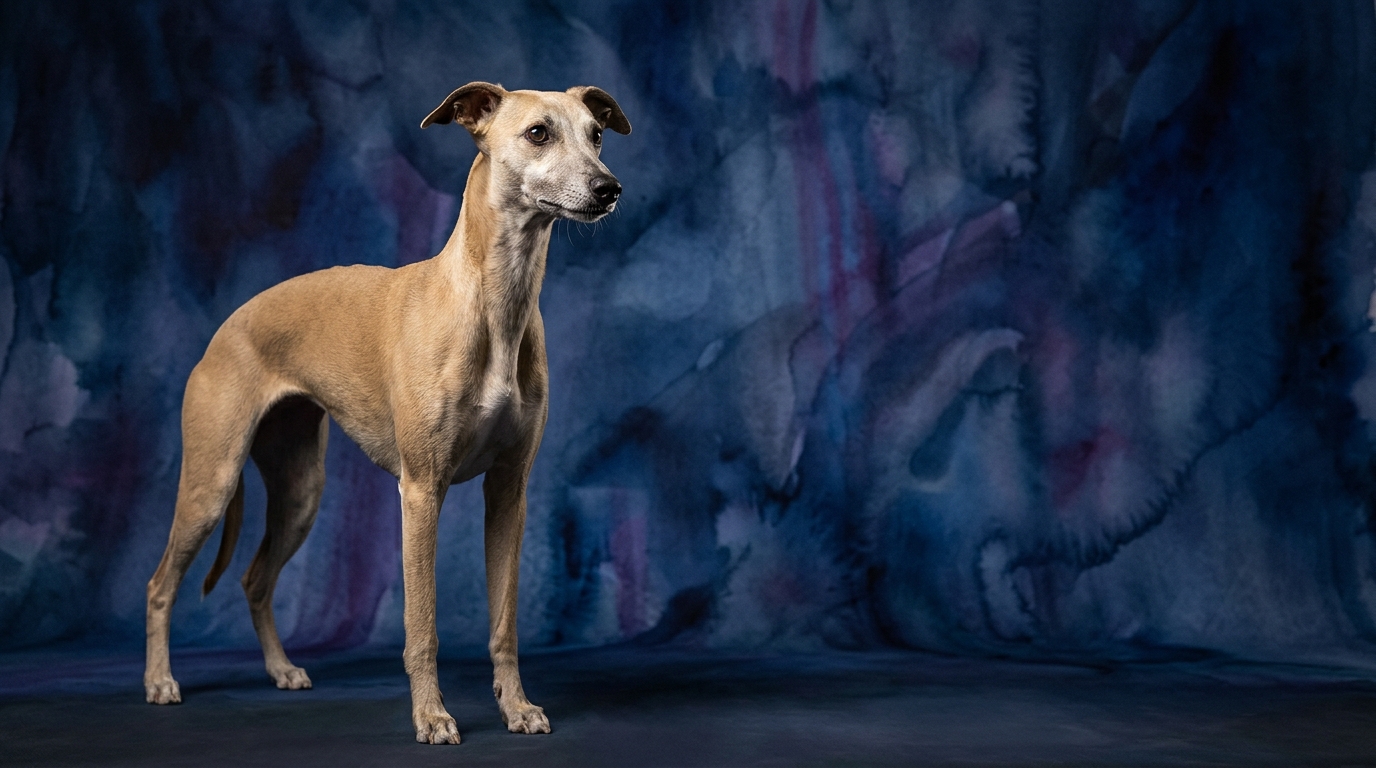

Side-by-Side IQ Profile: Whippet vs. Basset Hound
At The Cosmic Pet Pet IQ Lab, we delve into five key cognitive dimensions to paint a detailed picture of canine intellect. The Whippet, ranked #51 on Dr. Stanley Coren's scale, demonstrates a balanced yet distinct cognitive profile. Their problem Solving capability scores 3 out of 5, indicating a moderate ability to navigate novel challenges. Training Speed for a Whippet is 2 out of 5, suggesting they may require more repetition to solidify commands. However, their social Intelligence shines at 4 out of 5, reflecting a strong capacity for understanding and responding to human cues and pack dynamics. An instinctive Drive of 5 out of 5 highlights their powerful, inherent urge to chase and hunt, a defining trait of sighthounds. Their memory, like many breeds, is a solid 3 out of 5, allowing them to retain learned behaviors and recognize familiar patterns over time.
In contrast, the Basset Hound, holding Coren's rank #71, presents a different cognitive landscape. Their problem Solving ability is also rated 3 out of 5, indicating a similar aptitude for figuring things out, often with a methodical, scent-driven approach. Interestingly, their training Speed is a slightly higher 3 out of 5, suggesting they can learn new commands at a moderate pace, though often with a degree of stubbornness characteristic of scent hounds. Their social Intelligence is 3 out of 5, making them amiable companions who appreciate human interaction but might not be as overtly expressive or attuned to subtle social signals as some breeds. The Basset Hound's instinctive Drive scores 3 out of 5, reflecting a strong, but less frenetic, drive to follow a scent trail rather than a visual chase. Their memory, consistent with the Whippet, registers 3 out of 5, enabling them to recall important locations, routines, and scent profiles.
Where the Whippet Wins Cognitively
The Whippet's cognitive strengths distinctly lie in areas demanding quick perception and social attunement. Their superior social Intelligence (4/5 compared to Basset's 3/5) means they are often more responsive to human emotions and intentions, making them exceptionally empathetic companions. This higher social score translates into a dog that often seeks to please and thrives on close interaction, picking up on non-verbal cues with greater ease. Furthermore, their instinctive Drive, rated a perfect 5/5, is a cognitive advantage when tasks require incredible focus and speed in pursuit. While this drive needs careful management, it showcases a remarkable capacity for rapid decision-making and precise physical execution in a high-stakes scenario, such as lure coursing or competitive agility, where their problem-solving (3/5) converges with their innate athleticism. Their cognitive processing is geared towards rapid response to visual stimuli and the dynamics of a social group.
Where the Basset Hound Wins Cognitively
The Basset Hound's cognitive prowess is rooted in persistence, methodical exploration, and a keen sensory focus. While their problem-solving (3/5) matches the Whippet's, the nature of that problem-solving differs; for a Basset, it often involves intricate scent discrimination and following complex trails, a task requiring deep concentration and sustained effort rather than speed. Their instinctive Drive (3/5) is less about explosive speed and more about unwavering dedication to a scent, demonstrating a unique cognitive endurance. This allows them to systematically unravel olfactory puzzles that might overwhelm a visually-oriented sighthound. Furthermore, their training Speed (3/5) edges out the Whippet's (2/5), suggesting that while they can be stubborn, they may, with consistent, patient reinforcement, integrate new commands more readily into their routine, particularly if the training engages their natural instincts or offers rewarding sensory experiences. Their memory (3/5) is particularly potent for retaining scent information, enabling them to recall specific trails or locations with remarkable accuracy over time.
Training Dynamics: Whippet vs. Basset Hound
When it comes to training, the Whippet and Basset Hound present contrasting experiences, largely influenced by their core cognitive profiles. The Whippet's lower training Speed (2/5) might initially suggest a challenge, but their higher social Intelligence (4/5) often compensates. They respond well to positive reinforcement, especially when it involves engaging with their human companion or offers an outlet for their high instinctive Drive (5/5), such as chasing a toy. However, their strong prey drive means they can be easily distracted by movement or small animals, requiring rigorous proofing of recall and 'leave it' commands in varied environments. Training a Whippet often benefits from making it a game and leveraging their desire for connection, rather than relying on rote repetition.
The Basset Hound, with a slightly better training Speed (3/5) and a moderate social Intelligence (3/5), often requires a different approach. Their reputation for stubbornness isn't a lack of intelligence but rather a strong independent streak, often prioritizing a compelling scent over a human command. Training must be highly motivating, consistent, and patient, often incorporating their love for food or scent work as rewards. While they may not be as quick to pick up on subtle social cues as a Whippet, their persistence means that once a behavior is learned and deemed worthwhile, they are likely to retain it. Controlling their instinctive Drive (3/5) to follow a scent, however, is a lifelong training commitment, as they can become 'nose-blind' to their surroundings when on a trail, making off-leash reliability a significant challenge.
Matching Breeds to Lifestyles: Active vs. Relaxed Owners
The Whippet's cognitive makeup makes them an ideal companion for active owners who appreciate a dog capable of bursts of intense activity followed by calm relaxation. Their high instinctive Drive (5/5) means they thrive on opportunities to run and chase in a secure environment, engaging both their physical and mental faculties. Owners who enjoy lure coursing, fast-paced games, or simply long, brisk walks will find a Whippet to be an engaging partner. Their high social Intelligence (4/5) ensures they form deep bonds and enjoy participating in family activities, often curling up contentedly on the sofa after their exercise needs are met. They are not suited for owners who cannot provide regular outlets for their powerful chase instinct, as boredom can lead to undesirable behaviors.
Conversely, the Basset Hound is better suited for more relaxed owners who appreciate a dog with a deliberate pace and a strong, independent sense of purpose, often centered around their nose. While they certainly need daily walks to satisfy their instinctive Drive (3/5) for scent exploration, these walks are typically more meandering and less intense than those a Whippet requires. Owners who enjoy leisurely strolls and are patient with a dog that might stop frequently to investigate an interesting smell will find a Basset Hound a delightful companion. Their moderate social Intelligence (3/5) means they are affectionate but often content to entertain themselves with a scent puzzle or a snooze in a sunbeam. They are an excellent choice for individuals or families seeking a calm, amiable presence that doesn't demand constant, high-energy engagement but still requires consistent mental stimulation through scent work and patient training.
The Verdict
Choose a Whippet if you seek an agile, socially attuned companion who thrives on intense bursts of activity and forms deep, responsive bonds.
Opt for a Basset Hound if you prefer a patient, methodical companion who excels in scent work, enjoys leisurely exploration, and appreciates a calm, consistent routine.
🧠 Find Your Pet's IQ Score
Our Pet IQ Lab assessment covers 25+ tests across 5 cognitive dimensions — personalized to your breed.
Take the Full IQ Test →Frequently Asked Questions
Are Whippets difficult to train due to their low training speed score?
While Whippets have a training speed score of 2/5, their high social intelligence (4/5) means they respond well to positive reinforcement and bond-based training. The challenge often lies in managing their strong instinctive drive rather than a lack of learning capacity, making consistent, engaging methods key.
Do Basset Hounds require a lot of exercise despite their relaxed demeanor?
Basset Hounds do require daily exercise, primarily for mental stimulation through scent exploration, aligning with their 3/5 instinctive drive. While they aren't built for speed, regular walks where they can follow interesting smells are crucial to their well-being, preventing boredom and potential behavioral issues.
Which breed is more prone to wandering off?
The Basset Hound is significantly more prone to wandering, driven by their powerful 3/5 instinctive drive to follow a scent trail, often becoming 'nose-deaf' to calls. Whippets, with a 5/5 instinctive drive for chase, can also bolt after prey, but their social intelligence often makes them more responsive to recall training in controlled environments.