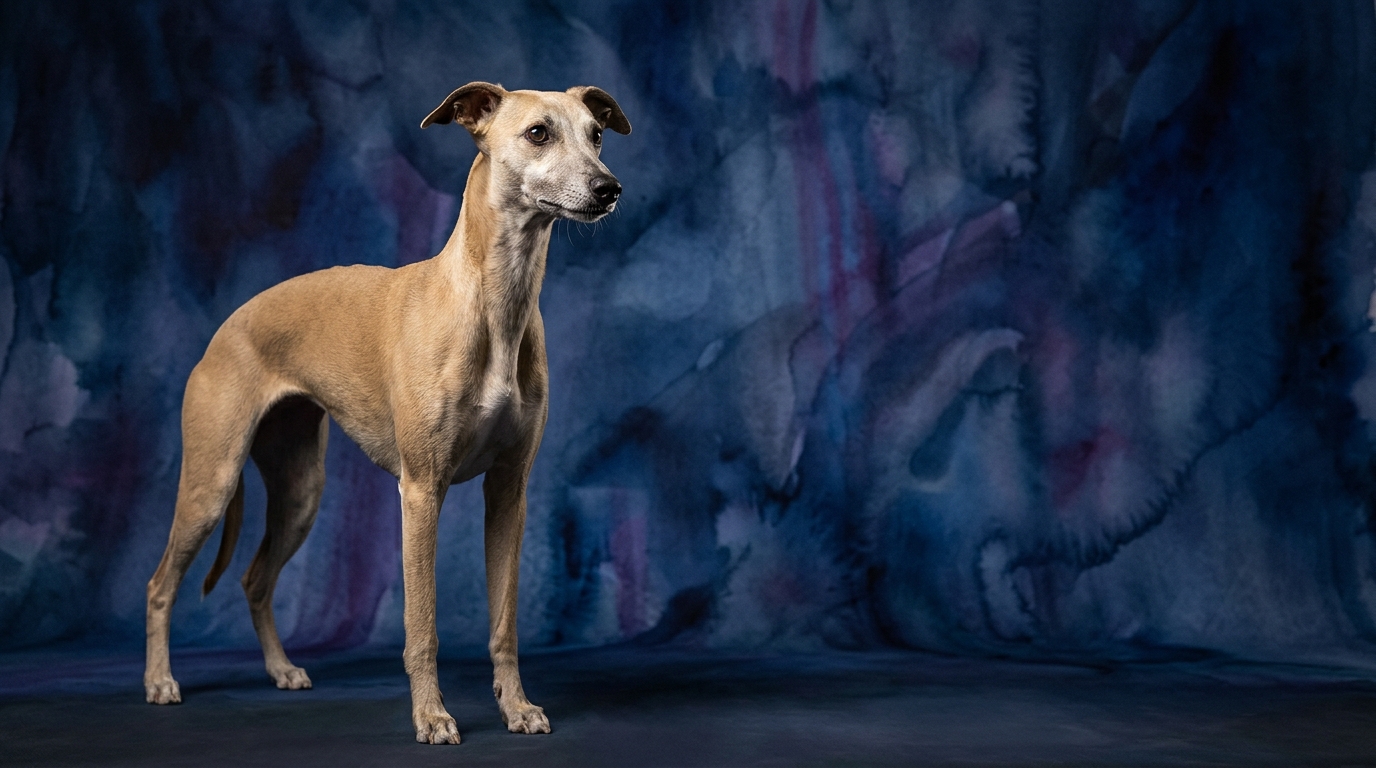
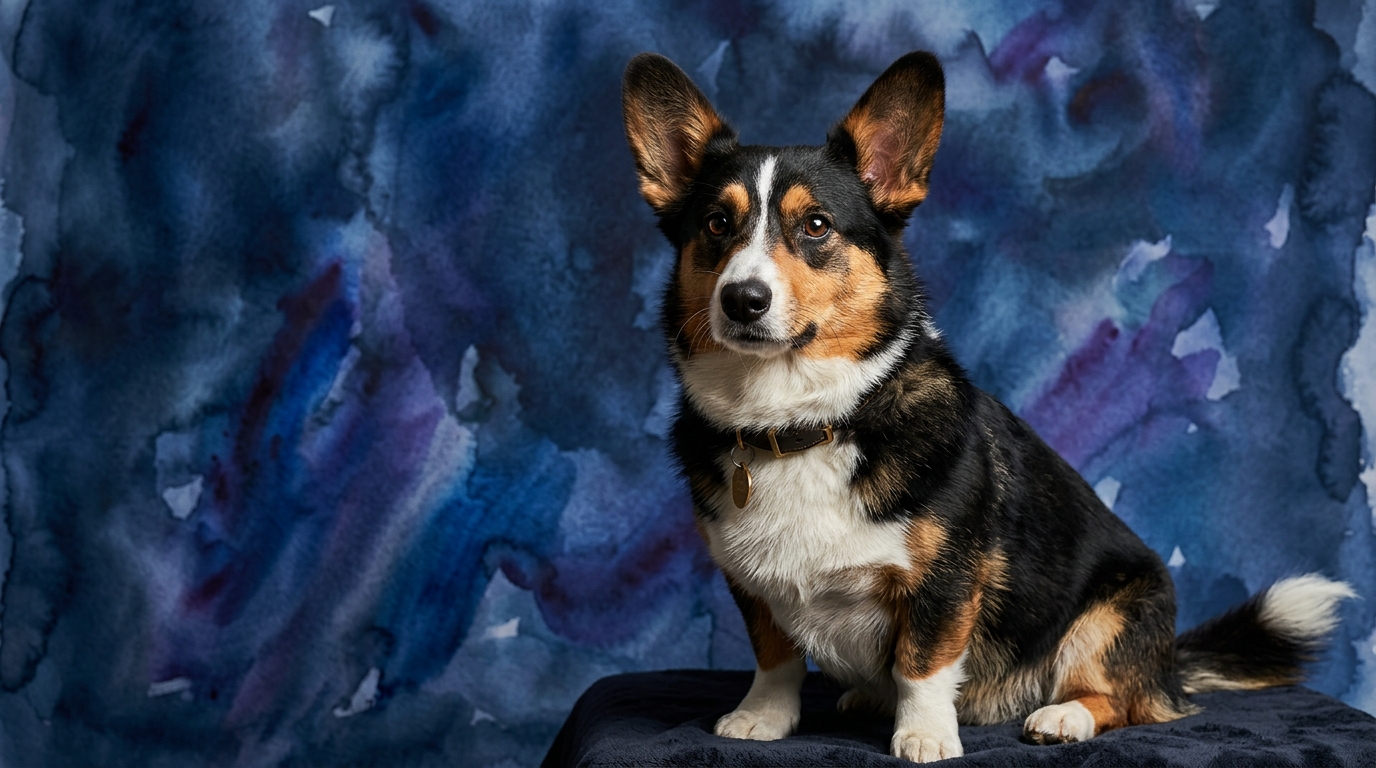
Side-by-Side IQ Profile: Whippet vs. Cardigan Welsh Corgi
The Cosmic Pet Pet IQ Lab employs a multi-dimensional framework to assess canine cognition. For the Whippet, a sighthound bred for speed and pursuit, their Coren rank of #51 places them in the fair to average working and obedience intelligence category. Their Problem Solving is rated 3/5, indicating an ability to navigate straightforward obstacles or understand direct cause-and-effect, particularly when motivated by comfort or a desired object. They are less inclined towards intricate, multi-step puzzles.
Whippets exhibit a Training Speed of 2/5. While capable of learning commands, their independent spirit often requires significant patience, consistent positive reinforcement, and highly engaging rewards. Repetitive drills can quickly lead to disinterest. Their Social Intelligence shines at 4/5; Whippets are remarkably adept at discerning human emotional states and subtle canine body language, fostering deep, empathetic bonds within their trusted circle, making them exceptionally attuned companions. Their Instinctive Drive is a powerful 5/5, manifesting as an intense, almost primal focus on moving objects. This innate prey drive dictates much of their spontaneous behavior. Finally, their Memory is 3/5, allowing them to retain routines, recognize familiar faces and places, and remember simple commands, but perhaps not extensive, complex sequences.
In contrast, the Cardigan Welsh Corgi, a compact herding dog, holds a Coren rank of #26, signifying excellent working and obedience intelligence. Their Problem Solving capability is a robust 4/5. Corgis excel at figuring out how to overcome barriers, manipulate objects, and devise strategies to achieve goals, often demonstrating remarkable persistence, stemming from their historical role of managing livestock.
Their Training Speed is rated 4/5. Corgis are generally eager to learn, highly responsive to consistent instruction, and quick to grasp new commands and routines, making them a joy to train for various disciplines. Social Intelligence for the Corgi stands at 3/5; they understand pack dynamics and group structures, often exhibiting a confident, sometimes assertive, demeanor. While cooperative, their strong herding instincts can lead to attempts to 'manage' their human family if not properly guided. Their Instinctive Drive is 3/5, rooted in their herding heritage, characterized by a desire to gather and control movement. The Cardigan Welsh Corgi’s Memory is an impressive 4/5. They possess excellent recall for learned tasks, commands, and past experiences, allowing them to build upon previous training and adapt effectively to new situations.
Where the Whippet Wins Cognitively
While the Corgi might outrank them in overall obedience, the Whippet possesses distinct cognitive strengths. Their Social Intelligence, rated 4/5, is a profound asset. Whippets are exceptionally attuned to human emotional nuances, often anticipating their owner's needs or moods with subtle cues. This fosters deep, empathetic companionship, making them highly sensitive and responsive to their family's internal states. They excel at silent communication, reading body language and energy with remarkable precision, forming an almost intuitive bond.
Furthermore, the Whippet's Instinctive Drive, a perfect 5/5, is unparalleled in its specific application. This isn't merely about 'chasing'; it's about a cognitive system dedicated to visual processing, rapid decision-making, and explosive acceleration. Their brains are wired for detecting minute movements at a distance and executing swift, precise pursuit. This specialized intelligence allows them to excel in activities that tap into their sighthound heritage, such as lure coursing, where their focus and reaction times are breathtaking. Their cognitive processing in these scenarios is lightning-fast, demonstrating highly optimized neural pathways for specific predatory behaviors.
Where the Cardigan Welsh Corgi Wins Cognitively
The Cardigan Welsh Corgi's cognitive profile reveals strengths perfectly aligned with their working role. Their Problem Solving ability, rated 4/5, stands out. Corgis are adept at strategic thinking, whether figuring out how to outmaneuver livestock or open a cabinet. This involves assessing a situation, planning actions, and persisting until a solution is found, often experimenting with different approaches.
Complementing this is their superior Training Speed (4/5) and Memory (4/5). Corgis absorb new commands and complex sequences with impressive alacrity, retaining lessons over time and applying them consistently. This cognitive nimbleness makes them prime candidates for advanced obedience, rally, and agility. Their robust memory allows them to build a comprehensive repertoire of skills and experiences, enabling generalization of learned behaviors to novel situations. This combination of quick learning, strong recall, and strategic problem-solving makes the Cardigan Welsh Corgi a formidable cognitive partner.
Which is Easier to Train and Why?
When considering ease of training, the Cardigan Welsh Corgi generally presents a more straightforward experience. Their 4/5 Training Speed and 4/5 Memory mean they grasp new concepts quickly and retain them well. Corgis possess an intrinsic desire for purpose and an inclination to work cooperatively, a legacy of their herding background. They thrive on clear direction and consistent routines, often showing genuine enthusiasm for learning new tasks and earning praise. Their problem-solving skills also mean they can often anticipate expectations, making training feel more like a collaborative effort.
Conversely, training a Whippet, with a 2/5 Training Speed, often requires a different approach and greater patience. Their independent nature and strong instinctive drive (5/5) mean they are easily distracted by visual stimuli and less motivated by repetitive obedience drills. A Whippet might learn a command but choose not to execute it if a more interesting stimulus appears, or if they prefer comfort. While capable of learning, their motivation is often self-directed. Successful Whippet training typically involves very short, engaging sessions, high-value rewards, and a deep understanding of their sighthound instincts, acknowledging their differing cognitive priorities.
Which Suits Active Owners vs. Relaxed Owners?
The distinction between an 'active' and 'relaxed' owner is nuanced for these two breeds. Whippets, while often perceived as couch potatoes, are built for explosive, high-speed bursts of energy. They require regular opportunities for running at full speed in a safe, enclosed area to satisfy their 5/5 instinctive drive. An owner who enjoys short, intense play sessions – perhaps a 15-20 minute sprint or lure coursing – followed by long periods of quiet companionship would find a Whippet an excellent match. They thrive on brief, exhilarating exercise that taps into their natural athleticism, then are content to relax.
The Cardigan Welsh Corgi suits owners who prefer consistent, moderate activity coupled with significant mental engagement. Their historical role demanded not just physical stamina but also strategic thinking and responsiveness. Corgis need daily walks, but more importantly, they thrive on structured activities like obedience training, agility, or herding games that challenge their 4/5 problem-solving abilities and strong memory. Owners who enjoy teaching new tricks, participating in dog sports, or engaging in interactive puzzle toys will find the Corgi a highly motivated partner. Their energy is less about explosive speed and more about sustained engagement and purposeful activity.
The Verdict
Choose a Whippet if you appreciate an independent, empathetic companion that thrives on comfort and short, high-energy sprints, and if you are patient with their unique training motivations.
Choose a Cardigan Welsh Corgi if you seek a highly trainable, problem-solving partner for structured activities and dog sports, and if you can provide consistent mental and physical engagement.
🧠 Find Your Pet's IQ Score
Our Pet IQ Lab assessment covers 25+ tests across 5 cognitive dimensions — personalized to your breed.
Take the Full IQ Test →Frequently Asked Questions
Are Whippets good at learning tricks?
Whippets can learn tricks, particularly those involving speed or agility, but their training speed of 2/5 suggests it might require more patience and high-value rewards compared to breeds that naturally thrive on complex command sequences. Their independent spirit means they often prefer to engage on their own terms rather than for repetitive drills.
Do Cardigan Welsh Corgis need a lot of mental stimulation?
Absolutely. With a problem-solving score of 4/5 and a strong memory, Cardigan Welsh Corgis thrive on mental challenges. Without adequate stimulation, their instinctive drive, even at a 3/5, can manifest as undesirable behaviors like excessive barking or 'herding' family members, indicating a need for engaging tasks and puzzles.
Which breed is better for first-time dog owners?
The Cardigan Welsh Corgi, with its 4/5 training speed and eagerness to learn, is generally more forgiving for first-time owners willing to commit to consistent training and mental engagement. Whippets, while affectionate, require an owner who understands and respects their independent nature and lower motivation for traditional obedience, making them potentially more challenging for a novice.