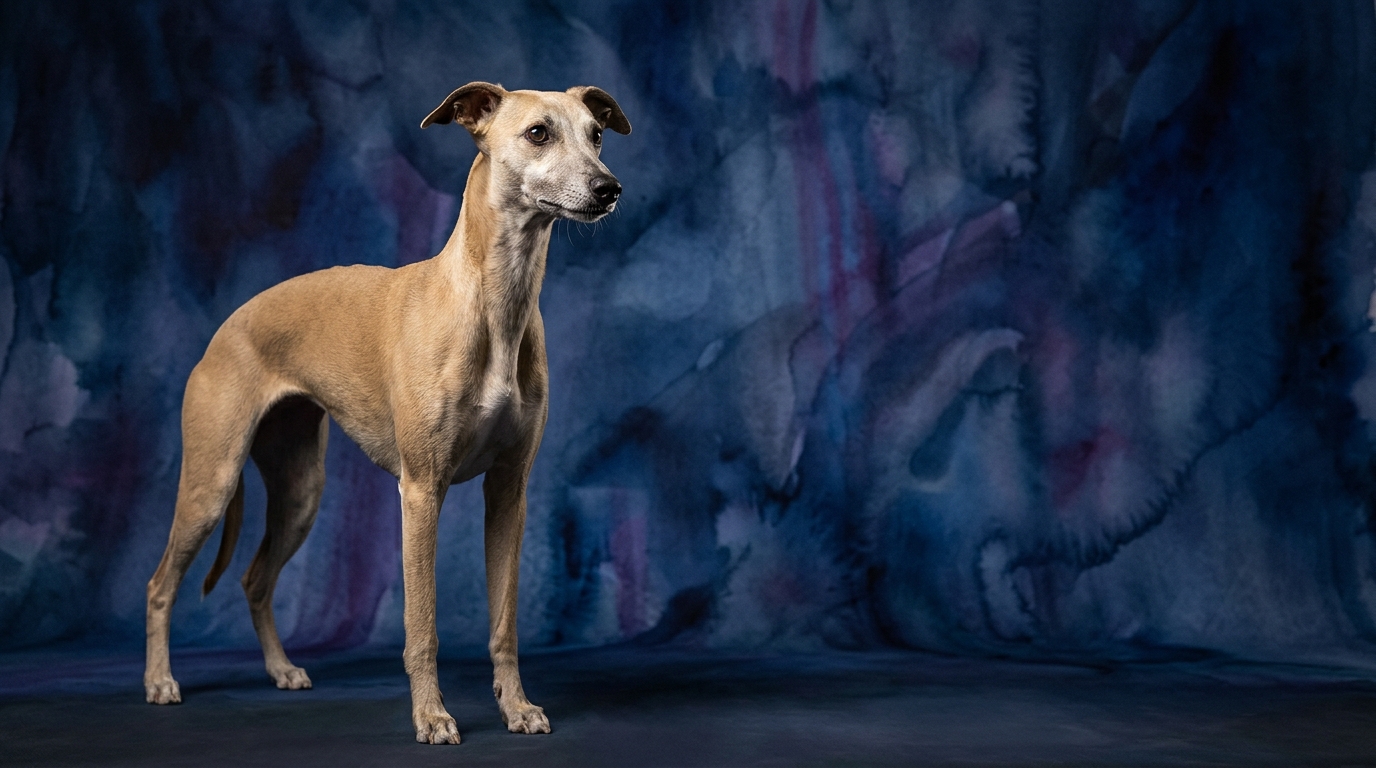

Side-by-Side IQ Profile: Whippet vs. Clumber Spaniel
**Whippet: The Agile Thinker (Coren Rank #51)** The Whippet's cognitive profile showcases a blend of keen social awareness and powerful primal drives. Their Problem Solving is rated 3/5, indicating a moderate capacity to navigate challenges, often preferring efficiency and speed over complex deliberation. Training Speed stands at 2/5, reflecting an independent spirit that requires patience and engaging methods for learning new commands. Social Intelligence, at 4/5, highlights their remarkable ability to read human emotions and cues, fostering deep, intuitive bonds. A perfect 5/5 for Instinctive Drive underscores their profound, inherent need to chase and run, a defining characteristic of their sighthound heritage. Memory is rated 3/5, meaning they retain routines and familiar associations well, though consistent reinforcement is key for less frequent commands.
**Clumber Spaniel: The Thoughtful Explorer (Coren Rank #55)** The Clumber Spaniel presents a cognitive makeup characterized by steadfastness and sensory engagement. Their Problem Solving is 3/5, signifying a deliberate and persistent approach to challenges, often utilizing their senses to unravel puzzles. Training Speed is 3/5, indicating a steady, cooperative learning pace, making them generally responsive to consistent instruction. Social Intelligence also scores 3/5, reflecting their affectionate and loyal nature within their family unit, though they might be more reserved with unfamiliar individuals. Instinctive Drive is 3/5, rooted in their flushing spaniel role, manifesting as a moderate but persistent desire for scent work and retrieving, focused on methodical exploration rather than high-speed pursuit. Memory is 3/5, showing a reliable capacity to recall commands and routines over time with regular practice.
Where the Whippet Wins Cognitively
Whippets demonstrably excel in two key cognitive dimensions: social intelligence and instinctive drive. Their social intelligence, rated 4/5, allows them to exhibit an almost uncanny ability to attune to human emotional states, often anticipating needs and offering comfort with subtle cues. This makes them highly intuitive companions, sensing shifts in mood or routine with remarkable accuracy. Furthermore, their instinctive drive scores a perfect 5/5, reflecting an unparalleled, inherent focus on movement and speed. This isn't merely a physical attribute; it's a profound cognitive specialization for rapid visual processing and instantaneous reaction to perceived motion, making them masters of the chase and a testament to their sighthound lineage. This specialized mental architecture, while sometimes requiring careful management in domestic settings, is a distinct cognitive advantage in tasks demanding swift visual identification and pursuit.
Where the Clumber Spaniel Wins Cognitively
The Clumber Spaniel's cognitive strengths lie in its more amenable training speed and its deliberate approach to problem-solving. With a training speed of 3/5, they generally absorb new commands with greater consistency and less resistance than a Whippet, often displaying a patient willingness to understand and comply. This steady learning curve makes them predictable and rewarding to teach. Their problem-solving ability, also rated 3/5, is characterized by a thoughtful, persistent engagement with their environment, particularly through scent. They are adept at tasks requiring methodical exploration and endurance, rather than requiring immediate, high-speed solutions. This cognitive style makes them excellent at unravelling puzzles that reward patience and sensory investigation.
Which is Easier to Train and Why
When considering ease of training, the Clumber Spaniel generally offers a more straightforward experience than the Whippet, primarily due to its higher training speed (3/5 versus the Whippet's 2/5) and a more biddable temperament. Clumbers often display a cooperative nature and a desire to please their handler, making them highly responsive to positive reinforcement and consistent training methods. Their instinctive drive, while present for scent work, is less overwhelming and easier to manage in various environments, allowing for better focus on commands. In contrast, the Whippet's independent spirit and powerful instinctive drive (5/5) means they are easily distracted by movement and can be less motivated by human approval alone. While capable of learning, their training demands exceptional patience, creativity, and a deep understanding of sighthound motivations, often requiring high-value rewards and short, highly engaging sessions to maintain their attention and overcome their innate desire to chase.
Which Suits Active Owners vs. Relaxed Owners
For active owners who relish intense, albeit brief, bursts of physical activity followed by long periods of relaxation, the Whippet is an ideal match. Their supreme instinctive drive means they thrive on opportunities to run freely and safely, satisfying their profound need for speed and the thrill of the chase. However, indoors, they are remarkably calm and content to lounge for extended periods, making them suitable for owners who appreciate both exhilarating outdoor adventures and quiet, affectionate companionship at home. Conversely, the Clumber Spaniel is better suited for relaxed owners who enjoy moderate, consistent activity rather than high-intensity athleticism. Their instinctive drive, while present for scent-based exploration, doesn't demand the same high-speed outlets as a Whippet. Clumbers are generally more placid, enjoying leisurely walks, methodical garden exploration, and extended periods of quiet companionship, fitting seamlessly into a less frenetic lifestyle and thriving in a calm, predictable environment.
The Verdict
Choose a Whippet if you appreciate a dog with profound social intuition, an incredible drive for speed, and the ability to seamlessly transition from exhilarating outdoor sprints to calm, affectionate indoor companionship.
Opt for a Clumber Spaniel if you seek a steady, thoughtful companion who learns with patient consistency, enjoys moderate activity, and brings a calm, devoted presence to a relaxed household.
🧠 Find Your Pet's IQ Score
Our Pet IQ Lab assessment covers 25+ tests across 5 cognitive dimensions — personalized to your breed.
Take the Full IQ Test →Frequently Asked Questions
Is a Whippet difficult to train because of its lower training speed score?
While a Whippet's training speed is rated 2/5, indicating a need for more patience and engaging methods, it doesn't mean they're untrainable. Their independent nature and strong prey drive require creative, positive reinforcement, and consistent effort, often making them more challenging for novice owners who are unprepared for their sighthound tendencies.
How does the Clumber Spaniel's problem-solving ability manifest in daily life?
A Clumber Spaniel's 3/5 problem-solving score means they approach challenges with deliberation and persistence. Owners might observe them systematically working to open a puzzle toy, carefully tracking a scent trail in the yard, or figuring out how to retrieve a hidden treat, demonstrating a thoughtful, sensory-driven approach rather than quick, impulsive actions.
Which breed is more adaptable to different living situations based on their social intelligence?
The Whippet, with its 4/5 social intelligence, tends to be highly adaptable to various social dynamics and human routines, often fitting well into different household environments due to their intuitive understanding of human cues and desire for close proximity. The Clumber Spaniel, at 3/5, is also adaptable but may be more reserved initially and thrives best with a consistent, familiar social circle and predictable routines.