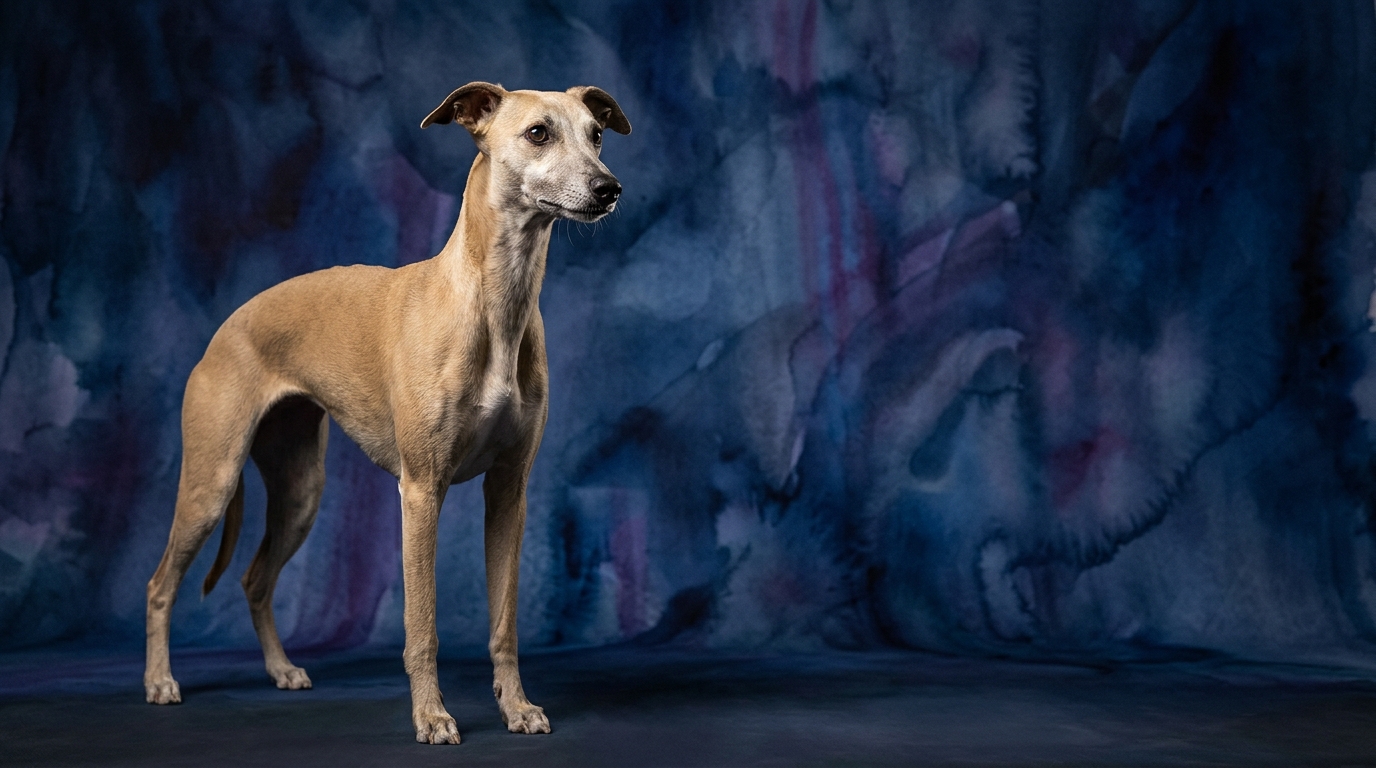

Side-by-Side IQ Profile: Whippet vs. Dandie Dinmont Terrier
The Cosmic Pet IQ Lab assesses five key cognitive dimensions, revealing distinct mental landscapes for each breed.
For the **Whippet** (Coren rank #51, Hound Group): Problem Solving (3/5): Whippets exhibit moderate problem-solving, often using keen observation and associative learning. They can navigate simple puzzles, but complex mental challenges are not their primary driver. Training Speed (2/5): Their independent nature and sighthound instincts mean Whippets can take longer to grasp and reliably execute commands. Consistent, positive reinforcement is key to overcoming their natural inclination to follow sight or scent. Social Intelligence (4/5): Whippets excel at understanding human cues and emotions, forming deep bonds. They display nuanced sensitivity to moods and a strong desire for companionship. Instinctive Drive (5/5): This breed's powerful prey drive is its defining cognitive trait, manifesting as intense focus on movement and a strong desire to chase. This deeply ingrained instinct shapes much of their attention and behavior. Memory (3/5): Whippets possess solid memory for routines, learned associations, and specific individuals. While retaining training with consistency, their memory leans more towards practical recall than intricate sequences.
For the **Dandie Dinmont Terrier** (Not Coren-ranked, Terrier Group): Problem Solving (3/5): Dandie Dinmont Terriers show resourceful problem-solving, especially for environmental navigation or achieving desired outcomes like finding a hidden toy. They are persistent, often trying various solutions. Training Speed (3/5): With moderate training speed, Dandies learn new commands steadily, particularly when motivated by engaging rewards. Their terrier tenacity means they can be single-minded, sometimes requiring creative approaches to maintain focus. Social Intelligence (3/5): Dandie Dinmonts are amiable, forming strong connections with family. While perceptive, their social cues are often direct, reflecting their independent terrier spirit rather than overt sensitivity. Instinctive Drive (3/5): Their instinctive drive is moderate, focused on typical terrier tasks like digging and exploring. This drive is often more manageable than in some other terrier breeds, allowing for a balanced home life. Memory (3/5): Dandies have reliable memory for learned behaviors, routines, and territory layout. They remember past interactions and training, contributing to consistent behavior patterns.
Where the Whippet Wins Cognitively
The Whippet's cognitive profile truly shines in its social intelligence and unparalleled instinctive drive. Their remarkable social perceptiveness means they often anticipate human needs and moods, making them exceptionally empathetic companions. This deep understanding of their family's emotional landscape allows them to integrate seamlessly into a household, often acting as sensitive barometers of the home's atmosphere. Furthermore, their instinctive drive, rated at a perfect 5/5, represents a highly refined cognitive specialization for pursuit. This isn't just about speed; it's about a laser-like focus, rapid visual processing, and an innate understanding of chase dynamics, making them unparalleled in activities that leverage these capabilities, like lure coursing. This specialized cognitive function, while sometimes challenging in a domestic setting, is a testament to their evolutionary purpose and a unique mental strength.
Where the Dandie Dinmont Terrier Wins Cognitively
The Dandie Dinmont Terrier demonstrates a distinct cognitive edge in its balanced problem-solving and training speed, paired with a resilient, independent spirit. While their problem-solving score matches the Whippet's, the Dandie's approach is often characterized by a terrier's tenacious ingenuity, particularly in navigating spatial challenges or figuring out how to access something they desire. This isn't about raw speed, but a persistent, iterative trial-and-error method that can outlast less determined breeds. Their moderate training speed (3/5 compared to the Whippet's 2/5) indicates a slightly greater receptiveness to formal instruction and a more direct willingness to engage in learning tasks. This is often underpinned by their self-assured nature and a less distractible focus when engaged, allowing for more consistent progress in structured training environments. They excel where persistence and a sturdy independence are assets.
Which is Easier to Train and Why
Assessing which breed is 'easier' to train requires understanding their inherent motivations and behavioral tendencies. The Dandie Dinmont Terrier, with its training speed of 3/5, generally presents a slightly more straightforward training journey than the Whippet (2/5). Dandies, while possessing terrier tenacity, often respond well to positive reinforcement and consistent methods, driven by their desire to engage with their owners and solve tasks. Their moderate instinctive drive means they can focus on a handler even when environmental distractions are present. In contrast, the Whippet's formidable instinctive drive (5/5) and lower training speed mean that their attention can be intensely drawn to movement or distant objects. This sighthound tendency makes off-leash reliability a significant challenge in open spaces, as their natural inclination to chase overrides learned commands. While Whippets are certainly capable of learning, their training requires a much higher degree of environmental management, patience, and a deep understanding of their prey drive, making the Dandie Dinmont typically more amenable to general obedience training in varied settings.
Suiting Active vs. Relaxed Owners
When matching these breeds to owner lifestyles, their cognitive profiles paint clear pictures. The Whippet, despite its reputation as a couch potato indoors, is a breed that thrives with opportunities to express its profound instinctive drive. For active owners who enjoy controlled off-leash exercise in secure areas, lure coursing, or long, brisk walks, the Whippet's cognitive need for bursts of speed and visual engagement is well-met. Their high social intelligence also means they blossom with owners who value deep, empathetic companionship. For more relaxed owners, a Whippet can adapt to a quieter home, provided their need for intense physical exertion is satisfied daily, often through dedicated play or secure running opportunities. The Dandie Dinmont Terrier, on the other hand, suits owners who appreciate a dog with a steady, inquisitive energy. While they enjoy walks and exploring, their instinctive drive (3/5) is less about explosive speed and more about diligent investigation. They are well-suited to owners who enjoy consistent daily walks, moderate play, and perhaps engagement in scent work or earthdog trials that satisfy their terrier instincts without requiring vast open spaces. Their moderate social intelligence and independent streak mean they are content with a comfortable routine but still enjoy interactive time with their family.
The Verdict
Opt for a Whippet if you seek an exceptionally sensitive, empathetic companion who thrives on intense bursts of physical activity and you are prepared to manage their powerful prey drive.
Select a Dandie Dinmont Terrier if you desire a resilient, tenacious companion with a steady problem-solving approach and a manageable energy level for consistent daily engagement.
🧠 Find Your Pet's IQ Score
Our Pet IQ Lab assessment covers 25+ tests across 5 cognitive dimensions — personalized to your breed.
Take the Full IQ Test →Frequently Asked Questions
Do Whippets learn quickly despite their lower training speed score?
Whippets learn through association and observation, but their independent nature and strong prey drive mean that reliably executing commands can take more repetitions and consistency. They grasp concepts, but their motivation to perform is often secondary to their natural instincts, requiring patient and engaging training methods.
Is the Dandie Dinmont Terrier a good choice for first-time dog owners?
The Dandie Dinmont Terrier can be a good choice for first-time owners who are committed to consistent, positive training and understand the terrier temperament. Their moderate training speed and balanced instinctive drive make them generally more adaptable than some other terrier breeds, provided their owner appreciates their independent spirit.
How does a Whippet's high social intelligence manifest in daily life?
A Whippet's high social intelligence means they are often acutely aware of their owner's emotions and body language, leading to a deep, intuitive bond. They might comfort you when you're sad, follow you from room to room, or gently seek attention, making them wonderfully sensitive and attuned household members.