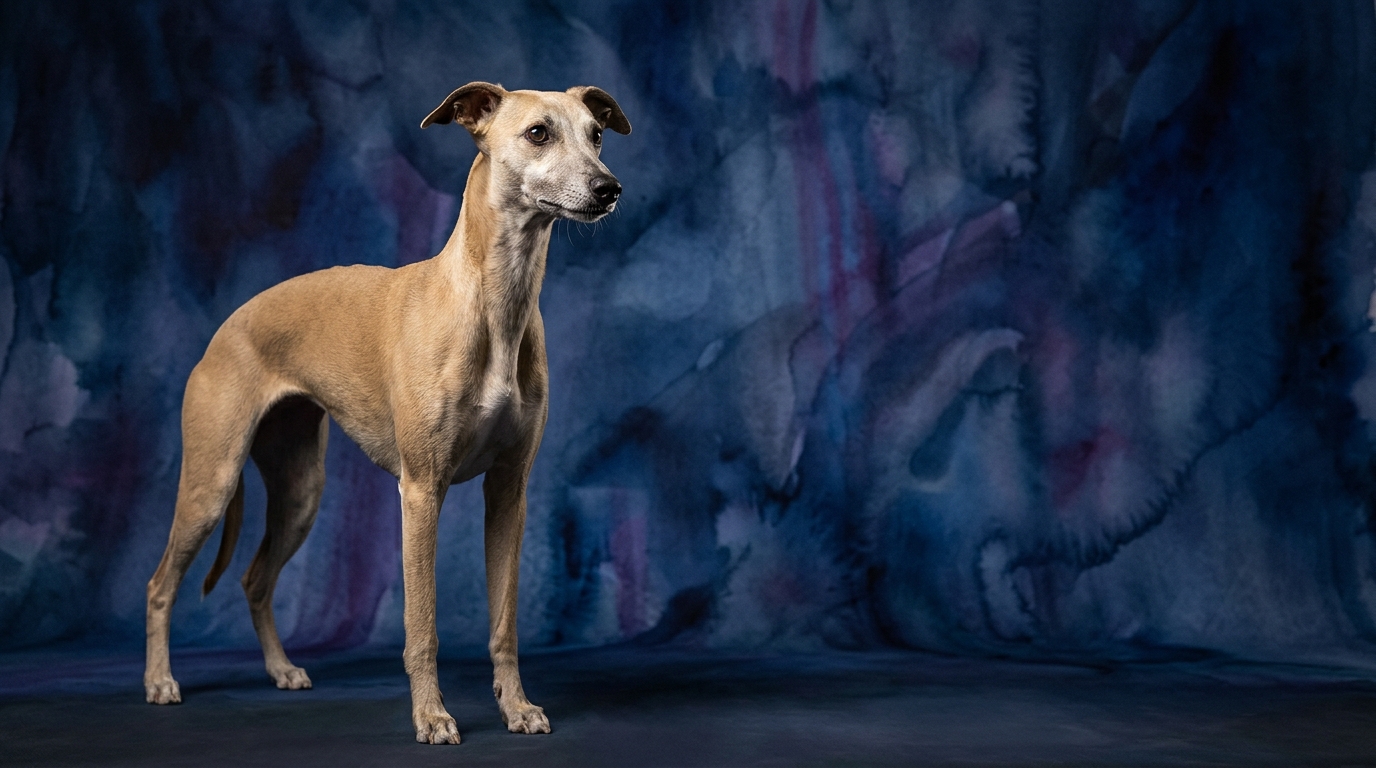
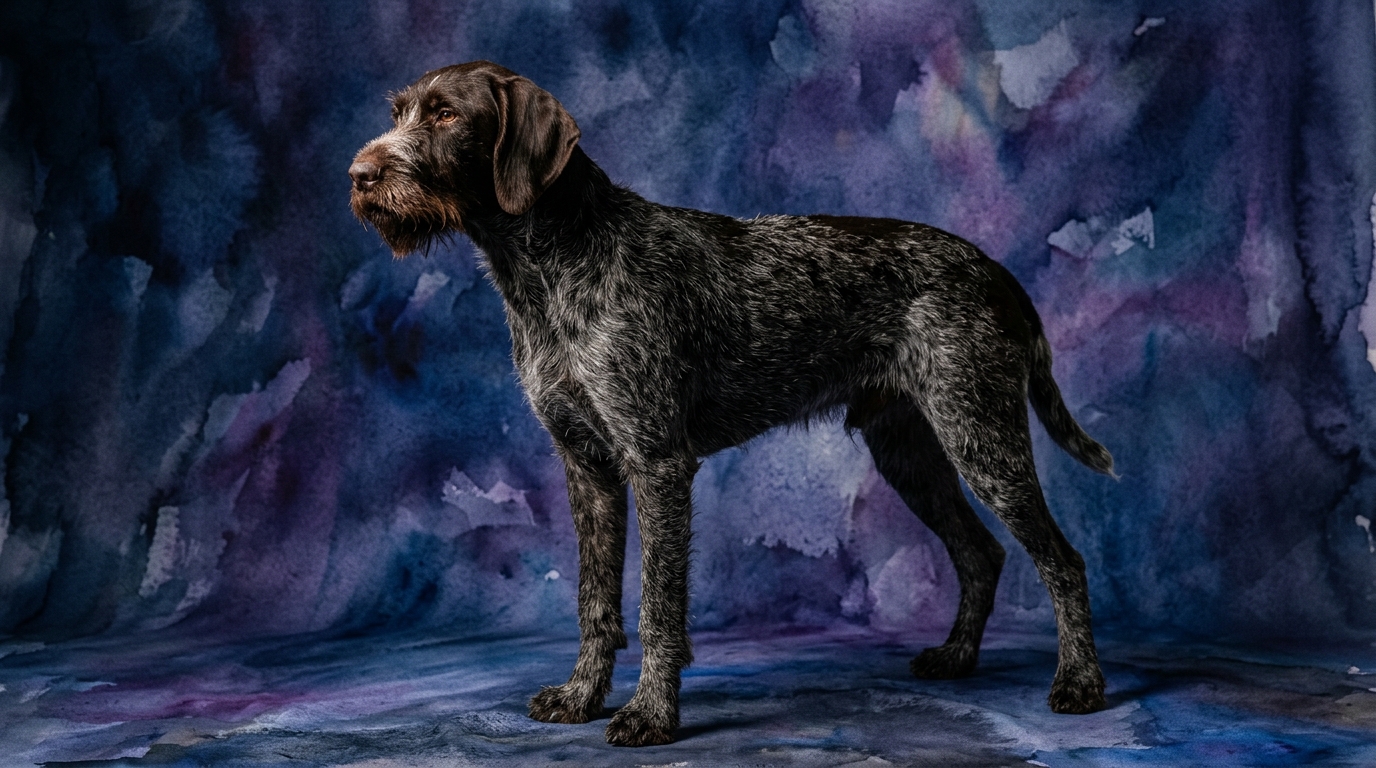
Side-by-Side Cognitive Profiles: Whippet vs. German Wirehaired Pointer
At The Cosmic Pet Pet IQ Lab, we evaluate canine intelligence across five key dimensions, offering a nuanced understanding of each breed's mental landscape. The Whippet, ranked #51 by Coren, and the German Wirehaired Pointer (GW Pointer), ranked #28, present a compelling study in divergent cognitive strengths.
The Whippet's cognitive blueprint leans heavily on instinct and social connection. Their Problem Solving is rated 3/5, suggesting they often rely on ingrained behaviors rather than complex, novel solutions. Training Speed is 2/5, indicating a need for patience and consistent, positive reinforcement to solidify commands. However, their Social Intelligence shines at 4/5, reflecting a deep attunement to human emotional states and social cues. Instictive Drive is a powerful 5/5, primarily focused on the thrill of the chase, making them exceptionally driven by movement. Memory stands at 3/5, allowing them to recall routines and familiar people effectively, but perhaps less detail-oriented than some breeds.
Conversely, the German Wirehaired Pointer's profile reflects a breed bred for versatile fieldwork. Their Problem Solving scores a robust 4/5, demonstrating a capacity for independent thought and adaptability in varied environments. Training Speed is an impressive 4/5, meaning they typically grasp new commands and concepts with efficiency. Social Intelligence is 3/5; while attentive to their owners, their primary focus is often on task execution rather than overt social bonding. Instictive Drive is a balanced 3/5, strong for hunting but manageable and directable. Memory is also 4/5, enabling them to retain intricate sequences and learn from past experiences, which is invaluable for complex working tasks.
Where the Whippet Cognitively Excels
The Whippet's standout cognitive strength lies in its Social Intelligence (4/5). These dogs possess an exceptional ability to read human emotions, often anticipating their owner's moods and responding with a quiet, comforting presence. This makes them incredibly empathetic companions, adept at forming profound, intuitive bonds within a family unit. They excel in environments where nuanced social interaction and emotional connection are valued, often becoming sensitive barometers of household dynamics.
While their Instinctive Drive is a high 5/5, it's a very specific, focused pursuit drive. When channeled appropriately, such as in lure coursing or similar activities, this intensity becomes a remarkable cognitive advantage. They exhibit unparalleled focus and determination in chasing, demonstrating an impressive mental engagement in tasks that align with this deeply ingrained instinct. This drive, though sometimes challenging, is a testament to their specialized mental wiring for speed and chase.
Where the German Wirehaired Pointer Cognitively Excels
The German Wirehaired Pointer truly shines in its Problem Solving ability (4/5). This breed exhibits a remarkable capacity for independent thought and practical application of intelligence, particularly when faced with novel challenges in varied terrains. Their heritage demands they think on their feet, adapting to changing scents, cover, and game behavior, translating into a dog that can figure things out rather than simply waiting for instructions. This makes them excellent partners for complex tasks requiring initiative.
Their superior Training Speed (4/5) is another significant cognitive advantage. GW Pointers are typically quick studies, absorbing new commands and complex sequences with relative ease. This rapid learning curve allows for a broad and sophisticated training repertoire, making them incredibly versatile for various dog sports, working roles, or advanced obedience. Coupled with a strong Memory (4/5), they retain these learned behaviors over time, building a robust foundation of knowledge and skills.
Trainability: A Tale of Two Temperaments
When considering ease of training, the German Wirehaired Pointer generally presents a more straightforward path. Their higher Training Speed (4/5) means they grasp new concepts efficiently, often eager to please and work cooperatively with their handler. Their Problem Solving (4/5) also contributes to this, as they can understand the 'why' behind a command or task, making them more adaptable to varied training methods. Their Instinctive Drive (3/5), while present, is typically more balanced and readily channeled into structured activities like retrieving or tracking, making it easier to direct their focus.
The Whippet, on the other hand, requires a different approach. With a Training Speed of 2/5, patience is paramount. They can be sensitive and respond best to positive reinforcement, gentle guidance, and making training feel like a game. Their formidable Instinctive Drive (5/5) for chasing is a significant behavioral difference; a Whippet spotting a squirrel can be incredibly difficult to recall, as their cognitive focus becomes entirely consumed by the pursuit. This necessitates early, consistent, and engaging recall training, often in distraction-free environments before gradually introducing more stimuli. While intelligent socially, their working intelligence is less about biddability and more about independent, instinct-driven action.
Matching Canine Cognition to Lifestyle: Active vs. Relaxed Owners
For the active owner, the German Wirehaired Pointer is often an ideal match. Their robust problem-solving abilities and efficient training speed mean they thrive on mental engagement and physical challenges. These dogs are not content with mere walks; they require consistent opportunities to use their bodies and minds, whether through hunting, retrieving games, agility, or extensive hikes. Their moderate instinctive drive needs outlets that allow them to explore and work, making them perfect for owners who enjoy an adventurous, outdoor-centric lifestyle and are prepared to provide daily, stimulating activity.
Conversely, the Whippet often suits a more relaxed, yet still active, owner. While they possess an incredible burst of speed and require opportunities for vigorous running, their energy is typically delivered in short, intense spurts. After a good sprint, they are often content to curl up for extended periods, leveraging their high social intelligence (4/5) to enjoy companionship and quiet time indoors. They are well-suited for owners who appreciate a dog that can keep pace for a quick run or lure course session but is equally happy to be a calm, affectionate presence around the house, provided their chase instincts are managed responsibly.
The Verdict: When to Choose Each Intelligent Companion
The Verdict
Choose a Whippet if you seek a deeply empathetic companion who excels in social settings and enjoys short bursts of activity followed by long, quiet cuddles, provided you can manage their intense chase instinct.
Opt for a German Wirehaired Pointer if you're an active owner craving a highly trainable, versatile working partner who thrives on mental challenges and physical exertion, ready for adventure at a moment's notice.
🧠 Find Your Pet's IQ Score
Our Pet IQ Lab assessment covers 25+ tests across 5 cognitive dimensions — personalized to your breed.
Take the Full IQ Test →Frequently Asked Questions
Is a Whippet difficult to train?
Whippets have a slower training speed and a very high instinctive drive for chasing, which can make training recall particularly challenging if not managed consistently. They respond best to positive, patient methods that make learning fun and rewarding, focusing on engagement over strict obedience.
What kind of activities does a German Wirehaired Pointer excel at?
German Wirehaired Pointers excel in activities that engage both their mind and body, such as hunting, retrieving, agility, and obedience trials. Their strong problem-solving skills and moderate instinctive drive make them adaptable to various working roles and dog sports.
Which breed is better with children?
Both breeds can be good with children, but their approaches differ. Whippets, with their higher social intelligence, are often gentle and intuitive with family members, while German Wirehaired Pointers can be more boisterous but equally devoted, thriving on structured interaction and play.